Anti-Star Trek: A Theory of Posterity

StarTrek_Logo_2007 Peter Frase over at his blog (image from wikipedia):

One of the intriguing things about the world of Star Trek, as Gene Roddenberry presented it in The Next Generation and subsequent series, is that it appears to be, in essence, a communist society. There is no money, everyone has access to whatever resources they need, and no-one is required to work. Liberated from the need to engage in wage labor for survival, people are free to get in spaceships and go flying around the galaxy for edification and adventure. Aliens who still believe in hoarding money and material acquisitions, like the Ferengi, are viewed as barbaric anachronisms.

The technical condition of possibility for this society is comprised of of two basic components. The first is the replicator, a technology that can make instant copies of any object with no input of human labor. The second is an apparently unlimited supply of free energy, due to anti-matter reactions or dilithium crystals or whatever. It is, in sum, a society that has overcome scarcity.

Anti-Star Trek takes these same technological premises: replicators, free energy, and a post-scarcity economy. But it casts them in a different set of social relations. Anti-Star Trek is an attempt to answer the following question:

* Given the material abundance made possible by the replicator, how would it be possible to maintain a system based on money, profit, and class power?

Economists like to say that capitalist market economies work optimally when they are used to allocate scarce goods. So how to maintain capitalism in a world where scarcity can be largely overcome? What follows is some steps toward an answer to this question.

Like industrial capitalism, the economy of anti-Star Trek rests on a specific state-enforced regime of property relations. However, the kind of property that is central to anti-Star Trek is not physical but intellectual property, as codified legally in the patent and copyright system.


Asymmetric Quarks Defy Standard Model of Physics

News436-i0.1 Ron Cowen in Nature News:

Newly released observations of the top quark — the heaviest of all known fundamental particles — could topple the standard model of particle physics. Data from collisions at the Tevatron particle accelerator at Fermilab in Batavia, Illinois, hint that some of the top quark's interactions are governed by an as-yet unknown force, communicated by a hypothetical particle called the top gluon. The standard model does not allow for such a force or particle.

The results, presented1 today at the Europhysics Conference on High-Energy Physics in Grenoble, France, could help researchers to understand the origins of mass. According to one theoretical interpretation, a top quark bound by to its anti-matter partner, the antitop, would act as a version of the elusive Higgs boson, conferring mass on other particles.

Regina Demina, a physicist at the University of Rochester in New York, and her colleagues sifted through eight years' worth of particle-collision data recorded by one of the Tevatron's two detectors, known as DZero. Top quarks produced during collisions can fly off in the direction of the accelerator's proton beam or its antiproton beam; Demina and her team discovered that more travel towards the proton beam than is predicted in the standard model of physics. A different model would seem to be needed to explain the discrepancy.

In the Details

Burt_36.4_book Stephen Burt reviews Allan Peterson's As Much As, in the Boston Review:

What if all that mattered in a life, all that stuck in the mind or pulled at the heart, were the well-defined events and decisions: where to live, what to do for a living, when to get married, whether to go to war? What would we miss? Almost everything that makes a life worth living. We want not just actions and consequences, victories and defeats, but dragonflies and paperclips, daydreams and counterfactual syllogisms. And perhaps poetry—that verbal art form without obvious consequence, whose shapes are not the shapes of events and plots—best suits those apparently negligible phenomena: if it cannot preserve them, it can at least show how we care.

That is not the only goal for poets, nor is poetry the only art that adopts it (Virginia Woolf to the white courtesy telephone, please). But it is a goal that many poets take on, by precept or example, and there may be no better example right now than Allan Peterson. No other poet—to judge by this third book, As Much As—focuses so fully on the inward effects of apparently inconsequential observations; no other poet makes them speak so well. Though he entitles one poem “Pure Description,” Peterson almost never describes scenes literally and at length; poets who do so can lose a lopsided contest against the resources of visual art, as Peterson must know (until 2005 he taught painting and ran the art department at Pensacola State College in Florida).

Instead, Peterson uses what he sees as a starting point for effects of inwardness, of ratiocination, above all of analogy. His title means that anything can matter as much as anything else, approached rightly, but it also means that he will use as much of “as”—as many similes—as he can. Unmoored from action, without preset pattern— no rhyme schemes, no New Sentences, no Oulipian bravado—his relatively short poems add to the world they explore by webs of simile, by like and as and so. “Docks along the coast looked like a thumb piano. / I listened.” “One harebell starts the yard in its frenzy / of reexplaining. / What takes its place appears lovingly / like caressing a pet.” Bird song consists of “short notes like dog names, / one or two syllables, something unmistakable.” Wrong numbers on a telephone exist “within hearing but unheard / even when you hold them to your ear / the way people will touch a photo / in a private ritual.”

Ratings Agencies and Public Sector Predictions

Mike Konczal over at Rortybomb:

There’s a few ways to think about how the ratings agencies could add value to the financial marketplace. Information tends to be a public good, so there’s a free rider problem towards any individual investor paying to rate a bond. This is one reason why issuers tend to pay for the rating. There are also instruments so complex, or with so little historical and comparative information, or so illiquid, that the ratings agencies can bring their so-called expertise to give information.

But the United States bond market is one of the largest, most-liquid, most-studied, most transparent markets in the world. There’s nothing the ratings agencies have that any else doesn’t have.

And what’s more important, the ratings agencies own internal analysis shows that they are terrible at rating government debt. Their ratings are all off, as government, especially those with a printing press for their own currency, simply don’t behave like the corporate world they were designed to analyze. And rather than just being wrong, they are wrong in that they are always overestimating the liklihood that governments will default.

A life in writing: Slavoj Žižek

Stuart Jeffries in The Guardian:

ScreenHunter_12 Jul. 24 17.32 “There is an anarchist leftist group here in London who hate me,” says Slavoj Žižek with a giggle as we settle into a dilapidated leather sofa in the bar of his Bloomsbury hotel. He is wearing freebie airline socks, an Italian T-shirt someone gave him and jeans that could easily have been made decades earlier in an unsuccessful Soviet tractor factory. “But fuck it, let's speak frankly, no bullshit, most of the left hates me even though I am supposed to be one of the world's leading communist intellectuals.”

Žižek summons the waiter and orders hot chocolate, Diet Coke and lots of sugar (“I am diabetic”). He is disappointed, he tells me parenthetically, that we didn't do the interview in the hotel's adjacent Virginia Woolf burger bar. “What would the Virginia Woolf burger be like?” he asks. “Dried out, topped with parsley, totally overrated. I always preferred Daphne du Maurier.” He then launches into a denunciation of the pretensions of James Joyce, arguing that his literary career went downhill after Dubliners, and then into a eulogy to the radical minimalism of Beckett's Not I. Within minutes we're on to German philosopher Peter Sloterdijk's views on the Malaysian economic miracle, the prospects for Žižek's film theory course in Ramallah and Katarina Wagner's production of Die Meistersinger von Nürnberg, in which Hans Sachs is depicted as a Heil Hitler-ing Nazi. One's task as a reader or interviewer of Žižek is rapidly to build a network of mental pontoon bridges to unite his seemingly autonomous intellectual territories.

More here.

NETWORKS, CROWDS, AND MARKETS: Reasoning about a Highly Connected World

Cosma Shalizi reviews the new book at American Scientist:

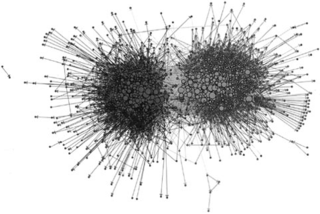
ScreenHunter_11 Jul. 24 17.21 David Easley and Jon Kleinberg’s Networks, Crowds, and Markets is one of the first textbooks on what could reasonably be called network science—the study of networks of semiautonomous but interdependent units and of the way those networks shape both the behavior of individuals and the large-scale patterns that emerge from small-scale interactions. This is, of course, a very broad description, and it’s not at all obvious that a single book should try to explain, within a common framework, information search on the Web, the spread of epidemic diseases, patterns of scientific collaboration, and much else besides. That these topics are grouped together not by rambling paranoiacs (who find connections everywhere), but by sober, mathematically minded scientists, employing a common and coherent set of concepts, testifies to a remarkable change in perception over the past few decades among scientists and the general educated public: We now see networks everywhere.

Studies dealing with what we now recognize to be social networks go back to the years around 1900, when political economists, social reformers and muckraking journalists began looking at interlocking directorates of corporate boards and other institutions through which the ruling classes (as they were then called) coordinated their actions without actually having an executive committee. People spoke of “social circles.” By the 1950s, sociologists had a notion of social networks, a concept that had a small band of enthusiastic devotees but was an esoteric idea even within mathematical social science. Even 25 years ago, the idea of networks as a form of social organization was reasonably avant-garde. (One can trace some of this evolution in Linton C. Freeman’s 2004 book, The Development of Social Network Analysis, but a proper history of the “network” concept has not yet been written.)

Nowadays, companies whose sole and explicit purpose is the formalization of social networks have hundreds of millions of active customers. (Although they are not often seen this way, these firms are massive exercises in centrally planned social engineering, inspired by sociological theories.)

More here.

The New Generation Of Molecular Tools

William McEwan at Edge.org:

ScreenHunter_09 Jul. 24 17.07 This afternoon I received in the post a slim FedEx envelope containing four small vials of DNA. The DNA had been synthesized according to my instructions in under three weeks, at a cost of 39 U.S. cents per base pair (the rungs adenine-thymine or guanine-cytosine in the DNA ladder). The 10 micrograms I ordered are dried, flaky, and barely visible to the naked eye, yet once I have restored them in water and made an RNA copy of this template, they will encode a virus I have designed.

My virus will be self-replicating, but only in certain tissue-culture cells; it will cause any cell it infects to glow bright green and will serve as a research tool to help me answer questions concerning antiviral immunity. I have designed my virus out of parts—some standard and often used, some particular to this virus—using sequences that hail from bacteria, bacteriophages, jellyfish, and the common cold virus. By simply putting these parts together, I have infinitely increased their usefulness. What is extraordinary is that if I had done this experiment a mere eight years ago, it would have been a world first and unthinkable on a standard research grant. A combination of cheap DNA synthesis, freely accessible databases, and our ever expanding knowledge of protein science is conspiring to permit a revolution in creating powerful molecular tools.

More here.

America’s attempted Quartet sophistry

Daniel Levy in Foreign Policy:

97853197_0 As more information seeps out from the Quartet principals meeting held in Washington on July 11, it becomes harder not to reach the conclusion that American policy on Israel-Palestine is now being driven almost exclusively by a desire to prevent any possible U.N. vote on the matter in the Autumn. Reading the draft text proposed as a Quartet statement by the U.S. (the text is not yet public, but the authenticity of the draft described here has been reliably confirmed) and rejected by the EU, Russia, and the U.N. Secretary General entrenches that conclusion — and worse, that the U.S. was attempting to pull something of a diplomatic fast one on the senior Quartet officials assembled. But more on that later.

First, a veritable minefield of myths that have sprung up around a possible Palestine vote at the U.N. should be debunked.

No a U.N. vote will not in practical terms deliver a sovereign Palestinian state and Israeli withdrawal and de-occupation. Nor will Israelis instantly be hauled in front of various international legal bodies as a consequence of a U.N. General Assembly (UNGA) resolution. Several other steps would have to take place subsequent to a U.N. vote for either of those things to happen and those do not flow seamlessly, one from the other.

No the U.N. Security Council or General Assembly is not an inappropriate venue for discussing or passing resolutions on the Israeli-Palestinian conflict, nor does doing so contravene previous agreements signed between the parties. It is hard to imagine a more relevant or obvious matter for the U.N. to act on. One does not have to get very far in reading the charter of the U.N. to understand that U.N. member states who are signatories to that charter would be derelict in their duties if they refused to act on the Israeli-Palestinian issue.

More here.

First Banana: Steve Carell and the meticulous art of spontaneity.

From The New Yorker:

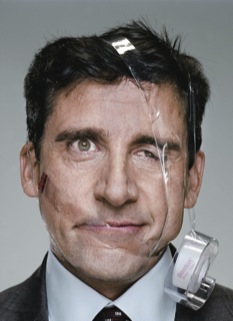
Banana What’s the smartest way to play dumb? Steve Carell carries that question around like a portable chessboard. One evening in December, he sat at a huge dining table on Stage 18 of the Paramount Studios lot, ruminating. His challenge for the next scene, part of a chaotic banquet sequence that ends the comedy “Dinner for Schmucks,” was to give the director at least five different takes—each one spontaneous, funny, and original—without ever stepping out of character. Carell was playing Barry, a sweet, beamish misfit who builds dioramas using taxidermized mice. Barry’s new pal, Tim (Paul Rudd), a silver-tongued financial analyst, has invited Barry to his boss’s house for a company dinner where everyone brings a schmuck for the execs to mock. Among the other oddballs present are a ventriloquist with a promiscuous dummy and a vulture trainer with a baleful-looking bird. The schmucks all believe it’s a “dinner for winners.”

The scene had been written as a brief shrieking fit by a schmuck named Madam Nora, a pet psychic, who suddenly channels the death agonies of the boiled-lobster entrée. But the director, Jay Roach, in search of more material, had swung his cameras around to shoot the schmucks’ reactions to Madam Nora, as well as any bits they wanted to improvise.

More here. (Note: For Ga who just visited a diorama in Louisville, KY)

Saturday, July 23, 2011

Open City

785f8da4-b3dd-11e0-8339-00144feabdc0 Pankaj Mishra reviews Teju Cole’s novel Open City, in The Financial Times:

Early in the history of the modern city, Baudelaire established, with his prose and poems about Paris, the figure of the flâneur: the peripatetic recorder of the bewildering metropolitan spectacle. Baudelaire also identified the flâneur’s natural recording instrument: “a poetic prose, musical, yet without rhythm and without rhyme, supple and jarring enough to be adapted to the soul’s lyrical movements, the undulations of reverie, to the sudden leaps of consciousness”.

Long after Baudelaire’s mid-19th-century vision, the flâneur tended to be an alienated bourgeois gentleman – such as the conservative Polish-Jewish protagonist of Saul Bellow’s novel Mr Sammler’s Planet, who walks around New York berating the city for being far too open to non-European influences. Mass global immigration has now produced another, more resourceful and cosmopolitan outsider: Julius, the flâneur-narrator of Teju Cole’s novel Open City, who is a half-Nigerian, half-German psychiatrist living in New York.

Julius’s narrative, which is held together by subtle perceptions rather than plot or strong characterisations, evokes his memories of Nigeria as well as describing his walks in New York (and Brussels, which he briefly visits). The flâneur’s prose, Baudelaire wrote, “is born, above all, from the experience of giant cities, from the intersecting of their myriad relations”. Cole fully exploits this potential for discursiveness in his narrator’s serendipitous encounters in New York.

Attitudes Towards Women, The Plough and the Hoe

20110723_fnd000 The Economist reports on research that makes the case that the choice of agricultural technology shaped, through the ages, attitudes towards women:

FERNAND BRAUDEL, a renowned French historian, once described a remarkable transformation in the society of ancient Mesopotamia. Sometime before the end of the fifth millennium BC, he wrote, the fertile region between the Tigris and the Euphrates went from being one that worshipped “all-powerful mother goddesses” to one where it was “the male gods and priests who were predominant in Sumer and Babylon.” The cause of this move from matriarchy, Mr Braudel argued, was neither a change in law nor a wholesale reorganisation of politics. Rather, it was a fundamental change in the technology the Mesopotamians used to produce food: the adoption of the plough.

The plough was heavier than the tools formerly used by farmers. By demanding significantly more upper-body strength than hoes did, it gave men an advantage over women. According to Mr Braudel, women in ancient Mesopotamia had previously been in charge of the fields and gardens where cereals were grown. With the advent of the plough, however, farming became the work of men. A new paper* by Alberto Alesina and Nathan Nunn of Harvard University and Paola Giuliano of the University of California, Los Angeles, finds striking evidence that ancient agricultural techniques have very long-lasting effects.

Long after most people have stopped tilling the land for a living, the economists find, their views about the economic role of women seem to line up with whether their ancestors ploughed or whether they hoed. Women descended from plough-users are less likely to work outside the home, to be elected to parliament or to run businesses than their counterparts in countries at similar levels of development who happen to be descended from hoe-users. The research reinforces the ideas of Ester Boserup, an economist who argued in the 1970s that cultural norms about the economic roles of the sexes can be traced back to traditional farming practices.

The Girl From F&B: A Portrait of the New India

51ZUr9ymkxL._SL500_AA300_ An excerpt from Siddhartha Deb's The Beautiful and the Damned: A Portrait of the New India, in The Nation:

Esther once worked as a waitress at Hotel Shangri-La, serving breakfast, high tea and happy hour drinks at the Horizon Club on the nineteenth floor. Some of her guests were businessmen passing through Delhi, while others maintained small but expensive office suites along the corridors twisting away from the club lounge. In the evening, these men sat in the lounge sipping Black Label Scotch with lots of ice, appreciative of the quiet, smiling demeanor with which Esther brought them their food and drinks, leaving them to talk to one another or on their BlackBerrys while outside the sheer glass windows the sun went down softly over the Parliament building and the palatial bungalows of industrialists and politicians. One of the men who sat in the club lounge was an arms dealer. I met him before I met Esther, although the reason I went to see the arms dealer was because I was looking for Esther.

All through the past few years in India, sometimes in Delhi and sometimes in other cities, I had noticed the women who worked as waitresses in cafes and restaurants and as sales assistants in retail stores. They were usually in their 20s, soft-spoken and fluent in English. In the shape of their eyes, their cheekbones and their light skin, I could read their origins in northeastern India. They were polite but slightly reticent until I spoke to them and told them that I too had grown up in the northeast. Then they seemed to open up, and often there were extra touches of attention as they served me. I flattered myself that they liked me. After all, I knew where they were from, I was generous with my tips and I thought I understood something of their loneliness in the loneliness I had felt when I began to leave my small-town origins behind and started my drift through cities. But in most ways, I wasn’t like them. I had grown up in Shillong, the most cosmopolitan of urban centers in the northeast, while the women were from Nagaland or Manipur, the first generation from these states to abandon their poor, violence-ridden homes for the globalized metropolises of the mainland. Their journey was longer and harder than mine had ever been, and although there were tens of thousands of them in Delhi alone, they were in some sense utterly isolated, always visible in the malls and restaurants but always opaque to their wealthy customers.

M.N. Roy on The “Historical Role of Islam”

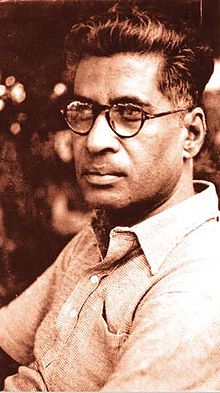
220px-Mn_roy2 I'm in Mexico City, where the house of one of my (flawed) heroes M.N. Roy, founder of both the Indian and Mexican Communist Parties, has been turned into a nightclub called M.N. Roy. (Roy later denounced Communism and became a radical humanist.) Anyway, it did remind of this essay, interesting in its capture of the spirit of debates that formed the background of Indian/Pakistani independence:

THE apparently sudden rise and the dramatic expansion of Mohammedanism constitutes a most fascinating chapter in the history of mankind. A dispassionate study of this chapter is of great importance in the present fateful period of the history of India. The scientific value of the study by itself is great, and the meritorious quest for knowledge is sure to be handsomely rewarded. But with us, to-day in India, particularly with the Hindu, a proper understanding of the historical role of Islam and the contribution it has made to human culture has acquired a supreme political importance.

This country has become the home of a very considerable number of the followers of the Arabian Prophet. One seldom realizes that many more Mohammedans live in India than in any single purely Islamic country. Still, after the lapse of many centuries, this numerous section of the Indian population is generally considered to be an extraneous element. This curious but extremely regrettable cleft in the loose national structure of India has its historical cause. The Mohammedans originally came to India as invaders. They conquered the country and became its rulers for several hundred years. That relation of the conqueror and the subjugated has left its mark on the history of our nation which to-day embraces the both. But the unpleasant memory of the past relation has been progressively eclipsed by the present companionship in slavery. The effect of British Imperialism is no less painful and ruinous for the bulk of the Muslim population than for the masses professing Hinduism. So completely have the Mohammedans become an integral part of the Indian nation that the annals of the Muslim rule are justly recorded as chapters of the history of India. Indeed, Nationalism has gone farther in effacing the painful memory of the past.

The practice of seeking consolation for the shame of the present in the real or legendary glory of the past has dressed the Muslim rulers of India in brilliant national colors.

Yet, a Hindu, who prides in the prosperity of the reign of an Akbar, or boasts of the architectural accomplishments of a Shahjehan, is even to-day separated most curiously by an unbridgeable gulf from his next door neighbor belonging to the race, or professing the faith, of those illustrious monarchs who are believed to have glorified the history of India. For the orthodox Hindus who constitute the great majority of the Indian population, the Mussulman, even of a noble birth or high education or admirable cultural attainments, is a 'mlechha'-impure barbarian-who does not deserve a social treatment any better than accorded to the lowest of the Hindus.

The cause of this singular situation is to be traced in the prejudice born, in the past, of the hatred a conquered and oppressed people naturally entertained for the foreign invader. The political relation out of which it sprang is a thing of the past. But the prejudice still persists not only as an effective obstacle to national cohesion, but also as a hindrance for a dispassionate view of history.

another Afghan misadventure

7d1d7cde-b3dd-11e0-8339-00144feabdc0

“The enterprise has proved to be a model of how not to go about such things, breaking all the rules of grand strategy: getting in without having any idea of how to get out; almost wilful misdiagnosis of the challenges; changing objectives, and no coherent or consistent plan; mission creep on an heroic scale; disunity of political and military command, also on an heroic scale; diversion of attention and resources [to Iraq] at a critical stage in the adventure; poor choice of local allies, who rapidly became more of a problem than a solution; unwillingness to co-opt the neighbours into the project, and thus address the mission-critical problem of external sanctuary and support; military advice, long on institutional self-interest, but woefully short on serious objective analysis of the problems of pacifying a broken country with largely non-existent institutions of government and security; weak political leadership, notably in subjecting to proper scrutiny militarily heavy approaches, and in explaining to the increasingly, and now decisively, sceptical domestic press and public the benefits of expending so much treasure and blood.” The history of Afghanistan is littered with examples of misguided foreign interventions, from the massacre of British imperial forces at Maiwand in 1880 to the Soviet invasion and retreat a century later. The west’s latest foray into the Afghan morass began in 2001 as a punitive US-led mission to destroy the al-Qaeda network responsible for the September 11 attacks and topple the Taliban regime that harboured Osama bin Laden’s terrorist group. It has since morphed into an altogether more ambitious venture: to establish a client state with a semblance of democracy in a hostile region with no tradition of strong independent institutions or basic human rights.

more from Lionel Barber at the FT here.

he was difficult

Chandler

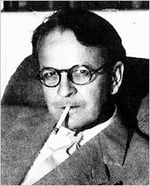
Watching the video clip, my heart raced. I’d seen the movie before, of course, but never realized what I was looking at: there, in the background of “Double Indemnity,” was Raymond Chandler. His appearance in the movie he’d help script had gone unnoticed for 55 years, until two separate researchers pointed him out in 2009. And there he was in a hallway as Fred MacMurray walked past, cigarette in hand, reading. Chandler is one of Los Angeles’ greatest writers, but his death in 1959 came before he was much captured on film — this was the first time I’d ever seen him move. It was like history had opened up and I’d reached through a window of time, seen him alive instead of as a name on the spine of a book. With Chandler, I’m always looking to connect, to create a narrative line — because while it’s both inspiring and intimidating, we have something in common: our birthday, July 23.

more from Carolyn Kellogg at the LA Times here.

über Coca

Nuland-sfSpan

On April 21, 1884, a 28-year-old researcher in the field now called neuroscience sat down at the cluttered desk of his cramped room in Vienna General Hospital and composed a letter to his fiancée, Martha Bernays, telling her of his recent studies: “I have been reading about cocaine, the effective ingredient of coca leaves,” Sigmund Freud wrote, “which some Indian tribes chew in order to make themselves resistant to privation and fatigue.” Less than a month later, Freud was writing to Bernays about the many self-experiments in which he had swallowed various quantities of the drug, finding it useful in relieving brief episodes of depression and anxiety. Later, he described how “a small dose lifted me to the heights in a wonderful fashion. I am just now busy collecting the literature” — in German, French and English — “for a song of praise to this magical substance.” That song of praise was “Über Coca,” a monograph published in July 1884 in a highly regarded journal. In his perceptive new book, “An Anatomy of Addiction,” Howard Markel points out that this landmark essay — Freud’s first major scientific publication — was in fact a turning point for the young scientist.

more from Sherwin Nuland at the NYT here.

Rest In Peace, Iftikhar Nasim

Update 07/25/11: My sister Azra Raza has now written a much longer obituary of Ifti here.

22050_100339450000985_100000747907119_6982_3031216_n A close family friend and renowned Urdu poet, Iftikhar Nasim, died in the early hours this morning in his beloved city of Chicago. Here is an excerpt from a remembrance of him by his friend Kareem Khubchandani on Facebook:

I am privileged to have met, known, and spent time with Ifti Nasim. Ifti was a gifted artist, an inspired activist, a successful businessman, and a truly spectacular being. Ifti was born in Pakistan, and moved to the U.S. to pursue an education in law, but he found that art (specifically poetry) truly moved him. He committed his life to writing, and has performed and published poetry in English, Urdu and Punjabi all over the world. His book Narman has been taken up as a source of inspiration and strength by young people in Pakistan who have had trouble reconciling their sexual orientation and gender identities with what society expects of them. Ifti has been an activist not only through his poetry, but on the ground in Chicago: establishing Sangat for LGBTQ South Asians, rallying South Asians to protest in the wake of post-9/11 hate crimes, and educating South Asians about HIV risk and prevention. Between his art-making and activism, Ifti also worked selling Mercedes cars, and prided himself on his sales skills. Every step of the way, he looked fabulous! Fur, silk, leather, diamonds, gold, sequins, glitter, wigs, makeup, ruffles, and jewelry, he wore it all in style. This is what I will remember most about Ifti, that there was always pleasure to be had; no matter how dire the situation, no matter how painful the issue, there was always pleasure to be found. Ever time I asked Ifti, “How are you?” his answer was, without fail, “Honey, I’m just trying to survive in this big, bad, heterosexual world.” But the grace, flair, and humor with which he “survived” assured me that he was doing more than just getting by, he was finding happiness in the crevices of what truly is a difficult world for an outspoken, queer, immigrant, Muslim, South Asian.

Our community has lost an important figure, but we must continue to be inspired by his activism, his art, and his exuberance. I have lost a special friend, but I will attempt to sustain the difficult work that he has done, and widen the path he has laid for queer desis in Chicago.

Here is a video of an interview with Ifti in Urdu:

Ifti (as he was known to all his friends) was one of my sister Azra's best and closest friends and several of his books are dedicated to her. I know that today will be a very difficult day for her.

The Perfect Summer Dress: First, it must be sleeveless

Geoff Dyer in Slate:

Summer So less is more—but only to a degree. If the dress is very short then it is too obviously sexual. And then, because the wearer has to make sure that the dress is not too revealing, she is all the time having to pull it down or restrict her movements, thereby contradicting one of the essential purposes of the summer dress: absolute freedom of movement. (There is an interesting potential exception to this: the tennis dress is in some ways a sub-set of the summer dress but if it has to be accompanied by special underwear—underwear designed to be seen by the world at large—then the tennis dress stops being a summer dress and becomes purely a tennis dress. In short, it is possible to play tennis in a summer dress but it is not always possible to wear a tennis dress as a summer dress.)

A summer dress always looks best without tights or stockings. It is about limbs that are either tanned or in the process of becoming so. It is an advertisement for health and fitness (as such it is defiled by any association with cigarettes). The summer dress is only incidentally sexual; as such it is far sexier than the kind of fetish clobber or lingerie on offer in Agent Provocateur. Ideally it is even worn without make-up. In the context of ball gowns, where everything is artificial and heightened, make-up does not look out of place, but the summer dress makes anything but the most discreetly applied make-up look unnatural and unhealthy.

More here.

Scientologists, Catholics and More Money Than God

From The New York Times:

Wills2-sub-popup We do not need these books to tell us that money and religion make for a poisonous combination. But it is of some interest to see that ancient truth confirmed in both a church as relatively new as Scientology and one as ancient as Roman Catholicism. Even religious leaders develop a certain swagger when they know they are backed by bundles of cash. When a French court fined Scientology nearly a million dollars, one of its officials shrugged that off as “chump change.” And when the Vatican ran a deficit of nearly 2.4 million euros in 2007, an Italian journalist familiar with the church’s finances dismissed the debt as “chopped liver.” Chump change or chopped liver, both churches have bigger sums they can get to and use, and few outsiders are given a look at how they do it. These two books trace the cash source of theological confidence.

More here.

Adapting evolutionary psychology

John Hawks in his blog:

Hawks-antica-pesa-2011 I've been reading the new paper, “Darwin in Mind: New Opportunities for Evolutionary Psychology”, in PLoS Biology. The paper, by Johan Bolhuis and colleagues [1], is an extended attack on the methods of analysis that have been most forcefully advanced by John Tooby and Leda Cosmides (mentioned by name) and David Buss (mentioned only by his institution, UT-Austin).

Bolhuis and colleagues focus on four assumptions that underlie some of the hypotheses promoted by researchers like Buss, Tooby and Cosmides:

1. Humans were once well adapted to their environment (the “environment of evolutionary adaptedness”), but recent changes to human existence have created a mismatch of some human traits with the current environment.

2. Human cognitive traits evolve slowly and gradually, so that they cannot be well adapted to recent environmental changes.

3. Human cognition occurs as an outcome of many specialized “modules” in the brain, not a few coordinated and flexible learning mechanisms.

4. Humans have the same cognitive processes whoever they are and wherever they live — in other words, mental adaptations are universal in humans.

Knowing all of these researchers, I don't think they would agree with all of this characterization. Some aspects are uncontroversial: Many humans display behaviors that appear poorly suited to current environments but may plausibly have been an advantage in past environments. Others are more reasonable than Bolhuis and colleagues present — for example I know that evolutionary psychologists usually express the “gradualism” assumption in a limited way, assuming that some cognitive adaptations are complex and therefore not likely to have arisen quickly as a result of a simple change in gene frequencies. Likewise, they do not assume that all human psychological traits are universal, but instead that those traits that appear universal are likely to have arisen in ancient environments shared by the ancestors of all humans. In short, I think the paper fails to accurately present the arguments put forward by mainstream evolutionary psychologists.

I've written on evolutionary psychology at some length, often in a very critical way (for a good example, check out this post about David Buller's critical work and evolutionary psychologists' lame response). But the idea of niche construction irritates me a lot more than evolutionary psychology ever does.

More here.