Friday Poem

Sapphics Against Anger

Angered, may I be near a glass of water;
May my first impulse be to think of Silence,
Its deities (who are they? do, in fact, they
Exist? etc.).

May I recall what Aristotle says of
The subject: to give vent to rage is not to
Release it but to be increasingly prone
To its incursions.

May I imagine being in the Inferno,
Hearing it asked: “Virgilo mio, who's
That sulking with Achilles there?” and hearing
Virgil say: “Dante,

That fellow, at the slightest provocation
Slammed phone receivers down, and waved his arms like
A madman. What Atilla did to Europe,
What Genghis Khan did

To Asia, that poor dope did to his marriage.”
May I, that is, put learning to good purpose,
Mindful that melancholy is a sin, though
Stylish at present.

Better than rage is the post-dinner quiet,
The sink's warm turbulence, the streaming platters,
The suds rehearsing down the drain in spirals
In the last rinsing.

For what is, after all, the good life save that
Conducted thoughtfully, and what is passion
If not the holiest of powers, sustaining
Only if mastered.

by Timothy Steele
from Sapphics Against Anger, 1986

Thursday, August 11, 2011

Western Secularity

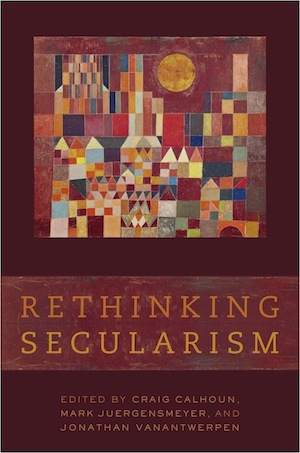
RethinkingSecularism An excerpt from Charles Taylor's piece in Rethinking Secularism, over at The Immanent Frame:

We live in a world in which ideas, institutions, artistic styles, and formulas for production and living circulate among societies and civilizations that are very different in their historical roots and traditional forms. Parliamentary democracy spread outward from England, among other countries, to India; likewise, the practice of nonviolent civil disobedience spread from its origins in the struggle for Indian independence to many other places, including the United States with Martin Luther King Jr. and the civil rights movement, Manila in 1983, and the Velvet and Orange Revolutions of our time.

But these ideas and forms of practice don’t just change place as solid blocks; they are modified, reinterpreted, given new meanings, in each transfer. This can lead to tremendous confusion when we try to follow these shifts and understand them. One such confusion comes from taking a word itself too seriously; the name may be the same, but the reality will often be different.

This is evident in the case of the word “secular.” We think of “secularization” as a selfsame process that can occur anywhere (and, according to some people, is occurring everywhere). And we think of secularist regimes as an option for any country, whether or not they are actually adopted. And certainly, these words crop up everywhere. But do they really mean the same thing in each iteration? Are there not, rather, subtle differences, which can bedevil cross-cultural discussions of these matters?

Is That All There Is? Secularism and its Discontents

110815_r21170_p465 James Wood in The New Yorker:

I have a friend, an analytic philosopher and convinced atheist, who told me that she sometimes wakes in the middle of the night, anxiously turning over a series of ultimate questions: “How can it be that this world is the result of an accidental big bang? How could there be no design, no metaphysical purpose? Can it be that every life—beginning with my own, my husband’s, my child’s, and spreading outward—is cosmically irrelevant?” In the current intellectual climate, atheists are not supposed to have such thoughts. We are locked into our rival certainties—religiosity on one side, secularism on the other—and to confess to weakness on this order is like a registered Democrat wondering if she is really a Republican, or vice versa.

These are theological questions without theological answers, and, if the atheist is not supposed to entertain them, then, for slightly different reasons, neither is the religious believer. Religion assumes that they are not valid questions because it has already answered them; atheism assumes that they are not valid questions because it cannot answer them. But as one gets older, and parents and peers begin to die, and the obituaries in the newspaper are no longer missives from a faraway place but local letters, and one’s own projects seem ever more pointless and ephemeral, such moments of terror and incomprehension seem more frequent and more piercing, and, I find, as likely to arise in the middle of the day as the night. I think of these anxieties as the Virginia Woolf Question, after a passage in that most metaphysical of novels “To the Lighthouse,” when the painter Lily Briscoe is at her easel, mourning her late friend Mrs. Ramsay. Next to her sits the poet, Augustus Carmichael, and suddenly Lily imagines that she and Mr. Carmichael might stand up and demand “an explanation” of life:

For one moment she felt that if they both got up, here, now on the lawn, and demanded an explanation, why was it so short, why was it so inexplicable, said it with violence, as two fully equipped human beings from whom nothing should be hid might speak, then, beauty would roll itself up; the space would fill; those empty flourishes would form into shape; if they shouted loud enough Mrs. Ramsay would return. “Mrs. Ramsay!” she said aloud, “Mrs. Ramsay!” The tears ran down her face.

Why is life so short, why so inexplicable? These are the questions Lily wants answered. More precisely, these are the questions she needs to ask, ironically aware that an answer cannot be had if there is no one to demand it from. We may hope that “nothing should be hid” from us, but certain explanations can only ever be hidden. Just as Mrs. Ramsay has died, and cannot be shouted back to life, so God is dead, and cannot be reimplored into existence. And, as Terrence Malick’s oddly beautiful film “The Tree of Life” reminds us, the answers are still hidden even if we believe in God. Lily Briscoe’s “Why?” is not very different from Job’s “Why, Lord?”

Animal’s Genetic Code Redesigned

_54557832_nematode Roland Pease in the BBC:

Researchers say they have created the first ever animal with artificial information in its genetic code.

The technique, they say, could give biologists “atom-by-atom control” over the molecules in living organisms.

One expert the BBC spoke to agrees, saying the technique would be seized upon by “the entire biology community”.

The work by a Cambridge University team, which used nematode worms, appears in the Journal of the American Chemical Society.

The worms – from the species Caenorhabditis elegans – are 1mm long, with just a thousand cells in their transparent bodies.

What makes the newly created animals different is that their genetic code has been extended to create biological molecules not known in the natural world.

Genes are the DNA blueprints that enable living organisms to construct their biological machinery, protein molecules, out of strings of simpler building blocks called amino acids.

Just 20 amino acids are used in natural living organisms, assembled in different combinations to make the tens of thousands of different proteins needed to sustain life.

The EU: The real sick man of Europe?

Vienna_2011_2_468x115 Therese Kaufmann, Ivan Krastev, Claus Offe, Sonja Puntscher-Riekmann,and Martin M. Simecka in Eurozine:

Therese Kaufmann: Martin Simecka, you once said that the biggest political moment for Slovakia was not 1989 but 1998, referring to a moment in Slovakian political history when the nationalist authoritarian government of Vladimir Meciar fell. You have also said that this political change was the result of a combined effort of many different groups in Slovak society: intellectuals, NGOs, media, politicians and diplomats. What is necessary for political transformation? Can Europe learn something from the Slovakian experience?

Martin Simecka: Sometimes I feel like an expert not on integration but on disintegration. I was part of the movement that brought about the disintegration of the communist empire in 1989; then I was a very sad witness to the disintegration of Czechoslovakia in 1992; and then again of a much happier event, the disintegration of Meciar's authoritarian regime in 1998. What I have learned from all this is that it's all about ideas. The communist system collapsed because it no longer had an idea of its own future. Czechoslovakia dissolved because it didn't believe in its own future. Meciar fell because society believed in ideas that were stronger and more powerful than that of his regime. In 1998 it was not only about getting rid of Meciar, it was also about becoming a part of the European Union. There was a vision for the country.

The current problem with the EU has to do with ideas. The idea of European integration has been driven by the past; by the horrors of WWII, by the Holocaust, by a long history of conflict. Today, the idea of the EU is instead driven by the future – but in a bad sense. If previously it was fear of repeating the past that pushed European integration forward and furthered peace and prosperity, today European policies are driven by fear of the future. We are afraid of increasing migration, of the consequences of the financial crisis. The future is not something that we believe in; we are afraid of it.

Not artist addicts. Not special addicts. Not entitled-to-use addicts.

Winehouse3

To the surprise of no one with the slightest sense of irony, singer Amy Winehouse, who earned a spot on iPods everywhere for saying no, no, no to rehab, died last weekend of an apparent overdose. Earlier this year, two other (less famous) celebrities, alumni of Dr. Drew Pinsky’s “Celebrity Rehab,” also died unsurprisingly from presumed overdoses: Mike Starr and Jeff Conway. Starr, formerly of the band Alice in Chains, had at one point achieved six months clean—an eternity in sobriety; but, then, it’s an insidious thing, this disease. And, lately, so is the response to it. Over on The Huffington Post, Charles Karel Bouley (“KGO Radio and Syndicated Host, Stand Up, Entertainer, Author, Actor, Dog Walker”—who doesn’t blog for HuffPo?) spends many thousands of words pondering the cruelty of the “general public” who “pass judgment on Winehouse, or any of the other host of celebrities that left too soon because of drugs, alcohol, fast cars or a myriad of other ways to die.” Let’s break that down: We, the general public, are chastised for our—un-cited—judgments of Winehouse and those other celebrities who died in, well, myriad other ways. “Those critics are not artists,” he huffs. How perfectly annoying. It’s bad enough that Bouley cannot produce one example of this supposed mass intolerance of fast cars (?!) and the like, but then he has the gall to be callous toward the “general public”—none of whom, apparently, are artists. Talk about passing judgment. “What we really should be asking,” Bouley declares, “is, why artists?”

more from Sacha Z. Scoblic at TNR here.

humanism

PicoUffizi

When we worry about machines replacing human beings, we are focused more on these alien robots than on mimetic replicants. Yet the programming of robots can, as the engineer Cecil Balmont observes, make their proper use obscure and dysfunctional, just because we have no guiding measure of what they should do for us. Neither Lanier nor Balmont are back-to-Nature romantics; they are raising questions of purpose and value in the design of machines, questions they think can only be answered by returning to the human subject. It is exactly the same question technicians in Spinoza’s generation posed about the value of the double concave lens he was a master in fabricating. I have wanted, in sum, to explain in this essay why the label “humanist” is a badge of honor, rather than the name for an exhausted worldview. Humanism’s emphasis on life-narratives, on the enriching experience of difference, and on evaluating tools in terms of human rather than mechanical complexity are all living values—and more, I would say, these are critical measures for judging the state of modern society. Looking back to the origins of these values is not an exercise in nostalgia; it is rather to remind us that we are engaged in a project, still in process, a humanism yet to be realized, of making social experience more open, engaging, and layered.

more from Richard Sennett at The Hedgehog Review here.

What distinguishes humans from animals?

TLS_McDonald_739473a

In 1386, the northern French town of Falaise witnessed an extraordinary trial – extraordinary to the modern mind, at least. A pig, “a sow of three years or thereabouts”, was arrested, held captive, tried in the local court by lawyers and magistrates, found guilty, sentenced, and finally executed for the crime of attacking a child, specifically of having “eaten the face” (mangé le visage) of a swaddled human baby. The infant died; the animal was dragged through the streets and hanged by the town’s “master of high works”, whose receipt for his fee is extant. Apparently the practice of subjecting animals to criminal prosecution, originating in France, spread to neighbouring countries and persisted for centuries, the last recorded case in Europe occurring in 1906. The episode of the homicidal sow is one of the multiple bits of zoographic evidence that informs Stage, Stake, and Scaffold, Andreas Höfele’s sophisticated study of how early modern Europeans conceived of the human being in relation to other species. Recently, Erica Fudge, Laurie Shannon and, more generally, Martha Nussbaum, Cary Wolfe and Giorgio Agamben have endeavoured to reappraise the category of Homo sapiens in different historical eras. Höfele extends their discussion by linking the early modern stage, the bear pit, and the executioner’s arena, thus addressing taxonomic questions such as: what do humans have in common with animals? What distinguishes humans from animals?

more from Russ McDonald at the TLS here.

Harvey Preisler Memorial Symposium: Dr. J. Craig Venter

As many of you know, my sister Azra has established an annual lecture in memory of her late husband Harvey. While attendance is generally by invitation only, once again I thank Azra for generously providing one hundred seats for 3QD readers. If you (and up to three guests) would like to attend the lecture, RSVP by providing your name in the comments area of this post so that you can be added to the guest list. The first 100 people to respond will be able to come. I am happy to say that my wife and I will also be there this year.

The Ninth
HARVEY PREISLER
Memorial Symposium
Saturday, August 13, 2011
9:00 a.m. to 12:00 p.m.

Dr. J. Craig Venter: From Reading to Writing the Genetic Code

Columbia University Medical Center
Myrna L. Daniels Auditorium
Vivian & Seymour Milstein Family Heart Center
173 Fort Washington Avenue
New York, NY 10032

9:00 am: Reception

9:30 am: Welcome of the honored guests and tribute to Harvey Preisler by
Sheherzad Raza Preisler

9:45 am: Introduction of Dr. J. Craig Venter by Azra Raza

10:00 am: Dr. J. Craig Venter

11:00 am: Questions and Discussion
ScreenHunter_01 Jul. 28 10.38 Harvey David Preisler, M.D., Director of Rush Cancer Institute and the Samuel G. Taylor III Professor of Medicine at Rush University, Chicago, died on May 19th 2002. The cause of death was lymphoma. Dr. Preisler grew up in Brooklyn, New York, and obtained his medical degree from the University of Rochester, NY in 1965. He trained in Medicine at New York Hospitals, Cornell Medical Center, and in Medical Oncology at the National Cancer Institute and Columbia Presbyterian Hospital in NYC. He then joined Mount Sinai hospital in NY, and subsequently moved to Roswell Park Cancer Institute in Buffalo, NY to direct the Leukemia Service there for the next 14 years. Dr. Preisler was recruited to Rush University as Director of the Cancer Institute in 1992. At the time of his death, he was the Principal Investigator of a ten million dollar grant from the National Cancer Institute in addition to several other large grants which funded his independent research laboratory with approximately 25 scientists. He published extensively including more than 350 full-length papers in peer reviewed journals, 50 books and/or book chapters and approximately 400 abstracts. He was married to Azra Raza, M.D.

A longer tribute to Harvey by Azra: http://3quarksdaily.blogs.com/3quarksdaily/2006/05/rx_harvey_david.html

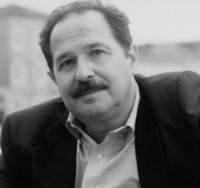
Dd-catchingup11__0497970082 J. Craig Venter is a biologist most known for his contributions, in 2001, of sequencing the first draft human genome and in 2007 for the first complete diploid human genome. In 2010 he and his team announced success in constructing the first synthetic bacterial cell. He is a founder and president of the J. Craig Venter Institute (JCVI) and founder and CEO of the company, Synthetic Genomics Inc (JCVI). His present work focuses on creating synthetic biological organisms and applications of this work, and discovering genetic diversity in the world's oceans. Dr. Venter is a 2008 National Medal of Science recipient and is a member of the National Academy of Sciences. He is the author of A Life Decoded: My Genome: My Life (Viking, 2007).

“A Broken Britain”: England’s novelists and filmmakers saw the riots coming. Why didn’t its politicians?

Tom Rachman in Slate:

London After days of rioting during which thugs often appeared more confident in the streets than the police trying to stop them, Britain was in a state of shock and trauma at this astonishing loss of control. A lockdown Tuesday night in London involving 10,000 additional police officers appeared to have restored order to the capital, but violence flared in other cities. By Wednesday morning, the authorities had reported a total of 1,335 arrests, including more than 750 in London and 300 in Manchester.

…The political class may have been caught out, but the culture betrayed signs of problems earlier, telegraphing anxieties of the law-abiding citizenry that a brutal underclass might at any moment elbow its way into their homes. Ian McEwan's 2005 novel Saturday tells of a London neurosurgeon who crosses paths with a demented thug, only to have the man invade his life and threaten his family. The book's resolution is rather optimistic, with the surgeon's daughter—forced to strip before the thug—managing to subdue him by reading poetry. Another example of these lurking worries appears in David Abbott's 2010 novel The Upright Piano Player, in which a lonely retired London ad executive is harassed by a violent sociopath, also after an unfortunate chance encounter. A more cathartic resolution came in the 2009 film Harry Brown, in which Michael Caine plays an aging military veteran who served in Northern Ireland but now finds himself in a miserable housing estate ruled by young criminals. Bloodshed ensues and the old man emerges triumphant. While novels and cinema expressed the fears of establishment Britons, pop culture was taking inspiration from the underclass, as in the comedy-drama series Shameless (now remade in a U.S. version), about a dysfunctional family in Manchester.

More here.

‘Amazing’ therapy wipes out leukemia in study

From AP News:

Killers NEW YORK (AP) – Scientists are reporting the first clear success with a new approach for treating leukemia – turning the patients' own blood cells into assassins that hunt and destroy their cancer cells. They've only done it in three patients so far, but the results were striking: Two appear cancer-free up to a year after treatment, and the third patient is improved but still has some cancer. Scientists are already preparing to try the same gene therapy technique for other kinds of cancer. “It worked great. We were surprised it worked as well as it did,” said Dr. Carl June, a gene therapy expert at the University of Pennsylvania. “We're just a year out now. We need to find out how long these remissions last.” He led the study, published Wednesday by two journals, New England Journal of Medicine and Science Translational Medicine. It involved three men with very advanced cases of chronic lymphocytic leukemia, or CLL. The only hope for a cure now is bone marrow or stem cell transplants, which don't always work and carry a high risk of death.

Dr. Kanti Rai, a blood cancer expert at New York's Long Island Jewish Medical Center, could hardly contain his enthusiasm, saying he usually is more reserved in his comments on such reports. “It's an amazing, amazing kind of achievement,” said Rai, who had no role in the research.

More here. (Note: Thanks to Akbi who read the news even before I did!)

Thursday Poem

Morning Swim

Into my empty head there come
a cotton beach, a dock wherefrom

I set out, oily and nude
through mist, in chilly solitude.

There was no line, no roof or floor
to tell the water from the air.

Night fog thick as terry cloth
closed me in its fuzzy growth.

I hung my bathrobe on two pegs.
I took the lake between my legs.

Invaded and invader, I
went overhand on that flat sky.

Fish twitched beneath me, quick and tame.
In their green zone they sang my name

and in the rhythm of the swim
I hummed a two-four-time slow hymn.

I hummed “Abide With Me.” The beat
rose in the fine thrash of my feet,

rose in the bubbles I put out
slantwise, trailing through my mouth.

My bones drank water; water fell
through all my doors. I was the well

that fed the lake that met my sea
in which I sang “Abide With Me.”

by Maxine Kumin
from Selected Poems 1960-1990 (Norton)

Wednesday, August 10, 2011

David Hume’s Impact on Causation

Hume200 Helen Beebee in The Philosopher's Magazine:

Hume’s account of causation has a good claim to being one of the most influential views in the history of philosophy. It not only set much of the agenda for large swathes of analytic philosophy in the 20th century and beyond, but it also awoke Immanuel Kant from his “dogmatic slumber” – as he put it in his Prolegomena to any Future Metaphysics – and prompted him to write the mighty Critique of Pure Reason, itself a hugely influential work and arguably the starting-point for the continental tradition in philosophy.

So why has Hume’s view on causation proved to be so influential? Well, let’s start with the state of play in philosophy at the time Hume was writing. The dominant view of causation at the time was a part of what Edward Craig (in The Mind of God and the Works of Man calls the “Image of God doctrine”. The idea here is, as the name suggests, that we are made in God’s image: our mental faculties are of course rather feeble compared to God’s, but they are of the same kind as God’s. If you were in the grip of the Image of God doctrine, you might think something like this. Our mental faculties are at their most perfect – their most God-like – when we’re engaged in a priori reasoning, for example when we’re constructing a mathematical proof. And in a mathematical proof, we can (if we’re really good at maths) just “see” or “intuit” that each successive stage of the proof follows from, or is entailed by, the preceding stage. So, if our mental faculties generally are God-like, then the same kind of thing must be going on when we turn our attention to the causal structure of the world. At least in principle, if I look at some event – the cue ball hitting the black ball in snooker, say – I can tell, just by observing that event, what must happen next: I can infer, on the basis of just that experience, what the collision will cause, just as I can in principle tell just by looking at a mathematical theorem what follows from it.

Hume’s fundamental insight when it comes to causation is that that story cannot possibly be right. No matter how hard I look, and no matter how much I know about the size and shape and weight of the balls and their position on the table, nothing whatsoever follows about what the collision is going to cause. Of course, what I expect to happen is that the black ball will move off in a certain direction and (let’s suppose) land in the corner pocket. But that is not something I can deduce just from careful observation of the collision. As Hume puts it: “If we reason a priori, any thing may appear able to produce anything”.

A Too-Modest Proposal

Inbar_36.4_palestine Avner Inbar and Assaf Sharon review Sari Nusseibeh's What Is a Palestinian State Worth?, in The Boston Review:

In the summer of 1988 Israeli authorities arrested Faisal Husseini, the Palestinian leader of East Jerusalem. The arrest came after the Israelis discovered in Husseini’s office a draft proposal for a unilateral declaration of Palestinian statehood. The document was part of an effort by the West Bank leadership to chart a political path following the eruption of the popular uprising, the intifada. Asked for his opinion of the Husseini document, the distinguished Palestinian philosopher and peace activist Sari Nusseibeh said, “The idea of declaring independence is becoming more necessary by the day. Our state will not arrive by registered mail to the main post office on Salah-al-Din street. It has to be created in stages.”

Almost a quarter century and many such stages later, the Palestinian leadership is better prepared than ever for independence. The Palestinians have been steadily building political and economic institutions in the West Bank, and just a few weeks ago Hamas and Fatah agreed to end a five-year feud and unify control of the West Bank and Gaza. Recent statements by the United Nations, World Bank, and International Monetary Fund declaring that the Palestinians are ready for statehood verify the success of these efforts. Given his past positions, Nusseibeh—now President of Al-Quds University in Jerusalem—could be expected to support these developments and the declaration of Palestinian independence scheduled for September. Yet his new book, What Is a Palestinian State Worth?, defies such expectations.

That same summer of 1988, Israel arrested and deported another Jerusalemite Palestinian, Mubarak Awad. The offense in this case was the promotion of non-violent resistance to the Israeli occupation. A Jerusalem-born, U.S.-educated psychologist who adopted Gene Sharp’s strategies of non-violent resistance, Awad returned to Palestine in 1985 to promote his philosophy among Palestinians. Two violent decades later, the practice of non-violence has spread widely among Palestinians. Every Friday hundreds of Palestinians join hands with Israelis and others to protest peacefully in the West Bank villages Bil’in, Ni’lin, Nabi Salih, Ma’asara, and Beit Ummar and in the East Jerusalem neighborhoods of Sheikh Jarrah and Silwan. Following the lead of their Egyptian counterparts, young Palestinians have been taking to the streets in Ramallah, Jenin, Hebron, Nablus, and Gaza demanding political unity and freedom. One would expect to find Nusseibeh hailing the Palestinian popular struggle, too. And once again, his new book defies expectations.

The Lost Art of Postcard Writing

Oranges_postcard_jpg_470x397_q85 Charles Simic in the NYRB blog:

Here it is already August and I have received only one postcard this summer. It was sent to me by a European friend who was traveling in Mongolia (as far as I could deduce from the postage stamp) and who simply sent me his greetings and signed his name. The picture in color on the other side was of a desert broken up by some parched hills without any hint of vegetation or sign of life, the name of the place in characters I could not read. Even receiving such an enigmatic card pleased me immensely. This piece of snail mail, I thought, left at the reception desk of a hotel, dropped in a mailbox, or taken to the local post office, made its unknown and most likely arduous journey by truck, train, camel, donkey—or whatever it was— and finally by plane to where I live.

Until a few years ago, hardly a day would go by in the summer without the mailman bringing a postcard from a vacationing friend or acquaintance. Nowadays, you’re bound to get an email enclosing a photograph, or, if your grandchildren are the ones doing the traveling, a brief message telling you that their flight has been delayed or that they have arrived. The terrific thing about postcards was their immense variety. It wasn’t just the Eiffel Tower or the Taj Mahal, or some other famous tourist attraction you were likely to receive in the mail, but also a card with a picture of a roadside diner in Iowa, the biggest hog at some state fair in the South, and even a funeral parlor touting the professional excellence that their customers have come to expect over a hundred years. Almost every business in this country, from a dog photographer to a fancy resort and spa, had a card. In my experience, people in the habit of sending cards could be divided into those who go for the conventional images of famous places and those who delight in sending images whose bad taste guarantees a shock or a laugh.

Does Philosophy Matter? (Part Two)

Fish.190 Stanley Fish in the NYT:

Some of the readers who were not persuaded by my argument that abstract moral propositions do not travel into practical contexts (see, “Does Philosophy Matter?”) offer what they take to be obvious counterexamples. Joe (187) cites “the ‘Philosophers’ Brief’ on assisted suicide that was submitted to the Supreme Court.” The example, however, counts for my side.

The brief was written by Ronald Dworkin, Thomas Nagel, Robert Nozick, John Rawls, Thomas Scanlon and Judith Jarvis Thomson (an all-star roster if there ever was one). It argues against a Washington state law prohibiting assisted suicide. The philosophers hope to persuade the Court to strike down the law by invoking a “liberty interest” all men and women have in making their own “personal decisions” about the “most intimate … choices a person may make in a lifetime” including the choice to die. “Death is, for each of us, among the most significant events of life.”

The Court alludes to this argument in passing when it acknowledges that the “decision to commit suicide with the assistance of another” may be “personal and profound.” The point, however, is summarily dismissed in the same sentence: “but it has never enjoyed … legal protection” (Washington v. Glucksberg, 1997). That is to say, while “abstract concepts of personal autonomy” (the Court’s phrase) may be interesting, they are not currency here in the world of legal deliberation. What is currency is the line of decisions preceding this one: “The history of the law’s treatment of assisted suicide in this country has been and continues to be the rejection of nearly all efforts to permit it.” Case closed. The editors of a leading jurisprudence casebook observe that “The Philosophers’ Brief arguments about autonomy seem not to have influenced the Supreme Court at all” (Jurisprudence Classic and Contemporary, 2002). Why should it have? The Court isn’t doing philosophy, it is doing law. Grand philosophical statements may turn up in a Supreme Court opinion, but they are not doing the real work.

Austerity and Anarchy

Via Crooked Timber, where Henry Farrell rightly notes, “the timing of this paper’s release is extraordinary,” a new working paper by Jacopo Ponticelli and Hans-Joachim Voth:

Does fiscal consolidation lead to social unrest? From the end of the Weimar Republic in Germany in the 1930s to anti-government demonstrations in Greece in 2010-11, austerity has tended to go hand in hand with politically motivated violence and social instability. In this paper, we assemble cross-country evidence for the period 1919 to the present, and examine the extent to which societies become unstable after budget cuts. The results show a clear positive correlation between fiscal retrenchment and instability. We test if the relationship simply reflects economic downturns, and conclude that this is not the key factor. We also analyse interactions with various economic and political variables. While autocracies and democracies show a broadly similar responses to budget cuts, countries with more constraints on the executive are less likely to see unrest as a result of austerity measures. Growing media penetration does not lead to a stronger effect of cut-backs on the level of unrest.

Whither goest thou, America, in thy shiny car at night?

Artwork_images_1011_325327_ed-ruscha

If each successive era has closed an old realm of exploration while opening up another, then what are we to make of the innovations in navigational technologies that have just gotten underway in earnest over the last ten years? The rise of digital mapping and the Global Positioning System (GPS) has seemed to come upon us almost as a matter of course, blended in with the general dawning of the digital age, and on its own relatively unremarked — but it has in a blink ushered in the greatest revolution in navigation since the map and compass. The conception of GPS by the U.S. military began in the 1960s. Satellites with extremely precise onboard clocks constantly send out packets of information containing the time and coordinate at which they were sent; navigation devices here below receive the signal and calculate the transit time and distance. By combining information from several satellites, an accurate and precise coordinate for the navigation device can be calculated. In 1983, a navigational error sent Korean Air Lines Flight 007 into restricted Soviet airspace, where it was shot down, killing all 269 people aboard; subsequently, President Reagan directed that GPS be opened up for civilian use once it had been fully implemented. This occurred in the early 1990s, when a network of satellites was put in place. Just as GPS was coming online, digital mapping applications were coming into widespread use.

more from Ari N. Schulman at The New Atlantis here.

memory’s paradox

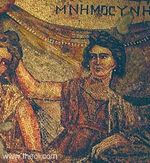
Img_mnemosyne

According to Karl Barth, a paradox is a statement “that is not made via dóxa, via ‘appearance’, but is to be understood parà tin dóxan, i.e. contrary to what the appearance as such seems to say, in order to be understood at all.”[1] Remembering and forgetting are deeply paradox human capabilities. A heightened capacity for remembering holds the promise of extended human access to the past, hence increased human sovereignty. At the same time, however, it is tied to the oppressive growth of the burden of the past, which hovers over the living like a nightmare. The burden of the past can, in turn, only be cast off through the development and cultivation of the opposite of remembrance, the ability to forget. The more we remember and thereby seemingly extend our power, the more are we in need of its opposite ability, forgetting. Forgetfulness ceases to be a fault – as it is generally understood – and becomes, as Nietzsche says, an “active, strictly speaking positive, capacity for restraint”. We need it like a “gatekeeper”, an “keeper of the order of the soul, calmness, etiquette”.

more from Helmut König at Eurozine here.

Beyond the Hero Syndrome

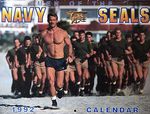
Navyseals

With apologies to the authors of the Old Testament, the popular myths of war heroes could well have started with the sacking of Troy, as recorded by Homer circa 850 BC. But in the telling of the Greek poets, heroes weren’t exactly winners. The higher they went, the deeper they fell. However, sometime between then and the mid-twentieth century, the tragedy that clung like a gray ghost to military heroes in the Western tradition withered away. Today there’s hardly an ironic note, much less a tragic one, to be found in accounts of the so-called war on terror. Counterinsurgency does not lend itself to Homeric heroes. Even when Julius Caesar paraded Vercingetorix, the captured leader of the Gauls, through Rome in a victory celebration, everybody knew something bad was going to happen. In today’s counter-insurgency engagements, there are no Berlins or Tokyos to be sacked. Victories are short, dirty, ambiguous, morally questionable, and often inconsequential. From the muck of the war on terror, heroes have to be invented. Take, for example, reports on the last breaths of Osama bin Laden.

more from Jeff Stein at Bookforum here.