
Leon Vlieger at The Inquisitive Biologist:
 Entomologist Erica McAlister, the Curator of Diptera at the Natural History Museum, London (NHM), has previously written two popular science books on flies, The Secret Life of Flies and The Inside Out of Flies. Her mission is to change your mind not just about flies, but, as Metamorphosis shows, about insects in general. In her third book with the NHM, she teams up with radio producer Adrian Washbourne with whom she worked on the 10-part BBC Radio 4 series Metamorphosis: How Insects Are Changing Our World
 that formed the basis for this book. A delightful potpourri of entomology, Metamorphosis is particularly strong on the science history front and further solidifies McAlister’s reputation as a science communicator par excellence.
Metamorphosis is the same size as the preceding two books on flies, a small 14 × 20 cm hardback that is illustrated throughout. Its ten chapters, clocking in at 20 pages or fewer, each focus on one particular group of insects that stand out for one reason or another. The authors examine the biomechanical and biochemical details that allow fleas to jump so far. They explain how Darwin predicted (correctly) the existence of a hawkmoth species with an exceptionally long tongue by examining an equally exceptional orchid. Plus, there is an engrossing chapter on blowflies and their role in forensic entomology, a topic I find particularly fascinating.
More here.
Enjoying the content on 3QD? Help keep us going by donating now.
 I am an
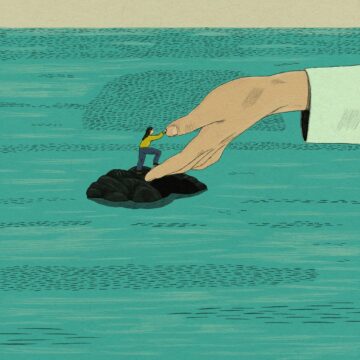 Here are two abortion stories. Both are mine. Both came with heartache and upheaval — and both prevented heartache and upheaval. One was an experience common to
  “People look for themselves
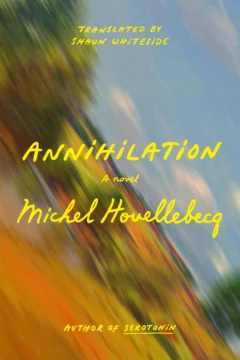 I THINK I’M GOING TO LEARN FRENCH, if only to keep up with Michel Houellebecq. The aging bad boy of letters has been embroiled in a fresh crop of scandals these past few years, the plotlines worthy of an X-rated soap opera on Canal+. First there’s his legal battle with Dutch art collective KIRAC—they collaborated on a pornographic film project together, in which audiences would have seen Houellebecq having sex with women other than his wife. He seems to have gotten cold feet after the trailer was teased, even though he’d already signed a release form. Then there are the accusations of plagiarism surrounding his 2015 novel Submission, which imagined France embracing Sharia law. Speaking of which, Houellebecq has also apologized for offensive comments he made in an interview published in Front Populaire. Meanwhile, Meta’s AI tool has refused point-blank to write in his style. A short memoir titled A Few Months of My Life (Quelques mois dans ma vie: Octobre 2022–Mars 2023) was published last year, in which Houellebecq gave his account regarding some of these stories. Sadly, this has yet to be translated into English. Which brings me to my main reason for taking French lessons: I want to read his damn
 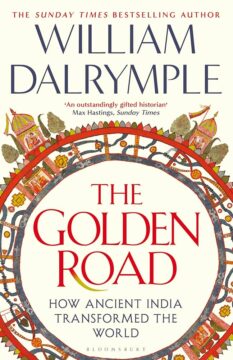 After writing a string of award-winning books on India, the historian and literary phenomenon William Dalrymple has forsaken the glamour of the Mughals and the murky dealings of the English East India Company to look beyond the Indian subcontinent and make the case for the existence of a wider, pre-Islamic ‘Indosphere’. His aim in The Golden Road is, he says, ‘to highlight India’s often forgotten position as a crucial economic fulcrum, and civilisational engine, at the heart of the ancient and early medieval worlds and as one of the main motors of global trade and cultural transmission in early world history, fully on a par with and equal to China.’
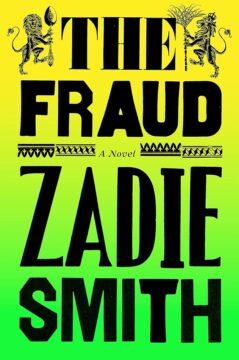 Sometimes you stumble across a line in a book and think, “Yeah, that’s exactly how that feels.” I had that moment reading the introduction to Zadie Smith’s 2018 book of essays,
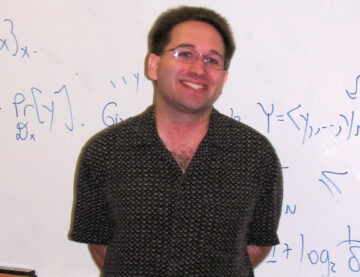 When Rafi invited me to open this event, it sounded like he wanted big-picture pontification more than technical results, which is just as well, since I’m getting old for the latter. Also, I’m just now getting back into quantum computing after a two-year leave at OpenAI to think about the theoretical foundations of AI safety. Luckily for me, that was a relaxing experience, since not much happened in AI these past two years. [Pause for laughs] So then, did anything happen in quantum computing while I was away?
 It’s election season, which means a return to the quadrennial tradition of
 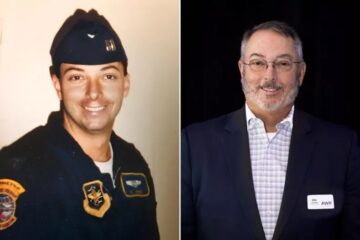 My family has always served in the military. My father was one of six brothers. They all went to World War Two, each in a different service and theater, and all came home. I was around 10 when my brother-in-law was in Vietnam, which was impactful, and my sister was an Air Force nurse. I always wanted to follow their example and serve in the military and was passionate about serving the United States of America as part of something bigger than myself. Originally, I wanted to be a pilot, but I didn’t realize until I went to the military recruiter that I was colorblind, so I didn’t qualify for flight status as a pilot. However, I had gone through nursing school. So, I joined the Air Force as a nurse and was assessed into its aeromedical evacuation program, which is the long-range movement of patients. This program gave me opportunities to fly, see the world, and care for wounded, ill, or injured. After joining, I served around the globe: In Iraq in both Gulf Wars, Somalia during the 1990s, Afghanistan late in the Soviet invasion, demining missions in Vietnam and Cambodia, work in Central America, and the Global War on Terror around the world.
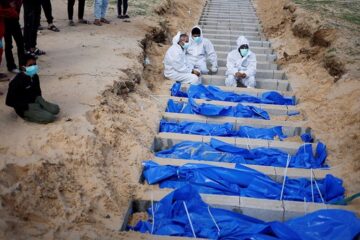 Since war broke out in the Gaza Strip almost a year ago, the official number of Palestinians killed exceeds 41,000. But this number has stoked controversy. Some researchers think it is an underestimate, owing to the difficulties of trying to count dead people during conflicts. Other sources say it overestimates the number of casualties. The count comes from the Palestinian Ministry of Health — Gaza, the main institution counting mortality in the region. It’s important to track fatalities during wars — and to estimate overall mortality — to hold warring parties accountable and to advocate for the protection of civilians, says Zeina Jamaluddine, an epidemiologist at the London School of Hygiene & Tropical Medicine. The number of deaths also informs discussions around when to officially declare that a situation involves famine.
 All men are brothers.” (Women too, of course.) If asked to agree or disagree with this statement, taken in a normative sense, most people would agree. At the moment, Ukrainians might make an exception for Russians, and Israelis and Palestinians for one another—though even they, if they listened to the better angels of their nature, might come around.