
Joseph M Keegin at Aeon Magazine:
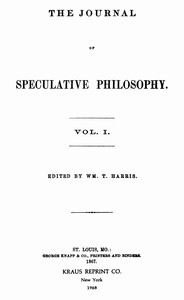 The prairie schools of philosophy were not just local curiosities; over the course of their roughly three decades of existence, they exerted a lasting influence on US intellectual culture, however much they themselves have been forgotten. They encouraged the growth of similar philosophical societies from the Midwest to the Eastern seaboard, in places like Chicago, Philadelphia and Massachusetts; they established a model for small-group adult education, contrasted with, for instance, the popular Lyceum model of the large public lecture; and they rekindled an interest in the study of classical, Medieval and early modern philosophy and literature among US thinkers who, influenced by transcendentalism and pragmatism, were all too often focused on what was simply useful or new.
‘We have listened too long to the courtly muses of Europe,’ Ralph Waldo Emerson had bemoaned in his speech ‘The American Scholar’ (1837). The philosophers of the prairie had no such complaint with the minds of the Old World.
more here.
Enjoying the content on 3QD? Help keep us going by donating now.
 T
T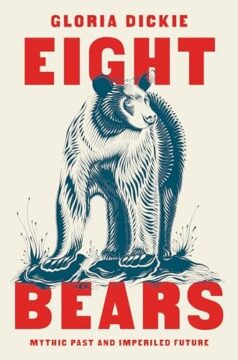 Though bears loom large in our collective imagination, their flesh-and-blood counterparts are increasingly losing ground. Eight Bears, the debut of environmental journalist Gloria Dickie, draws on visits to key hotspots where Earth’s remaining bear species come into conflict with humans. By interviewing scores of people, both conservationists and those suffering at the paws of these large predators, this nuanced and thought-provoking reportage asks whether humans and bears can coexist.
 In the
 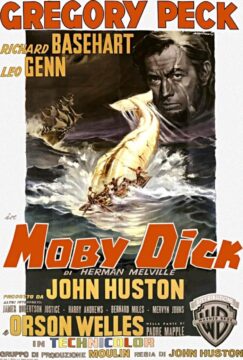 SEVENTY YEARS AGO, Ray Bradbury, then 33 years old—the author of The Martian Chronicles (1950), The Illustrated Man (1951), and Fahrenheit 451 (1953)—stood in front of a mirror in a London hotel room and declared, “I … am Herman Melville!” It was a last-ditch effort to channel the great American writer of Moby-Dick (1851). For Bradbury, it was either that or accept complete failure.
 A
A Depression doesn’t mean you’re always feeling low. Sure, most times it’s hard to crawl out of bed or get motivated. Once in a while, however, you feel a spark of your old self—only to get sucked back into an emotional black hole. There’s a reason for this variability. Depression changes brain connections, even when the person is feeling okay at the moment. Scientists have long tried to map these alternate networks. But traditional brain mapping technologies average multiple brains, which doesn’t capture individual brain changes.
 In 2009, A US security intelligence operative stationed in Iraq began to notice some gaps in the American government’s “surgical precision” drone strategy. “I was trained to be an all-source analyst,” writes Chelsea Manning in her memoir, README.TXT (2022). “I’m used to collecting the full context and getting—and sharing—as much detail as possible.”
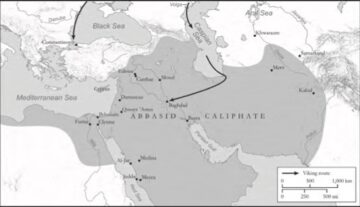 In the eighth-century CE the Abbasids undertook to collect the wisdom of the world in their new capital at Baghdad. This project started with the second Abbasid caliph, al-Mansur (“the Conqueror,” r. 754–74), who commissioned Arabic translations of important scientific texts from Persian, Sanskrit, Greek, and Syriac (a late form of Aramaic), and came into its own under al-Ma’mun (“the Trusted One,” r. 813–33).
 O
O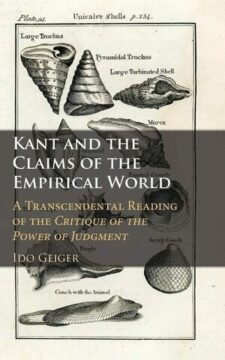 Readers of Kant’s third Critique, the Critique of the Power of Judgment, are presented with a set of puzzles about the unity, indeed, the very existence, of the very book before them: why did Kant think his critical system was ‘incomplete’ without a critique of the power of judgment, and why would such a critique complete that system? Why must that critique contain a critique of aesthetic judgment and a critique of teleological judgment? Are each equally necessary to the critical project? To borrow a trope from Kant himself, is this book a mere aggregate of its parts, or is it unified by an idea of the whole that determines those parts? And if so, what is that idea, and does it determine that the third Critique must have these, and only these, parts (no more, no fewer)?
 We tend to think
 Turmeric has been used as a spice and medicine for thousands of years. And in recent decades, it’s become popular as a dietary supplement, often sold as curcumin — a chemical compound found in dried turmeric — with claims that it can soothe joint pain, reduce inflammation and improve mobility. In Thailand, turmeric is also often consumed in its spice or supplement form to quell gastrointestinal symptoms like bloating and indigestion, said Dr. Krit Pongpirul, an associate professor of preventive and social medicine at Chulalongkorn University in Bangkok. But only a few
 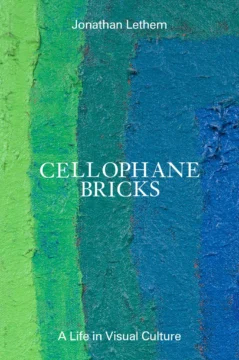 JONATHAN LETHEM is perhaps best known as a writer of pastiche-driven, omnidirectionally intelligent fiction. His novels include a Chandler-inspired detective story (Gun, with Occasional Music), an academic satire (As She Climbed Across the Table), and a work of entrancing social realism (Fortress of Solitude). His latest book, Cellophane Bricks, arrives at genre-mixing fiction via a slightly different angle. Modestly subtitled “A Life in Visual Culture,” the work is a multivalent, multiform achievement: a portrait of the writer as a young artist, a valentine to Lethem’s artist father, an Aladdin’s cave of allusions. Many of the pieces in the collection were occasioned by artists inviting Lethem to write something to accompany their art or exhibitions. He adhered to a personal rule of responding to these requests with stories, with “scenes and situations and voices, characters and set pieces, sprung from my response to the art.” “Sprung” is key here: There’s a sense, throughout the book, of Lethem cutting his own desire path away from traditional/scholarly approaches to art writing, crafting scenes and situations swagged with idiosyncrasy and refreshingly unburdened by what Nietzsche called a “columbarium of concepts.”
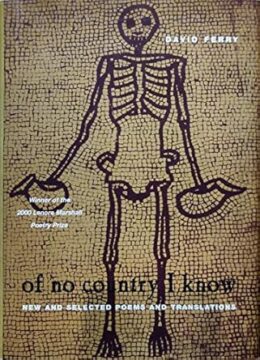 I first read “Johnson on Pope” by David Ferry in his 1960 first book, On the Way to the Island. I felt immediately that I had learned something about the art of poetry. Ferry’s poem demonstrated the crucial difference between prose and poetry as vocal: a matter of sound. That limited, technical point had its power.