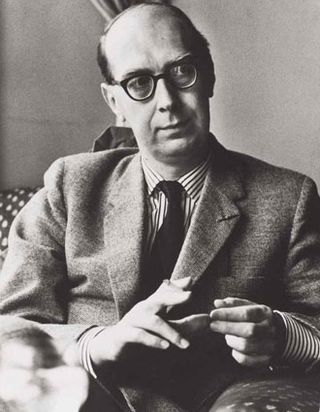
Wednesday Poem

Winter

I don't know what to say to you, neighbor,
as you shovel snow from your part of our street
neat in your Greek black. I've waited for
chance to find words; now, by chance, we meet.

We took our boys to the same kindergarten,
thirteen years ago when our husbands went.
Both boys hated school, dropped out feral, dropped in
to separate troubles. You shift snow fast, back bent,
but your boy killed himself, six days dead.

My boy washed your wall when the police were done.
He says, “We weren't friends?” and shakes his head,
“I told him it was great he had that gun,”
and shakes. I shake, close to you, close to you.
You have a path to clear, and so you do.

by Marie Ponsot
from Springing -New and Selected Poems
Knopf, 2002

Tuesday, August 30, 2011

Debating “Guilty Pleasures”

Vinyl Over in the blogosphere, a debate seems to be emerging. So far Atrios, Matthew Yglesias, Amanda Marcotte and Lindsay Beyerstein have weighed in. Lindsay:

Good taste can be idiosyncratic, in fact, it's expected to be. You're supposed to like what you like for your own well-thought-out reasons, and not just like what everyone else likes. (There are also shared cultural and class standards of “good taste,” but those aren't what I'm talking about.)

Someone with taste has a well fleshed-out theory about what makes a work of art good or bad. The cultivated observer is supposed to be able to see something new and rigorously scrutinize it according to their code…

Having coherent reasons for your preferences is integral to the concept of good taste. You're supposed to be able to recognize a band that swings hard, or a rocking baseline, or witty lyrics, or whatever you think is important in music.

You gain status for your good taste if you can reliably pick stuff that other people will like. You can't be capricious. If you recommend songs strictly because they have sentimental value for you, they're unlikely to appeal to other people. You have to appeal to shared musical values.

“Guilty pleasures” are things people like but can't justify liking. The concept of a guilty pleasure only makes sense if you try to live by an aesthetic code in the first place.

False world, good-night!

110829_POEM_benjonson_TN

Washington, Hollywood, Wall Street, the Pentagon: These names have a social meaning apart from geography. Each one indicates a certain world of activity—and the word world, in its primary sense, refers not to a planet but to the realm of human doings. The dictionary tells me that the Old English “weoruld” means something like “human life” or “age of man.” Worldly has an ambiguous, shifting place on the scale from negative to positive adjectives. To be unworldly might signify being a dupe, and worldly knowledge is desirable. Too much worldly knowledge, though, may suggest a villain played by Alan Rickman. Those good and bad connotations are epitomized by another place name that, in 16th- and 17th-century England, was a synonym for “the world” in the urbane, social sense: the royal court. In Ben Jonson’s time, the court was all of the above. It was Washington and Hollywood, the Pentagon and Wall Street, and more: a single seat of all kinds of power, concentrated in a few buildings in one city, a worldly magnet attracting all the most ambitious, gifted people in the worlds of art, money, politics, religion, sex, learning, and glamour. The court embodied worldliness at its most alluring and at its most treacherous.

more from Robert Pinsky at Slate here.

the hazare thing

Annahazare

IN THE past week, the world has been captivated by the bitter confrontation between the Indian government and a short, bespectacled seventy-four-year-old man named Anna Hazare, a self-styled anti-corruption crusader. On August 16, Hazare’s arrest and internment in Tihar Jail, South Asia’s largest complex of high-security prisons, sparked candlelit marches across the country, leading a shaken government to order his release in less than twelve hours. In a stunning turnaround, Hazare refused to leave, insisting that the government remove all conditions on his “fast-unto-death” in protest of the government’s recent anti-corruption legislation, which he feels is not strong enough. Hazare walked out of Tihar a national hero on August 20 and is currently lodged within the expansive public grounds of Delhi’s Ramlila Maidan, surrounded by tens of thousands of supporters, national flags, and mammoth portraits of Mohandas Karamchand (“Mahatma”) Gandhi. Today (Wednesday) is the ninth day he has refused to eat. As an admirer of Gandhi’s, I have found the ceaseless comparisons of Hazare with Gandhi—propagated by the media, Hazare’s supporters, and Hazare himself—troubling and inappropriate. I am not alone in my reservations about Hazare, who is not a popular figure within left and progressive circles in India. His movement has been portrayed, so far accurately, as a narrow, middle-class, upper-caste phenomenon that is dangerously tinged with authoritarianism and Hindu nationalism.

more from Mitu Sengupta at Dissent here.

anti-inflator

Theiword2__1314385425_1118

LIKE CORRUPTION, crime, and asbestos, “inflation” is a word that many Americans imagine in all-red capital letters, flashing across TV screens amid warnings of crisis. For anyone who remembers the gloomy, scary 1970s, when the inflation rate in the United States reached double digits, the word is shorthand for an economy that has spiraled out of control, the dollar losing value and prices climbing feverishly. “Inflation is as violent as a mugger, as frightening as an armed robber, and as deadly as a hit man,” said Ronald Reagan in 1978, as nervous citizens imagined the day when they’d have to push a wheelbarrow full of cash to the grocery store in order to buy a loaf of bread. That particular nightmare never came to pass, thanks to drastic measures taken by the Federal Reserve. For the better part of the past 30 years, the dollar has stayed stable, reassuring American families and the nation’s trading partners, with the central bank standing guard over the economy and doing everything necessary to keep inflation low. You might say that Kenneth Rogoff has been one of the guards. As a research economist at the Federal Reserve during the first half of the 1980s, he helped ensure that the word “inflation” would never again flash across American TV screens.

more from Leon Neyfakh at the Boston Globe here.

Research team turns terabytes of image data into model of neural circuits

Sarah Zhang in The Harvard Gazette:

SEAS_Hanspeter_380 The brain of a mouse measures only 1 cubic centimeter in volume. But when neuroscientists at Harvard’s Center for Brain Science slice it thinly and take high-resolution micrographs of each slice, that tiny brain turns into an exabyte of image data. That’s 1018 bytes, equivalent to more than a billion CDs.

What can you do with such a gigantic, unwieldy data set? That’s the latest challenge for Hanspeter Pfister, the Gordon McKay Professor of the Practice of Computer Science at Harvard’s School of Engineering and Applied Sciences (SEAS).

Pfister, an expert in high-performance computing and visualization, is part of an interdisciplinary team collaborating on the Connectome Project at the Center for Brain Science. The project aims to create a wiring diagram of all the neurons in the brain. Neuroscientists have developed innovative techniques for automatically imaging slices of mouse brain, yielding terabytes of data so far.

Pfister’s system for displaying and processing these images would be familiar to anyone who has used Google Maps. Because only a subsection of a very large image can be displayed on a screen, only that viewable subsection is loaded. Drag the image around, zoom in or out, and more of the image is displayed on the fly.

This “demand-driven distributed computation” is the central idea behind Pfister’s work, for which he recently won a Google Faculty Research Award.

More here. [Thanks to Sughra Raza.]

Dan Ariely: The field of financial advice is quite strange

Dan Ariely in his blog:

ScreenHunter_01 Aug. 30 16.11 For the most part, professional financial services rely on clients’ answers to two questions:

  1. How much of your current salary will you need in retirement?
  2. What is your risk attitude on a seven-point scale?

From my perspective, these are remarkably useless questions — but we’ll get to that in a minute. First, let’s think about the financial advisor’s business model. An advisor will optimize your portfolio based on the answers to these two questions. For this service, the advisor typically will take one percent of assets under management – and he will get this every year!

Not to be offensive, but I think that a simple algorithm can do this, and probably with fewer errors. Moving money around from stocks to bonds or vice versa is just not something for which we should pay one percent of assets under management.

Actually, strike that. It’s not something we should do anyway, because making any decisions based on answers to those two questions don’t yield the right answers in the first place.

To this point, we’ve run a number of experiments. In one study, we asked people the same question that financial advisors ask: How much of your final salary will you need in retirement? The common answer was 75 percent. But when we asked how they came up with this figure, the most common refrain turned out to be that that’s what they thought they should answer. And when we probed further and asked where they got this advice, we found that most people heard this from the financial industry. Sort of like two months salary for an engagement ring and one-third of your income for housing, 75 percent was the rule of thumb that they had heard from financial advisors. You see the circularity and the inanity: Financial advisors are asking a question that their customers rely on them for the answer. So what’s the point of the question?!

More here.

The Roots of the Islamophobia Network in America

Wajahat Ali, Eli Clifton, Matthew Duss, Lee Fang , Scott Keyes, and Faiz Shakir at the Center for American Progress:

Islamophobia_onpage A small group of foundations and wealthy donors are the lifeblood of the Islamophobia network in America, providing critical funding to a clutch of right-wing think tanks that peddle hate and fear of Muslims and Islam—in the form of books, reports, websites, blogs, and carefully crafted talking points that anti-Islam grassroots organizations and some right-wing religious groups use as propaganda for their constituency.

Some of these foundations and wealthy donors also provide direct funding to anti-Islam grassroots groups. According to our extensive analysis, here are the top seven contributors to promoting Islamophobia in our country:

  • Donors Capital Fund
  • Richard Mellon Scaife foundations
  • Lynde and Harry Bradley Foundation
  • Newton D. & Rochelle F. Becker foundations and charitable trust
  • Russell Berrie Foundation
  • Anchorage Charitable Fund and William Rosenwald Family Fund
  • Fairbrook Foundation

Altogether, these seven charitable groups provided $42.6 million to Islamophobia think tanks between 2001 and 2009—funding that supports the scholars and experts that are the subject of our next chapter as well as some of the grassroots groups that are the subject of Chapter 3 of our report.

And what does this money fund?

More here.

The Genius in My Basement

From Guardian:

Book In 2008, at a Downing Street reception, Gordon Brown presented a young man, a member of Plane Stupid, with a Transport Campaigner of the Year award. During the ceremony, the young man superglued himself to the premier's sleeve. The prize is sponsored – £10,000 a year – by Simon Phillips Norton, a rich recluse and public-transport obsessive who lives, surrounded by timetables, ticket-stubs, packets of Batchelors Savoury Rice, in a run-down multi-occupancy house in Cambridge. A former child prodigy, he is still believed to be one of the world's great living mathematicians, although he hasn't held down an academic position since 1985, when he was 33. And he used to be Alexander Masters's live-in landlord, which is how he comes to find himself the subject of this book.

I don't like your books, Alex,” Simon says in the epigraph to one of Masters's chapters. “Your representation of me as interesting is inaccurate,” he says in another. “You must be very careful not to jump to easy answers,” says John Horton Conway, a fellow mathematician. “Oh dear, I have a feeling this book is going to be a disaster for me,” Simon comments in the epigraph to the book.

More here.

The New Generation of Microbe Hunters

Gina Kolata in The New York Times:

Bac The first bacterial genome was sequenced in 1995 — a triumph at the time, requiring 13 months of work. Today researchers can sequence the DNA that constitutes a micro-organism’s genome in a few days or even, with the latest equipment, a day. (Analyzing it takes a bit longer, though.) They can simultaneously get sequences of all the microbes on a tooth or in saliva or in a sample of sewage. And the cost has dropped to about $1,000 per genome, from more than $1 million. In a recent review, Dr. David A. Relman, a professor of medicine, microbiology and immunology at Stanford, wrote that researchers had published 1,554 complete bacterial genome sequences and were working on 4,800 more. They have sequences of 2,675 virus species, and within those species they have sequences for tens of thousands of strains — 40,000 strains of flu viruses, more than 300,000 strains of H.I.V., for example. With rapid genome sequencing, “we are able to look at the master blueprint of a microbe,” Dr. Relman said in a telephone interview. It is “like being given the operating manual for your car after you have been trying to trouble-shoot a problem with it for some time.”

Dr. Matthew K. Waldor of Harvard Medical School said the new technology “is changing all aspects of microbiology — it’s just transformative.” One group is starting to develop what it calls disease weather maps. The idea is to get swabs or samples from sewage treatment plants or places like subways or hospitals and quickly sequence the genomes of all the micro-organisms. That will tell them exactly what bacteria and viruses are present and how prevalent they are. With those tools, investigators can create a kind of weather map of disease patterns. And they can take precautions against ones that are starting to emerge — flu or food-borne diseases or SARS, for example, or antibiotic-resistant strains of bacteria in a hospital.

More here.

Monday, August 29, 2011

Patricia Churchland to Judge 3rd Annual 3QD Philosophy Prize

UPDATE 9/19/11: The winners have been announced here.

UPDATE 9/13/11: The list of finalists can be seen here.

UPDATE 9/12/11: The list of semifinalists can be seen here.

UPDATE 9/6/11: Voting round now open. Click here to see full list of nominees and vote.

Dear Readers, Writers, Bloggers,

Patricia-churchland-258x258 We are very honored and pleased to announce that Professor Patricia Churchland has agreed to be the final judge for our 3rd annual prize for the best blog writing in philosophy. (Details of the inaugural prize, judged by Daniel C. Dennett, can be found here, and more about last year's prize, judged by Akeel Bilgrami can be found here.)

The following biographical sketch is from Professor Churchland's Wikipedia entry:

Patricia Smith Churchland (born July 16, 1943 in Oliver, British Columbia, Canada) is a Canadian-American philosopher noted for her contributions to neurophilosophy and the philosophy of mind. She has been a Professor at the University of California, San Diego (UCSD) since 1984. Since 1999 she has been UC President's Professor of Philosophy at UCSD, and has held an adjunct professorship at the Salk Institute for Biological Studies since 1989. Educated at the University of British Columbia, the University of Pittsburgh, and the University of Oxford (B.Phil.). She taught philosophy at the University of Manitoba from 1969 to 1984 and is the wife of philosopher Paul Churchland.

9780262530859-f30 On her own website, Professor Churchland describes her work as follows:

The central focus of my research has been the exploration and development of the hypothesis that the mind is the brain. My first book, Neurophilosophy (1986), argued in detail for a co-evolution of psychology, philosophy and neuroscience to answer questions about how the mind represents, reasons, decides and perceives. A major unanswered question in Neurophilosophy concerned the theoretical apparatus needed to bridge the gap between lower and higher levels of brain organization. I turned to this task in 1987, and began to collaborate with Terry Sejnowski on the book The Computational Brain (MIT 1992).

Patricia Churchland won a MacArthur (“Genius”) Award in 1991. She has also served as president of the American Philosophical Association (Pacific Division) and the Society for Philosophy and Psychology.

As usual, this is the way it will work: the nominating period is now open, and will end at 11:59 pm EDT on Spetember 5, 2011. There will then be a round of voting by our readers which will narrow down the entries to the top twenty semi-finalists. After this, we will take these top twenty voted-for nominees, and the four main editors of 3 Quarks Daily (Abbas Raza, Robin Varghese, Morgan Meis, and Azra Raza) will select six finalists from these, plus they may also add up to three wildcard entries of their own choosing. The three winners will be chosen from these by Professor Churchland.

The first place award, called the “Top Quark,” will include a cash prize of one thousand dollars; the second place prize, the “Strange Quark,” will include a cash prize of three hundred dollars; and the third place winner will get the honor of winning the “Charm Quark,” along with a two hundred dollar prize.

(Welcome to those coming here for the first time. Learn more about who we are and what we do here, and do check out the full site here. Bookmark us and come back regularly, or sign up for the RSS feed.)

Details:

PrizePhilosophyAnnounce2011 The winners of this philosophy prize will be announced on September 19, 2011. Here's the schedule:

August 29, 2011:

  • The nominations are opened. Please nominate your favorite philosophy blog entry by placing the URL for the blog post (the permalink) in the comments section of this post. You may also add a brief comment describing the entry and saying why you think it should win. (Do NOT nominate a whole blog, just one individual blog post.)
  • Blog posts longer than 4,000 words are strongly discouraged, but we might make an exception if there is something truly extraordinary.
  • Each person can only nominate one blog post.
  • Entries must be in English.
  • The editors of 3QD reserve the right to reject entries that we feel are not appropriate.
  • The blog entry may not be more than a year old. In other words, it must have been written after August 28, 2010.
  • You may also nominate your own entry from your own or a group blog (and we encourage you to).
  • Guest columnists at 3 Quarks Daily are also eligible to be nominated, and may also nominate themselves if they wish.
  • Nominations are limited to the first 200 entries.
  • Prize money must be claimed within a month of the announcement of winners.

September 5, 2011

  • The nominating process will end at 11:59 PM (NYC time) of this date.
  • The public voting will be opened soon afterwards.

September 11, 2011

  • Public voting ends at 11:59 PM (NYC time).

September 19, 2011

  • The winners are announced.

One Final and Important Request

If you have a blog or website, please help us spread the word about our prizes by linking to this post. Otherwise, post a link on your Facebook profile, Tweet it, or just email your friends and tell them about it! I really look forward to reading some very good material, and think this should be a lot of fun for all of us.

Best of luck and thanks for your attention!

Yours,

Abbas

Sunday, August 28, 2011

Ugly? You May Have a Case

28Graymatter-articleInline Daniel Hamermesh in the NYT:

Beauty is as much an issue for men as for women. While extensive research shows that women’s looks have bigger impacts in the market for mates, another large group of studies demonstrates that men’s looks have bigger impacts on the job.

Why this disparate treatment of looks in so many areas of life? It’s a matter of simple prejudice. Most of us, regardless of our professed attitudes, prefer as customers to buy from better-looking salespeople, as jurors to listen to better-looking attorneys, as voters to be led by better-looking politicians, as students to learn from better-looking professors. This is not a matter of evil employers’ refusing to hire the ugly: in our roles as workers, customers and potential lovers we are all responsible for these effects.

How could we remedy this injustice? With all the gains to being good-looking, you would think that more people would get plastic surgery or makeovers to improve their looks. Many of us do all those things, but as studies have shown, such refinements make only small differences in our beauty. All that spending may make us feel better, but it doesn’t help us much in getting a better job or a more desirable mate.

A more radical solution may be needed: why not offer legal protections to the ugly, as we do with racial, ethnic and religious minorities, women and handicapped individuals?

Company Man

CompanyMan Salil Tripathi in Caravan:

[Sanjiv] Mehta is very proud of his shop on Conduit Street. It is called The East India Company.

Yes, the same one. In one of history’s ironic twists, a Gujarati man born in Bombay now owns the company that was set up at Leadenhall Street at the end of the 16th century by British traders and merchants who went around the globe looking for a good cuppa and some spices and ended up colonising half the world—including India, the jewel in the crown—before collapsing in 1873. The company has been revived, but now it sells luxury teas, coffees, chocolates, jams, biscuits and chutneys. The minimalist 2,000 sq ft shop has a staff of 35, and aims to rake in £6 million (433 million) in its first year.

To be sure, The East India Company had ceased to operate when it was dissolved in 1873, its balance sheet smeared with red ink, as its income simply could not cover the cost of maintaining the empire it had built. After setting up trading operations in India in the 17th century, it had rapidly transformed from a mercantilist trading firm into a state, taking over territory, minting currency and maintaining its own army. The Sepoy Mutiny of 1857 (as the British view what Indians call the first war of independence) delegitimised the company’s political role in the eyes of the British establishment. Queen Victoria took over the governance of India in 1858; 15 years later, the debt-ridden company was dissolved.

But sometime in the 1980s, a group of British investors came together, and sought government approval to begin trading using the company’s title, in effect reviving it. Few knew about it then; the investors didn’t make any plans public, keeping a low profile.

One of the commodities they traded in was tea, and it was to Mehta that they turned for the trades. He saw huge potential in rebuilding the brand, even though he knew buying the company from a group of investors would be a daunting, time-consuming project. He understood the political significance of an Indian trader taking over the company that had once colonised India, and he was aware of the negative connotations the company’s name suggested for many patriotic Indians. Why should an Indian revive a company that enslaved Indians and sent them to far-flung places as indentured labourers?

Slowly, step-by-step, Mehta began buying over the investors, and after nearly three years, he bought out the last investor, acquiring full control of the company in 2006. At the same time, he studied the company’s history, consulted experts, talked to brand consultants and began assembling in his mind the architecture of the company that would no longer be an embarrassment, but would nurture the brand.

Does America Need Manufacturing?

28mag-break-slide-KVP9-articleLarge Jon Gertner in the NYT Magazine:

For decades, the federal government has generally resisted throwing its weight —and its money — behind particular industries. If the market was killing manufacturing jobs, it was pointless to fight it. The government wasn’t in the business of picking winners. Many economic theorists have long held that countries inevitably pursue their natural or unique advantages. Some advantages might arise from fertile farmland or gifts of vast mineral resources; others might be rooted in the high education rates of their citizenry. As the former White House economic adviser Lawrence Summers put it, America’s role is to feed a global economy that’s increasingly based on knowledge and services rather than on making stuff. So even as governments in China and Japan offered aid to industries they deemed important, factories in the United States closed or moved abroad. The conviction in Washington was that manufacturing deserved no special dispensation. Even now, as unemployment ravages the country, so-called industrial policy remains politically toxic. Legislators will not debate it; most will not even speak its name.

By almost any account, the White House has fallen woefully short on job creation during the past two and a half years. But galvanized by the potential double payoff of skilled, blue-collar jobs and a dynamic clean-energy industry — the administration has tried to buck the tide with lithium-ion batteries. It had to start almost from scratch. In 2009, the U.S. made less than 2 percent of the world’s lithium-ion batteries. By 2015, the Department of Energy projects that, thanks mostly to the government’s recent largess, the United States will have the capacity to produce 40 percent of them. Whichever country figures out how to lead in the production of lithium-ion batteries will be well positioned to capture “a large piece of the world’s future economic prosperity,” says Arun Majumdar, the head of the Department of Energy’s Advanced Research Projects Agency-Energy (ARPA-E). The batteries, he stressed, are essential to the future of the global-transportation business and to a variety of clean-energy industries.

A Meaningful Relationship with a Catfish

800px-Channelcat Justin Erik Halldór Smith over at his blog (photo from Wikimedia Commons):

To the extent that philosophers have felt the need to argue against sex with animals at all, the most common strategy has been to appeal to the fact that these beings lack life projects, and thus that a sexual relation with them cannot amount to a shared life project with a human being. It is further presumed, without argument, that any morally praiseworthy sexual relation ought to be such a project.

Something like this account is often heard in response to the conservative complaint that to accept homosexuality in our society will lead quickly to an 'anything goes' atmosphere in which bestiality, among other perversions, thrives. As former congressman Rick Santorum worried, or pretended to worry, in 2003, once you've got man-on-man sex, why not man-on-dog?

In a 2005 article (“Homosexuality and the PIB Argument,” Ethics 115 (April, 2005): 501-534), the philosopher John Corvino responds to Santorum's reasoning with a lengthy account of the various respects in which same-sex activity differs from what has come to be called 'PIB', that trifecta of unacceptable sexual relations: pedophilia, incest, and bestiality. Corvino would keep bestiality in its traditional place, while promoting same-sex relationships from their traditionally marginal place into a mainstream one. His argument is based largely on the claim that sexual contact with an animal cannot, by definition, contribute to a profound interpersonal interaction, while a same-sex, intraspecies relationship is as well-suited to do so as a heterosexual one.