Using Light to Flip a Tiny Mechanical Switch

Adrian Cho in Science:
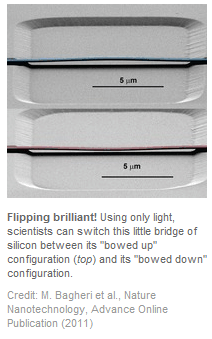
ScreenHunter_11 Oct. 25 11.20The feeble force of light alone can flip a nanometer-sized mechanical switch one way or the other, a team of electrical engineers reports. The little gizmo holds its position without power and at room temperature, so it might someday make a memory bit for an optical computer. Other researchers say it also introduces a promising new twist into the hot field of “optomechanics,” which marries nanotechnology and optics. “This a new paradigm,” says Markus Aspelmeyer, a physicist at the University of Vienna who was not involved in the research. “People are going to take a good look at this and use it in other schemes.”

Since 2005, physicists and engineers have been using light to set tiny structures vibrating and control their motion. Much of their effort has focused on using light to suck energy out of a vibrating beam or cantilever to try to achieve new states of motion that can be described only by quantum mechanics, extending the quantum realm to the movement of humanmade objects. In fact, Aspelmeyer, Oskar Painter of the California Institute of Technology in Pasadena, and colleagues have managed to use laser light to “cool” a vibrating beam to the lowest energy state possible, the so-called quantum ground state, a key step toward achieving more complex quantum states of motion, as they reported 6 October in Nature.

Now, taking a different tack, Mahmood Bagheri, Hong Tang, and colleagues at Yale University have used laser light to pump energy into a tiny bridge of silicon, flipping it between two stable configurations—in effect, making a mechanical switch. The bridge measured 10 micrometers long, 500 nanometers wide, and 110 nanometers thick and was suspended about 250 nanometers above a glass chip. When researchers etched glass out from under it, the silicon expanded, so the bridge bowed either upward or downward, like a playing card squeezed lengthwise between your thumb and forefinger.

The trick was to use light to make the bridge shift between the two positions in a controllable way.

More here.

Raj Rajaratnam reveals the reasons he didn’t take a plea that could have saved him from 11 years in jail

Suketu Mehta in The Daily Beast:

ScreenHunter_10 Oct. 25 11.01It was 6 a.m. on Oct. 16, 2009, and Raj Rajaratnam, head of the Galleon Group hedge fund, was at home on his exercise bike looking out over Manhattan’s Turtle Bay, thinking about how many shirts he would have to pack for his trip to England that day. He was to go there to launch a $200 million fund to invest in the Sri Lankan stock market, in which he, the richest Sri Lankan on the planet, was the biggest single investor.

At 6:30 his doorbell rang. He answered it to find a number of policemen and men in suits outside. An FBI agent named B. J. Kang told him he was under arrest for insider trading. There were five other agents with him, come to collect Rajaratnam. They asked if he had a gun, if he had drugs on the property. For a moment he was afraid they would plant something.

As they led him away from his family, Rajaratnam says Kang told him, “Take a good look at your son. You’re not going to see him for a long time.” He added, for good effect, “Your wife doesn’t seem so upset. Because she’s going to spend all your money.”

More here.

Monday, October 24, 2011

Sunday, October 23, 2011

How to Read Moby-Dick

Kathryn Harrison in The New York Times:

Moby-dick-jumpingIt’s a hard sell Nathaniel Philbrick has undertaken in “Why Read Moby-Dick?” The novel’s plot has been recycled for decades, inspiring films, radio dramas, cartoons, comic books, a television mini-series, a couple of heavy metal albums, a music video and a rap rendition. How many potential readers approach the masterwork of Herman Melville without already knowing the story of Captain Ahab and the white whale? Any? And why would such an overly exposed audience embrace a work of such heft, especially as almost every edition carries the added weight of ponderous academic commentary? “Moby-Dick” would appear to be one of those unfortunate books that are taught rather than enjoyed.

But who knows how many teeter in the aisles of Barnes & Noble, both drawn and repelled by the promise of edification? It’s the historian Nathaniel Philbrick’s intent to give those uncertain consumers a gentle shove toward the “one book that deserves to be called our American Bible.” He wants “you — yes, you — to read . . . ‘Moby-Dick.’”

More here.

The trouble with my blood

Will Self in The Guardian:

Red-blood-cells-007It didn't help that we seemed to be at the centre of a cancer cluster: one friend was dying of leukaemia in Hammersmith hospital, another was in the process of being diagnosed, a third had had half his throat and jaw chopped out. I fully expected cancer myself. To paraphrase the late and greatly pathetic roué Willie Donaldson, you cannot live as I have and not end up with cancer. There was the genetic factor to begin with, and then there's been the toxic landscape of carcinogens – the yards of liquor, the sooty furlongs left behind by chased heroin, the miles driven and limped for over a decade to score crack which then scoured its way into my lungs. The prosaically giant haystacks of Virginia tobacco hardly bear mentioning – being, in contrast, merely bucolic.

No, I was on the lookout for the crab – not a pair of lobster's claws. It was my wife who eventually sent me across the road to the GP, a shrewdly downbeat practitioner who in the past had declined to check my cholesterol levels or send me for a prostate-cancer biopsy, but now took one look at the human-into-crustacean transmogrification and sent me straight down to St Thomas's for a blood test. The results came within a couple of days, and when I saw him in person he confirmed what he'd told me over the phone: “Your haemoglobin is right up, and your white blood cell count is also elevated. I can't be certain but I think there's a strong possibility it's …”

I pre-empted him: “Polycythaemia vera?”

“Aha,” he said. “Been googling, have you?”

I conceded that I had.

“Well,'” he continued, “the Wiki entries are pretty thoroughly vetted – if you stick to that you're on safe ground.”

More here.

Drinking Whiskey In The Spirit Of George Washington

Allison Aubrey at NPR:

ScreenHunter_08 Oct. 23 12.18Virginians have always enjoyed their liquor, and for much of the 18th century, their preferred drink was rum. But when war and tariffs made imported rum hard to come by, George Washington saw an opportunity. Why not make liquor out of grains he was growing on his farms?

“He was a businessman and he was a very, very successful one,” says Dennis Pogue, the director of preservation programs at Mount Vernon.

By 1799, Washington's distillery was the single most profitable part of his plantation. He couldn't make enough whiskey to meet demand, Pogue says. Now the distillery has been restored, and I got a chance to see what Washington's rye whiskey probably tasted like…

But there is some uncomfortable history here. In Washington's day, the hard work of making whiskey fell to six slaves.

It's a fact of history that Pogue says he would never paper over. Washington was a man of his time, and the whiskey we're drinking is made to his exact recipe.

More here.

Pakistan, a “negotiated state”

Shehryar Fazli in The India Site:

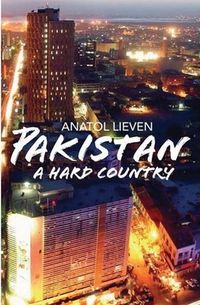
Lieven-PakistanEarly in Pakistan: A Hard Country, Lieven intriguingly describes Pakistan as a “negotiated state”, where the law only goes so far and, in practice, people choose between official, customary and Islamic systems of justice according to their needs. A deep sense of tradition, and strong social bonds safeguarded by kinship and patronage, ensure that the country won’t sink or surrender to modern Islamist revolt. But while it may be a negotiated state, there is no healthier dialectic to produce fresh arguments and movements. Even the many migrants to the cities, for example, retain their rural links and habits, and therefore don’t induce the changes typically associated with urbanization. The old and eternal persist here, too.

Lieven’s book is an ambitious attempt to explain what makes Pakistan tick and what the limitations and prospects of its leadership – civilian and military – are. It has been widely praised as an almost indispensable account of how the country works, and indeed it has its share of insights and debunks a good many myths. His depiction for example of the moderate, syncretic strands of Islam prevalent in the Pakistani heartland, and the centrality of the shrines of saints to a vast majority of the faithful, but hated by religious radicals, is welcome. So, too, is the related discussion discrediting accounts that the military, which recruits from this heartland, is dangerously full of Islamists. The case that Pakistan is not the failed state that many outside observers believe is well argued. Lieven has clearly traveled widely and talked to a great many stakeholders across class, religions, sects, political parties and state institutions – even if it gets tiresome to see passages regularly punctuated by a line like, “And never was this brought home to me more than when I visited” such and such a place.

As an analysis of politics and governance, however, much of the project is undermined by the author’s political sympathies.

More here.

How plants sense touch, gravity and other physical forces

From Physorg.com:

ScreenHunter_06 Oct. 23 11.50At the bottom of plants' ability to sense touch, gravity or a nearby trellis are mechanosensitive channels, pores through the cells' plasma membrane that are opened and closed by the deformation of the membrane. Elisabeth Haswell, Ph.D., a biologist at Washington University in St. Louis, is studying the roles these channels play in Arabdopsis plants by growing mutant plants that lack one or more of the 10 possible channel proteins in this species.

“Picture yourself hiking through the woods or walking across a lawn,” says Elizabeth Haswell, PhD, assistant professor of biology in Arts & Sciences at Washington University in St. Louis. “Now ask yourself: Do the bushes know that someone is brushing past them? Does the grass know that it is being crushed underfoot? Of course, plants don't think thoughts, but they do respond to being touched in a number of ways.”

“It's clear,” Haswell says, “that plants can respond to physical stimuli, such as gravity or touch. Roots grow down, a 'sensitive plant' folds its leaves, and a vine twines around a trellis. But we're just beginning to find out how they do it,” she says.

More here.

53% & Life is Not Fair

Jpg-300x293Mike LaBossiere over at Talking Philosophy:

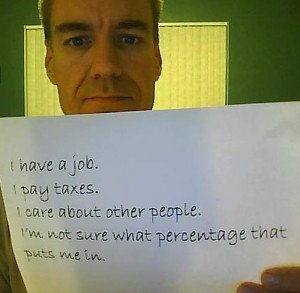
Erick Erickson recently started a movement in response to the Occupy Wall Street movement. The occupiers have as a slogan that they are the 99%. To counter this, Erickson hit on the idea of the 53%. This is the percentage of Americans who pay the federal income tax. His message is that complaints should cease, people should not blaming Wall Street, and people should pay their taxes.

During an interview on CNN Erickson responded to the criticisms of the Occupiers by asserting that life is not fair. He also made this point in his post:

Well, these people apparently forgot that life is not fair and are demanding the government intervene to legislate that life suddenly become fair. They are claiming to be the “99%” against the evil 1% of rich people who work on Wall Street. They are posting pictures to a website holding up their sob stories. Some are terribly tragic, but most? Boo-freakin’-hoo. Life is not, never has been, and never will be fair.

While Erickson does not actually present a developed argument, he seems to be contending that the Occupiers are in error regarding their protest and their desire to change the economic and political system. They are in error, as he seems to see it, because they supposedly want to make things fair and this will never occur. I am not sure if he means that unfairness is a matter of necessity in the sense that fairness is a logical or practical impossibility. However, it seems to suffice to take his claim at face value, namely that life will never be fair.

The Gourmet Guerilla: Adventures in Stealth Dining

Article_ng_01_imgTiffany Ng in Pluck Magazine:

What is it?

Half the time, my guests think I run ‘gorilla dining’ events and laugh at the ludicrousness of such a thought. Most times, I don’t have the heart to correct them more than once, lest the struggle to grasp this concept deter them from attending future events or, worse, from spreading the word. It did not make it easier that I decided upon introducing guerilla dining to Copenhagen and conjuring up a market out of thin air. Looking back on it, how naïve I was. Let’s just chalk that up to ingenuity, for now. Thanks to this leap of faith, I’ve had a stubborn, “I think I can, I think I can” choo-choo train approach this past year that’s led to countless adventures.

The concept of guerilla dining is without an official definition. Each orchestrator has his or her own understanding of what constitutes a true event. Many do not even use the term guerilla dining, opting rather for pop-up restaurant or supper club. In my view, the aim of each project is the same: we are looking to provide our guests with a completely different dining experience – one that will imprint itself permanently into your memory. How it is executed and what elements are brought into it to create the experience is what sets each apart. In this range are supper clubs consisting of only a few people and the host in a private home serving homemade food as well as professional exhibitions reaching upwards of fifty guests with hired chefs, musicians, and mobile kitchens. I like to think of mine as art installations that revolve around the central theme of food. Some have been intimate gatherings of fifteen guests, and others well over a hundred.

So how did I – a native San Franciscan transplanted in Copenhagen of all places — get involved in this sub-culture, you ask?

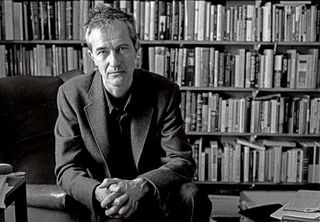
Jonathan Lethem Interviews Geoff Dyer

Geoff_Dyer_bodyIn Bomb Magazine:

J[onathan ]L[ethem] In the matter of coming up with a form or structure, I’m eager to talk with you about your new book on Tarkovsky’s Stalker. I’m actually reading it in tandem with revisiting the film—the first time I’ve seen it in 20 years. I’m halfway through both book and film as I write this. The short book that covers another artifact—a book, a film, an album—in scrupulous close description (with plenty of digressions, of course)—is something I’m trying myself. Last year with a film, John Carpenter’s They Live, and right at the moment I’m writing a short book on a Talking Heads album, Fear of Music. (I flatter myself I’m in “Dyerian Mode” when I do this.) If a novel is a mirror walking along a road (somebody said this; in a spirit of Dyerian laziness I’m refusing to Google it), a book like this is a mirror walking hand-in-hand with somebody else’s mirror. I’ll admit I also became fascinated by a weird concurrence in our film-subjects: both Stalker and They Live are films that switch between color and black-and-white (and therefore both get compared to The Wizard of Oz), and both turn on a transformation of the everyday world at roughly the half-hour mark, where the ordinary is revealed as extraordinary. Of course, your film quite respectably avoids wrestlers and ghouls.

G[eoff ]D[yer] Here is an important difference between us. You could do these books as sidelines or diversion, almost, I imagine, writing fiction in the morning and then doing the film or Talking Heads stuff in the afternoon. I operate at a far lower level of energy and inspiration, but a higher pitch of desperation! Generally, I like the idea of short books on one particular cultural artifact as long as they don’t conform to some kind of series idea or editorial template. The madder the better, in my view. I like the idea of an absurdly long book on one small thing. I think we’d agree that the choice of artifact is sort of irrelevant in terms of its cultural standing: all that matters is what it means to you, the author. I had so much fun doing the Stalker book I am tempted to do another, this time on Where Eagles Dare. In fact, I find myself thinking/whining, Why shouldn’t I do that? Plenty of other writers keep banging out versions of the same thing, book after book, why should I always have to be doing something completely new each time?

Saturday, October 22, 2011

When Kerouac Met Kesey

Sterling Lord in The American Scholar:

640px-Furthur_02-600x398If the 1950s and ’60s belonged to Jack Kerouac, then the ’60s and ’70s belonged to Ken Kesey. Both of them were my clients, and I liked and admired each of them. Although they differed in age, personality, and writing styles, they overlapped as writers of their times, and there was room for both. Each man was an iconoclastic thinker whose writing and philosophy inspired passionate devotion in his readers.

Before I ever met Kesey, Tom Guinzburg, president of Viking Press, called me one day in 1961 to ask whether Kerouac would write a blurb for One Flew Over the Cuckoo’s Nest, Kesey’s first novel. Tom had bought the book, but Viking had not yet published it. Publishers are always looking for well-known writers to offer positive comments for the book jacket or a press release. A blurb can be particularly helpful if readers feel there is a creative relationship between the two writers. I had no idea whether Kerouac would help, because I couldn’t remember his having blurbed before, but I didn’t think he would be offended if I asked. I thought he might even be flattered. So I told Tom to send me the manuscript. I read it before passing it on to Jack, and I knew right then that I wanted to work with Kesey. His novel was a bold, creative story of what happens in a mental institution—a very daring subject for his time. In the end, Jack did not write a blurb; he felt uncomfortable doing it, perhaps not wanting to get into that arena and all that went with it, and I respected that.

I called Guinzburg to tell him I’d like to represent Kesey, who didn’t have an agent, and then got in touch with Ken. He was delighted, and we started working together.

More here.

One Decade In Brooklyn…

Lahiri-web1Jhumpa Lahiri in The Brooklyn Rail:

In 2005 we bought a house in Fort Greene. I let go of the studio and acquired, for the first time in my life, a room to call my own, with a door to shut, and serving no other purpose. A single window, the only window of the house that faces south, looks out at the clock tower of the Williamsburgh Savings Bank. I have to stand up to see it. But it is there, a symbol and centerpiece of the borough, marking the hours of work I will not recall.

Boston is the city where I became a writer, but in Brooklyn I took on a far more daunting challenge, and that is to be a writer and a parent at the same time. Literary biographies and memoirs tell us that until recently, people tended to be one thing, not both. That the conflicting demands of each enterprise—one a self-centered, solitary vocation, the other inherently giving, in which the priorities of the self recede—could not coexist. But here in Brooklyn the exception seems to be the rule, because I am surrounded by, inspired by writers of all stripes, men and women alike, who are equally dedicated, though the equation is never a perfect one, to both the writing of books and the raising of children. You will find them attending birthday parties more often than book parties. You will find them, after a day of writing, not mixing a martini but preparing macaroni and cheese. You will find them rushing home from teaching writing classes at Princeton or Hunter College, in time to read to their children before bed. You will find them attending a friend’s reading with a newborn in a sling, being supportive to the friend, stepping onto the sidewalk when the baby needs comforting.

Something about Brooklyn accommodates both these callings, both drives. There are days when the prospect feels impossible, days when a school holiday means no writing gets done, or days when we choose to sit at our desks instead of accompany a field trip with our child’s class. There are months, even years, when our creative work may be put on hold.

In Brooklyn, versions of these choices are always being made, because examples of such writers are everywhere.

The Art of Money

The Moneychanger and his Wife2In More Intelligent Life:

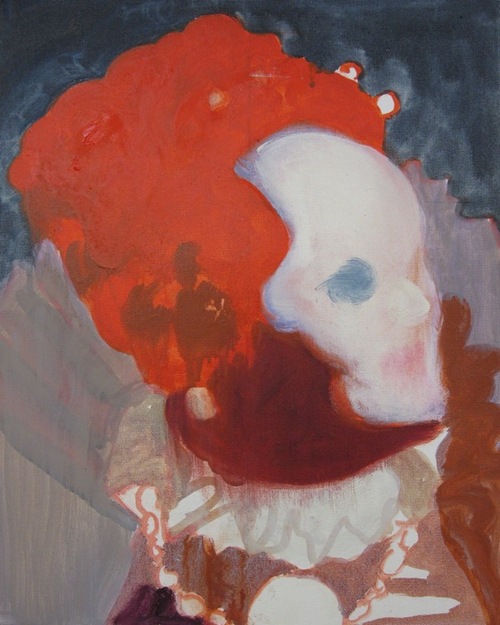
Renaissance-era Florence is remembered not for its bankers but for its beauty. Yet the city is now hosting a splendid exhibition that reaffirms the important link between the two. High finance not only funded high art, but its money and movement helped to fuel the humanist ideals that inspired the Renaissance. This show, curated by Tim Parks, a British writer based in Italy, and Ludovica Sebregondi, an Italian art historian, considers the influence of 15th-century financiers on Italian art and culture.

“Money and Beauty” is divided into two parts: how money was made, and how it was spent. The gold florin, first minted in 1252 (and equal to $150 today), made the Florentine republic the heart of a nascent banking system that stretched from London to Constantinople. The Medici bank was supreme for almost a century, till its collapse in 1494 when the family was ousted from political power. This show, on view in the Strozzi palace (built in 1489 by a rival banking family), also traces the humbler fortunes of Francesco di Marco Datini, the “merchant of Prato”, using the vast archive he left behind. To recreate the daily activities of these bankers as well as their world view, the exhibition includes paintings and mercantile paraphernalia, from weighty ledgers to nautical maps.

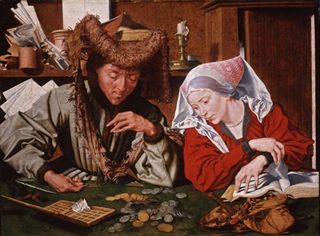
The Church deemed it sinful to charge interest on loans, viewing it as profit without labour. This gave rise to artful and elaborate ways to disguise such profit-making, including foreign currency deals and triangular trading. The divergence of moral and commercial values can be seen in some Flemish paintings included here, such as Marinus van Reyerswaele’s “The Money Changer and his Wife”, in which a couple fixates on their coins while their candle is snuffed out (pictured top).

Making the iBio for Apple’s Genius

Janet Maslin in The New York Times:

BOOK-popup-v2After Steve Jobs anointed Walter Isaacson as his authorized biographer in 2009, he took Mr. Isaacson to see the Mountain View, Calif., house in which he had lived as a boy. He pointed out its “clean design” and “awesome little features.” He praised the developer, Joseph Eichler, who built more than 11,000 homes in California subdivisions, for making an affordable product on a mass-market scale. And he showed Mr. Isaacson the stockade fence built 50 years earlier by his father, Paul Jobs. “He loved doing things right,” Mr. Jobs said. “He even cared about the look of the parts you couldn’t see.”

Mr. Jobs, the brilliant and protean creator whose inventions so utterly transformed the allure of technology, turned those childhood lessons into an all-purpose theory of intelligent design. He gave Mr. Isaacson a chance to play by the same rules. His story calls for a book that is clear, elegant and concise enough to qualify as an iBio. Mr. Isaacson’s “Steve Jobs” does its solid best to hit that target.

More here.