Category: Recommended Reading
holding time
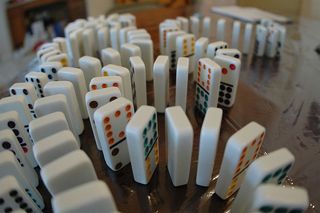
For over a hundred years, the villagers of Falealupo in Samoa were the last people on Earth to watch the sun sink from the sky each day. What must it have been like, to feel the hours race toward you like a set of collapsing dominoes as time zone after time zone left the previous day behind? Did these Samoans have a secret hold on time? Did they know what it was to make a day last just a little longer? Alas, no. The Samoans only made an alteration in the keeping of time, and the move was superficial. Even as we make little jumps and leaps over and through counted time, embedded in the Samoan time change is the reminder that we do not control time in the absolute sense. Samoans jumped a day ahead in the counting of time, they saw the new year sooner, and they will move economically closer to Asia as a result. But they will grow old and die just the same. Now, the Earth’s final sunset can be seen in the village of Poloa, in neighboring American Samoa, which did not make the time zone change. Though the decision wasn’t theirs, the people of Poloa were not only pleased by the designation; they felt privileged. It is “uplifting and a great honor for the village,” Poloa resident Tavai Fa’alogo told the Samoa News. “This historical moment makes me proud and happy to be a native of Poloa.”
more from Stefany Anne Golberg at The Smart Set here.
Death in Florence
Andrea del Castagno was one of the greatest Florentine painters of the Quattrocento – masterful in technique, spare and hard-edged in style, idiosyncratic to the point of strangeness. He was a hill farmer’s son from the Mugello, born in about 1419 in the hamlet of Castagno on the western flank of the Apennines. The first record of him is as a six-year-old bocca – a ‘mouth’, or dependant – in his father’s tax return. He is listed as Andreino, a diminutive which persisted throughout his life, possibly suggesting he was a small man. By 1440 he was in Florence, his talent already recognised by the civic authorities, who commissioned him to paint a huge propagandist mural on the façade of the Palazzo del Podestà (or Bargello) depicting a group of traitors hanging upside down. This debut earned him the rather striking nickname Andreino degl’ Impiccati (‘Little Andrew of the Hanged Men’). In 1442 he was in Venice, painting saints and prophets on the vaulted ceiling of San Zaccaria: his earliest extant work and the only one he signed (‘Andreas de Florentia’). The unusually youthful features of St Luke have been canvassed as an early self-portrait. For the next 15 years, until his early death in 1457, he worked like a fury, mostly in Florence and mostly in fresco, producing a series of dramatic masterpieces of which only a fraction survive, among them the grave and melancholy Last Supper in Sant’Apollonia; the moody St Julian in the Basilica della Santissima Annunziata (shown below); the equestrian portrait of Niccolò da Tolentino in the Duomo; and the windswept David, painted on a leather shield now in the National Gallery of Art in Washington. In a lost Assumption of the Virgin, it is said, he portrayed himself as Judas.
more from Charles Nicholl at the LRB here.
O RARE BEN JONSON!
In the summer of 1619, two writers evaluated Ben Jonson’s character and career in contrasting terms. Anthony à Wood, in his biographical dictionary of distinguished Oxford alumni, summarized the reasons why Richard Corbett of Christ Church “and other poets of this University did in reverence for his parts” propose him for an MA Degree: “His own proper industry and addiction to books, especially to ancient poets and classical authors, made him a person of curious learning and judgement, and of singular excellence in the art of poetry.” At much the same time, William Drummond, Laird of Hawthornden, near Edinburgh, having had Jonson staying with him after his epic walk from London to Scotland, noted this about his guest: “He is a great lover and praiser of himself, a contemner and scorner of others, given rather to lose a friend than a jest, jealous of every word and action of those about him (especially after drink, which is one of the elements in which he liveth) . . . . He is passionately kind and angry, careless either to gain or keep, vindicative, but if be well answered, at himself.”
more from Brian Vickers at the TLS here.
Friday Poem
Ka 'Ba
A closed window looks down
on a dirty courtyard, and black people
call across or scream or walk across
defying physics in the stream of their will
Our world is full of sound
Our world is more lovely than anyone's
tho we suffer, and kill each other
and sometimes fail to walk the air
We are beautiful people
with african imaginations
full of masks and dances and swelling chants
with african eyes, and noses, and arms,
though we sprawl in grey chains in a place
full of winters, when what we want is sun.
We have been captured,
brothers. And we labor
to make our getaway, into
the ancient image, into a new
correspondence with ourselves
and our black family. We read magic
now we need the spells, to rise up
return, destroy, and create. What will be
the sacred words?
.
by Imamu Amiri Baraka
Standing Up For Freedom
From Academy of Achievement:
Most historians date the beginning of the modern civil rights movement in the United States to December 1, 1955. That was the day when an unknown seamstress in Montgomery, Alabama refused to give up her bus seat to a white passenger. This brave woman, Rosa Parks, was arrested and fined for violating a city ordinance, but her lonely act of defiance began a movement that ended legal segregation in America, and made her an inspiration to freedom-loving people everywhere.
…The bus incident led to the formation of the Montgomery Improvement Association, led by the young pastor of the Dexter Avenue Baptist Church, Dr. Martin Luther King, Jr. The association called for a boycott of the city-owned bus company. The boycott lasted 382 days and brought Mrs. Parks, Dr. King, and their cause to the attention of the world. A Supreme Court Decision struck down the Montgomery ordinance under which Mrs. Parks had been fined, and outlawed racial segregation on public transportation.
More here. (Note: In honor of African American History Month, we will be linking to at least one related post throughout February. The 2012 theme is Black Women in American Culture and History).
How mitochondrial DNA defects cause inherited deafness
From PhysOrg:
Mitochondria are cellular structures that function as “cellular power plants” because they generate most of the cell's supply of energy. They contain DNA inherited from one’s mother. Mitochondria determine whether a cell lives or dies via the process of programmed cell death, or apoptosis. The Yale scientists focused on a specific mitochondrial DNA mutation that causes maternally inherited deafness. The mutation occurs in a gene that codes for RNA in mitochondrial ribosomes, which generate proteins required for cellular respiration. The team found that cell lines containing this mutation are prone to cell death not directly due to the mutation, but rather because it enhanced a normal chemical modification of the RNA called methylation, which regulates ribosome assembly.
“Our lab had previously discovered that overexpression of the enzyme responsible for this methylation could cause cell death, even in cells without the deafness mutation,” said corresponding author Gerald S. Shadel, professor of pathology and genetics at Yale School of Medicine. “But when the researchers overexpressed the enzyme in mice to mimic the effects of the mutation,” he said, “we were astonished to discover that the animals progressively lost their hearing, reflecting how such disease would develop due to a known pathogenic human mitochondrial DNA mutation. This new mouse model will be instrumental in understanding genetic and environmental factors known to impact mitochondrial disease pathology.” The researchers found that reactive oxygen molecules produced by diseased mitochondria are what trigger events leading to a cell death-inducing gene expression program. By genetically depleting the protein ultimately responsible for activating this programmed cell death response, they were able to restore normal hearing to the mice.
More here.
Thursday, February 16, 2012
The Pathology of Stabilisation in Complex Adaptive Systems
Ashwin Parameswaran over at Macroeconomic Resilience:
The core insight of the resilience-stability tradeoff is that stability leads to loss of resilience. Therefore stabilisation too leads to increased systemic fragility. But there is a lot more to it. In comparing economic crises to forest fires and river floods, I have highlighted the common patterns to the process of system fragilisation which eventually leaves the system “manager” in a situation where there are no good options left.
Drawing upon the work of Mancur Olson, I have explored how the buildup of special interests means that stability is self-reinforcing. Once rent-seeking has achieved sufficient scale, “distributional coalitions have the incentive and..the power to prevent changes that would deprive them of their enlarged share of the social output”. But what if we “solve” the Olsonian problem? Would that mitigate the problem of increased stabilisation and fragility? In this post, I will argue that the cycle of fragility and collapse has much deeper roots than any particular form of democracy.
In this analysis, I am going to move away from ecological analogies and instead turn to an example from modern medicine. In particular, I am going to compare the experience and history of psychiatric medication in the second half of the twentieth century to some of the issues we have already looked at in macroeconomic and ecological stabilisation. I hope to convince you that the uncanny similarities in the patterns observed in stabilised systems across such diverse domains are not a coincidence. In fact, the human body provides us with a much closer parallel to economic systems than even ecological systems with respect to the final stages of stabilisation. Most ecological systems collapse sooner simply because the limits to which resources will be spent in an escalating fashion to preserve stability are much smaller. For example, there are limits to the resources that will be deployed to prevent a forest fire, no matter how catastrophic. On the other hand, the resources that will be deployed to prevent collapse of any system that is integral to human beings are much larger.
Private Portraits: A Pakistan Diary
Rafia Zakaria has four posts in Dissent. From the latest one, “Agents of Change“:
You had to go through three metal detectors to get into the Karachi Literature Festival. They were necessary. Inside there was to be a dance performance featuring female dancers and talks by artists, writers, and officials from the American Embassy (which was sponsoring the event). One mid-morning panel was entitled “Women Writing Women,” featuring a selection of Pakistani and Pakistani-American authors. The moderator was Dr. Marilyn Wyatt, the wife of Cameron Munter, the U.S. Ambassador to Pakistan. After the authors had read their work—poignant selections of prose on life and love and relationships in Pakistan—she posed to them the question on the minds of many Americans: “Do you see room for optimism in the future facing Pakistani women?”
The question was well intentioned but misplaced. The women seated on the raised dais of the oceanfront hotel in Karachi, rising and established writers worthy of respect, were almost all from a tiny sliver of Pakistan’s elite, one that by virtue of class remains relatively untouched by the constrictions of culture. As most Pakistanis would be able to tell you, their presence on the stage that day is not a new chapter in the gender dynamics in Pakistan but an aged paradigm that has recently been endangered by the rapid encroachments of religious fundamentalism.
Raised in a middle-class Karachi family, self-conscious about respectability and reputation, I would as a young girl never have been allowed to attend the Karachi Literature Festival. There would have been too many questions about the nature of the event and the mixed-gender venue. With the logistics (the faraway hotel on the ocean) added to the mix, my attendance would have been impossible. As I sat there listening to the speakers in the marble-tiled meeting room of the hotel, I wondered if they had thought about the present day versions of myself, the girls who loved to read and to write and who had not been allowed to attend.
At the same time I realize that questions about women’s empowerment, about change and optimism, are tricky ones for any Pakistani or Muslim woman to tackle. As the speakers pointed out, a torrent of stereotypes immediately goes to work the moment the words are uttered: the Pakistani woman as an oppressed, veiled apparition languishing in a backward culture, mistreated by an inegalitarian religion, her hapless condition an excuse for military interventions and all the rest. In the face of all this, some defensiveness is inevitable and forgivable.
Human Evolution: Cultural roots
Jeff Tollefson in Nature News:
Metal scrapes on hard sand as archaeologist Chris Henshilwood shaves away the top layer of sediment in Blombos Cave. After just a few moments, the tip of his trowel unearths the humerus of a pint-sized tortoise that walked the Southern Cape of South Africa many millennia ago. Next come shells from local mussels and snails amid blackened soil and bits of charred wood, all remnants of an ancient feast. It was one of many enjoyed by a distinct group of early humans who visited Blombos Cave over the course of thousands of years.
The Still Bay culture was one of the most advanced Middle Stone Age groups in Africa when it emerged some 78,000 years ago in a startlingly early flourishing of the human mind. Henshilwood's excavations at Blombos Cave have revealed distinctive tools, including carefully worked stone points that probably served as knives and spear tips, and bits of rock inscribed with apparently symbolic designs. But evidence of the technology disappears abruptly in sediment about 71,000 years old, along with all proof of human habitation in southern Africa. It would be 7,000 years before a new culture appeared, with a markedly different toolkit, including crescent-shaped blades probably used as arrowheads.
What drove the coming and going of these early cultures?
The Arcades Project: Martin Amis’ Guide to Classic Video Games
Mark O'Connell in The Millions:
The British journalist Sam Leith recently opened a review of Richard Bradford’s Martin Amis: The Biography with the following question: “Where’s Invasion of the Space Invaders? That’s what I want to know.” The 418-page biography, which has been undergoing a sustained critical beatdown since its publication last year, contains no mention of a book Amis published in 1982, and which he has been avoiding talking about ever since. “Anything a writer disowns is of interest,” wrote Leith, “particularly if it’s a frivolous thing and particularly if, like Amis, you take seriousness seriously.” He’s got a point; any book so callously orphaned by its own creator has to be worth looking into. This is especially true if the book in question happens to be a guide to early 1980s arcade games.
Like most Amis fanciers, I had heard of the existence of this video game book –- the full title of which is Invasion of the Space Invaders: An Addict’s Guide to Battle Tactics, Big Scores and the Best Machines –- but knew very little about it. What I did know was that he dashed it off at some point during the time he was writing Money, one of the great British novels of the 1980s, and that it has long been out of print (a copy in good nick will cost you about $150 from Amazon). And I knew, most of all, that Amis was reluctant to talk about it or even acknowledge it. Nicholas Lezard of The Guardian once suggested to him (facetiously, surely) that it was among the best things he’d ever written, and that it was a mistake to have allowed it to go out of print. “The expression on his face,” wrote Lezard, “with perhaps more pity in it than contempt, remains with me uncomfortably.”
Invasion of the Space Invaders, then, is the madwoman in the attic of Amis’ house of nonfiction; many have heard rumors of its shameful presence, but few have seen it with their own eyes.
Golden Eye: On the James Webb Space Telescope
Ross Andersen in the Los Angeles Review of Books:
The launch of the James Webb will require technological cunning unequaled in the post-Apollo era. The base of the telescope, a six-layer sunshade, is roughly as long and wide as a tennis court. It will sit well beyond the moon, in a special pocket of gravity one million miles from Earth. Rather than orbit the Earth and whirl daily into the hot face of the sun, the Webb will use the combined gravity of the two to hide in a fixed position within the Earth’s shadow. Its 18 hexagonal mirrors, made of beryllium and coated in 24-carat gold, will operate at temperatures near absolute zero — the point at which all motion ceases — in order to remain sensitive to the faint infrared emanations of deep space. In this way movement in the heavens may be likened to sound, of which Emerson wrote, “Let us be silent, that we may hear the whispers of the gods.” Upon arriving in space, the Webb will attempt an unprecedented feat of reverse origami: It will emerge bundled from the tip of an Ariane rocket and slowly unfurl its shade, mirrors, and instruments, becoming in the process the world’s largest space observatory, its seeing power 100 times that of the Hubble. The stakes for this metamorphosis are high, for even with tomorrow’s technology, repair at such a remove from Earth will be impossible. If for any reason the Webb should fail after launch, it will be left to idle in space, out of reach, a stillborn in the void.
More here.
An American take on the Quran
Michael Morain in the Des Moines Register:
Los Angeles artist Sandow Birk has spent a good chunk of the last six years hand-writing an English translation of the Quran and illustrating it with scenes of modern American life.
He is not Muslim. He is not even very religious.
He’s a surfer.
His search for good waves took him to the coasts of Morocco, India, Indonesia and the southern Philippines — all places with sizable Muslim populations — and he wanted to learn more, especially when Islam became such a hot topic in the early 2000s. So he started reading its sacred text.
“Given the global situation right now, the Quran may be the most important book on earth, but few Americans know anything about it,” he told the New York Times in 2009. “I’m attempting to create visual metaphors that go along with the text and hopefully make it more accessible to Americans, more relevant to American life.”
More than half of his results — 61 chapters of the Quran’s 114, neatly painted on paper — are on display through March 18 at the Faulconer Gallery at Grinnell College.
More here.
Mammals Made By Viruses
Carl Zimmer in his excellent blog, The Loom:
If not for a virus, none of us would ever be born.
In 2000, a team of Boston scientists discovered a peculiar gene in the human genome. It encoded a protein made only by cells in the placenta. They called it syncytin.
The cells that made syncytin were located only where the placenta made contact with the uterus. They fuse together to create a single cellular layer, called the syncytiotrophoblast, which is essential to a fetus for drawing nutrients from its mother. The scientists discovered that in order to fuse together, the cells must first make syncytin.
What made syncytin peculiar was that it was not a human gene. It bore all the hallmarks of a gene from a virus.
Viruses have insinuated themselves into the genome of our ancestors for hundreds of millions of years. They typically have gotten there by infecting eggs or sperm, inserting their own DNA into ours. There are 100,000 known fragments of viruses in the human genome, making up over 8% of our DNA. Most of this virus DNA has been hit by so many mutations that it’s nothing but baggage our species carries along from one generation to the next. Yet there are some viral genes that still make proteins in our bodies. Syncytin appeared to be a hugely important one to our own biology. Originally, syncytin allowed viruses to fuse host cells together so they could spread from one cell to another. Now the protein allowed babies to fuse to their mothers.
More here.
Anwar Khurshid and Arshad Khan Thirakwa
Bubbles: Spheres, Volume I: Microspherology
John Ganz on the German philosopher Peter Sloterdijk, in The Brooklyn Rail:
Sloterdijk’s concern in Spheres is the same as every German philosopher since Kant: What is humanity in the condition of modernity? That is to say: What is humanity without the all-encompassing presence of religion, whose persistence in the modern world is either ineffectually subcultural or violently retrograde, and, in any case, is clearly incapable of offering a satisfying universal? What is humanity without the predictable cycles of the quasi-natural, communal lifeworld, and without the unquestioned legitimacy of the social, spiritual, and aesthetic hierarchies that once regulated that lifeworld? And how should we best offer solace to the lonely, confused, and rootless subject that emerges with the triumph of mass society, capitalism, scientism, technology, the destruction of traditional life, and the disenchantment of the world? (Just to make it sunnier, we can now also add to the list impending ecological crisis.) Sloterdijk describes humanity at the end of this process: “[d]isappointed, cold, and abandoned, they wrap themselves in surrogates of older conceptions of the world, as long as these still hold a trace of the warmth of old human illusions of encompassedness.”
For Sloterdijk, this crisis of modernity and post-enlightenment sketched above is a spherological crisis: it concerns the gradual destruction of those protective—or immunlogical, to use Sloterdijk’s terminology—membranes that mankind dwelled in for millenia, the bursting of the shared spaces that human beings had cultivated to provide meaning, metaphysical comfort, and shelter from the inhuman exterior. This metaphor of the sphere—the preservation, growth, and development of which can be thought of as the sole preoccupation of what we call culture—shares with Sloterdijk’s style in general the quality of being astonishing, strange, and novel, as well as being, at the same time, familiar, intuitive, and even self-evident.
More here.
America’s beloved best friend: Oprah Winfrey
From Achievement.org:
Born to an unwed teenage mother, Oprah Winfrey spent her first years on her grandmother's farm in Kosciusko, Mississippi, while her mother looked for work in the North. Life on the farm was primitive, but her grandmother taught her to read at an early age, and at age three Oprah was reciting poems and Bible verses in local churches. Despite the hardships of her physical environment, she enjoyed the loving support of her grandmother and the church community, who cherished her as a gifted child.
Her world changed for the worse at age six, when she was sent to Milwaukee to live with her mother, who had found work as a housemaid. In the long days when her mother was absent from their inner city apartment, young Oprah was repeatedly molested by male relatives and another visitor. The abuse, which lasted from the ages of nine to 13, was emotionally devastating. When she tried to run away, she was sent to a juvenile detention home, only to be denied admission because all the beds were filled. At 14, she was out of the house and on her own. By her own account, she was sexually promiscuous as a teenager. After giving birth to a baby boy who died in infancy, she went to Nashville, Tennessee to live with her father. Vernon Winfrey was a strict disciplinarian, but he gave his daughter the secure home life she needed. He saw to it that she met a curfew, and he required her to read a book and write a book report each week. “As strict as he was,” says Oprah, “he had some concerns about me making the best of my life, and would not accept anything less than what he thought was my best.” In this structured environment, Oprah flourished, and became an honor student, winning prizes for oratory and dramatic recitation. At age 17, Oprah Winfrey won the Miss Black Tennessee beauty pageant and was offered an on-air job at WVOL, a radio station serving the African American community in Nashville. She also won a full scholarship to Tennessee State University, where she majored in Speech Communications and Performing Arts. Oprah continued to work at WVOL in her first years of college, but her broadcasting career was already taking off. She left school and signed on with a local television station as a reporter and anchor.
More here. (Note: In honor of African American History Month, we will be linking to at least one related post throughout February. The 2012 theme is Black Women in American Culture and History).
Cormac McCarthy on the Santa Fe Institute’s Brainy Halls
From The Daily Beast:
One of the most impressive and eclectic intellectual groups in America gathers in a sprawling former mansion nestled in the foothills above Santa Fe. Once the private residence of a former U.S. Secretary of War, the space now houses the Santa Fe Institute. Lunchtime conversations range from game theory to historical linguistics to Sophocles. Pulitzer Prize–winning authors, Nobel Laureates and MacArthur geniuses wander the halls, scrawling equations on the window panes with erasable markers. The novelist and philosopher Rebecca Goldstein calls it “everything I hoped academia would be as a graduate student.” She adds, “It was pure bliss.”
The Santa Fe Institute was founded in 1984 by a group of scientists frustrated with the narrow disciplinary confines of academia. They wanted to tackle big questions that spanned different fields, and they felt the only way these questions could be posed and solved was through the intermingling of scientists of all kinds: physicists, biologists, economists, anthropologists, and many others. Almost three decades after its founding, the institute now has 12 resident faculty members whose interests range from the archaeology of the American Southwest to the physics of cities. Various educational programs and conferences supply fresh infusions of graduate students, post-docs, and professors from around the country. Over the last few years SFI has even extended the logic of collaboration further by establishing a regular fellowship to bring a novelist, playwright, philosopher, or other humanist to the institute. Though he’s technically a member of the board of trustees, Cormac McCarthy has also become a vital part of the intellectual atmosphere.
More here.
Wednesday, February 15, 2012
A New Obama Cinema?
J. Hoberman over at the NYRB blog:
A lone lean figure strides purposefully through a dark tunnel, maybe a highway underpass. There’s no fear. A familiar husky voice whispers that “it’s half time—both teams are in their locker rooms, discussing what they can do to win this game in the second half.” One needn’t be a genius like Karl Rove to catch the drift of the two-minute Clint Eastwood-narrated Chrysler spot shown mid-Super Bowl last Sunday and everywhere else ever since. But get it Rove did.
First thing Monday morning, America’s preeminent propagandist was on Fox & Friends to whine that “the president of the United States and his political minions are, in essence, using our tax dollars to buy corporate advertising.” What he meant was that a grateful automobile industry was engaging in some sneaky subliminal payback, hiring no less than Clint Eastwood as the mouthpiece for Barack Obama’s reelection bid. Well before the Giants edged out the Patriots, Obama adviser David Axelrod had wiped his boss’s fingerprints off the spot. “Powerful spot,” he slyly tweeted to his followers. “Did Clint shoot that, or just narrate it?”
By Monday evening, Eastwood—a life-long Republican—had given a statement to Fox’s O’Reilly Factor, “I am certainly not politically affiliated with Mr. Obama.” (Note the use of “mister”—Eastwood may be a secret Ron Paul supporter but, as a good American, he’s bound to give the president props.) Eastwood was actually a critic of the automobile bailout, having told the Los Angeles Times last November that “we shouldn’t be bailing out the banks and car companies.” By Wednesday, Chrysler executives were uniformly declaring that the ad had no political agenda: “It was designed to deliver emotions,” the company’s chief marketing officer was quoted in the Wall Street Journal, “and I don’t think emotions have a party.” (He did not, however, complain about extra publicity generated by the controversy.)
Noam Chomsky: Hegemony and its Dilemmas
Noam Chomsky in Guernica:
By 1970, U.S. share of world wealth had dropped to about 25 percent, roughly where it remains, still colossal but far below the end of World War II. By then, the industrial world was “tripolar”: US-based North America, German-based Europe, and East Asia, already the most dynamic industrial region, at the time Japan-based, but by now including the former Japanese colonies Taiwan and South Korea, and more recently China.
At about that time, American decline entered a new phase: conscious self-inflicted decline. From the 1970s, there has been a significant change in the U.S. economy, as planners, private and state, shifted it toward financialization and the offshoring of production, driven in part by the declining rate of profit in domestic manufacturing. These decisions initiated a vicious cycle in which wealth became highly concentrated (dramatically so in the top 0.1 percent of the population), yielding concentration of political power, hence legislation to carry the cycle further: taxation and other fiscal policies, deregulation, changes in the rules of corporate governance allowing huge gains for executives, and so on.
Meanwhile, for the majority, real wages largely stagnated, and people were able to get by only by sharply increased workloads (far beyond Europe), unsustainable debt, and repeated bubbles since the Reagan years, creating paper wealth that inevitably disappeared when they burst (and the perpetrators were bailed out by the taxpayer). In parallel, the political system has been increasingly shredded as both parties are driven deeper into corporate pockets with the escalating cost of elections, the Republicans to the level of farce, the Democrats (now largely the former “moderate Republicans”) not far behind.
More here.