Occupy the Future: The End of the End of History

Gary Segura in the Boston Review:

Occupy-HOPE-poster-final-rnd2-V2-500x752The degree to which our political and legal systems favor the wealthy and powerful is breathtaking in scope and arrogance. Nowhere is this more nakedly obvious than in Republican tax policy. Claiming, falsely, that the current marginal tax rate is severely curtailing investment, the “fix” for this faux problem is yet more tax cuts for the highest income earners. If the economy is growing or shrinking, in good times or bad, the preferred policy is the same. In other words, Republican fiscal “policy” resembles an article of faith, since it is unresponsive to facts, in this case social and economic conditions.

Time and again, we see our representatives manufacturing fake crises and offering phony solutions whose principal purpose is to enhance the political and economic power of the wealthy. For example, the faux problem of vote fraud (there is none) gives rise to Voter ID laws whose intended effect is to drive down voter participation of the poor, working class, and minority voters. Falsely blaming deficits on “overcompensated” public employees is used to justify the phony solution of union-busting legislation, whose real purpose is to defund and weaken one of the few powerful interest groups favoring the working class and poor. The myth of Social Security insolvency demands that we privatize old-age pensions, which would funnel billions of dollars into the pockets of investment banks and brokerage houses.

The Occupy movement has provided a rare moment of clarity. It has drawn our attention to the very raw deal that our government is providing us, and given voice to the plight of working people.

More here.
The Love That Dares

Mac McClelland in Mother Jones:

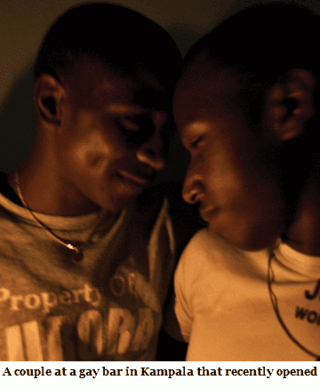
ScreenHunter_04 Dec. 10 11.10Uganda Penal Code Act of 1950, Chapter 120, Article 145: Unnatural offences. Any person who has carnal knowledge of any person against the order of nature; has carnal knowledge of an animal; or permits a male person to have carnal knowledge of him or her against the order of nature, commits an offence and is liable to imprisonment for life.

That long-extant law didn't go far enough for the supporters of the Anti-Homosexuality Bill of 2009, commonly referred to in the Western media as the “Kill the Gays Bill” because it upped the penalty for same-sex sex in “aggravated” circumstances (with a minor, with HIV-positivity, with frequency) to a death sentence. Once it was discovered that its proponents enjoy the love and support of American evangelicals, like the prominent group of congressmen known as the Fellowship or the Family, the headlines flowed so hard and fast that Uganda became the world's most publicized anti-gay place. Not that that stops the gays I've come to meet. Though it got her kicked out of schools, Kasha has never spent a day in the closet, and has for years been coming out, swinging, in the papers, on the radio, in response to the president saying in '99 that more gays should go to jail or to the minister of ethics saying in '07 that Ugandan gays should just leave. When Kasha was little, her mom fretted about her manly daughter's “mental illness.” She wasn't allowed to live on campus when she went to university. She is tough and stylish, and she collects awards from international human rights groups for being absurdly inspirational.

More here.

You should be very afraid of a pair of bills that threaten Internet freedom

James Losey and Sascha Meinrath in Slate:

111206_TECHNOCRACY_hilaryClinton_jpg_CROP_article250-mediumThe interconnected nature of the Internet fostered the growth of online communities such as Tumblr, Twitter, and Facebook. These sites host our humdrum daily interactions and serve as a public soapbox for our political voice. Both the PROTECT IP Act and SOPA would create a national firewall by censoring the domain names of websites accused of hosting infringing copyrighted materials. This legislation would enable law enforcement to take down the entire tumblr.com domain due to something posted on a single blog. Yes, an entire, largely innocent online community could be punished for the actions of a tiny minority.

If you think this scenario is unlikely, consider what happened to Mooo.com earlier this year. Back in February, the Department of Justice and Department of Homeland Security seized 10 domains during a child-porn crackdown called “Operation Protect Our Children.” Along with this group of offenders, 84,000 more entirely innocent sites were tagged with the following accusatory splash page: “Advertisement, distribution, transportation, receipt, and possession of child pornography constitute federal crimes that carry penalties for first time offenders of up to 30 years in federal prison, a $250,000 fine, forfeiture and restitution.” Their only crime was guilt by association: They were all using the Mooo.com domain.

SOPA would go even further, creating a system of private regulation to shut down websites that are accused of not doing enough to prevent infringement. Keep in mind that these shutdowns would happen before a site owner could defend himself in court—SOPA could punish sites without even establishing whether they are guilty of the charges brought against them.

More here.

Interview with David Graeber

Ellen Evans and Jon Moses in The White Review:

ScreenHunter_03 Dec. 09 17.44His most recent book, Debt: The First 5000 Years, which explores an alternative history of money and markets that is steeped in violence and oppression, has been described by Bloomberg Business Week as providing ‘an intellectual frame and a sort of genealogy’ for the occupations. Meanwhile, in recent articles and interviews Graeber has been particularly vocal on the point of demands, or more specifically the lack of, from OWS and its ilk – a strategy the media has remained utterly baffled by, insisting it to be antithetical to the change they seek, and using it as evidence of the protestor’s ‘lack of clear aims’ or understanding.

Instead, Graeber has put the spotlight on the anarchist principles of the Occupy movement, explaining that the lack of concrete demands is part of a pre-figurative politics. The protestors act as though they are ‘already living in a free society’, and thus refuse to accept the legitimacy of existing political institutions and legal order – both of which, he says, are immediately recognised in the placing of demands.

The White Review — Could you tell us a little bit about your life, your parents and your family background?

David Graeber — I grew up in a cooperative in New York – in Manhattan, Chelsea. My father was a plate stripper and my mother was a garment worker. My mother had also been the female lead in a musical review entirely made up of garment workers called Pins and Needles. The play became a hit on Broadway, so she was a star for three or four years —and then had to go back to being an ordinary person again. My father was working class, but I guess we were what’s sometimes described as working class aristocracy – book-lovers, engaged in an artisanal kind of skilled labour – but we never had money. I found this background was a great impediment, especially in grad school, because it meant while I usually knew far more about, say, the Oresteia than the bourgeois students, I was completely lacking in professional manners.

More here.

Out-of-body experience: Master of illusion

Ed Yong in Nature:

ScreenHunter_01 Dec. 09 17.03It is not every day that you are separated from your body and then stabbed in the chest with a kitchen knife.

But such experiences are routine in the lab of Henrik Ehrsson, a neuroscientist at the Karolinska Institute in Stockholm, who uses illusions to probe, stretch and displace people's sense of self. Today, using little more than a video camera, goggles and two sticks, he has convinced me that I am floating a few metres behind my own body. As I see a knife plunging towards my virtual chest, I flinch. Two electrodes on my fingers record the sweat that automatically erupts on my skin, and a nearby laptop plots my spiking fear on a graph.

Out-of-body experiences are just part of Ehrsson's repertoire. He has convinced people that they have swapped bodies with another person, gained a third arm, shrunk to the size of a doll or grown to giant proportions. The storeroom in his lab is stuffed with mannequins of various sizes, disembodied dolls' heads, fake hands, cameras, knives and hammers. It looks like a serial killer's basement. “The other neuroscientists think we're a little crazy,” Ehrsson admits.

But Ehrsson's unorthodox apparatus amount to more than cheap trickery. They are part of his quest to understand how people come to experience a sense of self, located within their own bodies. The feeling of body ownership is so ingrained that few people ever think about it — and those scientists and philosophers who do have assumed that it was unassailable.

More here.

“Trial of the Will” by Christopher Hitchens

Christopher Hitchens in Vanity Fair:

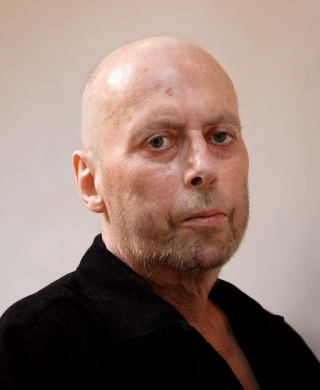
Cn_image_size_hitchensBut I do remember lying there and looking down at my naked torso, which was covered almost from throat to navel by a vivid red radiation rash. This was the product of a month-long bombardment with protons which had burned away all of the cancer in my clavicular and paratracheal nodes, as well as the original tumor in the esophagus. This put me in a rare class of patients who could claim to have received the highly advanced expertise uniquely available at the stellar Zip Code of MD Anderson Cancer Center in Houston. To say that the rash hurt would be pointless. The struggle is to convey the way that it hurt on the inside. I lay for days on end, trying in vain to postpone the moment when I would have to swallow. Every time I did swallow, a hellish tide of pain would flow up my throat, culminating in what felt like a mule kick in the small of my back. I wondered if things looked as red and inflamed within as they did without. And then I had an unprompted rogue thought: If I had been told about all this in advance, would I have opted for the treatment? There were several moments as I bucked and writhed and gasped and cursed when I seriously doubted it.

It’s probably a merciful thing that pain is impossible to describe from memory. It’s also impossible to warn against. If my proton doctors had tried to tell me up front, they might perhaps have spoken of “grave discomfort” or perhaps of a burning sensation. I only know that nothing at all could have readied or steadied me for this thing that seemed to scorn painkillers and to attack me in my core. I now seem to have run out of radiation options in those spots (35 straight days being considered as much as anyone can take), and while this isn’t in any way good news, it spares me from having to wonder if I would willingly endure the same course of treatment again.

More here.

The Best of Shouts & Murmurs, 2011

From The New Yorker:

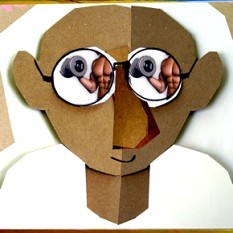
HinduSo I ask him if he’s come out to his parents, and he says, “Oh, no, they’re all old-school Hindu and they wouldn’t understand.” So I say, “But wouldn’t it be cool if you could do a campaign with a poster of your parents hugging you, and the poster could say, ‘Staying in the Closet Is a Hin-Don’t’?” And then he tells me about how India has this, like, totally bogus caste system, and how they even have people called untouchables, and I’m, like, “You mean brunettes?” And he laughs and I say, “No, it’s not funny. You mean, like, brunettes?” And he asks, “Kelly, have you ever studied any world history?,” and I’m, like, “Excuse me, but I happen to be wearing an imported Italian cashmere sweater,” and he says, “You know, maybe I’ll think about a steak.”

—Paul Rudnick, “I Was Gandhi’s Boyfriend,” (April 11, 2011). Illustration by Laurie Rosenwald.

More here.

Friday Poem

From the School of the Renowned Philosopher

For two years he studied with Ammonios Sakkas,
but he was bored by both philosophy and Sakkas.

Then he went into politics.
But he gave that up. That Prefect was an idiot,
and those around him, somber-faced officious nitwits:
their Greek—poor fools—absolutely barbaric.

After that he became
vaguely curious about the Church: to be baptized
and pass as a Christian. But he soon
changed his mind: it would certainly have caused a row
with his parents, ostentatious pagans,
and—horrible thought—
they would have cut off at once
their extremely generous allowance.

But he had to do something. He began to haunt
the corrupt houses of Alexandria,
every secret den of debauchery.

In this fortune favored him:
he’d been given an extremely handsome figure.
And he enjoyed the divine gift.

His looks would last
at least another ten years. And after that?
Maybe he’ll go back to Sakkas.
Or if the old man has died meanwhile,
he’ll go to another philosopher or sophist:
there’s always someone suitable around.
.

by Constantine Cavafy
from Collected Poems
Princeton University Press, Princeton, 1992
translation: Edmund Keeley and Philip Sherrard

Acquired Traits Can Be Inherited via Small RNAs

From CUMC News:

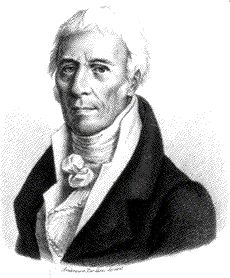
LamarckColumbia University Medical Center (CUMC) researchers have found the first direct evidence that an acquired trait can be inherited without any DNA involvement. The findings suggest that Lamarck, whose theory of evolution was eclipsed by Darwin’s, may not have been entirely wrong. The study is slated to appear in the December 9 issue of Cell. “In our study, roundworms that developed resistance to a virus were able to pass along that immunity to their progeny for many consecutive generations,” reported lead author Oded Rechavi, PhD, associate research scientist in biochemistry and molecular biophysics at CUMC. “The immunity was transferred in the form of small viral-silencing agents called viRNAs, working independently of the organism’s genome.”

In an early theory of evolution, Jean Baptiste Larmarck (1744-1829) proposed that species evolve when individuals adapt to their environment and transmit those acquired traits to their offspring. For example, giraffes developed elongated long necks as they stretched to feed on the leaves of high trees, an acquired advantage that was inherited by subsequent generations. In contrast, Charles Darwin (1809-1882) later theorized that random mutations that offer an organism a competitive advantage drive a species’ evolution. In the case of the giraffe, individuals that happened to have slightly longer necks had a better chance of securing food and thus were able to have more offspring. The subsequent discovery of hereditary genetics supported Darwin’s theory, and Lamarck’s ideas faded into obscurity. However, some evidence suggests that acquired traits can be inherited. “The classic example is the Dutch famine of World War II,” said Dr. Rechavi. “Starving mothers who gave birth during the famine had children who were more susceptible to obesity and other metabolic disorders — and so were their grandchildren.” Controlled experiments have shown similar results, including a recent study in rats demonstrating that chronic high-fat diets in fathers result in obesity in their female offspring.

More here.

Thursday, December 8, 2011

John Lennon’s spirit still soars (1940-1980)

From The Vancouver Sun:

JohnJohn Lennon left this earth on Dec. 8, 1980. But the way Yoko Ono sees it, the Beatle’s joyously populist spectre has never been busier. “Now that John’s a spirit, he has a different effect on people than when he was alive,” Ono, 78, says during a call from Tokyo, where she’ll attend a concert of Japanese musicians performing her husband’s works. “Spirits talk on a pure level and don’t get distracted by people saying things like, ‘That’s nice, but why’s he wearing that?’ “ she says in a slightly weary voice that betrays the midnight hour. “Of course, it would still be better if John was around.” Lennon will be very much around Saturday, when musicians such as Steve Forbert and Marshall Crenshaw gather at (Le) Poisson Rouge in New York for the 31st annual John Lennon Tribute concert. Last year’s 30th anniversary show recently appeared on CD and iTunes (Live From the Beacon Theater NYC), and features the likes of Jackson Browne (You’ve Got to Hide Your Love Away) and Aimee Mann (Jealous Guy). Both concerts are benefits for the Japanese Red Cross.

“The event has its own power source,” says Joe Raiola, co-founder of the concerts for the non-profit workshop Theatre Within. “You put people in a room and ask them to play John Lennon songs, and people get happy.” That Lennon catalog has in fact earned standards status, says Simon Vozick-Levinson, associate editor of Rolling Stone. “You can’t overstate Lennon’s importance as an artist or his influence on the culture, whether it’s having his songs covered on American Idol or giving comfort to people in the Occupy Wall Street movement.” Ono agrees that Lennon’s message is especially timely now. “John was about making the world a better place. He sang Gimme Some Truth, so when I see all the activism out there today, I feel like we will turn the corner soon,” she says.

More here.

What Really Happened Aboard Air France 447

Jeff Wise in Popular Mechanics:

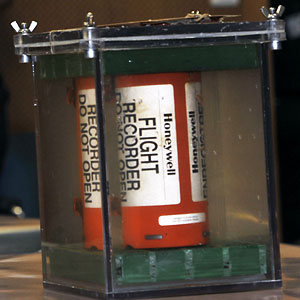
Af447-minutes-0511-mdnWith the wreckage and flight-data recorders lost beneath 2 miles of ocean, experts were forced to speculate using the only data available: a cryptic set of communications beamed automatically from the aircraft to the airline's maintenance center in France. As PM found in our cover story about the crash, published two years ago this month, the data implied that the plane had fallen afoul of a technical problem—the icing up of air-speed sensors—which in conjunction with severe weather led to a complex “error chain” that ended in a crash and the loss of 228 lives.

The matter might have rested there, were it not for the remarkable recovery of AF447's black boxes this past April. Upon the analysis of their contents, the French accident investigation authority, the BEA, released a report in July that to a large extent verified the initial suppositions. An even fuller picture emerged with the publication of a book in French entitled Erreurs de Pilotage (volume 5), by pilot and aviation writer Jean-Pierre Otelli, which includes the full transcript of the pilots' conversation.

We now understand that, indeed, AF447 passed into clouds associated with a large system of thunderstorms, its speed sensors became iced over, and the autopilot disengaged. In the ensuing confusion, the pilots lost control of the airplane because they reacted incorrectly to the loss of instrumentation and then seemed unable to comprehend the nature of the problems they had caused. Neither weather nor malfunction doomed AF447, nor a complex chain of error, but a simple but persistent mistake on the part of one of the pilots.

More here. [Thanks to Margit Oberrauch.]

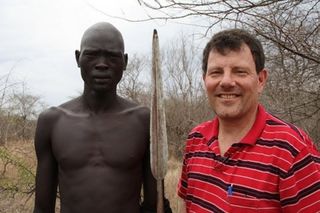
Nick Kristof’s Anti-Politics

Tumblr_lvbjpsADee1qzll1yElliott Prasse-Freeman in New Inquiry:

In order to grasp Kristof’s success, it is important to deconstruct his style and method. He is remarkably efficient with words, evocative through stories, and convincing in tone. After reading perhaps hundreds of his columns on the underdeveloped world, certain patterns emerge: Broadly speaking, Kristof often employs clever journalistic and prose devices to weave personalized traumas into bite-sized morsels of digestible horror. By playing on his audience’s Orientalist, classist, and racist fantasies, Kristof fabricates legible narratives out of snapshots of distant worlds. He then crafts stunningly simplistic solutions to the seemingly irrevocable problems that plague those backwards places. Kristof accomplishes this by using a standard and replicated formula: some mixture of (1) a construction of a bestial and demonic Other creating a spectacle of violence; (2) a rendering of the object of that horror—a depoliticized, abject victim, usually no more than a body; (3) a presentation of a (potential) salvific savior figure (typically the West writ large or a Western agent—some teleological process immanent in capitalism or development, the reader himself (who can act by donating money), and almost always Kristof himself as well); and (4) an introduction of potential linkages with larger systems and structures … only to immediately reterritorialize around the non-political solutions and the savior implementing them.

Taxing the 1%: Why the top tax rate could be over 80%

SaezFig2(1)Thomas Piketty, Emmanuel Saez, and Stefanie Stantcheva in Vox:

In the United States, the share of total pre-tax income accruing to the top 1% has more than doubled from less than 10% in the 1970s to over 20% today (CBO 2011 and Piketty and Saez 2003). A similar pattern is true of other English-speaking countries. Contrary to the widely held view, however, globalisation and new technologies are not to blame. Other OECD countries such as those in continental Europe or Japan have seen far less concentration of income among the mega rich (World Top Incomes Database 2011).

At the same time, top income tax rates on upper income earners have declined significantly since the 1970s in many OECD countries, again particularly in English-speaking ones. For example, top marginal income tax rates in the United States or the United Kingdom were above 70% in the 1970s before the Reagan and Thatcher revolutions drastically cut them by 40 percentage points within a decade.

At a time when most OECD countries face large deficits and debt burdens, a crucial public policy question is whether governments should tax high earners more. The potential tax revenue at stake is now very large. For example, doubling the average US individual income tax rate on the top 1% income earners from the current 22.5% level to 45% would increase tax revenue by 2.7% of GDP per year,1 as much as letting all of the Bush tax cuts expire. But, of course, this simple calculation is static and such a large increase in taxes may well affect the economic behaviour of the rich and the income they report pre-tax, the broader economy, and ultimately the tax revenue generated. In recent research (Piketty et al 2011), we analyse this issue both conceptually and empirically using international evidence on top incomes and top tax rates since the 1970s.

Thursday Poem

The Poet with His Face in His Hands
.

You want to cry aloud for your
mistakes. But to tell the truth the world
doesn't need anymore of that sound.
.
So if you're going to do it and can't
stop yourself, if your pretty mouth can't
hold it in, at least go by yourself across
.
the forty fields and the forty dark inclines
of rocks and water to the place where
the falls are flinging out their white sheets
.
like crazy, and there is a cave behind all that
jubilation and water fun and you can
stand there, under it, and roar all you
.
want and nothing will be disturbed; you can
drip with despair all afternoon and still,
on a green branch, its wings just lightly touched
.
by the passing foil of the water, the thrush,
puffing out its spotted breast, will sing
of the perfect, stone-hard beauty of everything.
.
.
by Mary Oliver
from New and Selected Poems Volume Two

Starting Over

From Seed:

Startingover_HLIn his famous Lectures on Physics, Richard Feynman presented this interesting speculation:

“If, in some cataclysm, all of scientific knowledge were to be destroyed, and only one sentence passed on to the next generations of creatures, what statement would contain the most information in the fewest words? I believe it is the atomic hypothesis (or the atomic fact, or whatever you wish to call it) that all things are made of atoms—little particles that move around in perpetual motion, attracting each other when they are a little distance apart, but repelling upon being squeezed into one another. In that one sentence, you will see, there is an enormous amount of information about the world, if just a little imagination and thinking are applied.”

Fascinated by Feynman’s question, Seed put a similar one to a number of leading thinkers: “Imagine—much as Feynman asked his audience—that in a mission to change everyone’s thinking about the world, you can take only one lesson from your field as a guide. In a single statement, what would it be?” Here are their answers:

“The dazzling diversity of species and biological adaptations over 3.5 billion years of life on Earth owes its existence to “adaptation by natural selection,” which requires just three simple conditions to operate: variation, differential selection (the best performing traits survive and reproduce more effectively than others), and replication of successful traits by subsequent generations, via a double helix of molecules that code for proteins as biological building blocks, or among more complex animals, via imitation or cultural transmission of methods and knowledge.”
—Dominic Johnson is a reader in politics and international relations at Edinburgh University.

More here.

Why aren’t we smarter already?

From PhysOrg:

RatWe put a lot of energy into improving our memory, intelligence, and attention. There are even drugs that make us sharper, such as Ritalin and caffeine. But maybe smarter isn’t really all that better. A new paper published in Current Directions in Psychological Science, a journal of the Association for Psychological Science, warns that there are limits on how smart humans can get, and any increases in thinking ability are likely to come with problems. Tradeoffs are common in evolution. It might be nice to be eight feet tall, but most hearts couldn’t handle getting blood up that high. So most humans top out under six feet. Just as there are evolutionary tradeoffs for physical traits, Hills says, there are tradeoffs for intelligence. A baby’s brain size is thought to be limited by, among other things, the size of the mother’s pelvis; bigger brains could mean more deaths in childbirth, and the pelvis can’t change substantially without changing the way we stand and walk. Drugs like Ritalin and amphetamines help people pay better attention. But they often only help people with lower baseline abilities; people who don’t have trouble paying attention in the first place can actually perform worse when they take attention-enhancing drugs. That suggests there is some kind of upper limit to how much people can or should pay attention. “This makes sense if you think about a focused task like driving,” Hills says, “where you have to pay attention, but to the right things—which may be changing all the time. If your attention is focused on a shiny billboard or changing the channel on the radio, you’re going to have problems.”

It may seem like a good thing to have a better memory, but people with excessively vivid memories have a difficult life. “Memory is a double-edged sword,” Hills says. In post-traumatic stress disorder, for example, a person can’t stop remembering some awful episode. “If something bad happens, you want to be able to forget it, to move on.” Even increasing general intelligence can cause problems. Hills and Hertwig cite a study of Ashkenazi Jews, who have an average IQ much higher than the general European population. This is apparently because of evolutionary selection for intelligence in the last 2,000 years. But, at the same time, Ashkenazi Jews have been plagued by inherited diseases like Tay-Sachs disease that affect the nervous system. It may be that the increase in brain power has caused an increase in disease.

More here.

Grossman’s truth

1291751682grossman_120710_380pxB

Inevitably, however, we tend to create a generic Holocaust narrative out of the tales we hear most often, and find most easy to identify with. As Americans, we respond to stories of assimilated Western European Jews who are gradually shut out of their country’s life, like that of the German diarist Victor Klemperer. As city dwellers, our imaginations are compelled by Anne Frank’s experience of hiding out in a crowded apartment, invisible in the multitude. And as members of an advanced industrial society, we are compelled by the image of the gas chamber, which writers since Hannah Arendt have made the central emblem of the Holocaust—the ultimate reduction of human life to inanimate matter. All of these are truths about the Holocaust, but they are not the only truths. As many Jews died by simple shooting as in gas chambers; far more died in Eastern Europe than in Western Europe; millions were killed almost as soon as their towns and villages were occupied by the Germans, with no chance to hide out or adjust in any way to life under Nazism. Statistically speaking, the representative Holocaust story might not feature concentration camps or hiding places or repressive laws at all; it might simply be the story of waking up one morning to find German tanks in your street and a month later being shot and buried in a mass grave.

more from Adam Kirsch at Tablet here.

Pieces of Shadow

320

When young W.S. Merwin met Ezra Pound in a windowless room at St. Elizabeth’s Hospital, Pound advised the aspiring poet to begin his career translating, or to, as he put it: “Study the roots, not the twigs.” Translation, Pound held, was a way to inculcate poetic voice; it revealed new possibilities of one’s native language. Merwin, then eighteen, took his advice and began translating soon after his sojourn in Europe, a trip he describes in his memoir Summer Doorways. Merwin’s first major translation, The Poem of the Cid, soon followed, the result of another encounter with a poet-translator, Robert Graves. While tutoring Graves’ son in Majorca, Merwin met Dido Milroy who would help him get a job with the BBC, translating medieval poetry, which led to his rendering of the Spanish epic. Some sixty years later, Merwin has racked up a long list of translations: The Song of Roland, Sir Gawain and the Green Knight, poems by Dante, Osip Mandelstam, Basho, Pablo Neruda, Guilhem Ademar. However, it is his translations from Spanish that stand out, not only because they greatly outnumber his translations from other languages, but also because they demonstrate that a tradition some had considered minor is abundant, rich, and varied in both content and voice.

more from Jesse Tangen-Mills at Asymptote here.