
Category: Recommended Reading
Social Criticism in the Age of the Normalized Intellectual
Axel Honneth in Transformations of the Public Sphere:

What sounds plausible in this conclusion is the fact that the forcefulness and practical effect of social criticism seldom results from the measure of the theory in which it is invested but, rather, from the perspicuity of its central concern. And today this results in a turn to the virtues of the critic, since it feeds the devaluation of sociological knowledge and meets up with the tendency to personalize intellectual contexts. All the same, the self-evidence with which Walzer still regards even the intellectuals of our day as born governors of social criticism is surprising. He does not speak of bold Enlighteners—we might think of figures on the model of Émile Zola—but of the ubiquitous sort of author who participates with generalizing arguments in the debates of a democratic public sphere. Is this normalized intellectual, a spiritual agent in the fora of public opinion formation, really the natural representative today of what was once called “social criticism”? Here I first trace an epochal transformation in the form of the intellectual before outlining a completely different physiognomy of the social critic than that found in Walzer’s work.
More here.
titanic

It is 100 years since the Titanic went down. Even as it happened, there were those who felt it was a metaphor for the end of the Victorian age. The great, self-confident ship, with its rigid social classifications, was clearly an emblem of the Britain that had sent the ship forth in April 1912. GK Chesterton, in The Illustrated London News, saw “our whole civilisation” as being “very like the Titanic” … “There was no sort of sane proportion between the extent of the provision for luxury and levity, and the extent of the provision for need and desperation. The scheme did far too much for prosperity and far too little for distress – just like the modern State.” The statistics for the deaths among the passenger lists seemed to bear out not simply the unfairness of the divisions between rich and poor, but also the differences between national characteristics. The death toll was 1,514, at least. Of these, 1,352 were men and 162 were women and children. Most of those who travelled first class were able to get into the lifeboats. Only four out of the 144 first-class women died, and three of them chose to remain on the ship. In second class, 154 men out of 168 died. In third class, 381 men out of 456 perished, and 89 women out of 165.
more from AN Wilson at the FT here.
a rake’s progress

With the deaths last year of Lucian Freud and Richard Hamilton, David Hockney suddenly catapulted into position as England’s leading painter. Although the cultivated image of a dandified English schoolboy in white pants, mismatched socks, polka-dot bow tie and beanie is long out of date for an artist who, at 74, is identified with iconic 1960s paintings of Los Angeles swimming pools, the thought is a bit of a shock. Still, the timing couldn’t be better for this enjoyable and well-sourced book, which — like Hockney’s own work — is both conversational and perceptive. The artist’s paintings serve as chapter headings in the first, fluent volume of Christopher Simon Sykes’ planned two-part biography. The list, roughly but not rigidly chronological, is not a gimmick.
more from Christopher Knight at the LA Times here.
the crisis of zionism

“The Jews are like rats,” Peter Beinart’s grandmother told him when he was a boy. “We leave the sinking ship.” This grandmother — who was born in Egypt and lived in South Africa but dreamed of joining her brother in Israel — believed that Israel was the last refuge of a hounded people, and she made Beinart, who was born in the United States, believe it, too. But Beinart, a former editor of The New Republic who now runs a blog called Open Zion, has a problem: he finds Israel, morally, a sinking ship. Instead of simply swimming away, he has written “The Crisis of Zionism,” in which he sets out to save the country by labeling many of its leaders racist, denouncing many of its American supporters as Holocaust-obsessed enablers and advocating a boycott of people and products from beyond Israel’s 1967 eastern border. While saving Israel, Beinart hopes with evangelical zeal to save America from a handful of Jewish organizations that in his view have not only hijacked American liberalism but also stolen the spine of the president of the United States, who, despite having received 78 percent of the Jewish vote, is powerless to pursue his own agenda.
more from Jonathan Rosen at the NY Times here.
Friday, April 13, 2012
An Interview with Richard Rorty
Some of the parts are voiceovers in German Dutch, but the interview is in English.
Ahmed Ben Bella, 1918-2012

Tall, athletic, handsome and charismatic, Mr. Ben Bella was known for his quick mind, courage and political cunning, traits that became tools of survival in a turbulent life. He faced heavy combat in wartime France and Italy, escaped French assassination attempts as well as a prison, then survived the murderous intrigues of political rivals as he struggled to impose socialism on his sprawling, divided country in the anarchy that followed independence in 1962.
On June 19, 1965, after less than three years as prime minister and president, he was ousted in a coup led by an old ally. He spent the next 14 years in confinement and never again held power. But he remained a powerful voice for the third world amid the conflicts of the cold war and the unrest within the Arab world over Israel, Iraq and radical Islam.
“My life is a life of combat,” he told an interviewer in his last years. “It is a combat that started for me at the age of 16. I’m 90 years old now, and my motivation hasn’t changed; it’s the same fervor that drives me.”
Ahmed Ben Bella was born on Dec. 25, 1918, in Marnia, a small town in the mountains of western Algeria, to a family with Moroccan roots. His father, a Sufi Muslim, supported his five sons and two daughters by farming and small-time trade. The oldest brother died from wounds received in World War I; two other brothers died from illness, and another went to France and disappeared in the mayhem of the Nazi victory in 1940.
Mr. Ben Bella chafed at colonialism from an early age — he recalled a run-in with a racist secondary school teacher — and complained of France’s cultural influence. “We think in Arabic, but we talk in French,” he said.
His education was truncated when his father officially changed the year of Ahmed’s birth to 1916 so that he could return to work on the farm. The move had unintended consequences: Ahmed was conscripted in 1937, two years ahead of his class.
He took to soldiering as readily as he had taken to soccer back home. He was promoted to sergeant and won celebrity as a soccer star in Marseille, France, where his regiment was based. In command of an antiaircraft section during the German invasion of 1940, he kept to his post, firing away as others fled, as waves of Stuka dive bombers pounded the city’s port. He was awarded the Croix de Guerre.
Also here, Alistair Horne revisits Savage War for Peace, his study of the Algerian war of independence.
Memory Lane

In a dark-red Ottoman town house in Istanbul’s antiques district, a fast-gentrifying quarter where brassware spills on to steep, cobbled lanes, an idiosyncratic museum has been taking shape. The first display as you enter is an entire wall spiked with evenly spaced cigarette butts – testament to the prolonged agony of a man who furtively saved 4,213 of his beloved’s fag ends after she married someone else. Yet “the word ‘obsession’ is discouraged”, says the Nobel laureate Orhan Pamuk, as he supervises the final touches to his Museum of Innocence.
Pamuk, an artist manqué, studied architecture but switched to novel writing aged 23. His “sentimental museum” was conceived in the mid-1990s as a counterpart to his eighth novel, The Museum of Innocence (2008) – published after he won the Nobel Prize in literature in 2006. Like the author, its hero Kemal is born into Istanbul’s well-heeled bourgeoisie. But after an affair with Fusun, a beautiful shopgirl and a distant poor relation, Kemal breaks off a society engagement to try to win her back. The story has the contours of Turkish television melodrama (Pamuk had a stint writing scripts in the 1980s). But the pain is real in a novel that, like much of Pamuk’s fiction, probes the anxieties and inauthenticity of living in what feels like a backwater while imitating a westernised modernity. Kemal’s beloved dies, and – unable to find peace – he builds a museum from the objects she touched, as Pamuk gathered memorabilia to inspire the narrative.
Language and Monsters
The most recent example of science fiction’s aesthetic power is the extraordinary new novel by China Miéville, whose tenth book demonstrates that fiction can be both serious and fun, a light fancy of the imagination and a deep investigation into what makes us human. Miéville is widely known for a string of bestselling and prize-winning novels that splice together elements of fantasy, horror, noir, and science fiction Embassytown is his first unequivocally science fiction text, his least hybridized book yet.
Part space opera and part planetary romance, set in our distant future, Embassytown is the tale of a young woman born and raised in the human enclave on the planet Arieka. Avice Brenner Cho leaves home to become an interstellar sailor, one of the few people capable of negotiating the “immer,” the subspace or hyperspace “altreality” that permits faster-than-light travel. Having met and married Scile, an academic linguist fascinated by the language of the indigenous Ariekei, whom the Embassytowners call “Hosts,” Avice agrees to indulge his curiosity and return to Arieka. The Hosts’ language, always called “Language,” is a very curious phenomenon. Their speech comes in the form of two words spoken simultaneously, something possible because the Ariekei have two mouths. To inscribe Language, the humans present a graphic image, rather like a mathematical fraction, with a numerator (the “cut”) and a denominator (the “turn”), as in the case of the Host named Surl Tesh-echer, which is written as:
surl
______
tesh-echer.
While this sort of inscription initially seems a precious affectation, it proves central to Miéville’s thematics.
Host Language has two features. First, the Hosts only recognize it when it is generated by living beings — by conscious minds — so Language generated by a computer, however semantically and syntactically perfect, isn’t even heard, though a broadcast recording of a conscious being is. Second, Language is exclusively literal; only things that are empirically true can be said. Since Language contains no figurative dimension — no irony, no metaphor, no oxymoron — the Ariekei cannot lie. While the Hosts always have polyphony, they do not have polysemy — the two words always have one meaning.
Embassytown is a novel of ideas — a novel about the philosophy of language, about how language is linked to ethics, and about our “biopolis,” the structure of the links between individual humans and the larger human community.
beck and the book of revelations

In his 48 years on planet Earth, Beck has been a teenage misfit; an amateur magician; an alcoholic and a pothead; a Catholic turned nonbeliever turned Mormon; a twice-married father of four; a top-rated radio talk-show host; a New York Times best-selling author in four genres; a polarizing, tearful television talking head; and a multi-media, multi-millionaire entrepreneur, now with his own online magazine and Web TV show. Just because he may have fallen off your radar since he left Fox News, last summer, doesn’t mean that millions of faithful listeners don’t still harken to his every dog-whistle warning. They do, and their views—and their votes—carry weight. For public consumption Beck styles himself as a performer, but this is pretense. He aspires to something greater. Beck is like Andy Griffith’s Lonesome Rhodes, the faux-bumpkin demagogue in A Face in the Crowd, who shouts, “I’m not just an entertainer. I’m an influence, a wielder of opinion, a force … a force!” And he is—a force and, as he sometimes suggests, a seer. Trying to parse his every utterance leads to madness. He’s more readily comprehensible as a vortex. Glenn Beck is a full-time pre-millennial prophet predicting, if not the end of days, at least something like a new Dark Age, with a collapsing global financial and political system and an onslaught of Evil Forces that will require an every-man-for-himself mind-set to survive. If he had lived in the first century A.D., Beck could well have displaced John of Patmos as the author of the biblical book of Revelation, that bizarre, brooding, apocalyptic amalgam of seven seals, seven stars, and a lamb with seven horns.
more from Todd S. Purdum at Vanity Fair here.
the peacock problem

Popular commentators on evolution, such as Richard Dawkins, have become overly enamoured with the idea of the gene. Genetics is certainly the most powerful mechanism of evolution and was unknown in Charles Darwin’s time but although we have learned much from sequencing DNA, the idea of the gene does not explain everything about the living world and certainly not about the human world. However, just as Herbert Spencer used the notion of the “survival of the fittest” to explain why some people are rich and others are poor, so Dawkins argues that culture has genes, too – self-replicating particles of information that he calls “memes” (think of the dumb jokes and “viral” videos that proliferate on the internet). If all evolution happens for the sake of proliferating selfish genes, then everything we see in living creatures has to be useful and practical. But that’s not at all how Darwin saw it. He envisioned as at least two distinct processes: natural selection and sexual selection. The former concerns the survival of the fittest. The latter, however, is an aspect of evolution that is too often overlooked today.
more from David Rothenberg at The New Statesman here.
Rwanda’s “evil twin”

Even those people who claim to know little of Africa have heard of Rwanda. Like Auschwitz and Srebrenica, the name is forever linked to one of the 20th century’s defining acts of depravity. Possibly more than 1m people, predominantly Tutsi, were hacked to death with hoes, machetes and whatever came to hand; the international community failed to take action and a United Nations mission was left floundering in the chaos. Some may have watched Hotel Rwanda, a film which tries to capture the brutality of what happened in 1994. More recently, President Paul Kagame has been credited with turning Rwanda into an African success story, although his growing number of critics cite the suppression of public debate, the murky handling of the 2010 election (all the opposition parties pulled out of the contest alleging fraud and vote rigging) and the worry that, as with previous African “big men,” he will fail to stand down at the 2017 election as the constitution requires. But few will have heard of Rwanda’s “evil twin.”
more from Will Paxton at Prospect Magazine here.
A CULTURAL HISTORY OF PHYSICS
From Edge:
THE FOREWORD
By Charles Simonyi
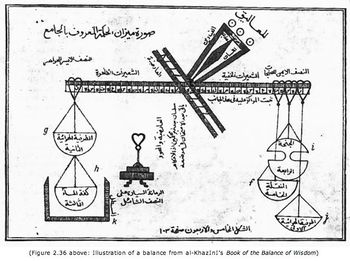
Besides being a scientist, my father was a great humanist, not only in terms of his concern for his fellow man but also in the sense of a scholar of the humanities: he was extremely well read in the classics as well as in contemporary literature and history. The break in his career at midlife did not drive him to despair; his humanism instead commanded him to work on the subject he had perhaps always wanted to work on: the history of the interplay of science and the humanities. His first notes became a lecture series, first given off campus, in the evenings at the invitation of student organizations. Much later, when I was able to return to Hungary, I was privileged to listen to one of these lectures, still filled to more than capacity with students and young intellectuals, hearing my father convey the excitement and wonder of scientific development—how difficult it was to make progress in science, not simply because of ignorance but because the arguments were complex and the evidence was often ambiguous, and how the scientists gained courage or were otherwise influenced by the humanities. The success of these lectures gave rise to the present book that he continued to revise and extend almost until his death in 2001.
More here.
Memory ‘trick’ relieves drug cravings
From Nature:

Existing therapies try to help addicts to unlearn their habit by, for example, showing them videos of people injecting, and having them handle syringes while not under the influence of the drug. This reduces cravings in the clinic, but not when addicts return to their usual surroundings. Other approaches tested in rats involved using memory-blocking drugs to change memories of past drug use, but these are not approved for use in humans. To boost the technique's effectiveness, Lu and his team combined the approach with a process called memory reconsolidation. During reconsolidation, information is retrieved from long-term storage and reactivated to strengthen the memory. After retrieval, however, the information becomes temporarily unstable and thus prone to alteration.
More here.
Christopher Hitchens’s Ten Commandments
I am posting this today, on what would have been Hitch's 63rd birthday, in his memory and as part of a worldwide celebration of Christopher Hitchens Day.

Thursday, April 12, 2012
Both of Us Disgusted in My Insula
It is often said by scientists that our understanding of the neural basis of empathy is in its infancy, the suggestion being that it is only a matter of time before problems will be solved, as if the difficulties facing the research field are merely technical. But the implication of my paper is that the issues confronting empathy theorists are as much theoretical or, say, philosophical, as they are technical or scientific. Adam Smith’s name is today routinely evoked in introductory remarks on the nature of empathy. But how many people realize that for Smith empathy (or sympathy) was not a natural phenomenon or an automatic process of resonance with the feelings of another? Rather, according to him sympathy was conditioned by an inherent theatricality that, by making persons into actors and spectators who distance themselves from each other and even from themselves, forestalls the possibility (the dream) of complete sympathetic merger or identification.43 Freud expressed the same difficulty, indeed impossibility, in his own way when he made psychical ambivalence—the constitutive impossibility of separating Eros and Thanatos, love and hate, immersion and distance—central to his understanding of the sympathetic-identificatory phenomenon. According to Freud, rivalry with the other is as inherent in human nature as is love, and indeed is inseparable from love: the taming of these emotions is the necessary but endless task of civilization.44 For such thinkers, then, our knowledge of other minds cannot be explained by an appeal to a simple mechanism of mutual resonance or mutual attunement of the sort I have analyzed here. A further implication of my paper is that the problem of emotional empathy can only be rendered the more intractable if investigators persist in adopting the theoretical assumptions and experimental methods associated with the Basic Emotions View and the mirror neuron hypothesis.
more from Ruth Leys at nonsite here.
Peoples bore me
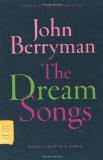
If poetry is going to be tortured, agonized, and morbidly introspective, it might as well be funny too. John Berryman’s The Dream Songs are all that and more. Half elegiac lyricism and half lowdown buffoonery, they’re like nothing else in American literature, though they owe a debt to Saul Bellow’s breakthrough mixture of high and low in The Adventures of Auggie March. (The two men shared an office at the University of Minnesota in the 1950s. Can you imagine being an undergraduate there and making a routine appointment to discuss your C+ with Mr. Bellow or Mr. Berryman?) Although I can’t claim to understand The Dream Songs fully, I’m not required to. No one said it better than Berryman himself: “These Songs are not meant to be understood, you understand./They are only meant to terrify & comfort.” Reading all 385 of them at a stretch (not recommended), I sometimes find myself bored as well as baffled.
more from Stephen Ackey at The Millions here.
Pauline Kael and the Paulettes

As chief film critic for the New Yorker from 1968 to 1991, sometimes alternating for six months of the year with Penelope Gilliatt, Kael had one of the best pulpits in the world during some of the greatest decades of international film. Phenomenally productive, she published twelve books of film criticism, many of them bestsellers, and one, Deeper into Movies, the winner of the National Book Award in 1974. Over her career, she wrote over 11,000 reviews, most of them reprinted in 5001 Nights at the Movies (1982). Her career coincided with the rise of film studies, and she received honorary degrees from Haverford, Reed, Smith and Kalamazoo colleges, Columbia University, and Berkeley. The archive of her manuscripts and letters is held at the Lilly Library of Indiana University. It’s difficult to imagine another film critic with both such a popular audience and such high-culture respect – at least in America. British readers, I think, have not been as much in her thrall. Although she was an early admirer of British cinema, a perceptive and bold critic of British acting (see her candid review of Laurence Olivier as Othello in 1966: “What Negro actor at this stage in the world’s history could dare bring to the role the effrontery that Olivier does?”), and a devoted follower of British film criticism in both newspapers and journals, she was not as widely read outside the US, or as significant.
more from Elaine Showalter at the TLS here.
The Case Against Kids
Elizabeth Kolbert in The New Yorker:
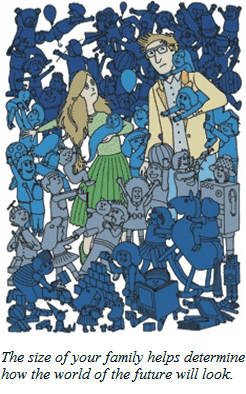
In “Why Have Children?: The Ethical Debate” (M.I.T. Press), Christine Overall tries to subject that decision to morally rigorous analysis. Overall, who teaches philosophy at Queen’s University, in Ontario, dismisses the notion that childbearing is “natural” and therefore needs no justification. “There are many urges apparently arising from our biological nature that we nonetheless should choose not to act upon,” she observes. If we’re going to keep having kids, we ought to be able to come up with a reason.
Of course, people do give reasons for having children, and Overall takes them up one by one. Consider the claim that having a child benefits the child. This might seem self-evident. After all, a child deprived, through some Knowltonian means, of coming into existence, loses everything. She can never experience any of the pleasures life has to offer—eating ice cream, say, or riding a bike, or, for the more forward-thinking parents among us, having sex.
More here.
Thursday Poem
Hot Late Summer
What to do with the rose in my garden,
this remaining rose?
I ended up looking at the abandoned garden.
My old mother, senile, asleep,
carelessly showed it
because of the unusually humid heat past noon
with no autumn wind to stir the blinds.
The withered gate that couldn’t possibly have
anyone to wait for or to visit
was not so much obscene
as openly, casually, innocent.
Having hurried past the verandah outside her chamber,
I wipe the sweat that covers my skin.
The heat of this year, this crazy heat.
What to do with the rose in my garden,
this private rose?
,
by Kazue Shinkawa
from Hiyu dewa naku
Publisher: Chikyusha, Tokyo, 1968
translation: Hiroaki Sato
from Not a Metaphor
P.S., A Press, Middletown Springs, VT, USA, 1999