
David Feldman in The Ideas Letter:
Over the last 100 years, the struggle against antisemitism and the struggle against racism have at times appeared inextricably connected, firmly allied in a single fight against bigotry. Today, it is the disconnections that appear most visible.
The standoff is now stark, thanks to divergent responses to Oct. 7, 2023 and its aftermath — to Hamas’s attack on Israel and the killing of civilians and hostage-taking, and to Israel’s ongoing war on Gaza and the death, displacement, and privation it has brought. These events have not only had grievous consequences for Palestinians and Israelis; they have also been divisive globally. And they have accelerated and amplified a split between anti-racism and anti-antisemitism that was already advanced.
For some, the attack of October 7 was an act of specifically antisemitic terror. “What is this, some pogrom in Lithuania?” asked Amit Halevi, the chairman of Be’eri, a kibbutz that lost 10 percent of its civilian population in the massacre. Others have drawn connections between October 7 and the Holocaust, finding “the antisemitism of extermination” expressed by Hamas today, as it was by the Nazis before.
Yet much of the anti-racist Left presents these events in a different key. In Britain, the Palestine Solidarity Campaign reacted immediately, on Oct.7: “The offensive launched from Gaza today can only be understood in the context of Israel’s ongoing, decades long, military occupation and colonisation of Palestinian land and imposition of a system of oppression that meets the legal definition of apartheid.” Amnesty International denounced Hamas’s attacks on civilians, but it located the roots of the violence in Israel’s 16-year blockade of Gaza and the discriminatory system it imposes on all Palestinians.
More here.
Enjoying the content on 3QD? Help keep us going by donating now.
 T
T I
I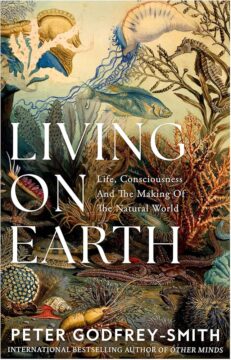 In 2016, scuba-diving philosopher Peter Godfrey-Smith made a huge splash with his book
  I opened the library’s glass door and placed a fresh copy of my latest novel, What the Dead Can Say, on the bottom shelf. Then I returned to the car. For months my wife and I had been driving around the country, dropping off free copies of What the Dead Can Say in hundreds of Little Free Libraries. Now, we turned back on to the main road and headed down to Colorado, in search of more.
 The operation that used pagers and walkie-talkies to
 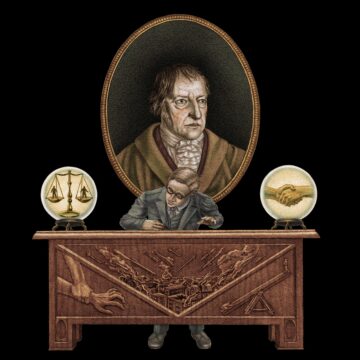 No idea has fallen flatter than the “end of history,” popularized by political philosopher Francis Fukuyama in his eponymous 1993 book. Few still believe that all human beings will accept liberal democracy and free market capitalism as the final forms of society and are uninterested in any alternative. But like many truly awful ideas, the end of history had its 15 minutes, or in this case 15 years, of fame, as a catchall motivation for America’s misguided attempt to export democracy to Afghanistan and Iraq.
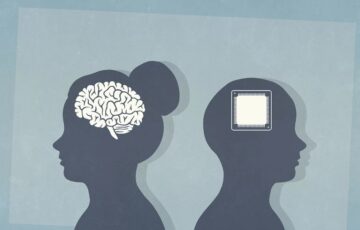 An ideas generator powered by artificial intelligence (AI) came up with more original research ideas than did 50 scientists working independently, according to a preprint posted on arXiv this month
 Digital quantification determines Americans’ quality of life. Algorithms select job applicants for interviews and employees for performance bonuses. They aggregate stories and products as we shop for news and goods, matching our preferences to the infinite bounty on offer. And they determine which homes we can buy, purchases we can make, and investments we can pursue. In love, the
  The United States doesn’t really make chips these days, instead relying on a complex process of design, production, assembly, and testing that spans the globe. The vast majority of fabrication is done in East Asia; Taiwan, in particular, produces 41 percent of all processor chips and more than 90 percent of the most powerful chips, essential to advanced computing and AI. The supply chain’s concentration in an island nation with which China expressly seeks to “reunify” gives the whole matter unusually weighty stakes. At a White House event to get the bill past the finish line in Congress, Deputy Secretary of Defense Kathleen Hicks
  It is illegal to buy or sell an organ anywhere in the world, with the
 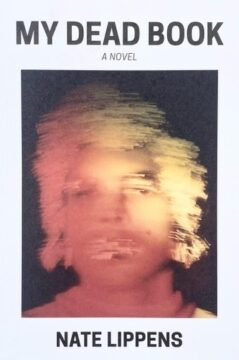 I’ve been reading Nate Lippens for years. I think this is the third time I’ve read My Dead Book and I’m finally getting a grip on what kind of machine his writing is. I think it’s a poetic instrument and also some kind of natural phenomena. I went to Joshua Tree one night in the aughts with a gang of people to see the Perseids. I’ve been thinking about that. We had sleeping bags and some people had drinks and their drugs of choice and then we all laid down flat looking up the sky waiting for the show. There wasn’t much. Like almost nothing. There’s one. And then in maybe about seven minutes another. Then another one. And nothing for a while. Then wham and all of the sudden we were screaming, giddy as kids because we were getting inundated with meteors making the sky like this crazy vibing net and we were ancient people animals lying there looking up in naked awe. It was the best. Start to finish I think that’s what Nate Lippens has done. Let me lay it out here. My Dead Book starts off with a fairly sentimental recitation, a recollection of one of his dead friends from the past. And then another one. I mean of course I like the way he writes. It’s clean, it’s fairly direct, and conceptually I am reminded of how practical friendship is to a lost child which this narrator definitely is. If you don’t know who you are then you make yourself up with bits and pieces of your friends.