Letter From Detroit

Ingrid Norton in the Los Angeles Review of Books:

Tumblr_lxrr9vUI9N1qhwx0oI was sitting in the Telway diner around the edge of midnight. The Telway is a story in itself: a chrome island built during the 1940s, floating on a blighted stretch of Michigan Avenue. Telway is staffed by the Appalachian whites who long ago moved to Detroit for work and, more recently, to the suburbs to live. It’s open 24 hours and nothing costs more than $2.25. I ordered a fish sandwich and had the place to myself, except for the short-order cook, the waitress, and the cashier. A pair of bulky night workers stood in the vestibule and asked for hamburgers, heads framed by the take-away window. Then an ambulance pulled off Michigan Avenue and parked on the sidewalk outside. A stocky, balding EMS worker with reddened skin and tired eyes came in.

“How much time you got?” he asked the powder-faced redheaded woman working the counter.

“How much time you need?”

“I just watched the cops beat the shit out of somebody,” the EMT said to all of us. “He was being stupid.”

He ordered a large coffee with double cream, and proceeded to tell us the convoluted story. He spoke with a flat affect and blank eyes. It was a robbery/assault at some house “by the train station.” He’d waited outside with the woman who had called 911. She kept telling him to go inside and help the man who’d been assaulted. “‘He’s spitting up, you gotta get in there.’ And I told her again,” he said, “‘I can’t go into a violent situation before the police get here, so we’ll have to wait for the police.’”

It took the police over half an hour to get there, and so they waited on the sidewalk while the woman grew steadily more agitated, railing about it being the EMT’s duty to save lives. She said, “I’m going in to get him! If he dies while we’re waiting and you aren’t helping him, I’m gonna sue the city.”

More here.

Do Thrifty Brains Make Better Minds?

Andy Clark in the New York Times:

ScreenHunter_07 Jan. 24 10.33Might the miserly use of neural resources be one of the essential keys to understanding how brains make sense of the world? Some recent work in computational and cognitive neuroscience suggests that it is indeed the frugal use of our native neural capacity (the inventive use of restricted “neural bandwidth,” if you will) that explains how brains like ours so elegantly make sense of noisy and ambiguous sensory input. That same story suggests, intriguingly, that perception, understanding and imagination, which we might intuitively consider to be three distinct chunks of our mental machinery, are inextricably tied together as simultaneous results of a single underlying strategy known as “predictive coding.” This strategy saves on bandwidth using (who would have guessed it?) one of the many technical wheezes that enable us to economically store and transmit pictures, sounds and videos using formats such as JPEG and MP3.

In the case of a picture (a black and white photo of Laurence Olivier playing Hamlet, to activate a concrete image in your mind) predictive coding works by assuming that the value of each pixel is well predicted by the value of its various neighbors. When that’s true — which is rather often, as gray-scale gradients are pretty smooth for large parts of most images — there is simply no need to transmit the value of that pixel. All that the photo-frugal need transmit are the deviations from what was thus predicted. The simplest prediction would be that neighboring pixels all share the same value (the same gray scale value, for example), but much more complex predictions are also possible. As long as there is detectable regularity, prediction (and hence this particular form of data compression) is possible.

More here. And a short sequel here.

The Bomb: Iran, Saudi Arabia, and Pakistan

Pervez Hoodbhoy in The Express Tribune:

ScreenHunter_06 Jan. 24 10.27Once upon a time Iran was Pakistan’s close ally — probably its closest one. In 1947, Iran was the first to recognise the newly independent Pakistan. In the 1965 war with India, Pakistani fighter jets flew to Iranian bases in Zahedan and Mehrabad for protection and refuelling. Both countries were members of the US-led Seato and Cento defence pacts, Iran opened wide its universities to Pakistani students, and the Shah of Iran was considered Pakistan’s great friend and benefactor. Sometime around 1960, thousands of flag-waving school children lined the streets of Karachi to greet him. I was one of them.

The friendship has soured, replaced by low-level hostility and suspicion. In 1979, Ayatollah Khomenei’s Islamic revolution, and the Soviet invasion of Afghanistan, set major realignments in motion. As Iran exited the US orbit, Pakistan joined the Americans to fight the Soviets. With Saudi money, they together created and armed the hyper-religious Pashtun mujahideen. Iran too supported the mujahideen — but those of the Tajik Northern Alliance. But as religion assumed centrality in matters of state in both Pakistan and Iran, doctrinal rifts widened.

These rifts are likely to widen as the US prepares for its withdrawal from Afghanistan. Iranians cannot forget that in 1996, following the Soviet pullout from Afghanistan, the Taliban took over Kabul and began a selective killing of Shias. This was followed by a massacre of more than 5,000 Shias in Bamiyan province. Iran soon amassed 300,000 troops at the Afghan border and threatened to attack the Pakistan-supported Taliban government.

More here.

Monday, January 23, 2012

Sunday, January 22, 2012

Philip Larkin: “Moving and Memorable”

Francis-Noël Thomas in Humanities:

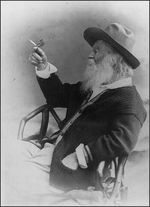
Moving_memorable_18_1000pxhPhilip Larkin started writing poems in 1938 when he was fifteen or sixteen and very nearly stopped about ten years before he died at sixty-three. His reputation, during his lifetime, was based almost entirely on three collections published at intervals of approximately ten years: The Less Deceived (1955), The Whitsun Weddings (1964), and High Windows (1974). Together they contain eighty-five poems, all but a few of them under forty lines. He said in an interview that he never wanted to “be a poet,” and he did not follow the established routine of people who did want to “be poets.” He didn’t give readings or lectures, was never a poet-in-residence at a university, never taught, rarely gave interviews, generally stayed away from literary circles, stayed away from London, did not work at maintaining a network of editors and publishers, did not have an agent or a publicist, and finally stopped writing poems. For him, to “be a poet” meant spending a lot of time doing things he considered inimical to writing poems. “I don’t want to go around pretending to be me.”

Beginning in 1955, he lived in Hull, where he was appointed university librarian, and he stayed there for the rest of his life. The University of Hull underwent a major expansion during his nearly thirty-year tenure; he was closely involved in the planning, design, and construction of two new library buildings. At the end of his career, he was directing a staff of over a hundred. When he first appeared in Who’s Who in 1959, he did not mention he was a poet or even a writer.

More here.

In Which I Fix My Girlfriend’s Grandparents’ WiFi and Am Hailed as a Conquering Hero

Mike Lacher in McSweeney's:

ScreenHunter_03 Jan. 22 17.04Lo, in the twilight days of the second year of the second decade of the third millennium did a great darkness descend over the wireless internet connectivity of the people of 276 Ferndale Street in the North-Central lands of Iowa. For many years, the gentlefolk of these lands basked in a wireless network overflowing with speed and ample internet, flowing like a river into their Compaq Presario. Many happy days did the people spend checking Hotmail and reading USAToday.com.

But then one gray morning did Internet Explorer 6 no longer load The Google. Refresh was clicked, again and again, but still did Internet Explorer 6 not load The Google. Perhaps The Google was broken, the people thought, but then The Yahoo too did not load. Nor did Hotmail. Nor USAToday.com. The land was thrown into panic. Internet Explorer 6 was minimized then maximized. The Compaq Presario was unplugged then plugged back in. The old mouse was brought out and plugged in beside the new mouse. Still, The Google did not load.

Some in the kingdom thought the cause of the darkness must be the Router. Little was known of the Router, legend told it had been installed behind the recliner long ago by a shadowy organization known as Comcast.

More here.

Twelve Lessons (Most of Which I Learned the Hard Way) for Evolutionary Psychologists

FesslerDan Fessler in his blog over at the International Cognition and Culture Institute (h/t: Dan Sperber):

Lesson 5: Understanding human diversity is vital to generating and testing hypotheses about the mind. Read ethnographies describing other cultures, travel whenever the opportunity presents itself, and try to surround yourself with colleagues who are familiar with disparate ways of life – what seems self-evidently true about humans to you may not seem so to others. If there is reason to suspect that the features of the mind at issue could be variable across groups, whenever possible, employ samples that vary along potentially relevant dimensions.

A second reason to attend to human diversity is that many adaptations can be expected to be facultatively adjusted or deployed. In order to test for such possibilities, or even to recognize that they might exist, we must consider the range of physical and social ecologies that humans inhabit. Consider, for example, the case of sex differences in reactions to sexual versus emotional infidelity. In their pivotal paper on the subject, Buss et al. (1992) insightfully noted that this effect should vary across cultures as a function of the degree of male parental investment. However, although much research has now been done on jealousy, some in cultures other than that of the original authors, nonetheless, investigators have yet to compare results across samples selected specifically with regard to variation along this critical dimension. A preliminary effort in this regard (Yamashita, 2005) suggests that the Na (Mosuo) culture of Southwest China could provide an ideal setting for such an investigation. However, as this example suggests, testing hypotheses across ecologies that differ along functionally relevant axes will not always be easy.

Female Orgasm: An Evolutionary Journey

Female_orgasm_bDaniel Honan in Big Think:

Take the issue of female orgasm, for instance, which some scientists do not accept as a biological necessity. Dr. Elisabeth A. Lloyd, among others, has described female orgasm as the female equivalent to male nipples, anatomy that one sex needed, while the other sex “just sort of lucked out with some lingering leftovers.”

Ryan rejects this view. “When a woman has an orgasm,” he explains, “the pH of her reproductive tract shifts in a way that favors sperm that enter her at that point.” Why is this so important? Sperm competition. In prehistoric times, according to Ryan, women had “multiple lovers at any given ovulatory cycle, even in any given sexual event.”

And so, let's say a woman is having sex with several different men, and she likes them all well enough. Now let's suppose she has a special connection with one man in particular, whether it is a psychological connection or the attraction happens on the level of smell. That man provokes her to have an orgasm, and that man’s sperm has a great advantage over the sperm of the other men “in the obstacle course to the ovum.”

What's the Significance?

Is it true that women are “quality players” while men are “quantity players”? Ryan says the two sexes are hard-wired exactly that way, and the proof about our sexual proclivities is written in the human anatomy. “The female, like the male body, is a book that can be read,” says Ryan. “It’s full of information about the sex lives of our ancestors.”

Ryan points to some cutting-edge experiments that suggest the ovum itself is “capable of distinguishing between the sperm of different men by the DNA and choosing the sperm that is the best match for her.”

Apple’s Mind-Bogglingly Greedy and Evil License Agreement

Eb-profileEd Bott in ZDNet, via Zite:

Summary: Over the years, I have read hundreds of license agreements, looking for little gotchas and clear descriptions of rights. But I have never, ever seen a legal document like the one Apple has attached to its new iBooks Author program.

I read EULAs so you don’t have to. I’ve spent years reading end user license agreements, EULAs, looking for little gotchas or just trying to figure out what the agreement allows and doesn’t allow.

I have never seen a EULA as mind-bogglingly greedy and evil as Apple’s EULA for its new ebook authoring program.

Dan Wineman calls it “unprecedented audacity” on Apple’s part. For people like me, who write and sell books, access to multiple markets is essential. But that’s prohibited:

Apple, in this EULA, is claiming a right not just to its software, but to its software’s output. It’s akin to Microsoft trying to restrict what people can do with Word documents, or Adobe declaring that if you use Photoshop to export a JPEG, you can’t freely sell it to Getty. As far as I know, in the consumer software industry, this practice is unprecedented.

Exactly: Imagine if Microsoft said you had to pay them 30% of your speaking fees if you used a PowerPoint deck in a speech.

I’ve downloaded the software and had a chance to skim the EULA. Much of it is boilerplate, but I’ve read and re-read Section 2B, and it does indeed go far beyond any license agreement I’ve ever seen…

Worth All the Sweat

20120121_STP001_0In the Economist:

As doctors never tire of reminding people, exercise protects against a host of illnesses, from heart attacks and dementia to diabetes and infection.

How it does so, however, remains surprisingly mysterious. But a paper just published in Nature by Beth Levine of the University of Texas Southwestern Medical Centre and her colleagues sheds some light on the matter.

Dr Levine and her team were testing a theory that exercise works its magic, at least in part, by promoting autophagy. This process, whose name is derived from the Greek for “self-eating”, is a mechanism by which surplus, worn-out or malformed proteins and other cellular components are broken up for scrap and recycled.

To carry out the test, Dr Levine turned to those stalwarts of medical research, genetically modified mice. Her first batch of rodents were tweaked so that their autophagosomes—structures that form around components which have been marked for recycling—glowed green. After these mice had spent half an hour on a treadmill, she found that the number of autophagosomes in their muscles had increased, and it went on increasing until they had been running for 80 minutes.

To find out what, if anything, this exercise-boosted autophagy was doing for mice, the team engineered a second strain that was unable to respond this way. Exercise, in other words, failed to stimulate their recycling mechanism. When this second group of modified mice were tested alongside ordinary ones, they showed less endurance and had less ability to take up sugar from their bloodstreams.

A thousand ways to please a husband

Sadie Stein in The Paris Review:

ThousandcoverMany people engage in dubious experimentation in their youth. Some get involved with intravenous drugs. Others sleep with problematic men. A few tattoo their faces. I, for my part, went on a spree when I was nineteen of cooking exclusively from a 1917-era cookbook. The book, A Thousand Ways to Please a Husband (with Bettina’s Best Recipes), might sound vaguely titillating. It’s not. ATWtPaH, by Louise Bennett Weaver and Helen Cowles LeCron, is the story of Bettina and Bob’s first year of marriage. The fictional, surnameless couple, who populate a series of domestic vignettes (with menus and recipes), seems to live on the outskirts of an anonymous American city where Bob does … well, some kind of office job. It’s 1917, but apparently no need at all to mention the War. My copy is a yellow hardcover I acquired at a long-ago church sale; it’s illustrated liberally with images of mischievous chef-cupids and periodic thumbnail sketches of the newlyweds. By the time we meet the pair, on their first night in their brand-new, cozy brown bungalow, the honeymoon is over—literally. When the happy-go-lucky Bob suggests dinner out, after they disembark from the train, he’s treated to the following:

“I’m ashamed of you! We’ll take the first car for home—a streetcar, not a taxi! Our extravagant days are over, and the time has come to show you that Bettina knows how to keep house!” Home again, and swathed in a trim percale apron, Bettina turns to her “Emergency Shelf,” which will become a recurring character, along with the word “economical,” her energy-efficient fireless cooker (a slow cooker of sorts), and the budget notebook that is her preferred topic of dinner-table conversation. “That was fun,” Bob says of the day they assembled the shelf. “Yes, and work, too,” said Bettina, “but I’m glad we did it. Do you remember how much I saved by getting things in dozen and half-dozen lots? And Mother showed me how much better it was to buy the larger sizes in bottled things, because in buying the smaller bottles you spend most of your money for the glass. Now that you have to pay my bills, Bob, you’ll be glad that I know these things.” In case you’re wondering, that evening Bob sat down to:

Creamed Tuna on Toast Strips
Canned Peas with Butter Sauce
Rolls Butter
Strawberry Preserves
Hot Chocolate with Marshmallows

More here. (Note: For my own favorite Uber Chef and dear friend Elatia Harris with love)

A Sharper Mind, Middle Age and Beyond

From The New York Times:

Edl-22middleage-t_CA1-popupIN 1905, at age 55, Sir William Osler, the most influential physician of his era, decided to retire from the medical faculty of Johns Hopkins. In a farewell speech, Osler talked about the link between age and accomplishment: The “effective, moving, vitalizing work of the world is done between the ages of 25 and 40 — these 15 golden years of plenty.” In comparison, he noted, “men above 40 years of age” are useless. As for those over 60, there would be an “incalculable benefit” in “commercial, political and professional life, if, as a matter of course, men stopped work at this age.” Although such views did not prevent the doctor from going on to accept a post at Oxford University, one he retained until his death at age 70, his contention that brainpower, creativity and innovation have an early expiration date was, unfortunately, widely accepted by others. Until recently, neurologists believed that brain cells died off without being replaced. Psychologists affirmed the supposition by maintaining that the ability to learn trudged steadfastly downward through the years. Of course, certain capabilities fall off as you approach 50. Memories of where you left the keys or parked the car mysteriously vanish. Words suddenly go into hiding as you struggle to remember the guy, you know, in that movie, what was it called? And calculating the tip on your dinner check seems to take longer than it used to. Yet it is also true that there is no preordained march toward senescence. Some people are much better than their peers at delaying age-related declines in memory and calculating speed. What researchers want to know is why. Why does your 70-year-old neighbor score half her age on a memory test, while you, at 40, have the memory of a senior citizen? If investigators could better detect what protects one person’s mental strengths or chips away at another’s, then perhaps they could devise a program to halt or reverse decline and even shore up improvements.

As it turns out, one essential element of mental fitness has already been identified. “Education seems to be an elixir that can bring us a healthy body and mind throughout adulthood and even a longer life,” says Margie E. Lachman, a psychologist at Brandeis University who specializes in aging. For those in midlife and beyond, a college degree appears to slow the brain’s aging process by up to a decade, adding a new twist to the cost-benefit analysis of higher education — for young students as well as those thinking about returning to school.

More here.

Sunday Poem

The Way We Were Made
.
But you made every
delicate, elegant wrist
& glistening ankle.
But you made them
beautiful
in braided rope
& dime store gold.
But you made every
necklace clasp.
But you made them
caress the nape
like an errant wind
after a shower.
But you made every
eyelash erotic. Every
single strand of hair
soft.
But you made them
from dust & bone.
Made every glorious
singing thigh. Every
button nose.
But you made them
with holes—
wide open
to the faintest hints
of salt
in a sea breeze, salt
in the sweaty mouth
of a navel, salt
in the blood, sweet
in every wrong way.
.
.
by Marcus Wicker
from Poetry, November2011

etta james

120123_etta-james_p233_opt

By the time she was a teen-ager, James was reunited, if that is the word, with her mother, who took her to San Francisco, where James’s love of R.&B. saved her, to some extent—but is talent enough if one has been continually unloved by those unreliable specimens, other people? That was what her big sound was about—a deafening cry in the wilderness of her unconquerable loneliness. She was fat: with drugs, food, incredible technical skill. But nothing could fill her up. All she could do was try to expel—shake off—some of the evening’s exertions (looking for dope on a more or less daily basis amounts to a job in itself) in the recording studio, where she sang a kind of speeded up blues, which I do not associate with R.&B. so much as it being just James’s singing, a variation of a sound I’ve heard all my life: black mothers calling down from various tenement windows for their children to come on in and eat their supper, or take some kind of nourishment, emotional and otherwise. I didn’t realize the extent of James’s gifts as a singularly butch performer until I saw an old YouTube clip of her singing “Precious Lord,” with Chaka Khan and Gladys Knight—a trio so powerful one would be frightened for one’s soul if they weren’t speaking directly about the soul. In it, James lead the choir with a rumble that supported Khan and Knight (particularly Khan) as they rose up to even greater heights of understanding vis-à-vis their respective gifts. As they did so, James stood back, nodding knowingly, a quintessential American artist in that she knew something about loneliness, and, from time to time, what to do with it.

more from Hilton Als at The New Yorker here.

Saturday, January 21, 2012

Jewish American newspaper publisher suggests Israel assassinate Barack Obama

Chemi Shalev in Haaretz:

893209974The owner and publisher of the Atlanta Jewish Times, Andrew Adler, has suggested that Israeli Prime Minister Binyamin Netanyahu consider ordering a Mossad hit team to assassinate U.S. President Barack Obama so that his successor will defend Israel against Iran.

Adler, who has since apologized for his article, listed three options for Israel to counter Iran’s nuclear weapons in an article published in his newspaper last Friday. The first is to launch a pre-emptive strike against Hamas and Hezbollah, the second is to attack Iran’s nuclear facilities and the third is to “give the go-ahead for U.S.-based Mossad agents to take out a president deemed unfriendly to Israel in order for the current vice president to take his place and forcefully dictate that the United States’ policy includes its helping the Jewish state obliterate its enemies.”

Adler goes on to write: “Yes, you read “three correctly.” Order a hit on a president in order to preserve Israel’s existence. Think about it. If have thought of this Tom-Clancy-type scenario, don’t you think that this almost unfathomable idea has been discussed in Israel’s most inner circles?”

More here.

Will Hutton on Fairness and Inequality

From The Browser:

What precisely is your critique of the capitalism we’re living in now?

ScreenHunter_02 Jan. 21 20.50The apologists for today’s capitalism have a series of theories which at a high level of abstraction are about markets always working optimally. What sits behind those theories is a belief system that the way markets work, and the way life works, revolves very much around the principles of Darwinian natural selection. That capitalism is about survival of the fittest, and hunter-gatherers pursuing their own interests individualistically.

My critique is that this doesn’t describe the world of hunter-gatherers, doesn’t describe how Darwin conceived of natural selection, and more importantly doesn’t describe how actually a contemporary capitalism works and how it has an ongoing legitimacy. My argument is that capitalism delivers its best when it respects some very deeply held human views about the way reward and punishment should be distributed.

More here.

Performing Protest Under Occupation: Iraq’s Tahrir Square

Nahrain Al-Mousawi in Muftah:

ScreenHunter_01 Jan. 21 20.44Iraq’s recent re-entry into American public discourse was marked by the withdrawal of U.S. troops from the country as well as hagiographies marking the death of the Iraq war’s foremost advocate, Christopher Hitchens. This renewed interest in Iraq serves as a reminder not only of the country’s displacement from public consciousness, but also the likelihood that U.S. military withdrawal signals Iraq’s final dismissal from the American narrative.

Although it is easy to now scoff at Bush’s misplaced Mission Accomplished banner and boasts in 2003, for most Americans the gap between rhetoric and reality on Iraq has by no means narrowed. This is evident in the widespread assumption that the withdrawal of American forces means that the war in Iraq is over. This conclusion erroneously assumes that the imprint of America’s material legacy in Iraq can be magically erased, and is as misplaced as Bush’s confidence in the immediate success of the Iraq campaign.

The enduring nature of the Iraq war is reflected by recent developments on the ground. U.S. announcement of the war’s end was met with a coordinated bombing in Baghdad on December 22, 2011, consisting of 16 explosions that involved 9 car bombs, 6 roadside bombs, and 1 mortar. Within two hours, 63 people were killed and 185 wounded. Amidst these bombings, the tributes to Christopher Hitches, who had succumbed to cancer on December 15, 2011, were a particularly fitting reminder of the American disconnect between reality and rhetoric on Iraq.

More here.