the continent of concrete abstraction

JO_ANTHO_MARCH_CO_001

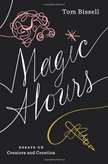
In this season of marking South Pole centennials, March is the last and cruelest month. On March 17, 1912, a starved, injured and frostbitten Lawrence “Titus” Oates famously crawled out through the tube door of Robert Falcon Scott’s tent to die deliberately in a blizzard. His last words, “I am just going outside and may be some time,” were transcribed two days later by a storm-bound Scott, making notes as his own death closed in, ice crystals already claiming his insensate right foot. Two months earlier, Scott, Oates, Edgar “Taff” Evans, Edward Wilson, and Henry “Birdie” Bowers had reached the South Pole, but instead of a blank nexus of latitude and longitude in an unmapped wilderness of ice, they found Roald Amundsen’s tent and Norwegian flag. The British team’s return was dismal, a trudging descent from the polar plateau into crippling starvation, dehydration, and nutritional deprivation. Having become a limping hindrance to his team’s already slow progress, Titus Oates hoped in his self-sacrifice to give the trio of Scott, Wilson, and Bowers (Taff Evans was already dead) a chance to reach their next depot of fuel and food. They would not, dying instead at month’s end as Oates had, prone and frozen solid under the snows of the blizzard-swept Ross Ice Shelf.

more from Jason Anthony at The Smart Set here.

Friday, March 23, 2012

The lesser-known atrocities of the 1971 India-Pakistan-Bangladesh War

Batool Zehra in The Express Tribune:

ScreenHunter_02 Mar. 23 14.57History is always written by the victors, and in the case of the 1971 war, the dominant narrative has been that of atrocities committed against the Bengali population. But in her upcoming novel, Of Martyrs and Marigolds, Aquila Ismail dredges up the memories of her traumatic past in order to shine a light on the lesser-known atrocities of that conflict.

“My mother forgot how to speak Bengali after the trauma of 1971. It just went out of her head. She cannot speak it to this day,” says Aquila Ismail, as we sip tea in her sitting room on a winter’s evening in Karachi. One of the few Biharis who managed to flee Bangladesh after what is known in that country as the War of Liberation, Aquila now lives in the UAE. But over 250,000 of her fellow Biharis still live in squalid conditions in Bangladesh today, as a stateless minority.

While the atrocities of the Pakistan Army against the Bengali population during the war are well-documented, little is known about the plight of the Biharis who were left stranded when East Pakistan seceded in 1972, and what they suffered during and after the conflict. According to some estimates, 750,000 Biharis were left in Bangladesh in 1972, and not only did they face persecution at the hands of Bengalis, they were also disowned by Pakistan and became stateless overnight…

More here.

Giant Silkmoths: Colour, Mimicry and Camouflage

Anna Lena Phillips in American Scientist:

ScreenHunter_01 Mar. 23 12.54Last spring, the periodical cicadas emerged across eastern North America. Their vast numbers and short above-ground life spans inspired awe and irritation in humans—and made for good meals for birds and small mammals. Such snacks do not come without cost, however: Cicadas emit extremely loud shrieks when captured. Perhaps the pattern of the giant silk moth Citheronia azteca (right) evolved to resemble a cicada as a form of Batesian mimicry—imitation by a nonpoisonous species of a poisonous or unappetizing one. So Philip Howse speculates in Giant Silkmoths: Colour, Mimicry and Camouflage (Papadakis, $40 paper), in which he and photographer Kirby Wolfe showcase these members of the Saturniidae family.

Wolfe offers notes on collecting and raising silk moths. But the book’s wealth of photographs serves as collection enough: Viewing page after page of stunning moths from all over the world, I felt the guilty pleasure of seeing more of these creatures than one would ever normally encounter. Caterpillars are well represented also.

More here.

North India and south Pakistan

Tahir Mehdi in Dawn:

290x230-voting-APA huge number of Muslims from Uttar Pradesh migrated in 1947 to Sindh in Pakistan. People with Urdu as their mother tongue are 21 per cent of the province’s population now. Or every fifth inhabitant of Sindh belongs to third or second generation of migrants from India at large and UP in particular. Any reference to forefather’s villages, towns or jagirs still makes many eyes sparkle and send others into nostalgic tailspins. They all had migrated, knowingly or unknowingly, willingly or unwillingly in pursuit of a peaceful society and prosperous family lives and their children’s text books kept on reminding them over the next many decades that the cherished dream could never be realised with Hindus roaming around all over and dominating every thing.

The same Uttar Pradesh recently elected members for its 403-seat state (provincial) assembly. Muslims still live in that Indian state that is bigger than Pakistan in population. UP’s population according to a 2011 census is 199.6 million and 19.8 per cent of these are Muslims. Or every fifth inhabitant of the present-day UP is a Muslim. Muslim candidates were serious contenders for around half of the general seats of the state. In fact 68 of them won to become a member legislative assembly (MLA) and another 64 stood second in contests.

Almost every party fielded Muslim candidates. Samajwadi Party’s Adil Sheikh defeated speaker of state assembly Sukhdev Rajbhar, former minister Nand Gopal Gupta was drubbed by SP’s first-timer Haji Parvez Ahmed and four-time BJP winner Inder Dev Singh lost the battle to Mohammad Ghazi. No one cried foul, no allegations of rigging were hurled, no conspiracy theories of undermining Hindutva made rounds and above all no one saw the infamous ‘foreign hand’ behind the defeat of caste Hindus at the hands of ‘pariah’ Muslims.

More here.

Harvard is Now Cheaper than San Jose State

Richard Anderson in The Nation:

GraduationPublic universities in California may have been dethroned as being cheaper than private schools for middle-income students. According to the San Gabriel Valley Tribune, schools like Harvard and Princeton provide a cheaper alternative to schools like San Jose State and University of California, Berkeley.

Private schools are generally even cheaper than Cal State Fullerton. To go to Harvard, it costs $4,000 for a family with an annual income of $30,000. At CSUF, it costs $16,331 for a full-time student.

According to the Bay Area News Group, a family of four making $130,000 a year would have to pay $24,000 for tuition, room, board and other expenses to send one child to a CSU. Harvard costs $36,000, but financial aid makes it the cheaper option.

Financial aid drops Harvard tuition costs down to $17,000 a year, under San Jose State’s $23,557 and even under the $19,500 it costs to go to UC Berkeley. While Princeton may be slightly more expensive ($19,830) than UC Berkeley, it is still considerably cheaper than San Jose State.

Private schools used to be considered more expensive than public, but that trend has changed for a couple of reasons.

According to the Social Security Administration’s website, in order for a college student under the age of 22 to receive Supplemental Security Income, the maximum he or she can earn annually is $6,600. However, Harvard’s maximum limit for receiving aid is much higher.

More here.

the lens of Vincent’s tartan vision of inner torment

Danchev_255961k

Vincent declared himself an artist in 1880, at the age of twenty-seven. He had only ten years left to live. Those years are chronicled with missionary zeal. Crisis follows crisis with numbing regularity. Perhaps that is how it was; what we lack in a treatment of this sort is a sense of what it meant, then and since. The pursuit is indefatigable but the life is shapeless. The death is re-examined, plausibly, but the significance of the life is never considered. A brief epilogue serves to reunite Vincent with Theo in the wheatfields of Auvers. It is as if the authors’ curiosity is sated with his interment. “Finally, Vincent had his reunion on the heath.” So it ends. The starry, starry afterlife is a void. The depth of his self-knowledge is unplumbed. What are we to make of this remarkable creature and his torments? How are we to weigh his work? On these questions Van Gogh: The Life keeps its silence. Vincent Van Gogh subscribed to an art of feeling – “heart-broken, and therefore heartbreaking”. He was a great painter, and very nearly a great writer. His painting is peculiarly life-affirming. His writing is truly heartbreaking. “I do not say that my work is good, but it’s the least bad that I can do. All the rest, relations with people, is very secondary, because I have no talent for that. I can’t help it.”

more from Alex Danchev at the TLS here.

In any case, Picasso was right

Clar05_3406_01

Modernism is a strange artistic formation. In it, time and again, originality – which remains anachronistically the goal – lies on the other side of subservience. There is no such thing, it turns out in practice, as well-tempered learning in modernism, reasonable apprenticeship, picking and choosing the imitable. And this is a problem particularly for a genteel art culture – for a culture like England’s, whose arrogance over the past century has been most powerfully manifest in its false moderacy. But I get ahead of myself. Two things need establishing. First, that Picasso’s instigation, difficult as it was, did prove time and again in other nations a spur to major art. What Malevich and Tatlin were able to do with Picasso’s Cubism between 1912 and 1917; how Mondrian thought through the same style’s implications in Paris, and what he did, on returning to Holland, to make what he had learned usable in a shared project; the long-distance Picasso-olatry of the New York School; even the scrupulous Cubism of the Czechs before 1914 – these are moments that sum up, for me, the true intensity and dignity of modernism. And for a culture signally to lack such a moment is a weakness – maybe even an indictment.

more from T.J. Clark at the LRB here.

europe: the immigrants are coming

Drakulic_Italy_1_468w

One evening, as I was taking the vaporetto no. 2 from Ponte dell’Academia to the San Marco stop on the Riva delgi schiavoni, I noticed that entire sections on this part of the Grand Canal were without light. Huge palaces were steeped in darkness, as if nobody lived there. These are the summer residences of the rich. But among them are also palaces that belong to the city and that the city is selling off, explained a friend of mine who lives here. Because change comes in many ways, not just with the poor wretches who make it in one piece to Lampedusa or some other patch of Italian soil; not just through food, fashion, custom and music, but also via banks, investments, money-laundering, corruption of the local administration. And while Europeans ponder future changes and whether to put up a wall around Europe (if only they knew what its boundaries were), while they contemplate measures that will contain immigrants at that same imaginary border and Europe’s culture and the values that need to be preserved (although globalization, in other words Americanization, has already utterly changed them), the Chinese are freely investing, buying palaces in Venice in order to turn them into hotels, thus making even more money out of Europe’s cultural treasures. From the Venetian viewpoint, in comparison with the investments of the Chinese – nota bene, some people here call it money-laundering – fear of Muslim immigrants in France and Germany and further north looks almost pathetic. My neighbour says that Venice is increasingly turning not into a museum, as I romantically thought, but a Disneylandish amusement park owned by the Chinese, who alone profit from it.

more from Slavenka Drakulic at Eurozine here.

India’s Sacred Geography

From Harvard Magazine:

Indiabooks_smThree decades ago, Diana L. Eck—master of Lowell House and Wertham professor of law and psychiatry in society (a scholar of South Asian religions, despite her chair’s title)—wrote Banaras: City of Light, exploring Hinduism through its holiest pilgrimage site. Her perspective has become ever more expansive, as she has explored the interconnected pilgrimage sites throughout India. Now she explicates that interwoven world-view of the sacred and the profane in India: A Sacred Geography (Harmony Books, $27)—a sweeping examination of texts, places, and beliefs that may also help to explain to Western readers the rise of place-based Hindu nationalism in Indian politics. From chapter 2, “What Is India?”

…Students of Hinduism or travelers in India quickly become aware of what prolific mythmakers Hindus have been. The Hindu tradition is famous for its mythologies, and for the multitude of gods and goddesses one encounters in the temples and public spaces of India. Less well known, however, is the fact that Hindus have been equally avid geographers who have described with considerable detail the mountains, river systems, and holy places of India. For the most part, Hindu mythology has been studied by one group of scholars, primarily historians of religion, while the geographical traditions have been studied and catalogued by another group, primarily British and Indian civil servants, historical and cultural geographers. The great geography scholar Bimala C. Law speaks for this latter group when he confesses, “One finds it tedious to read the legendary history of rthas or holy places, but to a geographer it will never be a fruitless study.”

More here.

Friday Poem

For Fear of Ruining My Life

For fear of ruining your life, or ruining you, or mine,
I stuff myself into a bottle like a bad genie.

Yet, since hope is an expansion, it will be unconfined.
This glass the color of jade is crackling and cracking.

The jailer is bladed. The genie is panicking.
Through each new fracture—a delicate beaming.
.

by Maria Gapotchenko
from Clarion, Issue 15
2011

Study reveals words’ Darwinian struggle for survival

From The Guardian:

Old-wooden-letters-007Words are competing daily in an almost Darwinian struggle for survival, according to new research from scientists in which they analysed more than 10 million words used over the last 200 years. Drawing their material from Google's huge book-digitisation project, the international team of academics tracked the usage of every word recorded in English, Spanish and Hebrew over the 209-year period between 1800 and 2008.

The scientists, who include Boston University's Joel Tenenbaum and IMT Lucca Institute for Advanced Studies' Alexander Petersen, said their study shows that “words are competing actors in a system of finite resources”, and just as financial firms battle for market share, so words compete to be used by writers or speakers, and to then grab the attention of readers or listeners. There has been a “drastic increase in the death rate of words” in the modern print era, the academics discovered. They attributed it to the growing use of automatic spellcheckers, and stricter editing procedures, wiping out misspellings and errors. “Most changes to the vocabulary in the last 10 to 20 years are due to the extinction of misspelled words and nonsensical print errors, and to the decreased birth rate of new misspelled variations and genuinely new words,” the scientists write in their just-published study. “The words that are dying are those words with low relative use. We confirm by visual inspection that the lists of dying words contain mostly misspelled and nonsensical words.” But it is not only “defective” words that die: sometimes words are driven to extinction by aggressive competitors.

More here.

Thursday, March 22, 2012

Germany’s $263 Billion Renewable Energy Initiative

Stefan Nicola at Bloomberg:

Not since the allies leveled Germany in World War II has Europe’s biggest economy undertaken a reconstruction of its energy market on this scale.

Chancellor Angela Merkel is planning to build offshore wind farms that will cover an area six times the size of New York City and erect power lines that could stretch from London to Baghdad. The program will cost 200 billion euros ($263 billion), about 8 percent of the country’s gross domestic product in 2011, according to the DIW economic institute in Berlin.

Germany aims to replace 17 nuclear reactors that supplied about a fifth of its electricity with renewables such as solar and wind. Merkel to succeed must experiment with untested systems and policies and overcome technical hurdles threatening the project, said Stephan Reimelt, chief executive officer of General Electric Co. (GE)’s energy unit in the country.

Utilities running gas-generating plants in Germany lost 10.92 euros a megawatt-hour today at 12:16 p.m. local time, based on so-called clean-spark spreads for the next month that take account of gas, power and emissions prices. That compared with a profit of 20.95 euros in October 2009, according to data compiled by Bloomberg. U.K. generators earned 2.06 pounds ($3.27), down from a profit of 7.02 pounds in October.

“Germany is like a big energy laboratory,” Reimelt said in an interview.

More here.

How to see around corners

From Nature:

ImagesThe ability to see objects hidden behind walls could be invaluable in dangerous or inaccessible locations, such as inside machinery with moving parts, or in highly contaminated areas. Now scientists at the Massachusetts Institute of Technology in Cambridge have found a way to do just that.

They fire a pulse of laser light at a wall on the far side of the hidden scene, and record the time at which the scattered light reaches a camera. Photons bounce off the wall onto the hidden object and back to the wall, scattering each time, before a small fraction eventually reaches the camera, each at a slightly different time. It's this time resolution that provides the key to revealing the hidden geometry. The position of the 50-femtosecond (that’s 50 quadrillionths of a second) laser pulse is also changed 60 times, to gain multiple perspectives on the hidden scene. “We are all familiar with sound echoes, but we can also exploit echoes of light,” says Ramesh Raskar, head of the Camera Culture Research Group at the MIT Media Lab which carried out the study.

More here.

Interview with Ahdaf Soueif

From The White Review:

Ahdaf-soueif1In 1999, Ahdaf Soueif’s second novel, The Map of Love, was shortlisted for the Booker Prize, eventually losing out to JM Coetzee’s Disgrace. The next year, the Guardian commissioned her to travel to Palestine – her first visit – and write about her experiences of a people increasingly marginalised and oppressed by the Israeli state. Thus began a decade-long crusade in cultural activism, in the shadow of her friend and mentor Edward Said. ‘This conflict has been a part of my life all my life,’ she wrote in December 2000. ‘But seeing it there, on the ground, is different. What can I do except bear witness?’ Since then, she has put fiction to one side, reluctantly, and grown into Egypt’s – and perhaps the Arab world’s – foremost political voice in Britain. In 2008, she launched the Palestinian Festival of Literature, an annual event dedicated to bringing Palestinian and international writers and artists to audiences across Palestine. Her latest book, Cairo: My City, Our Revolution, is a passionate and engaged chronicle of the events before and after the fall of Hosni Mubarak on 11 February 2011. A few days before the 25 January demonstration marking the anniversary of the revolution in Cairo, Soueif invited me into her south London home to discuss her writing career, Palestine, and the progress of democracy in Egypt. Below is a short extract from the interview, which can be read in full in The White Review No. 4.

QThe White Review — Your latest book, Cairo: My City, Our Revolution, is an incredibly fervent account of the revolutionary passion in Tahrir Square. But one gets the sense that, in light of the increasing repression by the Supreme Council of the Armed Forces against the revolutionaries, there is not so much hope. How do you feel, a year on, about the chances of the revolution being completed?

AAhdaf Soueif — I think we’re going to complete it, or die in the attempt. There’s nowhere else to go. I believe it will happen. Last January in the Guardian, my nephew Alaa Abd-El-Fattah {who was imprisoned twice as an opponent of the regime} said something that I really recognised. He said, more or less, that realistically, on 25 January 2011, we would have thought that we would still be fighting this fight a year later, but that it would be with Mubarak. It’s not surprising that we are where we are. It would have been wonderful if SCAF had made a different decision on 11 February, or indeed at any point since 11 February. The more they act, the more you can see how impossible it was that they would actually decide to grab this historic opportunity to protect the country.

More here.

The Brain: The Connections May Be the Key

Once we model the connectome—the million
billion points of contact between neurons in the brain—we’ll glimpse the anatomy of the mind.

Carl Zimmer in Discover:

ScreenHunter_13 Mar. 22 12.49Neuroscientists know that the brain contains some 100 billion neurons and that the neurons are joined together via an estimated quadrillion connections. It’s through those links that the brain does the remarkable work of learning and storing memory. Yet scientists have never mapped that whole web of neural contact, known as the connectome. It would be as if doctors knew about each of our bones in isolation but had never seen an entire skeleton. The sheer complexity of the connectome has put such a map out of reach until now.

The strange forest on Berger’s desktop is one small but crucial piece of the picture. It is just three neurons large—“a thousandth the width of a human hair,” Seung says—but it shows every detail of their connections down to the smallest bumps and spikes. Taking advantage of the latest advances in electron microscopy and computer-controlled imaging, Seung and his team are creating some of the most detailed three-dimensional reconstructions of cortical gray matter ever made.

Seung believes that by the end of this century, his successors will have mapped the connectome of an entire human brain. “Our descendants will look back on these achievements as nothing less than a scientific revolution,” he writes in his new book, Connectome: How the Brain’s Wiring Makes Us Who We Are. As scientists gain the power to see the brain in its full complexity, he argues, they will finally be able to answer some of the most fundamental questions about the mind.

More here.

90 Degrees in Winter: This Is What Climate Change Looks Like

Bill McKibben in The Nation:

ScreenHunter_12 Mar. 22 12.28The National Weather Service is kind of the anti–Mike Daisey, a just-the-facts operation that grinds on hour after hour, day after day. It’s collected billions of records (I’ve seen the vast vaults where early handwritten weather reports from observers across the country are stored in endless rows of ledgers and files) on countless rainstorms, blizzards and pleasant summer days. So the odds that you could shock the NWS are pretty slim.

Beginning in mid-March, however, its various offices began issuing bulletins that sounded slightly shaken. “There’s extremes in weather, but seeing something like this is impressive and unprecedented,” Chicago NWS meteorologist Richard Castro told the Daily Herald. “It’s extraordinarily rare for climate locations with 100+ year long periods of records to break records day after day after day,” the office added in an official statement.

It wasn’t just Chicago, of course. A huge swath of the nation simmered under bizarre heat. International Falls, Minnesota, the “icebox of the nation,” broke its old temperature records—by twenty-two degrees, which according to weather historians may be the largest margin ever for any station with a century’s worth of records. Winner, South Dakota, reached 94 degrees on the second-to-last day of winter. That’s in the Dakotas, two days before the close of winter.

More here.

Thursday Poem

Qazal (in vain)

What use if you've chanted all you know in vain?
Prayed, prostrated, bowed, but rose in vain?

Think you own the house in which you live?
That door leads nowhere; you open and close it in vain.

Think you soar? Think you touch the clouds?
You are earthbound; you stand on your toes in vain.

Think it was you who made the wheel turn?
The die was already cast—you chose in vain.

Is it piety that makes you feel so safe?
The mirror is dark; you pose in vain.

The lover's song falls on callous ears.
The nightingale serenades the rose in vain.

Is it you for whom the beloved waits?
Wake up! You're caught in passion's throes in vain.
.

by Sassan Tabatabai
from Uzunburun
The Pen & Anvil Press, Boston, 2011

Wednesday, March 21, 2012