
Ed Park at Harper’s Magazine:
 I started at the Voice while in grad school in 1994. I was new to the city, in love with it but slightly terrified. I was looking for part-time work, and a friend of a friend put me in touch with the copy chief at the paper. I passed the test, armed with Webster’s 10th and Chicago 14 and a much-thumbed xeroxed packet covering house style. I took a couple shifts a week, usually from 11 am to 7 pm, working in a sunny room on the third floor with the rest of copy and fact-checking—about a dozen people, most days.
We stared at our ATEX monitors, which had the scrapyard aesthetic of Seventies science fiction: amber letters on scuzzy screens, chunky keyboards that crackled like small-arms fire. When a new story hit the queue, we newbies raced to give it a read. I’d swoop in if I saw, say, a piece by the art-house film reviewer J. Hoberman or the gossip columnist Michael Musto or the soi-disant “dean of American rock critics,” Robert Christgau. None of them ever phoned it in. Other names invited hesitation, and the copy chief would prod us over ATEX. Once you entered corrections and queries, you’d type your initials in the “c1” field at the top and return it to the editor, who would process the changes and send it back to the queue for a second read.
more here.
Enjoying the content on 3QD? Help keep us going by donating now.
 Seoul is a megacity, with a population of nearly 10 million and a name pronounced like “soul.” There were times when I couldn’t stand its scale and pace of change, but I have managed to find a tranquil corner and continue to live in this city. Although modern at first glance, Seoul has a long history. People first began to gather here 6,000 years ago. Over the centuries, the city was the center of dynasties that ruled the region, and it remains the capital of South Korea.
 Malcolm Gladwell could have written a fresh book. Instead, he created a brand extension of his 2000 hit, “The Tipping Point.” The result, “Revenge of the Tipping Point,” is a genre bender: self-help without the practical advice, storytelling without the literariness, nonfiction without the vital truths, entertainment without the pleasure, a thriller without actual revelation and a business book without the actionable insights.
 Aviation has proven to be one of the most stubbornly difficult industries to decarbonize. But a new roadmap outlined by University of Cambridge researchers says the sector could reach net zero by 2050 if urgent action is taken. The biggest challenge when it comes to finding alternatives to fossil fuels in aviation is basic physics. Jet fuel is incredibly energy dense, which is crucial for a mode of transport where weight savings can dramatically impact range. While efforts are underway to build planes powered by
 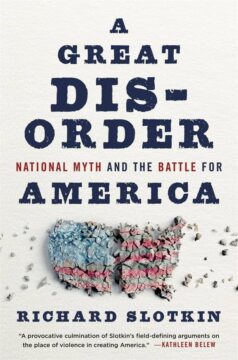 The stories that a country tells itself are just as critical to its functioning as its army, its laws, its borders, and its flag. Where did the country emerge from, and where might it be heading?
 When most of us think of AI, we think of chatbots like ChatGPT, of image generators like DALL-E, or of scientific applications like AlphaFold for predicting protein folding structures. Very few of us, however, think about physics as being at the core of artificial intelligence systems. But the notion of an artificial neural network indeed came to fruition first as the result of physics studies across three disciplines — biophysics, statistical physics, and computational physics — all fused together. It’s because of this seminal work, undertaken largely in the 1980s, that the widespread uses of artificial intelligence and machine learning that permeate more and more of daily life are available to us today.
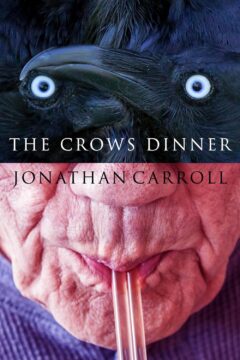 JONATHAN CARROLL’S The Crow’s Dinner, a 2017 collection of anecdotes, vignettes, and short essays (now
 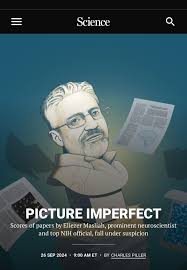 In 2016, when the U.S. Congress unleashed a flood of new funding for Alzheimer’s disease research, the National Institute on Aging (NIA) tapped veteran brain researcher Eliezer Masliah as a key leader for the effort. He took the helm at the agency’s Division of Neuroscience, whose budget—$2.6 billion in the last fiscal year—dwarfs the rest of NIA combined. As a leading federal ambassador to the research community and a chief adviser to NIA Director Richard Hodes, Masliah would gain tremendous influence over the study and treatment of neurological conditions in the United States and beyond. He saw the appointment as his career capstone. Masliah told the online discussion site Alzforum that “the golden era of Alzheimer’s research” was coming and he was eager to help NIA direct its bounty. “I am fully committed to this effort. It is a historical moment.”
 Certainly Jacob McNeal, played by the formidable Robert Downey Jr., is more a data set than a character. A manly, hard-driving literary novelist of the old school, like Saul Bellow or Philip Roth, he is not at all the magnetic and personable man Akhtar describes in the script; rather, he is whiny, entitled and fatuous. (“At my simple best, I’m a poet,” he says.) About the only time he engages instead of repels is when, in the amusing opening scene, as his doctor (Ruthie Ann Miles) prepares to deliver bad news, he fails to get ChatGPT to tell him his chances of winning the Nobel Prize.
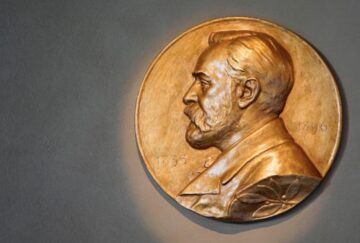 The 2024 Nobel Prize in Literature will be announced this Thursday, October 10. Who will win? As ever, no one knows. But everyone likes to guess…and bet. And because money talks, the betting odds can tell you a lot. Or a little. Or, something, anyway!
 “S
“S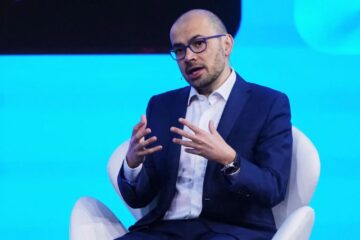 British computer scientist Professor Demis Hassabis has won a share of the Nobel Prize for Chemistry for “revolutionary” work on proteins, the building blocks of life.
 Over the past few years, the flimsy states and territories that cover the Eurasian continent as lightly as gauze have been getting pushed and pulled into a new way of being. In response to volatile oil prices, temperatures creeping ever higher,