
Shelly Fan in Singularity Hub:
 Human life expectancy dramatically increased last century. Compared to babies born in 1900, those born at the turn of the 21st century could live, on average, three decades longer—with many living to celebrate their 100th birthdays. In other words, for much of the century, each passing year added something like three months to a person’s potential time on Earth. To optimists in the longevity field, the rapid rise in life expectancy will likely continue at a steady, if not accelerated, pace.
Others have a more pessimistic view. In their predictions, humans will hit a natural ceiling, with the average person in developed countries living to an age far less than 100. A new study adds to the debate with analysis of data from 1990 to 2019. After examining life expectancy from eight countries with the longest living populations, plus those from Hong Kong and the US, the team reached a troubling conclusion: Despite innovations in healthcare, the increase in overall life expectancy is slowing down.
More here.
Enjoying the content on 3QD? Help keep us going by donating now.
 It is midday on a Friday, and I am in a room with about a dozen teenagers at an international school in Oslo, Norway. We are talking about how and why they use TikTok, the digital video-sharing application. The prevailing mood is laid-back: though I am technically a media researcher, and they are technically my research participants, this group of 16- and 17-year-olds are joking around with each other and with me as we chat about the role of TikTok in their everyday lives. It’s a beautiful day – warm and summery – and everyone, including me, is in a fun weekend mood.
 Terence Tao snorts and waves his hands dismissively when he hears that he is the most intelligent human being on the planet, according to a number of online rankings, including a recent one conducted by the
  The Palestinian Nakba produced, alongside death and displacement, a generation of writers who came of age in its aftermath. The moment seemed to demand a funereal tone from artists who had witnessed the tragedy. For them, a version of Theodor Adorno’s maxim, that to “to write poetry after Auschwitz is barbaric,” rung true. Few broke the taboo.
 It’s not immoral to kick a rock; it is immoral to kick a baby. At what point do we start saying that it is wrong to cause pain to something? This question has less to do with “consciousness” and more to do with “sentience” — the ability to perceive feelings and sensations. Philosopher Jonathan Birch has embarked on a careful study of the meaning of sentience and how it can be identified in different kinds of organisms, as he discusses in his new open-access book
  For Christmas lunch, 1937, Virginia and Leonard Woolf hosted John Maynard Keynes and his wife, Lydia. Imagine the talk, which no doubt ranged widely, including gossip about younger writers like W. H. Auden, the recipient that autumn of the King’s Gold Medal for Poetry from George VI himself. A lot of people were saying it: Auden was the man to watch. At only thirty, he was already regarded as England’s leading poet, head of a squadron of younger writers, including Louis MacNeice, C. Day-Lewis and Stephen Spender. According to Nicholas Jenkins’ important new book, The Island: War and Belonging in Auden’s England,
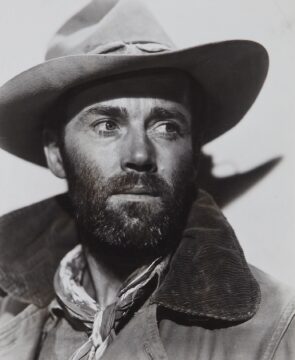 THERE’S A REASON why so many people regard Ronald Reagan as America’s last great leader. The further the monolithic Hollywood of the storied past recedes into the fragmented fun house of the media present, the more mythic the stellar avatars appear. One such divinity: straight-talking, honorable, unassuming, heroic Henry Fonda (1905–1982).
 How does the brain
 Reboot your immune system with intermittent fasting. Help your ‘good’ bacteria to thrive with a plant-based diet. Move over morning coffee: mushroom tea could bolster your anticancer defences. Claims such as these, linking health, diet and immunity, bombard supermarket shoppers and pervade the news. Beyond the headlines and product labels, the scientific foundations of many such claims are often based on limited evidence. That’s partly because conducting rigorous studies to track what people eat and the impact of diet
  The car I bought in Hamburg had distinctive oval German export license plates, and an international registration sticker marked with a D, for Deutschland. As I drove through Holland on my way to Paris, more than once when asking for directions I received dirty looks, especially from older persons for whom the wartime German occupation was a living memory.
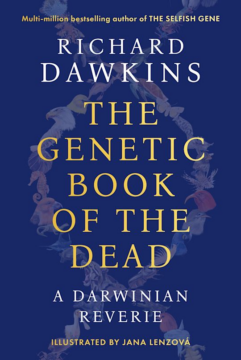 In The Oxford Book of Modern Science Writing (2008), Richard Dawkins writes:
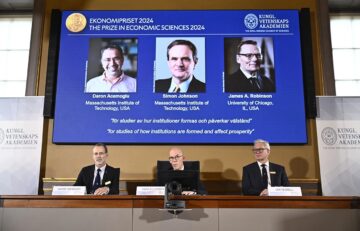 Why are some countries richer than others? The 2024 Sveriges Riksbank Prize in Economic Sciences in Memory of Alfred Nobel has been awarded to three researchers who have helped shed light on this fundamental question.
 J
J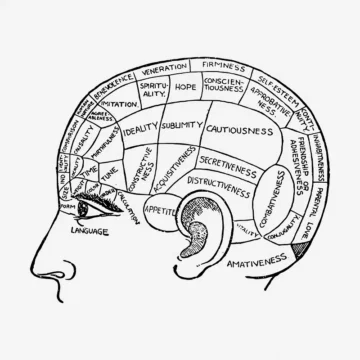 Foucault was greatly disturbed by modern psychiatry’s ability to draw definitive lines between the ‘reasonable’ and the ‘unreasonable’. He came to see it as another way for society to punish and marginalise its most troublesome subjects. Deploying the metaphor of a circulatory system, he conceived of psychiatrists as figures of ‘capillary’ power – unlike the conspicuous, beating heart of the state, these authorities functioned as more subtle, distal agents of the status quo. Writing in the 1960s and ’70s, Foucault saw the psychoanalytic therapists of his day as the latest technicians managing ‘one of the West’s most highly valued techniques for producing truth of one kind or another’ – the confession. This is the idea that disclosing one’s inner darkness leads to salvation, truth, self-actualisation. There is an important similarity between how this dynamic plays out in the church and the clinic: ‘bravely confront and share the ugly things inside you’ equally describes the task of the confessional booth as it does the therapist’s couch. In both cases, there is more at play here than simple unburdening: it is not just that ‘shared sorrow is half sorrow’, as in the case of confiding in a friend, but also that having an adversarial encounter with yourself can be fruitful in some way.
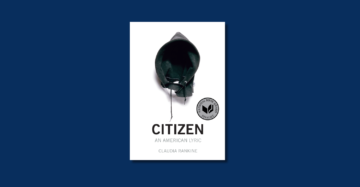 Representing suffering—how to do it, when we should do it at all—has long been a subject of debate. At the center of that debate is the role of the audience: how do we, as readers and viewers, witness depictions of violence in images, films, plays, or literature?