
The Old Days
In the old days of the old God, demanding and full of blame,
there was such commerce between heaven and earth—
burning bushes, angels knocking at the door, high drama
at the Red Sea. But after centuries, tired and overwhelmed,
God moved into a book with black frayed covers;
this book lived in our shul. And so my mother
rose to the occasion—she was the one who warmed cold
waters, parted them, pinched my cheek, made my bed.
Now she’s like God, helpless and confused,
the miracles of Egypt are lost, like her recipes and opinions.
Here she would say, drink this, it’s good for you;
here, this way, and my hands would tie a shoe.
God and my mother have grown to resemble each other,
like a couple who’ve lived under the same roof
for a long time. And both seem to have forgotten me —
He spinning the world, she rinsing the dishes,
remote and distracted, the two of them moving, morning
and night, in little circles of water and air.
by Gene Zeiger
from Leaving Egypt
White Pine Press, Fredonia, NY, 1995
Enjoying the content on 3QD? Help keep us going by donating now.
 I think of an essay as a realm for both the writer and the reader. When I’m working on an essay, I’m entering a loosely defined space. If we borrow Alexander’s terms again, the essay in progress is “the site”: “It is essential to work on the site,” he writes, in A Pattern Language: Towns, Buildings, Construction; “Work on the site, stay on the site, let the site tell you its secrets.” Just by beginning to think about an essay as such—by forming the intention to write on an idea or theme—I’m opening a portal, I’m creating a site, a realm. It’s a place where all my best thinking can go for a period of time, a place where the thoughts can be collected and arranged for more density of meaning. This place necessarily has structure, if it feels like a place. There’s a classic architecture book called Why Buildings Stand Up. We call any building, or part of a building, or thing like a building, a structure, if it succeeds in standing up. The structure is the system of elements in the building that make things go up—the load-bearing elements, walls and beams and columns, that counteract gravity. They counteract quote-unquote nothing, so empty space becomes a place.
 Recently, a team at Stanford University fished something new out of the vast, uncharted, and almost entirely unclassified world of genetic material sometimes known as biological dark matter. They called it an “obelisk,” a shell-less RNA of maybe 1,000 base pairs (shorter than any viral genome), which seems to self-organize into a rodlike shape. It appears to be the structural equivalent of a plant viroid or a fungal ambivirus, two other bits of self-replicating genetic material whose discovery widened the boundaries of what we know about microbiology. But the obelisks weren’t found in either plants or fungi. They were discovered in human intestines.
 Interest in
  O
O I grew up on the north side of Chicago in a pretty diverse school district that had students with backgrounds hailing from all corners of the world. I remember hearing a classmate speak to his mom in Polish when she picked him up. Another classmate brought Pakistani Biryani his mom made for lunch. It was a quite riveting experience at a young age to have exposure to such a vibrant student body. Everyone had a story, a history, a culture, yet we were all American kids raised on a steady diet of pop culture and pop tarts. Nonetheless, these kids’ subtle yet unique cultural undertones first sparked my curiosity to know more about the world.
 An artificial-intelligence tool honoured by this year’s Nobel prize
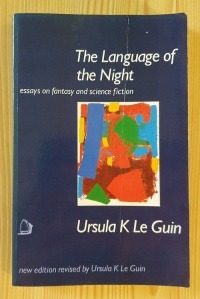 In ‘Dreams Must Explain Themselves’ (1973), Le Guin touches on the reference works that she consults for her writing (I’m a
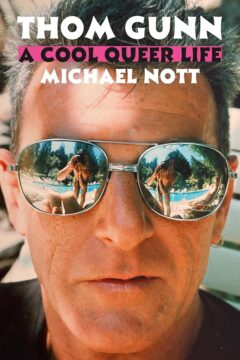 I
I  But if there was little obvious distinction between “religious” pilgrims and “regular” travelers, it was partly because the discourse of contemporary travel is so often geared toward the same ends as pilgrimage proper: a journey that results in the transformation, and ideally purification, of the searching self. This is the goal underlying, for example, travel-as-transformation narratives like Cheryl Strayed’s Wild, an account of the author’s solo hike along the Pacific Crest Trail, and Elizabeth Gilbert’s divorce-and-self-actualization memoir Eat, Pray, Love. Travel, at least the kind of travel so often coded as “real” or “authentic” (as opposed to, say, the family resort vacation, the Instagram trip, or the perfunctory list-ticking of the much-derided “tourist”), is already treated as a kind of secular pilgrimage in which we find out who we really are only by untethering ourselves from those elements of our identities too closely linked to habit and home. Only when we are away from our daily routines, this ideology implies, from our bosses and spouses and children, when we are challenged by language barrier or public transit mishap or unexpected romantic chemistry, can we come to know who we really are.
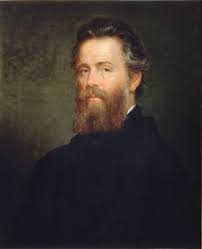 T
T