In Memoriam: Chris Marker

Richard Brody in The New Yorker:

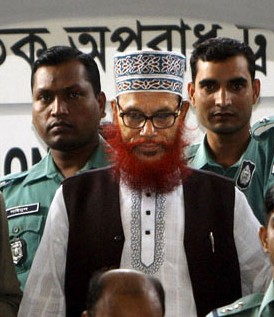
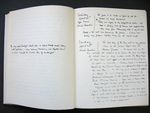
The very subject of Chris Marker’s work is memory; his death today, at the age of ninety-one (indeed, the day after his ninety-first birthday), elicits a simulacrum of memory, in tributes such as this one, where the contrast between the immediate significance (to the protagonist in the drama and to those who know and love him) and its public reflection is stretched to absurdity. For Marker, memory isn’t passive; it’s an act of resistance—the edge that cuts a path into the future—and the effective work of memory is the very definition of art. Marker was a master of film editing—the part of the filmmaking process that Jean-Luc Godard, another master editor and memory-artist, defined as holding past, present, and future in one’s own hands—and the very possibility of remembering Marker demands a little editing, a splicing-in of excerpts from a surprising and crucial document.

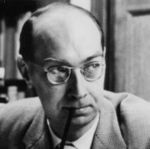
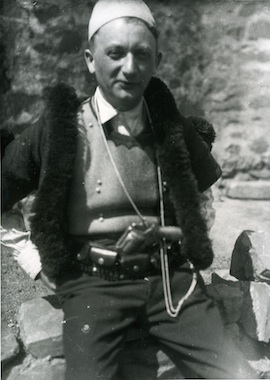
Marker gave few interviews and hardly ever allowed himself to be photographed; in one of the few interviews that he did grant—in 2003, to Samuel Douhaire and Annick Rivoire, for Libération—he explained his reticence, calling himself “publiphobic”:

At the beginning of the sixties, that was well-thought-of, now it has become literally inadmissible. I can’t help it. That way of putting the mechanism of calumny in the service of praise has always rubbed me the wrong way, although I recognize that this diabolical sponsorship sometimes offers the most beautiful images one can see on a small screen (have you seen David Lynch with blue lips?).

In this remarkable text, he provides several signal examples of what he considered abuses of the press: the silence surrounding the 2002 reissue of a 1945 book by the novelist François Vernet, a friend of his who died at Dachau; the lack of discussion of a recording of songs by Viktor Ullmann of poems by Hülderlin and Rilke (“one is seized by the truly vertiginous idea that, at that moment, nobody glorified true German culture more than this Jewish musician who would soon die at Auschwitz”).

College: What It Was, Is, and Should Be: Beyond the Ivy Islands

Steven Brint in the Los Angeles Review of Books:

1343512555It is odd to think that we live in a time when the college model may be in the process of breaking apart. So much suggests that college has never been more successful. Record numbers of students graduate every year. Every graduating class is more diverse than the one that preceded it. Foreign students flock to American quads. Harvard economists tell us that the college degree has never been worth more, relative to the high school degree, than it is today. Bill Gates and President Obama call for a doubling of the proportion of young adults with college degrees over the next decade. We seem to be heading for the day when we won’t have enough commencement speakers to go around.

And yet other indicators suggest that the college experience has never been more imperiled. Tuition has been increasing faster than inflation for more than 30 years. Some economists have begun to argue that college costs more than it is worth. Studies like Richard Arum and Josipa Roksa’s Academically Adrift suggest that the bottom third of students are not developing their analytical skills or thought processes in college, largely because not much is required of them. The fastest-growing parts of college budgets have nothing directly to do with teaching, but instead go to administrators and student affairs staff. In their efforts to shift enrollments to two-year community colleges, politicians like Louisiana’s Governor Bobby Jindal have stated flatly that “most future jobs [in America] will require more training than a high school diploma but less than the traditional 4-year college degree.” More radical still are plans to break up degree programs into distinct, definable skills and to award badges for successful acquisition of each skill. Even institutions like Harvard and Stanford are hedging their bets on the future of site-specific four-year baccalaureates by sponsoring ambitious online projects.

More here.

How many Israelis ask themselves why they remain in a country that has become the most dangerous place for Jews?

Akiva Eldar in Haaretz:

Akiva Eldar El MatanRecently I had a heart-to-heart talk with a beloved relative who was born in this country, in an effort to persuade her to return and bring up her children in Israel. I was reminded of this conversation when I read the speeches made last week by the two leaders of the nation, Prime Minister Benjamin Netanyahu and Defense Minister Ehud Barak, at the graduation ceremony of the National Security College.

In his speech Netanyahu presented the five leading challenges that threaten the country: the Iranian nuclear program, the missile threat, cyber warfare, problems near the borders and the stockpiling of weapons in the region. He promised Israel would do its utmost to stop the Iranian nuclear program. He vowed that, to the extent that it is necessary, Israel would surround additional parts of the country with security fences, alter the composition of its forces and increase the defense budget.

Barak went even further in enumerating the disasters that confront us and could destroy us. The challenges we face, he said, are among the most complex and complicated that the state has faced in its entire existence. He warned that the Iranian nuclear plan could turn into an existential threat against the state, prophesized that neither diplomacy nor sanctions would be able to stop it, and promised not to remove any option from the agenda to thwart it. For dessert, the minister promised that Israel would not stand by idly watching while sophisticated weapons systems are transferred from Syria to Hezbollah in Lebanon.

More here.

Tuesday Poem

Next Morning Letter

Savoring each summer moment Beauty Writing a Letter
lush and brief
I close my
eyes to see

your white robe, falling open

as you call for your scroll
and ink stone, a brush

As your brush passes over the paper

my body shivers

How closely now you watch
at the open lattice
as your
servant hurries away

the next morning letter

tethered to
a spray of clematis
whose blossoms will
not open

until they reach me

In the washbasin
your face is
the bridge that
spans

the floating world of dreams

Now you are yawning
Now you are reciting
sutras
bowing to the wind

When the letter arrives

all the leaves of the maple
outside my window
are
stirred

I read your words

just once, then once again
bringing my fingers
to my
lips, my hair

tucked back behind one ear

On the dawn's trellis
the scent of clematis
Now
smell your fingers
The petals of my body
gather in your empty arms

How shall I respond?
The cry of the stag
is so
loud

the echo answers

from the empty mountains
as if it were a doe
I tell
you only what you know

Clematis—the scent
of your teaching surrounds me
My
empty arms fill
Come night, the fragrant petals
fall in a heap at my feet
.

by Margaret Gibson
from Blackbird
Spring 2002, Vol. 1 No. 1

Slinky Magic

Dan Lewis in Now I know:

What’s going on here? The Slinky comes with a small, barely visible jet pack which allows– no, wait. It’s just physics, even if counterintuitively so.

Let’s start with gravity. Drop something — a ball, your cell phone (which certainly happens all too often), a Slinky, or anything, and gravity will start to pull it down. That’s pretty straightforward. It’s why the top of the Slinky immediately falls once released, and it’s why we expect the rest of the Slinky to fall as well. But that’s not the only force acting on the Slinky. There’s also the tension in the spring.

From the perspective of the Slinky’s bottom, the tension is an upward force. Literally, the tension is pulling the bottom of the Slinky back up toward the top. When you are holding the top end of the Slinky, tension is what keeps it from unraveling entirely and falling to the ground as it stretches and dangles. When you drop it, the spring’s tension doesn’t just disappear, It’s still there and, in this case, pulling up at the same rate that gravity is pulling it downward. So the bottom stays in place as the Slinky compresses.

But in the end, gravity wins. When the top and bottom meet, the tension goes to zero, and the bottom of the Slinky joins the top in its descent back to the ground.

More here. And a bonus video:

Nine Scientists Receive a New Physics Prize of $3,000,000. Each.

Kenneth Chang in the New York Times:

ScreenHunter_01 Jul. 31 12.30The nine are recipients of the Fundamental Physics Prize, established by Yuri Milner, a Russian physics student who dropped out of graduate school in 1989 and later earned billions investing in Internet companies like Facebook and Groupon.

“It knocked me off my feet,” said Alan H. Guth, a professor of physics at the Massachusetts Institute of Technology who was among the winners. He came up with the idea of cosmic inflation, that there was a period of extremely rapid expansion in the first instant of the universe.

When he was told of the $3 million prize, he assumed that the money would be shared among the winners. Not so: Instead, each of this year’s nine recipients will receive $3 million, the most lucrative academic prize in the world. TheNobel Prize currently comes with an award of $1.5 million, usually split by two or three people. The Templeton Prize, which honors contributions to understanding spiritual dimensions of life, has been the largest monetary given to an individual, $1.7 million this year.

More here.

The 10 best closing lines of books – in pictures

From The Guardian:

F-Scott-Fitzgerald-001The Great Gatsby
by F Scott Fitzgerald
“So we beat on, boats against the current, borne back ceaselessly into the past.” Nick Carraway’s signing off after the death of Gatsby is my favourite last line in the Anglo-American tradition – resonant, memorable and profound. It is the magnificent chord, in a minor key, which brings this 20th-century masterpiece to a close. Somehow, it sums up the novel completely, while giving the reader a way out into the drabber, duller world of everyday reality.

Middlemarch
by George Eliot
“But the effect of her being on those around her was incalculably diffusive: for the growing good of the world is partly dependent on unhistoric acts; and that things are not so ill with you and me as they might have been is half owing to the number who lived faithfully a hidden life, and rest in unvisited tombs.” This passage is almost a credo – a lovely, valedictory celebration of Dorothea’s quiet life, after she has renounced Casaubon’s fortune and confessed her love for Ladislaw.

More here.

Humans might be hard-wired to ‘love thy neighbor’

From PhysOrg:

HumansmightbBritish psychologists from the University of Lincoln argue that people may actually be hard-wired to “love thy neighbor.” In conducting the study, the researchers analyzed the behavior of contestants in first-round episodes of the BBC quiz show, “The Weakest Link.” “In the show contestants must make a choice about who is the worst player based on two very different sources of information,” study leader Paul Goddard, senior lecturer in the School of Psychology, explained in a Lincoln news release. “The primary and most reliable source comes from the game itself. If one player gets all their questions wrong, it's a fairly straightforward decision to vote them off. The quandary for contestants arises when there is no clear consensus about who is the worst player, such as in rounds where several players get just one question wrong. In these circumstances, contestants have to rely on a secondary source of information — their own judgment. This is where bias can really come to the fore.”

The researchers calculated the probability of votes and compared these projections to what actually happened. The study found contestants showed a strong reluctance to vote for the person standing next to them. The researchers dubbed this pattern, 'the neighbor avoidance effect.' They noted this bias was stronger when the group of contestants didn't agree on which players was the weakest. When forced to make decisions, the study revealed people were less likely to vote off the people next to them and target other contestants who were standing farther away. The researchers said their observations drew parallels from a controversial social psychology experiment conducted in the 1960s. In this experiment, Yale psychologist Stanley Milgram found people were more likely to punish people with an electric shock if they were in another room. If people were located in the same room however, they were more reluctant to administer this punishment.

More here.

pinker: the left critique

Tumblr_lv8inhsrMQ1qfugqmo1_250

Pinker’s remarkable inversion of reality in portraying the post-World War II period as a “Long Peace,” with residual violence stemming from communist ideology and actions, points up the relevance of Chalmers Johnson’s comment that “When imperialist activities produce unmentionable outcomes,…then ideological thinking kicks in.”[34] It kicks in for Pinker with communist expansionism and U.S. “containment.” It also kicks in with his notion that communism, but not capitalism, was both “utopian” and “essentialist,” “submerge[ing] individuals into moralized categories,” and causing some of the worst atrocities of the modern period. (328-329) But weren’t the racism and anticommunism of the Western powers and in particular the United States “essentialist” ideologies in the Pinkerian sense, and wedded to the “full destructive might” of these powers? And didn’t these ideologies justify exterminations and massive ethnic cleansings of inferior and threatening peoples, replacing them with advanced peoples and cultures who put resources to a higher use? Weren’t Friedrich von Hayek, Ludwig von Mises, Milton Friedman, and many other members of the Chicago School of Economics “free-market” ideologues?

more from Edward S Herman and David Peterson at ZNET here. (h/t Gary L. Olson).

Monday, July 30, 2012

The Humanists: Chris Marker’s Sans Soleil

Chris Marker (1921-2012), one of France's most influential filmmakers, one of my favorite filmmakers, died yesterday. In memory, we repost a Monday piece by Colin Marshall from a few years ago on Marker's Sans Soleil:

by Colin Marshall

His name is Sandor Krasna, and that's most of the information we have about him. All other qualities of Sans Soleil's verbose, peripatetic protagonist must be inferred from the wrong side of several layers of intermediation. Practically all the footage shown resides on film attributable to Krasna's camera, and practically all the words spoken reside on letters attributable to Krasna's pen. Krasna's shots are linked into a 100-minute collage atop which a nameless female voice, presumably that of Krasna's pen pal, reads the traveling cameraman's meandering, observational missives. The result is one of the most remarkable essay films ever assembled.

The trouble with whipping out the phrase “essay film” is, of course, the need to define the phrase “essay film”. Why not just call Sans Soleil a documentary? The most basic objection is that, well, Sandor Krasna isn't real. He's a fictional character, just like his electronic composer brother Michel Krasna (credited with the score); just like his unidentified female friend, the recipient of so much correspondence. The movie has a whole, if small, cast of players that go unseen, existing only as text, voice, music and an eye through a lens. Marker's choices about how to convey these characters, like many of the choices that make up Sans Soleil, allow — and in fact, force — so much to be generated solely in the viewer's imagination. One might loosely describe the film as a travelogue through time and geography, from mid-1960s Iceland to early-1980s Guinea-Bissau, Cape Verde and Japan, but only because those places are where most of Krasna's footage is shot and provide the raw subject matter for his ruminations. It's up to the mind, conscious or unconscious, of each individual audience member to construct the connective tissue between the shots, the words and the observations. It's not a non-narrative film, exactly; it's simply a film with an emergent narrative, one that differs from mind to mind.

Sunday, July 29, 2012

W.B. Yeats, Magus

HermesJamie James in Lapham's Quarterly:

If the paramount project of W. B. Yeats’ professional life was the perfection of the art of poetry, it was intertwined with a personal preoccupation, the study and practice of magic— not in any metaphorical sense, but the dedicated pursuit of supernatural powers based upon the ancient traditions of alchemy and necromancy, which began in his youth and persisted to the end of his long life.

Yeats wrote frankly about his vocation as a magician in several memoirs and in A Vision, a dense astrological treatise he labored over for twenty years. A Protestant Irishman in Victorian Britain, Yeats as a young man was pulled in conflicting directions, but the occult always trumped worldly concerns, because it was so deeply connected with his poetic craft. In 1892, when the Irish patriot John O’Leary admonished the twenty-seven-year-old poet for his devotion to magic at the expense of the Cause, Yeats answered:

Now as to magic. It is surely absurd to hold me “weak” or otherwise because I choose to persist in a study which I decided deliberately four or five years ago to make, next to my poetry, the most important pursuit of my life…If I had not made magic my constant study I could not have written a single word of my Blake book [The Works of William Blake, with Edwin Ellis, 1893], nor would The Countess Kathleen [stage play, 1892] have ever come to exist. The mystical life is the center of all that I do and all that I think and all that I write.

That’s plain speaking, which admits no ambiguity. If one would understand the works of the poet often described as the greatest of his age, it might seem necessary to come to terms with this lifelong passion. Yet apart from the prose works mentioned and a handful of supernatural tales in the vein of Edgar Allan Poe, Yeats never directly addresses the practice of magic in the poetry and plays upon which his magisterial reputation rests. He alluded to it only rarely, with ambiguous metaphors and a select hoard of words charged with esoteric meanings.

Magic imbrued Yeats’ thinking so profoundly that it’s nearly impossible to disentangle the strands without rending the garment.

Live Through This

Mermaid_WEB_schulnik-383x458There are a few controversial pieces this week about rape. First, in reddit is a post from someone who claims to have been a serial rapist and a discussion that follows. (Warning: needless to say, it's disturbing. He seems to be a sociopath who claims to have now somehow managed to keep his sociopathology at bay.) Second is this piece in New Inquiry by Charlotte Shane (which has some graphic descriptions of rape):

In our society, we recognize this as rape, an act of violence that in all its permutations (date, stranger, violent, anal, oral, gang) is understood to be the worst thing that can happen to a woman — worse than a serious car accident, worse than a protracted divorce, worse than the death of a parent. It is regularly equated with being murdered. It is life-shattering. It is soul-destroying. If you are a woman, you can never move past your rape; you can only “learn” to live with it, as though it is akin to abrupt blindness or a paralyzed limb. If it does not ruin you, it will at the very least change you forever for the worse. This is the only allowable truth about rape. There are no alternatives.

In my eight years as a sex worker, I’ve been sexually mistreated a relatively small number of times. For instance, I’ve been held down and penetrated without a condom twice, once vaginally and once anally, by separate men. The first was over so quickly that I was too shocked to have much of a reaction. He pulled out to ejaculate after maybe six rabbit fast strokes. It wasn’t painful. At that time I was providing so-called sensual massage, which means there was no implicit agreement for anything beyond a hand job. I was 22.

After he left, I gradually became furious. What I most wanted was not for him to serve jail time or face some retributive physical assault; what I wanted was the chance to berate him, to tear him down verbally for deciding he could use me, another human being, however he wanted and without consequence — ultimately, an accurate assessment on his part. I wanted to make him feel ashamed.

Then I mostly forgot about it. I didn’t quit my job. I didn’t stop enjoying sex.

The Ruins of Empire: Asia’s emergence from western imperialism

Pankaj Mishra in The Guardian:

EmpireThe unctuous belief that British imperialists, compared to their Belgian and French counterparts, were exponents of fair play has been dented most recently by revelations about mass murder and torture during the British suppression of the Mau Mau uprising in Kenya in the 1950s. Nevertheless, in one of the weirdest episodes of recent history, a Kipling-esque rhetoric about bringing free trade and humane governance to “lesser breeds outside the law” has resonated again in the Anglo-American public sphere. Even before 9/11, Tony Blair was ready to tend, with military means if necessary, to, as he put it, “the starving, the wretched, the dispossessed, the ignorant” around the world. His apparently more intellectual rival Gordon Brown urged his compatriots to be “proud” of their imperial past. Sensing a sharper rightward shift after 9/11, many pith-helmet-and-jodhpurs fetishists boisterously outed themselves, exhorting politicians to recreate a new western imperium through old-style military conquest and occupation of native lands.

Embracing such fantasies of “full-spectrum dominance”, American and European policymakers failed to ask themselves a simple question: whether, as Jonathan Schell put it, “the people of the world, having overthrown the territorial empires, are ready to bend the knee to an American overlord in the 21st”? After two unwinnable wars and horribly botched nation-building efforts, and many unconscionable human losses (between 600,000 and one million in Iraq alone), the “neo-imperialists” offering seductive fantasies of the west's potency look as reliable as the peddlers of fake Viagra. Yet, armour-plated against actuality by think tanks, academic sinecures and TV gigs, they continue to find eager customers. Of course, as the historian Richard Drayton points out, the writing of British imperial history, has long been a “patriotic enterprise”. Wishing to “celebrate” empire, Michael Gove plans to entrust the task of rewriting the history syllabus to Niall Ferguson, one of the “neo-imperialist” cheerleaders of the assault on Iraq, who now craves “creative destruction” in Iran and whose “skilful revision of history” the Guardian's Jeevan Vasagar asserted last month, “will reverberate for years to come”.

Read the rest here.

I’m wired, therefore I exist

From New Statesman:

InterToday if you are not often wired, you do not exist. Like radio and television in other times, the internet has become not only an indispensable tool but also a vital component of our life. It has become so useful, significant, and meaningful for variety of administrative, cultural, and political reasons that a life without it seems unimaginable in the twenty-first century. But the ownership of this interactive life is troubled: when you start seeing interesting advertising on your Gmail banner, personalised ads aimed just at you, your existence has begun to belong to others. At last count, there are now 2,267,233,742 users of the internet, that is, 32.7 per cent of the world population. While these numbers refer primarily to North America, Asia, and Europe, in Africa, Latin America, and the Middle East its use is growing rapidly. However, there is a big difference between being online and being wired. This is not a simple semantic difference, but rather an existential distinction that determines our roles, tasks, and possibilities in the world today. Without suggesting a return to twentieth century existentialism (which arose as a reaction against scientific systems threatening humans beings uniqueness) philosophy must stress the vital danger that being wired can pose for our lives.

Not everyone who is online is also wired. The latter refers to those capable to finding a date or a job through social networks such as LinkedIn, downloading the latest episodes of True Blood, or purchasing self-designed Nike shoes; the former avoid these services. Using the internet just for an email account and cheap airline tickets does not make you technologically incompetent, but rather concerned for your existential distinctiveness, that is, autonomy. For the wired West the danger of the internet does not lie in going crazy from too many hours spent online, although this is becoming more common, but rather in considering a wired existence transparent, free, and vital for your life rather than an active threat. Although being wired assures you an identity on the web, that is, a position in the new wired world, it also frames your existence within the possibilities and limitations of the web. This is why Tim Berners-Lee, a founder of the web, recently pointed out how the “more you enter, the more you become locked in. Your social networking site becomes a central platform—a closed silo of content, and one that does not give you full control over your information in it.”

More here.

Syrian war of lies and hypocrisy

Robert Fisk in The Independent:

Has there ever been a Middle Eastern war of such hypocrisy? A war of such cowardice and such mean morality, of such false rhetoric and such public humiliation? I'm not talking about the physical victims of the Syrian tragedy. I'm referring to the utter lies and mendacity of our masters and our own public opinion – eastern as well as western – in response to the slaughter, a vicious pantomime more worthy of Swiftian satire than Tolstoy or Shakespeare.

While Qatar and Saudi Arabia arm and fund the rebels of Syria to overthrow Bashar al-Assad's Alawite/Shia-Baathist dictatorship, Washington mutters not a word of criticism against them. President Barack Obama and his Secretary of State, Hillary Clinton, say they want a democracy in Syria. But Qatar is an autocracy and Saudi Arabia is among the most pernicious of caliphate-kingly-dictatorships in the Arab world. Rulers of both states inherit power from their families – just as Bashar has done – and Saudi Arabia is an ally of the Salafist-Wahabi rebels in Syria, just as it was the most fervent supporter of the medieval Taliban during Afghanistan's dark ages. Indeed, 15 of the 19 hijacker-mass murderers of 11 September, 2001, came from Saudi Arabia – after which, of course, we bombed Afghanistan. The Saudis are repressing their own Shia minority just as they now wish to destroy the Alawite-Shia minority of Syria. And we believe Saudi Arabia wants to set up a democracy in Syria?

More here.

Sunday Poem

The Camel

Don't tell a camel about need and
want.

Look at the big lips
pursed
in perpetual kiss,
the dangerous lashes
of a born coquette.

The camel is an animal
grateful for less.
It keeps to itself
the hidden spring choked with grass,
the sharpest thorn
on the sweetest stalk.

When a voice was heard crying in the
wilderness,

when God spoke
from the burning bush,

the camel was the only animal
to answer back.

Dune on stilts,
it leans into the long horizon,
bloodhounding

the secret caches of watermelon
brought forth like manna
from the sand.

It will bear no false gods
before it:
not the trader
who cinches its hump
with rope,
nor the tourist.

It has a clear sense of its place in
the world:

after water and watermelon,
heat and light,
silence and science,

it is the last great hope.

by Wislawa Szymborska
from Miracle Fair: Selected Poems of Wislawa Szymborska
translated by Joanna Trzeciak