Ten Things You Need to Know About Gaza

Mehdi Hasan in the Huffington Post:

1) “PRISON CAMP”

David Cameron once referred to Gaza as a “prison camp” and “some sort of open-air prison”. 1.7million Palestinians are crammed into just 140 square miles; Gaza is one of the most crowded places on earth.

Israel, despite withdrawing its troops and settlers from the Strip in 2005, continues to control its airspace, territorial waters and border crossings (with the exception, of course, of Gaza's land border with Egypt).

2) (UN)FAIR FIGHT

Remember: according to the Israeli human-rights group B'Tselem, in the last major conflict between Israel and Hamas – 'Operation Cast Lead' which kicked off in December 2008 – 762 Palestinian civilians were killed, including more than 300 children, compared to three (yes, three!) Israeli civilians.

We seem to be seeing a similar imbalance in bloodshed this time round: “More Palestinians were killed in Gaza [on Wednesday] than Israelis have been killed by projectile fire from Gaza in the past three years,” wrote Palestinian-American activist Yousef Munayyer on the Daily Beast website.

3) “COLLECTIVE PUNISHMENT”

Why do they hate us, ask ordinary Israelis? Well, Gaza has been under siege since January 2006, after its residents dared to elect a Hamas goverment in free and fair elections. The subsequent economic blockade imposed upon the Strip by the Israeli government at one stage prevented the residents of Gaza from importing, among other things, coriander, ginger, nutmeg and, even, newspapers.

Most international lawyers, as well as the International Committee of the Red Cross (ICRC), consider the blockade to be illegal under international humanitarian law; in 2009, a UN panel, led by distinguished South African judge and self-confessed Zionist Richard Goldstone, accused Israel of imposing “a blockade which amounted to collective punishment”.

More here.

The Global War on Terror shows no sign of coming to an end

Mark Danner in the New York Review of Books:

Amid the clamorous controversies of this election campaign, what strikes one here on the West Bank of the Jordan is the silences. Though the issue of Palestine promises to have a much more vital part in the volatile, populist politics of the Middle East’s new democracies—whose vulnerable governments actually must take some account of what moves ordinary people—here in Ramallah we have heard virtually nothing substantive about it, apart, that is, from Mitt Romney’s repeated charge that President Obama, presumably in extracting from Israel a hard-fought ten-month freeze on settlement building early on in his administration, had “thrown Israel under the bus.”

In fact, the West Bank is perhaps the place on the globe that has seen the least of President Obama’s promised “change you can believe in.” Nearly fifty years after Israel conquered the territories, its young soldiers are still on patrol, herding millions of Palestinians through and around an increasingly elaborate labyrinth of checkpoints, walls, and access roads, while Israeli settlers, now numbering in all more than half a million, flow over the hills, swelling their gated and fortified towns, creating one “fact on the ground” after another. Even as the land of the long-promised Palestinian state vanishes behind these barricades, the phrase “two-state solution” lives on, hovering like a ghost over the settlements, a remnant mirage of a permanently moribund “peace process” that has produced no agreement of consequence in twenty years, since the Oslo Accords vowed a Palestinian state would be declared no later than 1999.

More here.

On Art’s To-Do List: Climate Change

Andrew Russeth in the New York Observer:

ScreenHunter_33 Nov. 15 17.28Before Norwegian businessman Petter Olsen sent his version of Edvard Munch’s The Scream to the auction block at Sotheby’s New York in May, where it sold for $120 million, he spoke to the press about what he thought the work meant. At the time, Mr. Olsen’s pronouncements sounded, at least to me, a little bit off. The Scream, we’re all taught, is about existential angst, the individual crying out, alone in the universe, but Mr. Olsen, who’d lived with the work his entire life, had a more expansive view.

The Scream for me shows the horrifying moment when man realizes his impact on nature,” Mr. Olsen told the Financial Times, “and the irreversible changes that he has initiated, making the planet increasingly uninhabitable.” After last week’s storm, which killed more than 40 people in New York, destroyed homes, and damaged art, artist studios and galleries in Brooklyn and Chelsea, that reading of the painting seems painfully on point. Munch couldn’t have known about the coming climate change, but it’s all there in the work—in its original title (Scream of Nature) and in the sky and land that appear to undulate behind the bald figure.

Until visiting The Scream two weeks ago at the Museum of Modern Art, to which it has been loaned for six months by its new, anonymous owner, I had forgotten that it has three figures: besides the alarmed man who gets all of the attention, there is another man in a top hat, his head bowed as if in deep despair, and a third man, further in the distance, who stares out at the landscape, strangely unaware—or in denial—of the fact that the world is coming undone around him. Factoring in those other two, it’s easier to follow Mr. Olsen’s thinking: when it comes to the effects that humans are having on nature, most of us are the second or third person.

More here.

Another Israel-Gaza War?

Editorial from the New York Times:

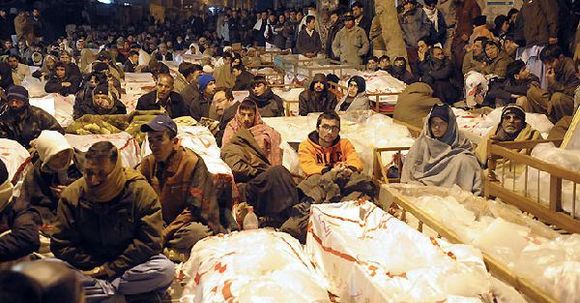
ScreenHunter_32 Nov. 15 17.22Israel has a right to defend itself, but it’s hard to see how Wednesday’s operation could be the most effective way of advancing its long-term interests. It has provoked new waves of condemnation against Israel in Arab countries, including Egypt, whose cooperation is needed to enforce the 1979 peace treaty and support stability in Sinai.

The action also threatens to divert attention from what Prime Minister Benjamin Netanyahu has repeatedly described as Israel’s biggest security threat: Iran’s nuclear program.

Engaging in a full-scale ground war is especially risky. Israel’s last major military campaign in Gaza was a three-week blitz in 2008-09 that killed as many as 1,400 Palestinians, and it was widely condemned internationally. It did not solve the problem. Hamas remains in control in Gaza and has amassed even more missiles.

Some Israeli commentators have suggested that Mr. Netanyahu’s decision to order the operation is connected to elections in January.

More here. [Photo from the Washington Post.]

Nine theories of the multiverse promise everything and more

From Aeon:

MultiversesOur understanding of the fundamental nature of reality is changing faster than ever before. Gigantic observatories such as the Hubble Space Telescope and the Very Large Telescope on the Paranal Mountain in Chile are probing the furthest reaches of the cosmos. Meanwhile, with their feet firmly on the ground, leviathan atom-smashers such as the Large Hadron Collider (LHC) under the Franco-Swiss border are busy untangling the riddles of the tiny quantum world. Myriad discoveries are flowing from these magnificent machines. You may have seen Hubble’s extraordinary pictures. You will probably have heard of the ‘exoplanets’, worlds orbiting alien suns, and you will almost certainly have heard about the Higgs Boson, the particle that imbues all others with mass, which the LHC found this year. But you probably won’t know that (if their findings are taken to their logical conclusion) these machines have also detected hints that Elvis lives, or that out there, among the flaming stars and planets, are unicorns, actual unicorns with horns on their noses. There’s even weirder stuff, too: devils and demons; gods and nymphs; places where Hitler won the Second World War, or where there was no war at all. Places where the most outlandish fantasies come true. A weirdiverse, if you will. Most bizarre of all, scientists are now seriously discussing the possibility that our universe is a fake, a thing of smoke and mirrors.

All this, and more, is the stuff of the multiverse, the great roller-coaster rewriting of reality that has overturned conventional cosmology in the last decade or two. The multiverse hypothesis is the idea that what we see in the night sky is just an infinitesimally tiny sliver of a much, much grander reality, hitherto invisible. The idea has become so mainstream that it is now quite hard to find a cosmologist who thinks there’s nothing in it. This isn’t the world of the mystics, the pointy-hat brigade who see the Age of Aquarius in every Hubble image. On the contrary, the multiverse is the creature of Astronomers Royal and tenured professors at Cambridge and Cornell.

PICTURE: String Theory suggests that our universe may be like a page in a book, stacked alongside tens of trillions of others. Those other realities would be right next to us now.

More here.

Images on Cigarette Packs Are Scarier to Smokers Than Text Warnings

From Smithsonian:

Tobacco-pack-designsMore than 40 countries around the world force cigarette companies to print graphic images of things like decaying teeth, open-heart surgeries and cancer patients on their packs, in an effort to discourage smoking by directly linking cigarettes with their most gruesome effects. The United States, however, is not one of these countries: The U.S. Food and Drug Administration unveiled graphic designs in November 2010, but repeated lawsuits by the tobacco industry have delayed implementation of the new warnings. If and when the labels do hit, the images could go a long way towards continuing the decline in smoking rates across the country. That’s because, as new research demonstrates, seeing these images every time a person reaches for a pack is a more effective deterrent than a text-only warning. The research also indicates that the graphic warnings are especially powerful in discouraging low-health literacy populations from smoking—the one group in which smoking rates have remained stubbornly high over the past few decades.

The study, published yesterday in the American Journal of Preventive Medicine [PDF], was conducted by James Thrasher of the University of South Carolina and colleagues. A control group of 207 smokers saw text-only warning labels, while 774 smokers evaluated nine different graphic labels, both images proposed by the FDA and a selection of others currently used in foreign countries. The smokers were asked to judge each label on a scale of one to ten for credibility, relevance and effectiveness. The results were unequivocal: The text-only warnings’ average ratings were mostly in the fives and sixes, while simpler text messages combined with striking graphics scored in the sevens and eights across the board.

More here.

Wednesday, November 14, 2012

Into the Woods Again and Again

1352588573

PERHAPS THE GREATEST IRONY concerning the profound legacy of Jacob and Wilhelm Grimm’s Children’s and Household Tales (1812), celebrating its bicentenary worldwide this year, is that the fame of the tales is due in great part to Edgar Taylor, a British lawyer, who produced the first English translation, German Popular Stories, in 1823. Actually, Taylor adapted the Grimms’ tales, and thus transformed them into unusual jocose stories for children and middle-class families. He also included 22 hilarious illustrations by the great caricaturist George Cruikshank. Surprisingly, the serious Grimms, who never took care to have their tales enlivened with illustrations, were so impressed by Taylor’s highly successful book that they followed his example in all the editions they published after 1823 and until 1857. The Grimms remained true to their original scholarly intention of salvaging the great oral tradition of storytelling, while artfully editing the tales according to the tastes and values of their contemporary reading public. Meanwhile, Taylor, who published another translation called Gammer Grethel in 1839, continued to influence the reception and legacy of the Grimms in Great Britain and also in North America up through the twentieth century. Thanks to Taylor and other British translators, the Grimms became known as delightful writers for children whose books also had an appeal for adults, even though the original works were never intended for children.

more from Jack Zipes at the LA Review of Books here.

“Little Killing Ditty”

121112_POEM_ShootingBird.jpg.CROP.rectangle3-large

Christian Wiman in Slate:

I have forgotten the little killing ditty
whispered to the red birds and the blue birds and the brown birds
not one of which I ever thought to give a name.

In the tall mesquite mistaking our yard
for a spacious place, I plugged away with my pellet gun
and got them often even in the eye, for I was trained

to my craft by primordial boredom
and I suppose some generic, genetic rage
I seem to have learned to quell or kill.

They dropped like the stones I’d throw in Catclaw Creek
or fluttered spastically and panickedly up
whereupon I took more tenacious aim—

much more difficult now because they moved
—not me, frozen as if in a camera’s flash—
troubling the tyranny of the ordinary

as if a wave of meaning or unmeaning
went rippling like heat through the yard.
Fire and fire and they fell and they fall, hard.

I felt nothing, and I will not betray those days
if days are capable of being betrayed,
by pretending a pang in my larval heart

or even some starveling joy when Tuffy yelped.
I took aim at the things I could not name.
And the ditty helped.

Go here to hear the poet reading his poem and to read interesting discussion in the comments.

mare nostrum?

Pavicic

But this “room with a view” is also metaphorical. The Mediterranean, as imagined by the North, is where you expect to “open a window” to erotic, tactile or – most crudely – alcoholic liberation. For several generations, the Mediterranean was rather like what Polynesia was to Gauguin: a place where people walked about unclothed and uninhibited, where all you needed to be happy was the sun and a handful of figs, a place where physical liberation met philosophy, ancient wisdom and civilization. This is the Mediterranean of Salvatore’s film Mediterraneo, a Greek island that resists even the war being waged around it. It is the Mediterranean of Renato Baretic’s novel Osmi povjerenik (“The eighth commissioner”) – an isolated island where a strange dialect is spoken, where the locals refuse to recognise any external authority, and where the protagonist finds refuge from the rebarbative reality of a corrupt and cynical Croatia in transition. It is the Mediterranean of Alexander Sacher Masoch’s Die Ölgärten brennen (“The olive groves are burning”): the beautiful island of Korcula (another island!), where the longevity of the olive grove and the wisdom of the ordinary man defeats Nazi evil. This is the Mediterranean sought, though frequently not found, by the heroes of great European literature and film.

more from Jurica Pavicic at Eurozine here.

Kiarostami in Tokyo

LikeSomeoneinLove4_jpg_470x421_q85

Like Someone in Love has all of Kiarostami’s usual preoccupations: the passage of time, the mystery and contingency of human intercourse, the shadow of death, the illusions of love, the intimacy of being isolated from the world in a moving vehicle. But the setting in Japan does not feel arbitrary; it has a point. Tokyo, the ultimate modern metropolis, with its neon-lit commercial graffiti and buildings that look like a pastiche of everywhere and nowhere, is perfect for Kiarostami’s story of closeness between strangers. To most foreign visitors, Tokyo looks uncannily familiar and yet deeply strange. Kiarostami is a stranger in Tokyo, but his depiction of the city is extraordinarily intimate and delicate. Kiarostami’s idea for the film began with an image. Driving in a taxi through the raffish entertainment district of Roppongi, he filmed an elderly lady standing on a street corner.

more from Ian Buruma at the NYRB here.

Evolutionary Psychology ≠ Biological Determinism

Gad Saad in Psychology Today:

Gad_saadThis past weekend, a prominent consumer scholar took me to task onFacebook regarding evolutionary psychology. He seemed to reject the idea that men and women might exhibit biological-based sex differences, as this is apparently a form of biological determinism that promotes racial and gender stereotyping. I am reproducing here my two Facebook replies to him (with very slight editing). The first quote refers to his rejection of so-called “gender essences” (i.e., that innate biological-based differences might exist between the sexes) while the second speaks to his lumping of evolutionary psychology with biological determinism.

“Homo sapiens is a sexually dimorphic species (a basic tenet of evolutionary biology). As such, we should expect that on many dimensions, men and women will exhibit no sex differences. On others, there will be differences in one direction or the other. The meta-framework that explains these patterns is evolutionary theory. It has nothing to do with the '50s [in reference to his implying that “gender essences” is a form of obsolete sexist thinking of the '50s] and everything to do with an astonishing amount of empirical evidence collected for well over 150 years (let alone archival, paleontological, historical, anthropological, ethological data etc. collected over millennia and spanning endless cultures).”

“Biological determinism is a canard that has repeatedly been explained away by evolutionary informed scientists since time immemorial. Humans are an inextricable mix of their genes and their environments. As a matter of fact, genes get turned on or off as a function of environmental inputs. Evolutionary-based cognitive computational systems take information from the environment to get activated. Natural selection itself, the foundational mechanism of evolution, is shaped by the selective forces within a specific environment. Hence, there is no such thing as biological determinism. It only exists in the minds of those who wish to hang on to the antiquated and erroneous idea that the human mind starts off as a blank slate. Biological determinism = unicorn. They both do not exist. That many cretins have misused biological-based theories for a wide range of nefarious political goals says nothing about the veracity of evolutionary theory whether applied to mosquitoes or humans. Evolution is the sole game in town to explain the evolution of biological diversity on earth. No working biologist questions its veracity. It is largely becoming untenable for social scientists to reject the import of evolution in explaining human affairs. Culture is crucially important but so is biology.”

More here.

Richard Feynman witnesses bizarre (and tragic) demonstration of a perpetual motion engine

Richard Feynman at the Museum of Hoaxes website:

ScreenHunter_31 Nov. 14 13.58There were quite a few wires running from the engine down to where Mr. Papp and the spectators were standing, into a set of instruments used for measurement; these included a variac, a variable transformer with a dial which could put out different voltages. The instruments were, in turn, connected by a cord to an electrical outlet in the side of the building. So it was pretty obvious where the power supply was.

The engine started to go around, and there was a bit of disappointment: the propeller of the fan went around quietly without the noise of an ordinary engine with powerful explosions in the cylinders, and everything- it looked very much like an electric motor.

Mr. Papp pulled the plug from the wall, and the fan propeller continued to turn. 'You see, this cord has nothing to do with the engine; it's only supplying power to the instruments,' he said. Well, that was easy. He's got a storage battery inside the engine. 'Do you mind if I hold the plug?' I asked? 'Not at all,' replied Mr. Papp, and he handed it to me.

It wasn't very long before he asked me to give me back the plug. 'I'd like to hold it a little longer,' I said, figuring that if I stalled around enough, the damn thing would stop.

Pretty soon Mr. Papp was frantic, so I (Richard Feynman) gave him back the plug and he plugged it back into the wall. A few moments later there was a big explosion:

A cone of silvery uniform stuff shot out and turned to smoke. The ruined engine fell over on its side. The man standing next to me said, 'I've been hit!' I looked at him, the whole side of his arm was torn open, you could see all the muscle fibers, tendons-everything.

More here. [Thanks to Sean Carroll.]

Bactrian camel genome holds survival secrets

CamelFrom Nature:

Sky-high blood glucose levels, a diet loaded with salt and a tendency to pack away fat sounds like a recipe for a health disaster in a human. But in a Bactrian camel, these are adaptations that may help it survive in some of the driest, coldest and highest regions of the world. Researchers in Mongolia and China have begun to unravel the genomic peculiarities behind the physiological tricks that camels use to survive in the harshest of conditions. In a paper published today in Nature Communications, the scientists describe the draft genomes of wild and domesticated Bactrian camels1. When they first explore a new genome, geneticists are most interested in the ‘rapidly evolving’ sections. These hot zones of activity typically contain genes that define the species, coding for the characteristics that set it apart from its closest relatives. “We found that many genes related to metabolism are under accelerated evolution in the camel, compared with other even-toed ungulates such as cattle,” says Yixue Li, director of the Shanghai Center for Bioinformation Technology in China and a co-author of the paper.

…The work shows that camels can withstand massive blood glucose levels owing in part to changes in genes that are linked to type II diabetes in humans. The Bactrians' rapidly evolving genes include some that regulate insulin signalling pathways, the authors explain. A closer study of how camels respond to insulin may help to unravel how insulin regulation and diabetes work in humans. “I’m very interested in the glucose story,” says Brian Dalrymple, a computational biologist at the Queensland Bioscience Precinct in Brisbane, Australia.

More here.

Why Men Like Petraeus Risk It All to Cheat

From Scientific American:

The risk of destroying a career is nothing compared with the evolutionary drive to reproduce

Why-men-cheat_1An admitted affair has crumbled the career of CIA Director David Petraeus, prompting the evergreen question: Why do people with so much to lose risk it all for sex? In the last few years alone, several public figures, from former Rep. Anthony Weiner to action star and former California Gov. Arnold Schwarzenegger, have admitted to straying from their marital vows. In Petraeus' case, a miscalculation of risk may have contributed to the decision to cheat, psychologists say. “People tend to underestimate how quickly small risks mount up” because of repeated exposure to those risks, said Baruch Fischhoff, a professor of social and decision science at Carnegie Mellon University. “You do something once and you get away with it — certain things you're probably going to get away with — but you keep doing them often enough, eventually the risk gets pretty high.” Even so, men can become blind to risk at the sight of an attractive woman, and from an evolutionary perspective, cheating can be a positive mechanism for ensuring gene survival, regardless of risk, scientists say.

More here.

Wednesday Poem

Bereft

Where had I heard this wind before
Change like this to a deeper roar?
What would it take my standing there for,
Holding open a restive door,
Looking down hill to a frothy shore?
Summer was past and the day was past.
Sombre clouds in the west were massed.
Out on the porch's sagging floor,
Leaves got up in a coil and hissed,
Blindly struck at my knee and missed.
Something sinister in the tone
Told me my secret must be known:
Word I was in the house alone
Somehow must have gotten abroad,
Word I was in my life alone,
Word I had no one left but God.

Robert Frost

Tuesday, November 13, 2012

Why Obama is More than Bush with a Human Face

Belle-mellor-008

Slavoj Žižek in The Guardian:

So should we write Obama off? Is he nothing more than Bush with a human face? There are signs which point beyond this pessimistic vision. Although his healthcare reforms were mired in so many compromises they amounted to almost nothing, the debate triggered was of huge importance. A great art of politics is to insist on a particular demand that, while thoroughly realist, feasible and legitimate, disturbs the core of the hegemonic ideology…

In Europe, the ground floor of a building is counted as zero, so the floor above it is the first floor, while in the US, the first floor is on street level. This trivial difference indicates a profound ideological gap: Europeans are aware that, before counting starts – before decisions or choices are made – there has to be a ground of tradition, a zero level that is always already given and, as such, cannot be counted. While the US, a land with no proper historical tradition, presumes that one can begin directly with self-legislated freedom – the past is erased. What the US has to learn to take into account is the foundation of the “freedom to choose”.

Obama is often accused of dividing the American people instead of bringing them together to find bipartisan solutions – but what if this is what is good about him? In situations of crisis, a division is urgently needed between those who want to drag on within old parameters and those who are aware of necessary change. Such a division, not opportunistic compromises, is the only path to true unity. When Margaret Thatcher was asked about her greatest achievement, she promptly answered: “New Labour.” And she was right: her triumph was that even her political enemies adopted her basic economic policies. True victory over your enemy occurs when they start to use your language, so that your ideas form the foundation of the entire field.