Mo Yan interviewed by John Freeman

From Granta:

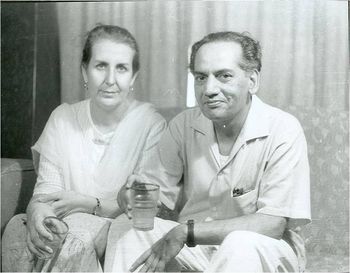
ScreenHunter_01 Oct. 12 19.07Mo Yan [who just won the Nobel for literature yesterday] is one of China’s most celebrated and widely translated writers. Born in the Shandong province in 1955 into a family of farmers, he enlisted in the People’s Liberation Army at the age of twenty and began writing stories at the same time. Since then he has written several novels and story collections, including Red Sorghum, Big Breasts & Wide Hips, Life and Death Are Wearing Me Out and most recently, Frog. This week he spoke toGranta editor John Freeman at the London Book Fair, about writing strong women, retaining idioms and puns even in translation and avoiding censorship.

JF: Many of your novels are located in a half-fictionalized town based on your Gaomi hometown, in a way similar to, say, Faulker’s American South. What is it that makes you return to this half-imagined community and does having a global readership alter the focus at all?

MY: When I first started writing the environment was there and very real and the story was my personal experience. But with an increasing volume of my work being published, my day-to-day experience is running out and so I need to add a little bit of imagination, sometimes even some fantasy, in there.

JF: Some of your writing recalls the work of Günter Grass, William Faulkner and Gabriel García Marquez. Were these writers available to you in China when you were growing up? Can you tell us a little about your influences?

MY: When I first started writing it was the year of 1981, so I didn’t read any books by García Marquez or Faulkner. It was 1984 when I first read their works and undoubtedly those two writers have great influence on my creations. I found that my life experience is quite similar to theirs, but I only discovered this later on. If I had read their works sooner I would have already accomplished a masterpiece like they did.

More here.

What does spirituality mean in America today?

54262670_00a28a19a7_z-300x229

Social scientists frequently juxtapose spirituality to religion and identify the former by way of what it lacks in comparison to the latter. In particular, spirituality would appear to lack institutions, authority structures, community, and even history—all of which are considered integral to religion, such as it is widely understood today. Congregational identity, membership, and attendance are key markers for studies of Americans’ religious convictions, and the congregation, therefore, is taken to be an especially important, if not the definitive, site for the political and social mobilization of religious Americans. Against this backdrop, the rising number of “religious nones” (as well as shifts in congregational styles [see Chaves 2009]) emerge not only as new empirical facts but, insofar as their presence is measured against a norm of voluntary participation, also appear to engender a certain anxiety on the part of the scholars who study them (e.g., Olson 2010; Putnam and Campbell 2010). Though “religious nones” may be believers, they appear to lack the kinds of social connectivity that are recognizable to scholars, and that the latter have deemed essential to voluntary political participation. Insofar as spirituality emerges as a term associated with such individuals—and one that seems to sound the alarms about the problems of individualism—it appears as either the weak cousin or the crazy uncle of the norm that continues (or that should continue) to endure (see, e.g., Bellah et al. 1985), or as the spark of regeneration and the movement toward a “new” social order (e.g., York 1995).

more from Courtney Bender and Omar M. McRoberts at The Immanent Frame here.

Kunkel v Žižek

Rexfeatures_558622a

In The Year of Dreaming Dangerously, even the “direct exchange of activities” has vanished. Here Žižek counsels refusing capitalism from the point of view of “a communism absconditus” without worldly instantiation or conceptual content. He defends this featureless vision by warning, with compact incoherence, against “the temptation of determinist planning”: determinism refers to inevitability, while planning implies voluntarism. Yet it requires no creed of either historical predestination or revolutionary infallibility to hazard an idea, presumably subject to revision both before and after the rupture with capitalism, of a better society. Whether such a hypothesis is called communist is a secondary question; as the poet (and revolutionary) John Milton put it in another context: “The meaning, not the name I call.” At the moment, Žižek’s communism is a heavy name very light on meaning.

more from Benjamin Kunkel at The New Statesman here.

wood on goodwood

Henry-James-006

Aspiring writers are usually dissuaded from the kind of gauche proscenium overture in which characters sit around discussing the protagonist, only to discover that the protagonist is conveniently at hand. And the coy titivations and velvet evasions (‘A momentary silence marked perhaps on the part of his auditors a sense of the magnanimity of this speech’) might properly alienate readers only slightly attracted to the lure of the Master. But the self-consciousness is here calculated. Isabel is a heroine in triplicate. She has just walked into a novel; she thinks of herself in heroic terms; and a group of gazers – or readers – watchful as a Greek chorus but endowed with greater agency, seems to have begun to plot this heroine’s destiny. We understand that the three men have effectively spent the first chapter in a long whine: ‘We’re so bored; give us a heroine to make things interesting!’ And here she is. But The Portrait of a Lady gets stranger before it gets more conventional. Instead of putting his heroine through her narrative paces, James slows down, and writes a kind of essay-portrait, almost a paternal introduction, on the subject of Isabel. Over the next forty or so pages, he serves up a mess of propositions, often contradictory.

more from James Wood at the LRB here.

Smokin’ Joe Delights Democrats and Shows Up the Boss

John Cassidy in The New Yorker:

Biden-ryan-cassidyThe reason I think Biden got the best of things is straightforward. For the first hour, at least, he dominated the debate, pushing Ryan onto the defensive. Many of the points he made were telling and substantive ones—not merely bluster. Identifying a key weakness in the Republican platform, he repeatedly challenged Ryan to explain how he and Romney could pass a five-trillion-dollar income-tax cut without raising the deficit or increasing other types of taxes on middle-income Americans. “It’s mathematically impossible,” he thundered. Ryan didn’t have a convincing answer because there isn’t one. He cited six “studies” that he said had concluded that the Romney math adds up, but, as Justin Wolfers, of the University of Pennsylvania, quickly pointed out, these weren’t exactly all peer-reviewed analyses: four of them were blog posts or op-eds. Eventually, Ryan fell back on the largely discredited supply-side argument that the tax cuts would unleash growth and generate more revenues, saying that Ronald Reagan and John Kennedy had proved it could be done. To which a dismissive Biden replied. “Oh, now you’re Jack Kennedy?”

More here.

Are Humans Monogamous or Polygamous?

From Slate:

MonkSince we like to think that how we mate defines us, the sex lives of ancient hominids have for many years been examined in computer simulations, by measuring the circumferences of ancient bones, and by applying the rules of evolution and economics. But to understand the contentious field of paleo-sexology, one must first address the question of how we mate today, and how we’ve mated in the recent past. According to anthropologists, only 1 in 6 societies enforces monogamy as a rule. There's evidence of one-man-one-woman institutions as far back as Hammurabi's Code; it seems the practice was further codified in ancient Greece and Rome. But even then, the human commitment to fidelity had its limits: Formal concubines were frowned upon, but slaves of either sex were fair game for extramarital affairs. The historian Walter Scheidel describes this Greco-Roman practice as polygynous monogamy—a kind of halfsy moral stance on promiscuity. Today's Judeo-Christian culture has not shed this propensity to cheat. (If there weren't any hanky-panky, we wouldn't need the seventh commandment.)

In The Myth of Monogamy, evolutionary psychologists David P. Barash and Judith Eve Lipton say we're not the only pair-bonding species that likes to sleep around. Even among the animals that have long been known as faithful types—nesting birds, etc.—not too many stay exclusive. Most dally. “There are a few species that are monogamous,” says Barash. “The fat-tailed dwarf lemur. The Malagasy giant jumping rat. You've got to look in the nooks and crannies to find them, though.” Like so many other animals, human beings aren't really that monogamous. Better to say, we're monogamish.

More here.

Thursday, October 11, 2012

how to write about poverty

Nussbaum_paper_299070h

Suppose you want to wake people up to the human cost of poverty and to energize them with some urgency towards productive social action. And suppose you are a skilled writer. Your public, though well intentioned, is ignorant and more than a little obtuse, inclined to think of the lives of the poor (especially, perhaps, the distant or foreign poor) as not equally real. How do you write, if you want to inform their perceptions and inspire useful choices? You could, of course, present your audience with a lot of data; but data don’t easily reach the part of our minds with which we see others as fully human. (It is said of Louisa Gradgrind in Dickens’s Hard Times that she had learned of the poor of Coketown as if they were so many ants and beetles, “passing to and from their nests”). It is plausible to think what Dickens clearly thought: that you can’t really change the heart without telling a story. What Dickens knew intuitively has now been confirmed experimentally. C. Daniel Batson’s magisterial work on empathy and altruism shows that a particularized narrative of suffering has unique power to produce motives for constructive action.

more from Martha Nussbaum at the TLS here.

grand mal

1349777537725

Minutes later, barrelling down Monument Avenue in my pickup truck, I began to experience the mental flashes neurologists call auras. At the time, I didn’t know them by that name, or by any name. They’d been happening since I was an adolescent – maybe every few months, always at times of high stress – and they were so bizarre and difficult to convey that I’d never tried to describe them to anyone. Here’s my best shot: Imagine your mind is tripping through a litany of memories. One memory in particular stands out because it’s simultaneously both familiar and foreign. (In my case, this is always an aural memory – something someone once said to me, or something I heard in a movie, or something I may have listened to over and over again on a storybook record when I was a child.) What is that sound/voice/musical phrase? Where is it from? You try to place it but are unsuccessful, and then – you can’t help yourself, it’s like running downhill and picking up speed – you become obsessed with placing it, and it’s this effort that starts a hot wave pulsing inside you, stemming from somewhere in the vicinity of your stomach and eventually climbing up your neck and welling into your head: wa-wa-wa.

more from Patrick Ryan at Granta here.

October 18, 1977

Richter

The paintings in Gerhard Richter’s Baader-Meinhof series do not have the answers to what happened in Stannheim prison on October 18, 1977. They do not have the answers to any questions about who is at fault in this or any other public crisis. They do not ask us to condemn or to forgive. They do not defend any particular political perspective, either that of the prisoners or that of the society that imprisoned them. They do not invite us to take action, and they do not offer us emotional catharsis: in this respect, they are neither Brechtian nor Aristotelian. They are not cheap theater. They are not, I would argue, any kind of theater at all, and their relationship to spectacle has been invoked only to be quelled. They are not about voyeurism, and they do not really care what is happening to the work of art in the age of mechanical reproduction. They do not even represent the artist’s viewpoint, because viewpoint itself is one of the things they are questioning. They ask us to stand in front of them and contemplate what we think, what we feel, even as they quietly cut the ground out from under us. It is not a comfortable situation to be put in—it may even be “horrific,” as Richter said—but it is necessary, and truthful, and in that sense redeeming.

more from Wendy Lesser at Threepenny Review here.

A Return To The Black Hole: Partha Chatterjee On the flawed legacy of empire

K9756
Gyan Prakash
reviews Partha Chatterjee's new book in Caravan:

IN HIS NEW BOOK, Partha Chatterjee returns to the Black Hole, excavating the layers of justifications covering British rule to reveal how these laid the groundwork for new norms and practices of governance. Chatterjee is a widely known and read historian and political theorist, and a professor at Columbia University. As one of the founder members of the Subaltern Studies Group, he is the author of several influential books and articles, almost all of them based on his intimate knowledge of Bengal’s history and culture. The Black Hole of Empire is his most ambitious book yet. Challenging existing understandings, reinterpreting the meaning of well-known events, and displaying an authoritative knowledge of an astonishing range of scholarly literature, we encounter a historian at the top of his game.

Like Chatterjee’s other works, The Black Hole of Empire also focuses on colonial Bengal. It covers the period from the birth of British rule in the 18th century to the 20th-century nationalist mobilisations against the Raj. He places his Bengal-centric account on a larger canvas, tracing the origins of the global norms and practices of modern European imperialism—and those of the modern state itself—in local history. He invites us to see the contemporary predicaments of the Indian state and its moral and legal legitimacy in light of the drama played out in Britain’s prized possession in the east.

At the centre of the book is an attempt to trace the emergence of theories and norms in the actual business of empire. It is not an account of abstract debates on political theory, law and economics but a narrative of the actual conquerors, rulers and their opponents. The work of empire on the ground mattered; it was there that enduring theories and practices of the modern empire and the state were forged.

Chapter 1 of the book can be found here.

A Debate on Environmentalism

3474625501_9cab55ffce_o

Over at Jacobin Magazine, first Alex Gourevitch:

I come from the minority on the Left that is skeptical of environmentalism. This is not skepticism of the science, but of the politics and ideology of environmentalism.

Consider the difference between Hurricane Mitch, a Category 4 hurri­cane, and Hurricane Andrew, a Cat­egory 5.

1992’s Andrew was a more power­ful storm than Mitch, but Andrew hit Florida, where it killed about 80 peo­ple and left about 125,000 temporarily homeless. Due to the wealth and social organization of the region, most people had a place to take refuge, and nearly everybody had found a new place to live within a year.

Mitch hit Central America – mainly Honduras, Guatemala, and Nicaragua – in 1998. It was catastrophic, killing 11,000 people, with just as many miss­ing, and it left 2.7 million people home­less. The economic devastation led to a cholera outbreak.

Why the difference?

The answer lies with Central Amer­ica’s poverty and underdevelopment.

Max Ajl, Peter Frase (both also in Jacobin) and Chris Bertram (over at Crooked Timber) respond to Gourevitch. Bertram:

No doubt Alex can find plenty of instances of people mouthing the sentiments and opinions he condemns. But the trouble with this sort of writing is exemplified by the endless right-wing blogs that go on about “the left” and then attribute to everyone from Alinsky to the Zapatistas a sympathy for Stalinist labour camps. Just like “the left”, people who care about the environment and consider themselves greens come in a variety of shapes, sizes and flavours. Taking as typical what some random said at some meeting about the virtues of Palestinians generating electricity with bicycles is inherently problematic. Alex argues in the piece that “the Left” should support the industrialization of “the Global South”. Well, it might be right that some countries should industrialize more. But countries don’t all have to go through some developmental phase involving smoky factories. What’s important is that people in the Global South should, where possible, have the benefits of a modern infrastructure, well-built houses, secure energy supplies, decent transportation, and so forth. Industrializing might be one way of getting those things, but it is hardly the only way.

The Education of Tony Marx

11MARX_SPAN-articleLargeJacob Bernstein in the NYT:

EVERYWHERE Tony Marx goes, he does a lot of smiling and nodding. As the president of the New York Public Library (a job he took over in July 2011, after eight years as the president of Amherst), it is his job to smile and nod at big-name writers around whom the library plans events.

It is his job to smile and nod at the business leaders who serve on his board. It is his job to smile and nod at heads of foundation boards, at members of the City Council and officials in the Bloomberg administration, whom he lobbies for money and patronage, since the library (like most publicly financed institutions) has been subject to brutal budget cuts over the last four years.

Anyway, smiling and nodding are certainly what he was doing on an early September evening at a cocktail party for the Doris Duke Foundation for Islamic Art at the Museum of Arts and Design at 2 Columbus Circle, working the room, introducing himself to anyone and everyone, offering tours, giving pats on the back and providing reassurances to people who appeared to be slightly wary of him.

Mr. Marx has had to reassure a lot of people of late.

Writers campaign for Israel-Palestine peace

From Guardian:

David-Grossman-010Celebrated Israeli novelist David Grossman is working with Boualem Sansal, an award-winning Algerian writer who came under harsh criticism for visiting Jerusalem earlier this year, to launch a writers' drive for peace which calls among other things for a halt to the “inhuman and immoral” situation in Israel. Supported by some of international literature's most respected names, including Claudio Magris, Antonio Lobo Antunes and Liao Yiwu, the authors will present their appeal at the closing session of the World Forum for Democracy on Thursday. Their document states that there is still a “possible solution” for the Israel-Palestine conflict, where “Israel has maintained the Palestinians under occupation for more than 45 years”, but “but maybe not for long”. The writers are therefore pushing for a Palestinian state to be created next to Israel, both with secure borders, “on the basis of painful compromises for both parties … such as the abandonment of settlements or their exchange for land, the renouncement of the right of return of the 1948 refugees, the sharing of Jerusalem”.

Sansal, whose books are banned in Algeria but who has won prizes for his work in France and took the German book trade peace prize last year, met Grossman, whose son, Uri, was killed in 2006 when a missile struck his tank in southern Lebanon, in May when he travelled to Jerusalem for an international literary festival. The threats and criticism he received for going to Israel led him to the idea of gathering writers to speak up for peace in the world. “Before I went to Jerusalem I came in for a lot of harassment [but] I did not let it intimidate me,” Sansal told the Guardian. “I decided to go to Jerusalem anyway, to mobilise people. Our enemies are organised, but we are not. Our way of fighting is literature, it's meeting, it's dialogue. We need to fight with these things.”The appeal from the authors, who include Daniel Pennac, Tomi Ungerer and Peter Esterhazy, also states that it is “urgent” that the international community “intervenes firmly to bring the Iranian nuclear programme under control”, warning that Iran is accelerating “its nuclear programme to achieve its hegemonic pretensions on a political, military and religious level, and Arab countries in the region might be driven to follow a similar path”.

More here.

Stress: The roots of resilience

From Nature:

AstressOn a chilly, January night in 1986, Elizabeth Ebaugh carried a bag of groceries across the quiet car park of a shopping plaza in the suburbs of Washington DC. She got into her car and tossed the bag onto the empty passenger seat. But as she tried to close the door, she found it blocked by a slight, unkempt man with a big knife. He forced her to slide over and took her place behind the wheel. The man drove aimlessly along country roads, ranting about his girlfriend's infidelity and the time he had spent in jail. Ebaugh, a psychotherapist who was 30 years old at the time, used her training to try to calm the man and negotiate her freedom. But after several hours and a few stops, he took her to a motel, watched a pornographic film and raped her. Then he forced her back into the car. She pleaded with him to let her go, and he said that he would. So when he stopped on a bridge at around 2 a.m. and told her to get out, she thought she was free. Then he motioned for her to jump. “That's the time where my system, I think, just lost it,” Ebaugh recalls. Succumbing to the terror and exhaustion of the night, she fainted. Ebaugh awoke in freefall. The man had thrown her, limp and handcuffed, off the bridge four storeys above a river reservoir. When she hit the frigid water, she turned onto her back and started kicking. “At that point, there was no part of me that thought I wasn't going to make it,” she says.

Few people will experience psychological and physical abuse as terrible as the abuse Ebaugh endured that night. But extreme stress is not unusual. In the United States, an estimated 50–60% of people will experience a traumatic event at some point in their lives, whether through military combat, assault, a serious car accident or a natural disaster. Acute stress triggers an intense physiological response and cements an association in the brain's circuits between the event and fear. If this association lingers for more than a month, as it does for about 8% of trauma victims, it is considered to be post-traumatic stress disorder (PTSD). The three main criteria for diagnosis are recurring and frightening memories, avoidance of any potential triggers for such memories and a heightened state of arousal.

More here.

“Frogs”, a story by newest literature Nobel laureate, Mo Yan

Mo Yan in Granta:

1346335758334I have to admit that, though I did not make it public, I was personally opposed to my Aunty’s marriage plans. My father, my brothers and their wives shared my feelings. It simply wasn’t a good match in our view. Ever since we were small we’d looked forward to seeing Aunty find a husband. Her relationship with Wang Xiaoti had brought immense glory to the family, only to end ingloriously. Yang Lin was next, and while not nearly the ideal match that Wang would have provided, he was, after all, an official, which made him a passable candidate for marriage. Hell, she could have married Qin He, who was obsessed with her, and be better off than with Hao Dashou . . . we were by then assuming she’d wind up an old maid, and had made appropriate plans. We’d even discussed who would be her caregiver when she reached old age. But then, with no prior indication, she’d married Hao Dashou. Little Lion and I were living in Beijing then, and when we heard the news, we could hardly believe our ears. Once the preposterous reality set in, we were overcome by sadness.

Years later, Aunty starred in a TV program titled ‘Moon Child,’ which was supposed to be about the sculptor Hao Dashou, though the camera was always on her, talking and gesturing as she welcomed journalists into Hao’s yard and gave them a guided tour of his workshop and the storeroom where he kept all his clay figurines, while he sat quietly at his workbench, eyes glazed over and a blank look on his face, like a dreamy old horse. Did all master artists turn into dreamy old horses once they became famous? I wondered. The name Hao Dashou resounded in my ears, though I’d only met him a few times. After seeing him late on the night my nephew Xianquan hosted a dinner to celebrate his acceptance as a pilot, years passed before I saw him again, and this time it was on TV. His hair and beard had turned white, but his complexion was ruddy as ever; composed and serene, he was a nearly transcendent figure. It was during that program that we learned why Aunty had married Hao Dashou.

More here.

Wednesday, October 10, 2012

The 3-D Printed Future and its Enemies

Peter Frase in Jacobin:

8017415208_b3958ea7ecLately, it seems like everyone is talking about 3-D printers. Until recently, these devices have been seen either as novelties or as expensive pieces of equipment suited only for industrial use. Now, however, they are quickly becoming affordable to individuals, and capable of producing a wider range of practical items. Just as the computer became a vector for pervasive file-sharing as soon as cheap PCs and internet connections were widespread, we may soon find ourselves living in a world where cheap 3-D printers allow the dissemination of designs for physical objects through the Internet.

The line between science fiction and reality is moving rapidly. Scroll throughthese links at BoingBoing and you’ll see 3-D printers churning out everything from guitars to dolls to keys to a prosthetic beak for a bald eagle.

Ensconced in the home, the 3-D printer is a step toward the replicator: a machine that can instantly produce any object with no input of human labor. Technologies like this are central to the vision of a post-scarcity society that I outlined in “Four Futures”. It’s a future that could be glorious or terrible, depending on the outcome of the coming political struggles over the adoption of these new technologies. As the title of a report from Public Knowledge puts it, “It will be awesome if they don’t screw it up.”

Battles over 3-D printing will be fought on two fronts, and two mechanisms of power are likely to be mobilized by the rentier elites who are threatened by these technologies: intellectual property law and the war on terror.

More here. [Thanks to Ahmad Saidullah.]

More on Joan Didion

DidionJustin E. H. Smith in Berfrois:

When it comes to texts in foreign languages, I find the closest reading I can give them is by translating them into my native idiom. Texts in English can’t be translated any further, but I can at least transcribe them: already a sort of translatio, a bringing-over from page to screen. There are few authors who inspire me to undertake such a close reading. I’ve acknowledged before thatJames Agee is one of them. Joan Didion is another.

I’ve also acknowledged before a difficult relationship to my fellow Sacramentan. I want to dissect every sentence, copy it out, parse it, anatomize it, and when I do this what I am left with, on the dissecting table, on my desktop, is a sharp feeling of unreciprocated love. One of Didion’s favorite themes is contempt for the people I happen to identify with most closely: the Central Californians who aspire to live in history-less tract houses. The ones perpetually hovering, classwise, between the meth lab and BestBuy.

Consider Didion’s destruction of Ronald Reagan, not as an aggrieved victim of his far-right, aggressively neoliberal policies (the only kind of attack on Reagan most of us even know), but as an aristocrat repulsed by his yokel tastes, and by the fact that democracy has by now spread so far that even those in power aspire to have nothing more than what the great mass of people have, if slightly more of it.

On Firestone

ImageDayna Tortorici on Shulamith Firestone in n+1:

Although in later years a private and often isolated person, the writer, artist, and feminist thinker Shulamith Firestone was at one time a formidable public force. A founder of the first radical feminist organizations in New York and co-editor of the first theoretical journals of the Women’s Liberation Movement, she was one of the most memorable characters of the second wave. Brilliant, passionate, aggressive, and uncompromising in her beliefs, possessing an intellectual confidence that lives on in her work, Firestone embodied much of the radical energy of her era. She “dared to be bad”—as she declared women ought to in an editorial for Notes from the Second Year—which meant not just disobedient, but willing to fail. Women, Firestone knew, had to take risks to find liberation, even if it meant faltering in their first attempts. And although Firestone and her peers struggled to form and maintain a coherent women’s movement—and although their movement today is remembered as flawed and tenuous—our world owes as much to their failures as their successes.

Firestone’s wit was biting and aphoristic; her words sizzled on the page. With an almost anachronistic philosophical confidence she explained the world as she saw it without hesitation, from the ground up. At age 25 she wrote the seminal book The Dialectic of Sex: The Case for Feminist Revolution (1970)—described by contemporaries as “the little red book for women”—which for the first time united the then-irreconcilable discourses of Marxist analysis and feminist critique. And then, in a turn that still mystifies her admirers, she withdrew from both the movement and from public life. Decades later Firestone re-emerged with a small, startling book called Airless Spaces (1998), a fictionalized chronicle of her later life, that spoke in vignettes to her years spent in and out of mental hospitals. But as if unsatisfied by this account, admirers of her early work still wondered: Why had she left? Where had she gone?