
Neuroscience and the Soul (The Research Group in Mind, Science and Culture –Columbia College Chicago, LAS) from stephen asma on Vimeo.
Category: Recommended Reading
stella

She was always concerned about the question of integrity, and would bring it up whenever we saw each other. It was, she pointed out, the central theme of “Golden Boy”: Odets “wrote it after he got back to New York from a scriptwriting job in Hollywood, when a lot of his friends on the left were criticizing him for ‘selling out.’ I think he was torn between the Hollywood movie scene and the New York theater scene in the same way Joe” — the lead in “Golden Boy” — “is torn between boxing for big money and becoming a great violinist.” Stella always grilled me to make sure I hadn’t lost my integrity; she considered this a major problem for the American artist. I wonder what she would have said about the almost total materialism of our current era? Stella Adler was a grande dame of the theater. I never met anyone remotely like her. With her mid-Atlantic accent, she was once mistaken by a London shopkeeper for English. “No,” she replied, “just affected.” And at a New York cocktail party, she once made a sweeping entrance that brought a hush to the room. A little girl turned to her mother and asked in an awed whisper, “Mommy, is that God?” I understand how the little girl felt. All Stella’s students would.
more from Peter Bogdanovitch at the NY Times here.
eagleton reads the derrida bio
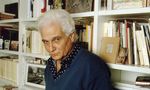
I suspect that one reason Derrida enjoyed travelling the world so much was because it allowed him some respite from the bitchy, sectarian, backstabbing, backscratching climate of Parisian intellectual life, which this superb biography faithfully records. What the book fails to underline quite as heavily is how waspish the maitre himself could be. Two dramatic moments stand out in Derrida’s subsequent career. Traveling to communist Prague in 1981 to address a secretly organised philosophy seminar, he was arrested and charged with drug smuggling. It seems the authorities saw the dismantling of binary oppositions as a threat to the state. The police officer who had planted the drugs in Derrida’s suitcase was himself later arrested for drug trafficking.
more from Terry Eagleton at The Guardian here.
At heart is the mystery of the universe

“The Higgs particle arises from a field pervading space, known as the Higgs field,” explains Caltech physicist Sean Carroll in “The Particle at the End of the Universe: How the Hunt for the Higgs Boson Leads Us to the Edge of a New World.” “Everything in the known universe, as it travels through space, moves through the Higgs field; it’s always there lurking invisibly in the background.” As to why this matters, Carroll points out that “without the Higgs, electrons and quarks would be massless, just like photons, the particles of light. They would move at the speed of light themselves, and it would be impossible to form atoms and molecules much less life as we know it…. Without it, the world would be an utterly different place.”
more from David L. Ulin at the LA Times here.
The women who dominated publishing in 2012
From The Guardian:
EL James
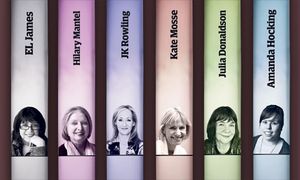
Like Harry Potter and The Da Vinci Code, it burst the banks of the publishing world; people were buying it who didn't otherwise buy books, if only to find out what the fuss was about. It single-handedly re-ignited the women's erotica market, which had withered when Black Lace covers began to look dated, as well as tapping a whole new readership who didn't know or care that – as those in the know sniffily pointed out – you could find much better erotica, for free, on the web. Thus it was a victory for the paperback, as well as for ebooks and self-publishing. The Kindle has been credited with removing the embarrassment from reading dirty books, but what Fifty Shades revealed is that erotica isn't shameful any more so long as enough people are reading it already, and it's got a tasteful jacket (James wanted restrained covers, having herself squirmed over reading lurid-looking romances on the tube).
In literary terms, the books are atrocious: whole blogs have been dedicated to pulling them apart sentence by sentence.
More here.
100 Notable Books of 2012
From The New York Times:

ALIF THE UNSEEN. By G. Willow Wilson. (Grove, $25.) A young hacker on the run in the Mideast is the protagonist of this imaginative first novel.
ALMOST NEVER. By Daniel Sada. Translated by Katherine Silver. (Graywolf, paper, $16.) In this glorious satire of machismo, a Mexican agronomist simultaneously pursues a prostitute and an upright woman.
AN AMERICAN SPY. By Olen Steinhauer. (Minotaur, $25.99.) In a novel vividly evoking the multilayered world of espionage, Steinhauer’s hero fights back when his C.I.A. unit is nearly destroyed.
ARCADIA. By Lauren Groff. (Voice/Hyperion, $25.99.) Groff’s lush and visual second novel begins at a rural commune, and links that utopian past to a dystopian, post-global-warming future.
…NONFICTION
ALL WE KNOW: Three Lives. By Lisa Cohen. (Farrar, Straus & Giroux, $30.) The vanished world of midcentury upper-class lesbians is portrayed as beguiling, its inhabitants members of a stylish club.
AMERICAN TAPESTRY: The Story of the Black, White, and Multiracial Ancestors of Michelle Obama. By Rachel L. Swarns. (Amistad/HarperCollins, $27.99.) A Times reporter’s deeply researched chronicle of several generations of Mrs. Obama’s family.
AMERICAN TRIUMVIRATE: Sam Snead, Byron Nelson, Ben Hogan, and the Modern Age of Golf. By James Dodson. (Knopf, $28.95.) The author evokes an era when the game was more vivid and less corporate than it seems now.
More here.
Friday, November 30, 2012
Egypt’s New Constitution

Amnesty International issues a press release warning of dangers to freedoms of worship and women:
A draft constitution approved by Egypt’s Constituent Assembly falls well short of protecting human rights and, in particular, ignores the rights of women, restricts freedom of expression in the name of protecting religion, and allows for the military trial of civilians, Amnesty International said.
“This document, and the manner in which it has been adopted, will come as an enormous disappointment to many of the Egyptians who took to the streets to oust Hosni Mubarak and demand their rights,” said Hassiba Hadj Sahraoui, Deputy Director for the Middle East and North Africa at Amnesty International.
Freedom of religion is limited to Islam, Christianity and Judaism, potentially excluding the right to worship to other religious minorities such as Baha’is and Shi’a Muslims.
The constitution fails to provide for the supremacy of international law over national law, raising concerns about Egypt’s commitment to human rights treaties to which it is a state party.
Furthermore, the document fails to fully guarantee economic, social and cultural rights, such as protection against forced evictions – it also tolerates child labour.
You can read the draft (as of now) yourself here.
Also the NYT reports on protests around the draft.
The Salman Rushdie Case
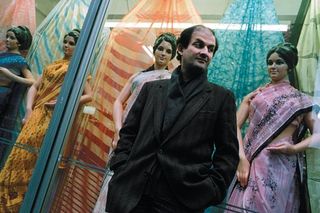
Zoë Heller reviews Salman Rushdie's Joseph Anton: A Memoir, in the NYRB:
When Anis Rushdie read his son’s novel Midnight’s Children for the first time in 1980, he became convinced that Ahmed Sinai, the drunken father in the book, was a satirical portrait of himself. A family row ensued. Rushdie fils did not deny that Sinai was based on his father—“In my young, pissed-off way,” he would later tellThe Paris Review, “I responded that I’d left all the nasty stuff out”—but he objected to his father’s wounded reaction and thought it revealed a crude understanding of how novels worked. “My father had studied literature at Cambridge so I expected him to have a sophisticated response to the book, but the person who did was my mother…. She understood it at once as fiction.”
The position that Rushdie took during this literary-domestic spat uncannily prefigured the position he would take nine years later, when confronted by the wrath of another, more punishing patriarch. On February 15, 1989, a day after the Ayatollah Khomeini had issued a fatwa condemning him to death for his authorship of The Satanic Verses, Rushdie appeared on British television and announced that he wished his book had been “more critical” of Islam. As he reports in Joseph Anton—a memoir he has chosen to write in a de Gaulle–like third person—his principal emotion at the time was one of bafflement:
When he was first accused of being offensive, he was genuinely perplexed. He thought he had made an artistic engagement with the phenomenon of revelation; an engagement from the point of view of an unbeliever, certainly, but a proper one nonetheless. How could that be thought offensive? The thin-skinned years of rage- defined identity politics that followed taught him, and everyone else, the answer to that question.
Given how often Rushdie has been accused of writing The Satanic Verses with the express purpose of making trouble, it is understandable that he should wish to highlight the unexpected—the unprecedented—nature of the events that followed the novel’s publication. Even so, his retrospective account of himself as a bookish innocent, bewildered by the world’s coarse intrusion into the literary sphere, seems a little over-egged. By this point in his career, Rushdie, who had already been sued by Indira Gandhi for libelous statements in Midnight’s Children and had already seen his third novel banned in Pakistan, was better qualified than most to appreciate literature’s capacity for eliciting hostile, nonliterary responses.
A Pair of MIT Scientists Try to Transform Nuclear Power
Richard Martin in Forbes:

Transatomic’s product is called a “Waste Annihilating Molten Salt Reactor.” If you’ve read my book, SuperFuel, you’ll recognize it as an update on an old reactor technology that was pioneered at Oak Ridge National Laboratory, in the 1950s and 60s. SuperFuel focused on another type of molten salt reactor, a Liquid Fluoride Thorium Reactor, or LFTR. Dewan and Massie’s design is fuel-agnostic in the sense that it can run on either uranium or thorium; as the name implies, its signal feature is that it can consume spent fuel from conventional light-water reactors. Transatomic joins a growing list of start-ups, including Flibe Energy, that are trying to revolutionize nuclear power by bringing back alternative fuels, including thorium, and alternative reactor designs.
More here. [Thanks to James Edward Kolb.]
Why U.S., Israel should welcome Palestinian move at U.N.
Rabbi Michael Lerner at CNN:

The de facto strategy of past and present Israeli governments of seeking security through domination and by pushing Palestinians out of their homes, or allowing right-wing religious fanatics to create settlements throughout the West Bank to ensure that no Palestinian state could have contiguous parts, has not and cannot work to provide safety for Israel.
Israel's fate and its well-being are intrinsically linked to the well-being of the Palestinian people. It's time for the powerful to show generosity to the relatively powerless.
So those in the U.S. and Israel who want Israel to be secure should welcome the Palestinian Authority's decision to seek observer status as a nonmember state in the United Nations. The authority has agreed to return to negotiations with Israel without conditions once that status has been granted. The goal is creation of a state living in peace with Israel in borders roughly approximating those of the before than 1967 war, with minor border changes mutually agreeable through negotiations.
So who opposes this? Hamas, Israel and the U.S.
More here.
A sprinting cheetah at 1200 frames per second slow motion
Twilight People: Subways Are for Sleeping
Joe Kloc in the Paris Review:
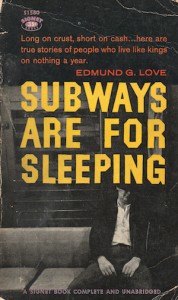
Over the years I’ve made casual study of this joyful band of accidental philosophers as they’ve decorated my dreary morning commutes with their Bedazzler guns of mischief. A few months ago I had the good fortune of getting to know one of them on the R train. I was reading Joseph Mitchell’s Up in the Old Hotel when a man whom I’ll call Z. (because he asked me not to use his name) approached me and said, “That’s a great fucking book.”
More here.
Friday Poem
Mushrooms
“Overnight, very
Whitely, discreetly,
Very quietly
Our toes, our noses
Take hold on the loam,
Acquire the air.
Nobody sees us,
Stops us, betrays us;
The small grains make room.
Soft fists insist on
Heaving the needles,
The leafy bedding,
Even the paving.
Our hammers, our rams,
Earless and eyeless,
Perfectly voiceless,
Widen the crannies,
Shoulder through holes. We
Diet on water,
On crumbs of shadow,
Bland-mannered, asking
Little or nothing.
So many of us!
So many of us!
We are shelves, we are
Tables, we are meek,
We are edible,
Nudgers and shovers
In spite of ourselves.
Our kind multiplies:
We shall by morning
Inherit the earth.
Our foot’s in the door.”
by Sylvia Plath
And the award for savage wit goes to …
From The Independent:

…If there's one sweeping generalisation to be made about queer writing (I've been a judge for two years running), it is that it's often savagely funny. Judge a mainstream literary prize and you'll be overwhelmed by dark themes and sombre writing. This year's Polari shortlistees are North Morgan, a bitterly funny satirist in his London club novel Exit Through the Wound (Limehouse Books); the music producer Terry Ronald's Becoming Nancy (Transworld), a deliciously camp rites of passage novel; and Vicky Ryder's rollicking Ey Up and Away (Wandering Star Press), a series of almost poem-like vignettes about growing up in Nuneaton. But perhaps even more surprising is the discovery of two strong poetic voices in John McCullough (Frost Fairs, published by Salt) and Max Wallis (Modern Love, published by Flap). The elfin Wallis has an unusual day job for a poet: when I caught up with him, he had just got back from a modelling assignment in Paris. He's also unusual in his choice of inspiration: the Victorian poet George Meredith who also penned a poem sequence called Modern Love. (Also something of a model, Meredith posed for the famous Pre-Raphaelite painting The Death of Chatterton.)
…Modern Love by Max Wallis:
Flap £4
“… A final glance. Sigh as the door slams a wooden tongue. Do not look back as dawn carries her torch across the sky; he will stay. Tarmac claps footsteps toward day and then, within, something out loud to the world that he will never hear; 'I am sorry, you know'.”
More here.
Scientists build with DNA bricks
From MSNBC:

The latest research builds upon work that the Wyss researchers detailed in May, which involved piecing together DNA strands to create two-dimensional tiles (including cute smiley faces). This time around, the strands were twisted in such a way that they could be interlocked, Lego-style. As any visitor to Legoland knows, such structures can get incredibly complex in the hands of a skilled builder. Yin and his colleagues are still learning their building techniques. Fortunately, the bricks could be programmed to build themselves, with the aid of 3-D modeling software . Once the designs were set, the researchers synthesized strands with the right combinations of nucleotides — adenosine, thymine, cytosine and guanine — so that when they were mixed together in a solution, at least some of the bricks would form the desired design. To demonstrate the method, 102 different 3-D shapes were created using a 1,000-brick template.
More here.
Thursday, November 29, 2012
Steven Spielberg’s White Men of Democracy
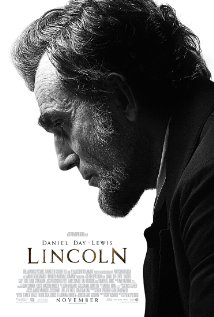
Corey Robin over at his blog:
Two weeks ago I wrote, “When Steven Spielberg makes a movie about the Holocaust, he focuses on a German. When he makes a movie about abolition, he focuses on a white man. Say what you will, he’s consistent.”
My comment was inspired by historian Kate Masur’s excellent New York Timesop-ed, which argued that Spielberg’s film Lincoln had essentially left African Americans offstage or in the gallery. In Spielberg’s hands, blacks see themselves get rescued by a savior who belongs to the very group that has ravaged and ruined them. Just as Jews do in Schindler’s List. The difference is that in the case of emancipation, blacks—both free and slave—were actually far more central to the process of their own deliverance.
Thanks in part to documents from the National Archives that historians began to rigorously amass and organize in 1976—resulting in the multi-volume Freedom: A Documentary History of Emancipation, 1861-1867—students and scholars have come to a completely different view of how emancipation happened. As three of the historians who were involved in that project wrote in the path-breaking Slaves No More:
The Destruction of Slavery [the first essay in the book] explicates the process by which slavery collapsed under the pressure of federal arms and the slaves’ determination to place their own liberty on the wartime agenda. In documenting the transformation of a war for the Union into a war against slavery, it shifts the focus from the halls of power in Washington and Richmond to the plantations, farms, and battlefields of the South and demonstrates how slaves accomplished their own liberation and shaped the destiny of a nation.
Not in the Mood
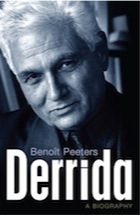
Adam Shatz reviews Benoît Peeters' Derrida: A Biography, in the LRB:
Derrida’s early work was written in the shadow of decolonisation. His first book, a translation of Husserl’s 43-page Origin of Geometry preceded by a 170-page introduction, was published in 1962, but it wasn’t until 1967 that he made his mark. That year he published three books of astonishing audacity which, taken together, amounted to a declaration of war on structuralism, then all the rage in France: Speech and Phenomena, another study of Husserl; Writing and Difference, a collection of essays originally published in journals like Tel Quel and Critique; and his masterwork,Of Grammatology. Few read the formidably dense Of Grammatology from cover to cover, but it acquired tremendous cachet; a year later, its cover made an appearance in Godard’s Le Gai Savoir. What was Of Grammatology about? When Madeleine, the heroine of Jeffrey Eugenides’s campus novel The Marriage Plot, asks a young theory-head this question, she is immediately set straight: ‘If it was “about” anything, then it was about the need to stop thinking of books as being about things.’
That’s not so far off. In all three books, Derrida’s argument was that Western thought from Plato to Rousseau to Lévi-Strauss had been hopelessly entangled in the illusion that language might provide us with access to a reality beyond language, beyond metaphor: an unmediated experience of truth and being which he called ‘presence’. Even Heidegger, a radical critic of metaphysics, had failed to escape its snares. This illusion, according to Derrida, was the corollary of a long history of ‘logocentrism’: a privileging of the spoken word as the repository of ‘presence’, at the expense of writing, which had been denigrated as a ‘dangerous supplement’, alienated from the voice, secondary, parasitic, even deceitful.
Derrida wanted not only to liberate writing from the ‘repression’ of speech, but to demonstrate that speech itself was a form of writing, a way of referring to things that aren’t there. If logocentrism was a ‘metaphysics of presence’, what he proposed was a poetics of absence – a philosophical echo of Mallarmé’s remark that what defines ‘rose’ as a word is ‘l’absence de toute rose’.
two angry old men
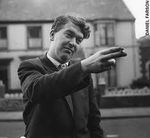
Though lasting literary friendships between natural rivals are not rare — Byron and Shelley, Coleridge and Wordsworth and Edward Thomas and Robert Frost spring to mind — few have been as durable as the one that began in the Front Quad of St John’s College, Oxford, one afternoon in May 1941 when a mutual friend introduced what their biographer calls ‘the odd couple’ by pointing his fingers at Kingsley Amis while imitating the sound of a gunshot. On cue, the fair-haired freshman yelled in pain, clutched his chest and staggered back to fall on a convenient pile of laundry sacks. Philip Larkin, a deliberately conspicuous figure in drab wartime Oxford, clad in bow tie, yellow waistcoat and the city’s only pair of cerise trousers, was suitably impressed by the performance. ‘I stood silent. For the first time in my life I felt myself in the presence of a talent greater than my own,’ he later publicly recalled.
more from Nigel Jones at The Spectator here.
dung into diamonds

In fact, Burton knew a lot about excremental places. Twenty-seven years before this incident, we find, in the matter-of-fact diary of the fourteen-year-old Richard Jenkins (he later adopted the last name of his guardian and mentor Philip Burton) laconic entries: “Bucket of D.” “Went up Mountain and had a bucket of D.” “Fetched a bucket of D. There was another man up there but I was very keen today I could smell D. a mile off. This mountain is nothing but D.” “D.” is code for dung. The adolescent Richard earned money by climbing the mountains outside the industrial town of Port Talbot, scooping animal manure into his bucket, carrying it back down the mountain, and selling it to gardeners in the town. The alchemy of Burton’s career is the transformation of dung into diamonds. There is a delicious moment in the diaries when he is reading in bed “and E. was around the corner of the room I asked: What are you doing lumpy? She said like a little girl and quite seriously: ‘Playing with my jewels.’” The innocence is as much his as hers: Burton’s idea of wealth—dressing your princess in diamonds—is a fantasy of childhood poverty.
more from Fintan O’Toole at the NYRB here.
Brigham Young and the restless
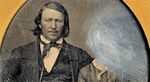
Like most founders of world-changing institutions (and nearly all religious ones), Young led the kind of outsize life that lends itself to these Janus-faced interpretations. The great virtue of John G. Turner’s new biography of Brigham Young—the first major study since LDS historian Leonard Arrington’s Brigham Young: American Moses (1985)—is the author’s stolid resistance to either version of the traditional Young caricature. Turner, a professor of religious studies at George Mason University, treats him as an exceptional spiritual figure (“a leader who understood himself as following in the footsteps of the ancient biblical prophets could not readily function within the US territorial system,” Turner drily notes), but also as an avatar of the frontier spirit of colonial conquest during the mid–nineteenth century. By settling a Utah territory that originally comprised one-sixth of the western United States, Young was “the greatest colonizer in American history,” Turner writes. And in establishing his desert kingdom in the face of sustained federal resistance, “he brought many of the key political issues of mid-nineteenth-century America into sharp relief: westward expansion, popular sovereignty, religious freedom, vigilantism, and Reconstruction.”
more from Chris Lehmann at The Nation here.