Freedom & Diversity: A Liberal Pentagram for Living Together

Gartonash_1-112212_jpg_230x1357_q85

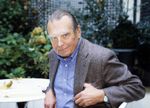
Timothy Garton Ash in the NYRB:

“Multiculturalism” has become a term of wholly uncertain meaning. Does it refer to a social reality? A set of policies? A normative theory? An ideology? Last year, I served on a Council of Europe working group with members from eight other European countries. We found that the word meant something different, and usually confused, in every country.

Some, though not all, of the policies described as “multiculturalism” over the last thirty years have had deeply illiberal consequences. They have allowed the development of “parallel societies” or “subsidized isolation.” Self-appointed community leaders have used public funds to reinforce cultural norms that would be unacceptable in the wider society, especially in relation to women. This has come close to official endorsement of cultural and moral relativism. A perverse effect has been to disempower the voices of the more liberal, secular, and critical minority within such ethnically or culturally defined minorities.

If, therefore, you want to elaborate a version of multiculturalism that is genuinely compatible with liberalism, as some distinguished political theorists do, you have to spend pages hedging the term about with clarifications and qualifications. By the time you have finished doing that, the justification for a separate new “ism” has evaporated. Why not simply talk about the form of modern liberalism suited—meaning also, developed and adapted—to the conditions of a contemporary, multicultural society?

When understandings of liberalism were expanded to embrace equal liberty under law for people of all social classes, it was not thought necessary to speak of “multiclassism”; nor, when extended to those of all skin colors, “multicolorism”; nor again, when to those of all genders and sexualities, “multigenderism” or “multisexualitism.” Painful though this will be to those who have expended their academic careers on multiculturalism, the term should be consigned to the conceptual dustbin of history.

In Sentencing Criminals, Is Norway Too Soft? Or Are We Too Harsh?

Finland prison

Liliana Segura in The Nation:

It’s not very often the concept of restorative justice gets much play outside scholarly publications or reformist criminal justice circles, so first, some credit for Max Fisher at The Atlantic for giving it an earnest look last week. In seeking to explain Norway’s seemingly measly twenty-one-year sentence for remorseless, mass-murdering white supremacist Anders Breivik—a sentence that is certain to be extended to last the rest of his life—Fisher casts a critical eye on the underlying philosophy that animates that country’s sentencing practices, finding it to be “radically different” from what we’re used to in the United States. When it comes to criminal sentencing, he notes, the United States favors a retributive model—in which an offender must be duly punished for his crimes—over a restorative model that “emphasizes healing: for the victims, for the society, and, yes, for the criminal him or herself.”

“I don’t have an answer for which is better,” he says at the outset, acknowledging that his own sense of outrage over Breivik’s sentence—like that of many Americans—“hints at not just how different the two systems are, but how deeply we may have come to internalize our understanding of justice, which, whatever its merits, doesn’t seem to be as universally applied as we might think.”

This is true, and a promising place to start. The United States is uniquely punitive when it comes to sentencing compared to much of the rest of the world, whether the crime is murder or drug possession. Putting aside the death penalty, which lands us in dubious international company, in countries with life sentences on the books, prisoners are often eligible for release after a few decades. “Mexico will not extradite defendants who face sentences of life without parole,” the New York Times’s Adam Liptak noted in 2005 (Most of Latin America has no such sentence). “And when Mehmet Ali Agca, the Turkish gunman who tried to kill Pope John Paul II in 1981, was pardoned in 2000, an Italian judge remarked, ‘No one stays 20 years in prison.’ ”

The same article quoted Yale law professor James Q. Whitman, author of a book comparing US sentencing with Europe. “Western Europeans regard 10 or 12 years as an extremely long term, even for offenders sentenced in theory to life,” he said. Today, there are more than 41,000 people serving life without parole in the United States compared to fifty-nine in Australia, forty-one in England and thirty-seven in the Netherlands.

It’s Been a Tough Week for Hidden Variable Theories

Delayed_choice_experiment

Shaun Maguire in Quantum Frontiers:

The RSS subscriptions which populate my Google Reader mainly fall into two categories: scientific and other. Sometimes patterns emerge when superimposing these disparate fields onto the same photo-detection plate (my brain.) Today, it became abundantly clear that it’s been a tough week for hidden variable theories.

Let me explain. Hidden variable theories were proposed by physicists in an attempt to explain the ‘indeterminism’ which seems to arise in quantum mechanics, and especially in the double-slit experiment. This probably means nothing to many of you, so let me explain further: the hidden variables in Tuesday’s election weren’t enough to trump Nate Silver’s incredibly accurate predictions based upon statistics and data (hidden variables in Tuesday’s election include: “momentum,” “the opinions of undecided voters,” and “pundit’s hunches.”) This isn’t to say that there weren’t hidden variables at play — clearly the statistical models used weren’t fully complete and will someday be improved upon — but hidden variables alone weren’t the dominant influence. Indeed, Barack Obama was re-elected for a second term. However, happy as I was to see statistics trump hunches, the point of this post is not to wax political, but rather to describe the recent failure of hidden variable theories in an arena more appropriate for this blog: quantum experiments.

The November 2nd issue of Science had two independent papers describing the results of recent delayed-choice experiments. The goal of these papers was to rule out hidden variable theories as an explanation for aspects of quantum mechanics.

Was Nate Silver the Most Accurate 2012 Election Pundit?

Nate-Silver

Over at Center for Applied Rationality, Luke with Gwern Branwen:

Obama may have won the presidency on election night, but pundit Nate Silver won the internet by correctly predicting presidential race outcomes in every state plus the District of Columbia — a perfect 51/51 score.

Now the interwebs are abuzz with Nate Silver praise. Gawker proclaims him “America’s Chief Wizard.” Gizmodo humorously offers 25 Nate Silver Facts (sample: “Nate Silver’s computer has no “backspace” button; Nate Silver doesn’t make mistakes”). IsNateSilverAWitch.com concludes: “Probably.”

Was Silver simply lucky? Probably not. In the 2008 elections he scored 50/51, missing only Indiana, which went to Obama by a mere 1%.

How does he do it? In his CFAR-recommended book The Signal and the Noise: Why So Many Predictions Fail, but Some Don’t, Silver reveals that his “secret” is bothering to obey the laws of probability theory rather than predicting things from his gut.

An understanding of probability can help us see what Silver’s critics got wrong. For example, Brandon Gaylord wrote:

Silver… confuses his polling averages with an opaque weighting process… and the inclusion of all polls no matter how insignificant – or wrong – they may be. For example, the poll that recently helped put Obama ahead in Virginia was an Old Dominion poll that showed Obama up by seven points. The only problem is that the poll was in the field for 28 days – half of which were before the first Presidential debate. Granted, Silver gave it his weakest weighting, but its inclusion in his model is baffling.

Actually, what Silver did is exactly right according to probability theory. Each state poll provided some evidence about who would win that state, but some polls — for example those which had been accurate in the past — provided more evidence than others. Even the Old Dominion poll provided some evidence, just not very much — which is why Silver gave it “his weakest weighting.” Silver’s “opaque weighting process” was really just a straightforward application of probability theory. (In particular, it was an application of Bayes’ Theorem.)

The Online Funeral

Evan Selinger in the Huffington Post:

ScreenHunter_27 Nov. 11 17.24My grandfather died on Halloween. Thanks to Hurricane Sandy, none of the New York family members could attend the funeral in Massachusetts. Fortunately, another option became available: The ceremony was streamed online, and so my wife, daughter and I gathered around a laptop in our living room to watch the live webcast.

The rabbi began by giving technology center stage, poignantly acknowledging that the virtual participants played an important role in honoring the deceased's memory. After that, technology receded into the background for the Massachusetts crowd. My grandmother looked like a bereaved widow. Online coverage didn't affect her demeanor — or anyone else's.

At my house, however, things were different. The technology raised all sorts of problems and questions.

For starters, there was the initial hurdle of gaining access to the webcast. A password was needed, and we were initially sent the wrong one. After conceding the mistake, the woman in charge of the set-up said that we could just catch the archived footage later on. She was trying to be helpful, but the digital convenience of it all felt completely out of place, as if we were making plans to watch a favorite sitcom later on DVR.

Once the technical difficulty got resolved, we confronted a host of unfamiliar issues of protocol and decorum. Rory, my six-year-old daughter, wanted to know if she could eat while watching.

More here.

Science Journalism and the Inner Swine Dog

Jalees Rahman in SciLogs:

Cogito_Innerer_Schweinehund_Bonn-224x300A search of the PubMed database, which indexes scholarly biomedical articles, reveals that 997,508 articles were published in the year 2011, which amounts to roughly 2,700 articles per day. Since the database does not include all published biomedical research articles, the actual number of published biomedical papers is probably even higher. Most biomedical researchers work in defined research areas, so perhaps only 1% of the published articles may be relevant for their research. As an example, the major focus of my research is the biology of stem cells, so I narrowed down the PubMed search to articles containing the expression “stem cells”. I found that 14291 “stem cells” articles were published in 2011, which translates to an average of 39 articles per day (assuming that one reads scientific papers on week-ends and during vacations, which is probably true for most scientists). Many researchers also tend to have two or three areas of interest, which further increases the number of articles one needs to read.

Needless to say, it has become impossible for researchers to read all the articles published in their fields of interest, because if they did that, they would not have any time left to conduct experiments of their own. To avoid drowning in the information overload, researchers have developed multiple strategies how to survive and navigate their way through all this published data.

More here.

Sunday Poem

Romeo and Juliet
—excerpt, Scene III

The grey-eyed morn smiles on the frowning night,
Chequering the eastern clouds with streaks of light,
And flecked darkness like a drunkard reels
From forth day's path and Titan's fiery wheels:
Now, ere the sun advance his burning eye,
The day to cheer and night's dank dew to dry,
I must up-fill this osier cage of ours
With baleful weeds and precious-juiced flowers.
The earth that's nature's mother is her tomb;
What is her burying grave that is her womb,
And from her womb children of divers kind
We sucking on her natural bosom find,
Many for many virtues excellent,
None but for some and yet all different.
O, mickle is the powerful grace that lies
In herbs, plants, stones, and their true qualities:
For nought so vile that on the earth doth live
But to the earth some special good doth give,
Nor aught so good but strain'd from that fair use
Revolts from true birth, stumbling on abuse:
Virtue itself turns vice, being misapplied;
And vice sometimes by action dignified.
Within the infant rind of this small flower
Poison hath residence and medicine power:
For this, being smelt, with that part cheers each part;
Being tasted, slays all senses with the heart.

William Shakespeare

Saturday, November 10, 2012

Tulsi Gabbard, Hawaii Democrat, Poised To Be Elected First Hindu In Congress

R-TULSI-GABBARD-CONGRESS-large570

Omar Sacirbey in The Huffington Post:

Hindu Americans have run America's major companies and universities, won Nobel prizes and Olympic gold medals, directed blockbuster movies, and even flown into space. But one profession has so far been out of reach: Member of Congress.

That may change next week in Hawaii's 2nd congressional district, where Democrat Tulsi Gabbard is poised to win an out-of-nowhere bid over Republican opponent Kawika Crowley. Gabbard was leading Crowley 70 percent to 18 percent, according to an Oct. 12 poll by the Honolulu Civil Beat.

The heavily Democratic district also elected one of two Buddhists to have ever served in Congress, Mazie Hirono, who won her seat in 2006 but is now running for the U.S. Senate.

Gabbard, 31, was born in American Samoa to a Catholic father and a Hindu mother, and moved to Hawaii when she was 2. In 2002, at age 21, she was elected to the Hawaii state legislature.

The next year, she joined the Hawaii National Guard, and in 2004 was deployed to Baghdad as a medical operations specialist. After completing officers' training she deployed to Kuwait in 2008 to train the country's counter-terrorism units.

Not everyone would welcome a Hindu into Congress. When self-proclaimed “Hindu statesman” Rajan Zed was asked to open the Senate with a prayer in 2007, the American Family Association called the prayer “gross idolatry” and urged members to protest; three protesters from the fundamentalist group Operation Save America interrupted the prayer with shouts from the gallery.

Then-Rep. Bill Sali, R-Idaho, said the prayer and Congress' first Muslim member “are not what was envisioned by the Founding Fathers.” Former presidential candidate Rick Santorum told supporters this summer that equality was a uniquely Judeo-Christian concept that “doesn't come from the East and Eastern religions.” Crowley, in an interview with CNN.com, said Gabbard's faith was incompatible with the Constitution.

Meaningful Words Without Sense, & Other Revolutions

Pyke-Philosophers_0005

Richard Marshall interviews Jerry Fodor in 3:AM Magazine:

3:AM: Your recent incursion into the Darwin wars caught some people by surprise but really it shouldn’t have. You basically were arguing the same case against a version of natural selection that you used against behaviourism weren’t you? The pesky intension/intention distinction was something you realised lay at the heart of a hidden piece of fallacious thinking in the Darwinian camp and although disguised it was a potentially devastating element. Can you say why the mechanism for natural selection used by Darwinists is flawed?

JF: That’s easy. Darwinism doesn’t have a mechanism for natural selection; in particular, the `theory of natural selection’ doesn’t provide one. That was the main theme of Piatelli and my book What Darwin Got Wrong. Darwin, like Skinner, is a `black box’ theorist; both insist that the non-random variables in explanations of biological traits are environmental .In consequence, Darwin is left with the hopeless problem, of (which the `linkage’ of traits is a parade example) how environmental variables could account for the effects of a creatures internal organisation in determining its phenotype. Hence the familiar loose talk about `Mother Nature’s role in guiding trait selection. Dawkins (among others) keeps assuring us that such talk is metaphorical. But he never does explain how to cash the metaphor. Skinner’s problem is exactly the same, except he’s interested not in innate phenotypes but in acquired `behavioral repertoires’.

Market-Based Disaster Justice

6a00d8341d17e553ef017d3d2d740d970c-800wi

Rob Verchick, over at the Harvard University Press blog:

Reagan’s approach to market solutions is grounded in an intellectual movement called neoliberalism, a revived form of traditional liberalism that champions free markets and individual liberty in an economy gone global. As geographer David Harvey puts it, “[n]eoliberalism is in the first instance a theory of political economic practices that proposes that human well-being can best be advanced by liberating individual entrepreneurial freedoms and skills within an institutional framework characterized by strong private property rights, free markets and free trade.” Some may believe that neoliberalism as a guiding principle is waning in the Obama administration. This is not entirely so. While it is true that President Obama and, perhaps, the public have embraced a more optimistic view of government and its role in American life, current economic forces will ensure that American law and international law continue to follow a market approach to solving big problems. Thus the goal, from a disaster justice perspective, is not to reverse the market approach (as it can’t be done) but to make space within the neoliberal framework for a vocabulary of justice. In this area, the Obama administration may prove a helpful ally.

From the neoliberal model, three relevant corollaries follow. First, neoliberal policy seeks the efficient allocation of resources. “Efficient,” here means optimizing aggregate social welfare in a context of limited political and material resources. “Efficient” does not always mean “fair,” and for this reason free-market ideology is sometimes described as “amoral.” Second, free markets are much better at allocating resources than are governments or other organized institutions. This is what Reagan meant by “Government is the problem.” Third, neoliberalism promotes an ethic—some would say “virtue”—of self-sufficiency and the stoic acceptance of unfortunate consequences. Individuals are expected to assume the risk of participating in the market, and to adapt quickly to changing landscapes. “Instances of inequality and glaring social injustice,” in this view, “are morally acceptable, at least to the degree in which they could be seen as the result of freely made decisions.” Indeed, as neoliberal philosopher Robert Nozick has argued, efforts to redistribute wealth in order to rehabilitate economic losers creates its own injustice by treating affluent individuals as a “means” to enhance the “ends” of those who are less affluent.

The market approach poses a problem for advocates of disaster justice for a couple of reasons. First, protection from disaster requires infrastructure, and infrastructure, because its benefits are shared, is hard to fund through private means. Second, justice (in the sense I use the term) requires attention to distributional outcome, and that value is not recognized in a purely market approach. The market approach has been especially hard on urban areas, where reliance on infrastructure is high and diversity is great.

Cloud Atlas’s Theory of Everything

CloudAtlas1_jpg_470x419_q85

Emily Eakin in the NYRB blog:

Cloud Atlas, the unlikely new adaptation by Lana and Andy Wachowski and Tom Tykwer of David Mitchell’s ingenious novel, should do well on DVD, a format whose capacity for endless replay will enable viewers to study at leisure the myriad concurrences binding the movie’s half dozen plots. Better yet, the directors should hire their friend the philosopher Ken Wilber to provide expert commentary and spare us from having to hit “pause” and “reverse.”

Ken Wilber? In academic circles, Wilber remains obscure. A sixty-three-year-old autodidact, he is the author of an ambitious effort to reconcile empirical knowledge and mystical experience in an “Integral Theory” of existence. Yet his admirers include not only the alternative-healing guru Deepak Chopra—who has called Wilber “one of the most important pioneers in the field of consciousness”—but also the philosopher Charles Taylor, the theologians Harvey Cox and Michael Lerner, and Bill Clinton. Wilber’s generally lucid treatments of both Western science and Eastern spirituality have earned him favor with a coterie of highly literate seekers for whom the phrase “New Age” is nonetheless suspect. He’s an intellectual’s mystic, short on ecstatic visions and long on exegeses of Habermas (whom he regards, for his perception of “homologous structures” in human individual and social development, as something of a kindred spirit). At the Integral Institute, a Colorado-based think tank inspired by Wilber’s ideas, scholars like Jack Crittenden, a professor of political theory at Arizona State University, strive to apply his approach to “global-scale problems,” from climate change to religious conflict.

All of which makes Wilber a natural ally of the Wachowski siblings, whose films tend to reflect a similar grandiosity of ambition.

Black-Hearted or Bleeding-Hearted?

LysanderSpooner

John Holbo over at Bleeding-Heart Libertarianism (with some interesting pushback from BHL's commenters) (pictured, Lysander Spooner from wikimedia commons):

Let’s look at the Chartier and Johnson (eds.) volume (PDF) that is the occasion for this symposium: Markets Not Capitalism: individualist anarchism against bosses, inequality, corporate power, and structural poverty. In “Socialist Ends, Market Means”, Gary Chartier argues that libertarianism is—can be, ought to be—socialism. (He admits saying so will probably cause more terminological trouble than it’s worth. So fine. Don’t call it that. No one is going to force you.)

There is good reason to use “socialism” to mean, at minimum, something like opposition to:

1. bossism (that is, subordinative workplace hierarchy); and

2. deprivation (that is, persistent, exclusionary poverty, whether resulting from state-capitalist depredation, private theft, disaster, accident, or other factors.

“Socialism” in this sense is the genus; “state-socialism” is the (much-to-be-lamented) species. (150)

Chartier’s title ought to be “Autonomous Ends, Socialist Means, Market Means To Those Means”. Libertarianism is commitment to maximizing (optimizing) the human supply of freedom (as autonomy), hitched to the hypothesis that socialism (in the generic sense) is the most likely way to do this, atop the hypothesis that market means (negative liberties all around) are the royal road to the true (generic) socialism (that is the royal road to true freedom.)

The social relationships that market anarchists explicitly defend, and hope to free from all forms of government control, are relationships based on:

1.ownership of property, especially decentralized individual ownership, not only of personal possessions but also of land, homes, natural resources, tools, and capital goods;

2. contract and voluntary exchange of goods and services, by individuals or groups, on the expectation of mutual benefit;

3. free competition among all buyers and sellers – in price, quality, and all other aspects of exchange – without ex ante restraints or burdensome barriers to entry;

4. entrepreneurial discovery, undertaken not only to compete in existing markets but also in order to discover and develop new opportunities for economic or social benefit; and

5. spontaneous order, recognized as a significant and positive coordinating force—in which decentralized negotiations, exchanges, and entrepreneurship converge to produce large-scale coordination without, or beyond the capacity of, any deliberate plans or explicit common blueprints for social or economic development. (Chartier, Johnson, 2)

Libertarianism, on this view, is an alloy of ‘high liberal’ ideals and social theory—really social prophecy. As such, it is more or less falsifiable. Libertarianism could turn out to be wrong about generic socialism being the social form most conducive to an optimized autonomy supply. It might be wrong about market anarchism being the best way to bring about generic socialism. If it turns out that state socialism, or actually existing laissez faire capitalism, or neo-feudalism, or Leninism, or Burkean conservatism, or ‘Nudge’-style paternalism administered by alien ant overlords, or expanded Obamacare, or giving everyone $1 at birth, would, in the event, optimize the effective autonomy supply, then the libertarian is philosophy-bound to run with the best plan.

Conversely, all high liberals ought to admit that if these libertarians are right—if generic socialism makes liberty, if markets make generic socialism—that’s the way to go. Probably. Fair enough.

what does china want?

B66f929c-c77a-443e-99a0-50f0681d64e4

Of course, all nations’ foreign policies are rooted in their own particular historical experiences. But China’s modern history has been unusually turbulent and traumatic. Westad argues that this, together with the country’s Confucian heritage, its geography and its traditional veneration of the state, have bequeathed three big ideas that continue to shape China’s worldview. The first is the concept of justice as central to the international order. As Westad writes: “In the Chinese view today, the outside world over the past two hundred years has treated China unjustly, and this grievance remains a leitmotif.” The second idea is a search for “rules and rituals” – general principles – that can bring order to an otherwise chaotic international society. The third is “a sense of centrality” and a belief in China as “the indispensable nation for its region.”

more from Gideon Rachman at the FT here.

Connecting yesterday’s thinkers

600

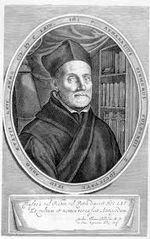
“It is tempting to compare Plato with Marx,” he writes in one early discussion; “indeed, I have done so. Like Plato, Marx looked forward to a future in which the state, law, coercion, and competition for power had vanished and politics been replaced by rational organization. But we must not press the comparison.” Here, we see his method: to look for threads, connections, while at the same time considering each thinker on his or her own. Context, for Ryan, means two things: how his subjects echo one another, and the way they reflect their times. Thus, his take on Plato begins with a portrait of the philosopher as an aristocrat with ties to the oligarchy that “briefly replaced the Athenian democracy at the end of the Peloponnesian War,” a position that influences “The Republic” and its sense of social hierarchy. “He assumes as a premise,” Ryan writes, “that we are naturally suited to different sorts of social roles, and that one of many things wrong with democratic Athens is that the wrong people end up occupying positions of power.”

more from David L. Ulin at the LA Times here.

Jefferson and his use of power

1111-Abramson-articleInline

It is easy to see why such a life, with its grand sweep and many events so central to American history, took up so many volumes by Henry Adams and then Dumas Malone. Meacham wisely has chosen to look at Jefferson through a political lens, assessing how he balanced his ideals with pragmatism while also bending others to his will. And just as he scolded Jackson, another slaveholder and champion of individual liberty, for being a hypocrite, so Meacham gives a tough-minded account of Jefferson’s slippery recalibrations on race, noting, “Slavery was the rare subject where Jefferson’s sense of realism kept him from marshaling his sense of hope in the service of the cause of reform.” In 1814 Jefferson wrote, “There is nothing I would not sacrifice to a practicable plan of abolishing every vestige of this moral and political depravity.” This wasn’t true. Jefferson “was not willing to sacrifice his own way of life, though he characteristically left himself a rhetorical escape by introducing the subjective standard of practicability,” Meacham observes. In fact, his slaves were his most valuable possessions. He also believed emancipation would precipitate a race war. The only solution was for free blacks to be exiled to another country. These were the reasons, or excuses, that underlay Jefferson’s justifications of slavery, though they were not his ideas alone. Lincoln, too, considered expatriation a viable solution to the slavery problem.

more from Jill Abramson at the NY Times here.

Friday, November 9, 2012

One test may ‘find many cancers’

From BBC News:

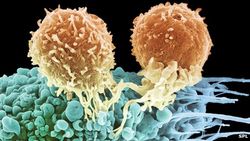
CancerTargeting just one chemical inside cancerous cells could one day lead to a single test for a broad range of cancers, researchers say. The same system could then be used to deliver precision radiotherapy. Scientists told the National Cancer Research Institute conference they had been able to find breast cancer in mice weeks before a lump had been detected. The same target chemical was also present in cancers of the lung, skin, kidney and bladder, they said. The team, at the Gray Institute for Radiation Oncology and Biology at Oxford University, were looking for a protein, called gamma-H2AX, which is produced in response to damaged DNA. This tends to be one of the first steps on the road to a cell becoming cancerous.

The scientists used an antibody that is the perfect partner to gamma-H2AX and able to seek it out in the body. This was turned into a cancer test by attaching small amounts of radioactive material to the antibody. If the radiation gathered in one place it would be a sign of a potential tumour. The researchers trialled the test on genetically modified mice, which are highly susceptible to forming tumours. Prof Katherine Vallis said lumps could be felt when the mice were about 120 days old, but “we detected changes prior to that at 90 to 100 days – before a tumour is clinically apparent”. She told the BBC that gamma-H2AX was a “fairly general phenomenon” and it “would be the dream” to develop a single test for a wide range of cancers.

More here.