Post-Structural Integrity: On “Arrested Development,” Season Four

1370132173

Ted Scheinman in the LA Review of Books:

Arrested Development, of course, is also a show about family, a unit the show sketches via ad absurdum caricature, all the more absurd because a lot of people seem truly to care about the largely atrocious and backbiting Bluths. (This writer included.) But Mitch Hurwitz, the show’s creator, is interested in more than the dynamics of family betrayal, and for social satire he uses the family frame as a metaphor in itself. Name a show whose politics are at once so oblique and so obvious: the Bluths were both a conspicuous model of the Bushes and a warning about con-men and short-sellers seeking to capitalize on the real estate bubble, no small foresight in 2003 when the show first aired. Biblical in its simplicity, Freudian in its symbolism (it is rumored that Buster breast-fed into his teens), Arrested Development was as rich in formal and moral delights as any other show on the planet.

Yes, it was probably too “smart” for TV, but mainly it was too weird, and non-initiates couldn’t exactly just slip into the show’s groove; plot, and the slow accretion of glimmering self-reference, were the bellylaughs. Two and a Half Men this was not. But man did it hit the spot via DVD marathon. Plus or minus the smoke, this is how Arrested Development deserves, and ought, to be watched.

The fourth season — 15 episodes released simultaneously on May 26 — has kept cognoscenti drooling for years but has also left time for new viewers to enter the welcoming, only vaguely canine circle of devotion. A lot has happened between 2005 and 2013, for the Bluths and for us. The new episodes each focus on what has happened to a given character in the years following the implosion of the latest Bluth scheme, and very rarely is it pretty to look at. If in 2003 Enron was a topical referent for the Bluths’s dynastic malfeasance, the collapse of the housing bubble, and of all the dreams and derivatives that depended on it, offer creator and executive producer Mitch Hurwitz far darker material.

Wednesday, June 5, 2013

The view from Taksim Square: why is Turkey now in turmoil?

Elif Shafak in The Guardian:

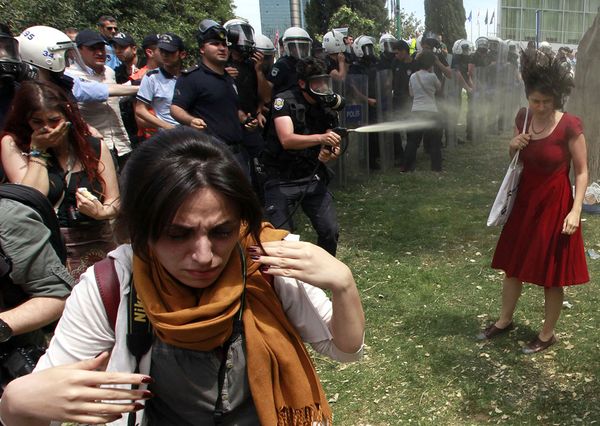
Protesters-in-Ankara-005“My dear Prime Minister, I was an apolitical man; then how come I took to the streets? Not for two trees. I rebelled after seeing how, early at dawn, you have attacked those youngsters who were silently protesting in their tents. I took to the streets because I do not wish my son to go through the same things and I would like him to live in a democratic country.”

This poignant letter, addressing Recep Tayyip Erdogan and written by one of the protesters in Istanbul's historic Taksim Square, was widely circulated on Turkey's social media. That the owner of these words, Cem Batu, is the creative director of an advertising agency, and he and his team of well-educated, modern, young Istanbulites have been subjected to tear gas and injured during the protests says a lot about the ordeal of these last days.

It all started as a peaceful sit-in to save one of the last remaining public parks in a city of almost 14 million people. The government has been adamant about razing the park to rebuild the old Ottoman military barracks that once stood there and to then turn it into a museum or a mall. It was a decision that was made too fast and without proper public and media debate. Many people, who would opt for a public garden over a shopping mall, felt their voices were not heard by the politicians. Of these, some have ended up occupying Gezi Park. At the same time, the hashtag #occupygezi was launched, calling out for support and solidarity. As Koray Çaliskan, a political scientist from the Bosphorus University, wrote in the daily Radikal newspaper, these early protesters came from diverse ideological backgrounds, and among them were even people who had voted in the past for the party in power, the Justice and Development party (AKP).

More here.

experience only serves to torment the mind on sleepless nights

Grandville-simic-edited_jpg_470x912_q85

The reality of that didn’t hit me until I was almost fifty. I woke up one morning a few days before my fiftieth birthday and suddenly grasped the enormity of it. A half a century is no joke. When I was already old enough to pull the tail of our cat in Belgrade, German tanks were rolling into Paris. It wasn’t the gray hairs on my head that got me, but the deluge of memories. I remembered sitting in the first grade classroom in the fall of 1945 staring at the pictures of Marx, Stalin, and Marshal Tito that hung over the blackboard. I recalled the long forgotten brands of Balkan cigarettes; Russian, French, and American pop tunes from the war years, and the 1930s movies, of which few people alive today have any notion, that were still being shown in my childhood. So many memories came back to me at once; all of a sudden my life seemed to be that of a complete stranger. It took months to get used to it—if one can ever get used to knowing that the world and people one once knew have vanished without a trace. In the final months of my father’s life, every time I went to visit him we talked about books. He had no patience for novels any more. History still fascinated him, and so did certain philosophers. The gloomier the thinker he was reading, the more pleased my father became, since it confirmed his long-held suspicion: the world was going to hell.

more from Charles Simic at the NYRB here.

reading agamben

1370318219

A striking feature of Agamben’s work is its tendency to leap immediately from the tiniest detail to the broadest possible generalization. In Homo Sacer, for instance, we learn that the entire history of Western political thought was always heading toward the horrors of totalitarianism, as we can tell by taking a look at an obscure corner of ancient Roman law. Similarly, while his late works boast increasingly large-scale ambitions, they are nonetheless written in a fragmentary form and always make room for digressions and asides (often in the form of notes inserted right into the middle of the text, introduced by the Hebrew letter “aleph”). These idiosyncratic traits can, I believe, be traced back to Agamben’s two most significant influences: Walter Benjamin and Martin Heidegger. Agamben served as editor of the Italian edition of Benjamin’s complete works, which consist primarily of dense essays and cryptic fragments, the majority of them not published during Benjamin’s lifetime. It’s clear that Agamben admires the compression and vast interdisciplinary range of Benjamin’s work and aspires to similar effects in his own writing. The link to Heidegger is perhaps even closer: as a student in one of Heidegger’s postwar seminars, Agamben picked up the great philosopher’s ambition to provide an overarching account of the history of the West, and use that history to shed light on the contemporary world.

more from Adam Kotsko at the LA Review of Books here.

reading salter

Salter2-e1369880219751

This is philosophical fiction and what Janine and Ardis are hungry for and what they stumble upon in the course of their “adulteries,” goes beyond the physical or sexual, beyond earthly love. Salter and Camus have given their women a deeper reach, a solitary quest for something that no man—husband or lover—could possibly embody or provide for a woman, and vice versa. It is the aspiration, the urge, the hunger to go into the pure space of Rilke’s “open.” In the everyday Ardis and Janine yearn for an essential life, for the quiver and tremble of copious primal love. Both are “unfaithful” and in their consummation with nature, sky, the night, they are given the taste, the thirst for something transcendental and they are both saved and ruined and there will be no going back for them, ever. In the final scene of “My Lord You” when the dog is resurrected at dawn and disappears, Ardis is bereft. She will never see him again. Salter tells us that the dog may be gone—”lost, living elsewhere, his name perhaps to be written in a line someday though most probably he was forgotten, but not by her.”

more from Mary Costello at Guernica here.

Wednesday Poem

Splinter
.
I like you, a twenty-year-old poet writes to me.
A beginning carpenter of words.

His letter smells of lumber.
His muse still sleeps in rosewood.

Ambitious noise in a literary sawmill.
Apprentices veneering a gullible tongue.

They cut to size the shy plywood of sentences.
A haiku whittled with a plane.

Problems begin
with a splinter lodged in memory.

It is hard to remove
much harder to describe.

Wood shavings fly. The apple cores of angels.
Dust up to the heavens.

.

by Ewa Lipska
from Drzazga
publisher: Wydawnictwo Literackie, Krakow, 2006

Quiet professor who finally became a bestseller

Arifa Akbar in The Independent:

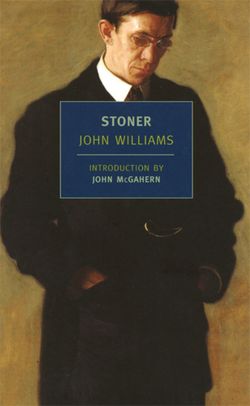
John-Williams-StonerWhen the American academic and novelist John Edward Williams published his third novel, in 1965, it was greeted with a respectful, albeit muted, reception by the literary press. The New York Times gave Stoner, the story of an ordinary American man making his way in the world, a favourable enough write-up, while The New Yorker mentioned it in worthy terms in its “briefly noted” column. No other waves were made. After selling a grand total of 2,000 copies, Stoner seemed to suffer the unenviable fate of being respectfully shelved as that “quiet American novel”. Until now, that is. The “quiet” American classic has become something of a slow-burn sensation. Nearly two decades after its author’s death in 1994, Stoner is hitting Europe’s bestseller lists, and causing a stir in Britain and America. The unexpected and widespread reappraisal has earned the epithet “the Stoner phenomenon”.

…The novel’s hero, William Stoner, begins life on a farm but falls in love with literature and becomes an English literature professor at a Midwestern university – much like Williams himself, who was a novelist and university professor for most of his life (winning the National Book Award for his last novel, Augustus). Stoner’s career is largely uneventful, and his marriage is largely unhappy. That this is deliberately the story of an unremarkable man is stated in the opening lines: “William Stoner entered the University of Missouri as a freshman in the year 1910, at the age of nineteen. Eight years later, during the height of World War I, he received his Doctor of Philosophy degree and accepted an instructorship at the same University, where he taught until his death in 1956. He did not rise above the rank of assistant professor, and few students remembered him with any sharpness after they had taken his courses.”
Despite its seeming “smallness”, the novel is filled with life’s most profound moments and passions.
More here.

Scientists capture first images of molecules before and after reaction

From UC Berkeley News Center:

Molecule_before_afterEvery chemist’s dream – to snap an atomic-scale picture of a chemical before and after it reacts – has now come true, thanks to a new technique developed by chemists and physicists at the University of California, Berkeley. Using a state-of-the-art atomic force microscope, the scientists have taken the first atom-by-atom pictures, including images of the chemical bonds between atoms, clearly depicting how a molecule’s structure changed during a reaction. Until now, scientists have only been able to infer this type of information from spectroscopic analysis. “Even though I use these molecules on a day to day basis, actually being able to see these pictures blew me away. Wow!” said lead researcher Felix Fischer, UC Berkeley assistant professor of chemistry. “This was what my teachers used to say that you would never be able to actually see, and now we have it here.”

The ability to image molecular reactions in this way will help not only chemistry students as they study chemical structures and reactions, but will also show chemists for the first time the products of their reactions and help them fine-tune the reactions to get the products they want. Fischer, along with collaborator Michael Crommie, a UC Berkeley professor of physics, captured these images with the goal of building new graphene nanostructures, a hot area of research today for materials scientists because of their potential application in next-generation computers.

More here.

Hanging on to Mutti

SPD_logo

Neal Ascherson reports from Germany, in the LRB:

They always loved huge halls, the Social Democrats. They still do. Vaulted spaces taller than cathedral naves and vaster than locomotive assembly halls, mammoth sheds big enough to hold a battle-cruiser on stocks. This time I was in Augsburg, at the last SPD congress before the German federal elections on 22 September, but it was all familiar as I plodded towards the loudspeakers. The scent of bratwurst and mustard and German coffee; the aisles of lobby stalls promoting car factories, renewable energy, private health insurance or Bavarian tourism; the crop-haired bouncer scowling as he checked the press passes; the delegates clutching the party programme as they waddled through antechamber after antechamber towards the sound of the big guns. And then at last the arena itself, the loyal thousands sitting in half-darkness and staring towards a horizon on which tiny pink figures wiggled in the lights. Giant voices spoke from somewhere.

Yes, it was the same party I had known. The Social Democrats, the heavy, rusty anchor of German democracy, are 150 years old this year. Still honest, still fearful of taking a risk, still prone to the ghastly blunders which used to make people cover their faces and say: ‘Scheisse! Trotzdem, SPD!’ – ‘Oh shit! But we’ll still have to vote for them.’ The great exhibition hall at Augsburg could have been the gigantic Westfalenhalle in Dortmund where Willy Brandt used to speak at the climax of his election tours. That harsh, hoarse, painful voice seemed to be powered by coal and iron from the Ruhr industries around him. And now, forty years on, the SPD still speaks with a steam-age accent. Peer Steinbrück, the chancellor-candidate, is a steady, potato-faced politician, not a living monument like Brandt. But his oratory has the same blast furnace glow: red-hot rather than white-hot, pouring predictably down the channels of expectation.

He is a good man, with quite a bold programme for ‘social justice’. Tax increases for the better-off, a proper minimum wage, dual citizenship for immigrants, less elbowing individualism and more solidarity in a society where das Wir entscheidet – ‘it’s the we that counts.’ The German public, surprisingly, mostly agree that increasing taxes is a sound idea. What they resent is that the idea comes from the SPD. In the same way, the Augsburg programme is widely thought to make sense, but the voters don’t fancy Peer Steinbrück. They are pissed off with Angela Merkel’s governing coalition, but reluctant to let go of Mutti’s hand. In short, the public are in one of those sullen, unreasonable moods which make politicians despair.

Tuesday, June 4, 2013

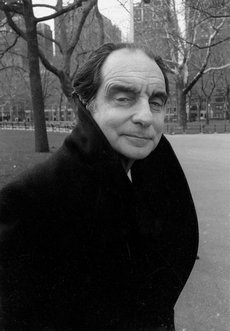
The Dreams of Italo Calvino

Jonathan Galassi in the New York Review of Books:

Galassi_1-062013_jpg_230x1371_q85If you don’t count Umberto Eco, Italo Calvino (1923–1985) is the postwar Italian prose writer who has had the largest and most enduring impact outside his own country. (As a sign of this, it’s worth noting that this is the tenth consideration of his work to appear in these pages since 1970.) Calvino’s refined, gently pessimistic, humane irony rode the wave of the deconstruction of realistic fiction the way the more programmatic Frenchnouveau roman and OULIPO writers could not, gently unmasking narratorial trade secrets and reminding readers of the self-reflexive nature of the fictional game, while continuing to deliver appetizing fabulist delights.

Postwar Italian fiction offered an embarrassment of riches as substantial as that of any other European country, starting with Giuseppe Tomasi di Lampedusa’s magisterial, posthumously published The Leopard (1958)—though it might arguably be considered the last great novel of the old school. Before the war, Elio Vittorini and Cesare Pavese had been greatly influenced by Hemingway and American realism; they were followed by a generation that included Giorgio Bassani, Alberto Moravia and his wife Elsa Morante, Carlo Emilio Gadda, Natalia Ginzburg, Leonardo Sciascia, Pier Paolo Pasolini, and Primo Levi, to name only the most prominent—most of whom make appearances in this consistently absorbing and suggestive selection of Calvino’s letters, chosen by Michael Wood from the several thousand pages of his literary correspondence published in Italy.

More here.

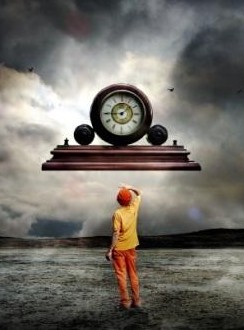
Decoding Space and Time in the Brain

Aiden Arnold in Scientific American:

ScreenHunter_217 Jun. 04 13.59Spatial cognition is the study of how the mind’s cognitive architecture perceives, organizes and interacts with physical space. It has long been of interest to philosophers and scientists, with perhaps the biggest historical step towards our modern ideas occurring within Immanuel Kant’sCritique of Pure Reason(1781/1787). Kant argued that space as we know it is a preconscious organizing feature of the human mind, a scaffold upon which we’re able to understand the physical world of objects, extension and motion. In a sense, space to Kant was a window into the world, rather than a thing to be perceived in it.

While philosophers following Kant have debated his theory on space perception, it served to lay the groundwork for the twentieth century empirical investigation into how the mind constructs the space that we experience. A key piece to how this happens was provided in 1948 by American psychologist Edward Tolman.

Tolman’s main interest was studying the behavior of rats in mazes – specifically, he was interested in whether a rat came to understand the layout of an environment through purely behavioral mechanisms, or if there was a cognitive process underlying their navigation ability.

More here.

How Not to Win Friends and Influence the Turkish People

Mustafa Akyol in Foreign Policy:

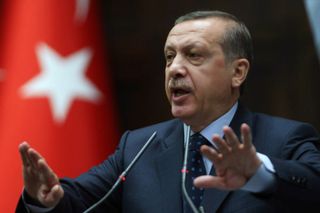
Erdogan_4“Where they gather 100,000, I can bring together 1 million.”

That was not only one of the highlights of Turkish Prime Minister Recep Tayyip Erdogan's initial reaction to the massive protest against his government that shook Turkey in the past weekend. It was also the gist of his problem.

Erdogan, the most popular premier Turkey has seen in the past half-century, believes in what political scientists would call a “majoritarian democracy.” In other words, he believes that once he gets the majority of the votes — which he has done successfully throughout the past decade — he has the right to make every single political decision in the country. He disregards all opposing views, and, furthermore, employs an overbearing tone to shout them down.

The recent dispute over Istanbul's Taksim Square, which triggered the demonstrations, was a perfect example. Erdogan wants to rebuild the square according to his own vision, so the Istanbul municipality, which is controlled by his political party, initiated a reconstruction project. One of the details is the replacement of Gezi Park, a small green area, with a reconstructed Ottoman military barracks, which, as Erdogan said in passing, can also serve as a shopping mall.

But many Taksim residents want to keep their park as it is, and some founded a civil society initiative asking to be heard. But the prime minister never wanted to listen. Instead, when they launched the “Occupy Taksim” campaign last week, a movement with a similar spirit to the “Occupy” movements in Western countries, Erdogan's government responded in a way one should not see in any democracy — with a police attack on peaceful demonstrators with tear gas and water canons.

More here.

Elsewhere

I’d like to live Elsewhere.
In hand-embroidered towns.

To meet those
who are not born into the world.

At last we would be happily alone.
No stop would wait for us.

No arrival. No departure.
Evanescence in a museum.

No wars would fight for us.
No humanity. No army. No weapon.

Tipsy death. It would be fun.
In the library a multi-volume time.

Love. A mad chapter.
It would turn the pages of our hearts in a whisper
.
.
by Ewa Lipska
from Ja
publisher: Wydawnictwo Literackie, 2003
translation: Robin Davidson & Ewa Elżbieta Nowakowska
from: The New Century
publisher: Northwestern University Press, 2009

Read more »

Online daters do better in the marriage stakes

From Nature:

LineCouples in the United States who meet online seem to enjoy at least as much marital bliss as those who meet in more traditional venues, according to the results of an online survey of more than 19,000 people funded by online dating service eHarmony. The survey's participants consisted of people who married between 2005 and 2012. About 35% reported that they had met their spouse online, more than through introductions by friends, work and school combined. The study revealed that people who used this method to meet their spouses were slightly older, wealthier, more educated and more likely to be employed than those who went with tradition1. Yet only about 45% of these online meetings took place on a dating site; the rest occurred through social networks such as Facebook and MySpace, as well as chat rooms, online communities, virtual worlds, multi-player games, blogs and discussion boards.

“Surprisingly, we found that marriages that started online were associated with better outcomes,” says psychologist and lead author John Cacioppo of the University of Chicago, Illinois, who is also a scientific adviser to eHarmony.

More here.

In the Pursuit of Longevity

Abigail Zuger in The New York Times:

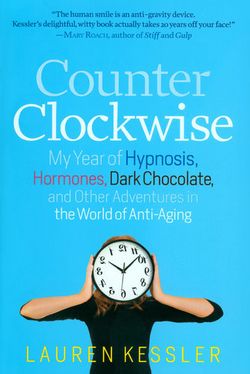
BookAt some point between George Washington and Colonel Sanders, white hair and a cane turned from symbols of elegance to suggestions of decrepitude, and an industry was born. Not that the fountain of youth wasn’t always sought after. But to look young, think young, feel young — those are distinctly modern goals.

Ms. Kessler, a no longer young but not quite old journalist who sneakily never does mention her chronological age, decided to test a host of popular techniques on herself. “I did everything,” she tells her readers, “so you don’t have to.” She starts with the cosmetics of aging, visiting a group of researchers at the University of North Carolina who specialize in digitally aging faces. Their work provides a detailed scientific analysis of the wreckage time’s chariot leaves behind: The face alone sustains almost two dozen separate assaults, from sunken cheeks to larger ears (the cartilage actually grows). With a rendition of her aged self in hand, Ms. Kessler investigates plastic surgery options, supplementing Internet window shopping with a few in-person visits. Everything she hears is light on the blood and gore, heavy on the appealing metaphors. Young skin is spandex; older is linen and needs loving attention. “I am seduced by this language,” she admits. Ultimately, though, she forgoes major procedures in favor of a little botulinum toxin to the forehead (“the change is subtle, like good lighting”) and a variety of potions and laser treatments to the rest of the face (it looks “brighter and more alive”). Surgery on the rest of the body she leaves to those with “more money than sense.” Then it is on to the body’s interior. Ms. Kessler’s first step is a complete evaluation of her risks for imminent collapse, with measurements of blood pressure, cholesterol, stamina, flexibility, oxygen-using ability. She even has a researcher check the health of her mitochondria, cell components whose vigor wanes with age. It turns out she has the mitochondria of a fit young woman, “way too much” body fat, fabulous blood pressure and iffy cholesterol. Time to embark on the cure. To eat herself younger, Ms. Kessler starves, diets, detoxes, cleanses, and supercharges her meals with berries, salmon and all the other good-fat-filled, antioxidant-rich edibles of current vogue. To sweat herself younger, she stretches, lifts weights, runs races, and signs up for not one but two classes featuring the repeated spurts of all-out exertion thought to optimize fitness. Ms. Kessler ingests a variety of vitamins and other compounds, suspending her otherwise reliable skepticism when it comes to several suspicious-sounding Eastern teas. She lies on a hypnotist’s couch to cultivate calm and optimism. It is this forward-looking spirit which, she suspects, kept her great-great-grandmother, known to all as “Old Oldie,” preparing the family breakfast well into her 10th decade.

After a year of all this activity comes Ms. Kessler’s big reveal, and indeed she has improved enough in some objective measures of biologic age to support current estimates that a full 70 percent of the disability of age may be caused by factors within our control. (The other 30 percent is genetic, and even the most energetic guinea pig can’t do a thing about it.)

More here.

Does Great Literature Make Us Better?

01stone-img-blog427

Gregory Currie in The NYT's The Stone:

Here, quickly, is a reason we already have for thinking the idea of moral and social learning from literature may be misguided.

One reason people like Martha Nussbaum have argued for the benefits of literature is that literature, or fictional narrative of real quality, deals in complexity. Literature turns us away from the simple moral rules that so often prove unhelpful when we are confronted with messy real-life decision making, and gets us ready for the stormy voyage through the social world that sensitive, discriminating moral agents are supposed to undertake. Literature helps us, in other words, to be, or to come closer to being, moral “experts.”

The problem with this argument is that there’s long been evidence that much of what we take for expertise in complex and unpredictable domains – of which morality is surely one – is bogus. Beginning 50 years ago with work by the psychologist Paul Meehl, study after study has shown that following simple rules – rules that take account of many fewer factors than an expert would bother to consider – does at least as well and generally better than relying on an expert’s judgment. (Not that rules do particularly well either; but they do better than expert judgment.)

Some of the evidence for this view is convincingly presented in Daniel Kahneman’s recent book “Thinking Fast and Slow”: spectacular failures of expertise include predictions of the future value of wine, the performance of baseball players, the health of newborn babies and a couple’s prospects for marital stability.