Saturday Poem

The Sea Question
.
The sea asks “How is your life now?”
It does so obliquely, changing colour.
It is never the same on any two visits.

.
It is never the same in any particular
Only in generalities: tide and such matters
Wave height and suction, pebbles that rattle.
.
It doesn't presume to wear a white coat
But it questions you like a psychologist
As you walk beside it on its long couch.
.
by Elizabeth Smither
from The Sea Question

Be Fruitful and Simplify!

Michiko Kakutani in The New York Times:

Less is more. The bare essentials. Back to basics. User-friendly. No fine print. Clutter-free. Transparent. Clean. Easy. Back in the mid-19th century Henry David Thoreau exhorted us to “simplify, simplify,” and his appeal to distill things down to “the necessary and the real” has only gained more resonance, as our Internet-driven, A.D.D. culture has grown ever more complex and frenetic. The re-embrace of simplicity is not exactly new. In the 1990s some neo-hippies and fed-up yuppies took up the idea of Voluntary Simplicity, Downshifting or Simple Living. In 2000 the commercial possibilities of this trend were ratified with Time Inc.’s introduction of the magazine “Real Simple,” and in 2005 Staples started promoting itself with an “Easy Button.”

…“Simple,” by two business consultants, Alan Siegel and Irene Etzkorn, is a straightforward brief on simplicity, providing the reader with interesting examples of companies that have successfully embraced it as a business strategy while only occasionally slipping into overly simplistic advice. (“Simplification requires a thorough and pervasive commitment by an organization to empathize, distill and clarify.”) “Simpler,” by Cass R. Sunstein — who as the administrator of the White House Office of Information and Regulatory Affairs from 2009 to 2012 helped “oversee the issuance of nearly 2,000 rules from federal agencies” — is a more detailed, more nuanced look at how rules and regulations can be made simpler, and how the social environment in which we make decisions can be “nudged” in ways that help us to make more rational, sensible choices. Many of the more original and illuminating ideas in this book, however, were previously mapped out by Mr. Sunstein and Richard H. Thaler in their fascinating 2008 best seller “Nudge: Improving Decisions About Health, Wealth and Happiness,” or build upon the groundbreaking ideas laid out by Daniel Kahneman in his compelling 2011 book “Thinking, Fast and Slow.”

More here.

The Second Cooing: Raising Passenger Pigeons from the Dead

Image-483098-breitwandaufmacher-yhyf

Philip Bethge in Spiegel Online:

The eye sockets of the slender pigeon are filled with light-colored cotton. Its neck feathers shimmer in iridescent colors, and it has a russet chest and a slate-blue head. The yellowed paper tag attached to its left leg reads: “Coll. by Capt. Frank Goss, Neosho Falls, Kansas, July 4, 1875.”

Ben Novak lifts up the stuffed bird to study the tag more closely. Then he returns the pigeon to a group of 11 other specimens of the same species, which are resting on their backs in a wooden drawer. “It's easy to see just dead birds,” he says. “But imagine them alive, billions of birds. What would they look like in the sky?”

Novak has an audacious plan. He wants to resurrect the passenger pigeon. Vast numbers of the birds once filled the skies over North America. But in 1914 Martha, the last of her species, died in a zoo in Cincinnati, Ohio.

Novak, a researcher with the Long Now Foundation, a California think tank, wants to give the species a second chance. At the Museum of Vertebrate Zoology in Berkeley, Novak used a scalpel to slice small tissue samples from the red-painted toes of the passenger pigeons kept there. He hopes to isolate tiny bits of DNA from the samples and use them to assemble an entire genotype. His ultimate goal is the resurrection of the passenger pigeon.

“It should be possible to reconstruct the entire genome of the passenger pigeon,” says Novak. “The species is one of the most promising candidates for reintroducing an extinct species.”

The art of breathing new life into long-extinct species is in vogue among biologists. The Tasmanian devil, the wooly rhinoceros, the mammoth, the dodo and the gastric-breeding frog are all on the list of candidates for revival. To recover the genetic makeup of species, experts cut pieces of tissue from stuffed zoological rarities, pulverize pieces of bone or search in the freezers of their institutions for samples of extinct animals.

When Dickens met Dostoevsky

Naiman_Commentary_336746h

Eric Naiman in TLS:

Late in 2011, Michiko Kakutani opened her New York Times review of Claire Tomalin’s biography of Charles Dickens with “a remarkable account” she had found in its pages. In London for a few days in 1862, Fyodor Dostoevsky had dropped in on Dickens’s editorial offices and found the writer in an expansive mood. In a letter written by Dostoevsky to an old friend sixteen years later, the writer of so many great confession scenes depicted Dickens baring his creative soul:

“All the good simple people in his novels, Little Nell, even the holy simpletons like Barnaby Rudge, are what he wanted to have been, and his villains were what he was (or rather, what he found in himself), his cruelty, his attacks of causeless enmity toward those who were helpless and looked to him for comfort, his shrinking from those whom he ought to love, being used up in what he wrote. There were two people in him, he told me: one who feels as he ought to feel and one who feels the opposite. From the one who feels the opposite I make my evil characters, from the one who feels as a man ought to feel I try to live my life. ‘Only two people?’ I asked.”

I have been teaching courses on Dostoevsky for over two decades, but I had never come across any mention of this encounter. Although Dostoevsky is known to have visited London for a week in 1862, neither his published letters nor any of the numerous biographies contain any hint of such a meeting. Dostoevsky would have been a virtual unknown to Dickens. It isn’t clear why Dickens would have opened up to his Russian colleague in this manner, and even if he had wanted to, in what language would the two men have conversed? (It could only have been French, which should lead one to wonder about the eloquence of a remembered remark filtered through two foreign tongues.) Moreover, Dostoevsky was a prickly, often rude interlocutor. He and Turgenev hated each other. He never even met Tolstoy. Would he have sought Dickens out? Would he then have been silent about the encounter for so many years, when it would have provided such wonderful fodder for his polemical journalism?

Asia: ‘The Explosive Transformation’

Mishra_1-042513_jpg_230x1425_q85

Pankaj Mishra reviews Mohsin Hamid's How to Get Filthy Rich in Rising Asia, Tash Aw's Five Star Billionaire, and Randy Boyagoda's Beggar’s Feast in the NYRB (photo by Jillian Edelstein):

“Let some people get rich first,” the Chinese leader Deng Xiaoping proclaimed a generation ago, inaugurating a strange new phase in his country’s—and the world’s—history. It now seems clear that nowhere has capitalism’s promise to create wealth been affirmed more forcefully than in post–World War II Asia. By now we have all heard about the rise of China and India as economic powers. But as early as the late 1960s, the rates of economic growth in South Korea, Hong Kong, Taiwan, Singapore, and even Thailand, Indonesia, and Malaysia were double the rate in European and American countries.

In most of these nations, collaborations between the military or authoritarian-minded governments and businessmen ensured the rise of big, often monopoly, conglomerates, such as the South Korean chaebols. Most ordinary people suffered from a long denial of democracy and then, following free elections, the subversion of democratic institutions; after decades of uneven economic growth they now try to cope with the irreversible contamination of air, soil, and water. Long working hours, low wages, limited mobility, and perennial job insecurity are the lot of most toilers in Asian economies, especially women. Nevertheless, some people have gotten extremely rich in Asia’s own Gilded Age: for instance, in “rising” India, the number of malnourished children, nearly 50 percent, has barely altered while a handful of Indian billionaires increased their share of national income from less than 1 percent in 1996 to 22 percent in 2008.

Such concentrations of private wealth are now common across Asia, which accordingly has produced several Horatio Alger–type legends of its own. Born in 1928, Hong Kong’s Li Ka-shing, today Asia’s richest man with an estimated wealth of $31 billion, started out as a poor immigrant from China hawking plastic combs. Another kind of morality tale is illuminated by the career of the Indonesian Mochtar Riady, who worked in a bicycle shop before he turned his modest enterprise, with the help of the Indonesian strongman Suharto and the “bamboo network” of overseas Chinese businessmen—the greatest Asian economic power outside of Japan—into a family business empire drawing on global resources.

On Fernando Pessoa’s Philosophical Essays

Michael Colson over at Truth Tableaux (via the NYT's The Stone):

Fernando Pessoa (1888-1935) is considered to be a great European intellectual and a preeminent Portuguese modernist. Born in Lisbon, he grew up in South Africa and had an English education at St. Joseph’s, a Dominican convent school, in Durban. In 1901, he passed the Cape School Higher Examination with distinction, and in 1903, he won Queen Victoria’s Memorial Prize for the best essay in English. After returning to Portugal in 1906-1907, Pessoa enrolled in philosophy classes at the University of Lisbon. He wrote poetry, fiction, and essays on topics ranging from politics and economics to mysticism and astrology. Importantly, Pessoa wrote several essays in English on philosophy.

For the first time Pessoa’s philosophical writings in English have been published. His Philosophical Essays: Critical Edition (First Contra Mundum Press, 2012), edited by Nuno Ribeiro, collects hitherto unpublished philosophical essays and fragments transcribed from material in the Fernando Pessoa Archive at the Biblioteca Nacional de Portugal. The archive holds more than 27,000 manuscript sheets in labeled envelopes, and 14 envelopes contain 1,428 sheets on philosophy.

If writing is a form of autobiography, as composition teacher Donald Murray says, then much of the paradox surrounding Pessoa’s writings involve the ambiguity of his “factless autobiography” and the many personalities that are attributed to him. Pessoa created complicated sets and subsets of authorial voices: heteronyms, semi-heteronyms, pre-heteronyms, and sub-heteronyms. The heteronym is a personality that allows a writer to explore ideas and feelings outside his own person—it’s like a public mask. Pessoa’s heteronyms—Alberto Caeiro, Ricardo Reis, and Alvaro de Campo—offer different ideas, feelings, and writing styles than his own.

In 1915, Pessoa employed the first heteronym Alvaro de Campos in a modernist Portuguese review Orpheu. Some scholars believe that the plurality of heteronyms demonstrates a conception of self based on the multiplicity of Nietzsche’s ‘decentered self.’

Friday, April 12, 2013

Liam Heneghan on The Sunflower Forest

Liam Heneghan in the Los Angeles Review of Books:

1365627929When I first brought a group of my undergraduate students to meet William Jordan III at Cafe Mozart in Evanston, Illinois, he told them that each year we should ritualistically destroy a small plot of virgin prairie, of which there is virtually none left in this state, in order to dramatize its importance to us. I assured them that he did not mean this sacrifice literally; he assured them that he did.

At that time, around the turn of the new millennium, William (Bill) Jordan was working on The Sunflower Forest: Ecological Restoration and the New Communion with Nature, which came out in 2003 (reissued in paperback 2012). More than any other writer I know, Bill rehearses his arguments in countless conversations and prepared talks before commuting them to the written word. I can trace remarks he made at a Christmas gathering years ago through several iterations until they became the fully formed ideas that made up his most recent book Making Nature Whole: A History of Ecological Restoration, written with George M. Lubick (2011). So, when Bill assured us he was serious about the ritualistic sacrifice of prairie a decade ago, it anticipated a theme that would emerge sometime later in The Sunflower Forest.

Several ecological restorationists with whom I have spoken over the years confess bewilderment with The Sunflower Forest; they read it hoping to get insights into the “how” of restoration, whereas the book focuses primarily on its performance, ritual and the creation of meaning. However, The Sunflower Forest and its companion Making Nature Whole were not written to appeal to the most immediate pragmatic needs of restoration. They were written to address questions about our troubling relationship with nature.

More here.

Will We Ever Communicate Telepathically?

Professor-X

Ed Yong over at National Geographic's Not Exactly Rocket Science:

In a lab at Harvard Medical School, a man is using his mind to wag a rat’s tail. To send his command, he merely glances at a strobe light flickering on a computer screen, and a set of electrodes stuck to his scalp detects the activity triggered in his brain. A computer processes and relays the electrodes’ signal to an ultrasound machine poised over the rat’s head. The machine delivers a train of low-energy ultrasound pulses into the rat’s brain, stimulating its motor cortex – the area that governs its movements. The pulses are aimed purposely at a rice-grain-sized area that controls the rat’s tail. It starts to wag.

This link-up is the brainchild of Seung-Schik Yoo, and it works more than 94% of the time. Whenever a human looks at the flickering lights, the rat’s tail almost always starts to wag just over a second later. The connection between them is undeniably simple. The volunteer is basically flicking a switch in the rat’s brain between two positions – move tail, and don’t move tail. But it is still an impressive early example of something we will see more of in coming years – a way to connect between two living brains.

Science-fiction is full of similar (if more flamboyant) brain-to-brain links. From the Jedi knights of Star Wars to various characters in the X-Men comics, popular culture abounds with telepathic characters that can read minds and transmit their thoughts without any direct physical contact or the use of their senses. There’s no evidence that any of us mere mortals share the same ability, but as Yoo’s study shows, technology is edging us closer in that direction. The question is: how far can we recreate telepathy using electronics? A human wagging a rat’s tail is one thing. Will we ever get to the point where we can share speech or emotions or memories?

Who the F@#$ is Jacques Ranciere?

Eugene over at Critical Theory:

While other philosophers deconstruct the metaphysical tradition and replace it with their own project, Ranciere’s philosophy can be summed up by “meh, people will figure it out.” And thus we present: the thought of Jacques Ranciere.

#1 “Fuck the Police” is Pretty Much his Definition of Politics

NWA - Fuck The Police

This counts.

In his “Ten Theses on Politics”, Ranciere makes a simple claim. There are two kinds of politics in the status quo, fake poser bullshit masquerading as politics and the real thing. Ranciere calls the poser politics the “politics of the police”. Ranciere calls “real” politics “dissensus.”

What the Fuck is Dissensus?

Dissensus is the process by which actors disrupt the politics of the police.

You see, the police are all about telling you what to do and where to do it. Remember that time that cop got all up in your grill for skateboarding in front of 7-11? Or, if you’re a person of color, remember that time a cop arrested you and planted drugs on you for skateboarding in front of 7-11? That’s the police order; the partitions that the police put in place for what can be seen, said and done, and where they can be done. When that cop drove away and you kept skateboarding, you totally disrupted the police partitioning of that space (sort of).

The police says that there is nothing to see on a road, that there is nothing to do but move along. It asserts that the space of circulating is nothing other than the space of circulation. Politics, in contrast, consists in transforming this space of ‘moving-along’ into a space for the appearance of a subject: i.e., the people, the workers, the citizens: It consists in refiguring the space, of what there is to do there, what is to be seen or named therein. It is the established litigation of the perceptible. – Ten Theses on Politics

We can see how these police partitions work in the events of Occupy Wall Street.

You see, some bankers made this park on stolen native land for them to eat lunch in while they rested from robbing the world of millions of dollars with complicated derivatives and other bullshit nobody understands. When some hipsters decided they wanted to camp out on Wall Street, the police were like “GTFO bro”.

Brains as Clear as Jell-O for Scientists to Explore

11brain-2-popup

James Gorman in the NYT:

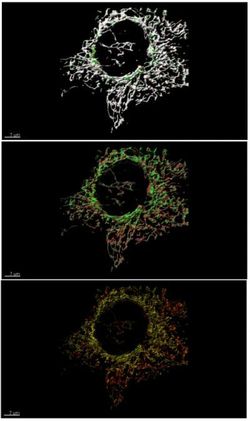
Scientists at Stanford Universityreported on Wednesday that they have made a whole mouse brain, and part of a human brain, transparent so that networks of neurons that receive and send information can be highlighted in stunning color and viewed in all their three-dimensional complexity without slicing up the organ.

Even more important, experts say, is that unlike earlier methods for making the tissue of brains and other organs transparent, the new process, called Clarity by its inventors, preserves the biochemistry of the brain so well that researchers can test it over and over again with chemicals that highlight specific structures and provide clues to past activity. The researchers say this process may help uncover the physical underpinnings of devastating mental disorders like schizophrenia, autism,post-traumatic stress disorder and others.

The work, reported on Wednesday in the journal Nature, is not part of the Obama administration’s recently announced initiative to probe the secrets of the brain, although the senior author on the paper, Dr. Karl Deisseroth at Stanford, was one of those involved in creating the initiative and is involved in planning its future.

Dr. Thomas Insel, director of the National Institute of Mental Health, which provided some of the financing for the research, described the new work as helping to build an anatomical “foundation” for the Obama initiative, which is meant to look at activity in the brain.

Dr. Insel added that the technique works in a human brain that has been in formalin, a preservative, for years, which means that long-saved human brains may be studied. “Frankly,” he said, “that is spectacular.”

Kwanghun Chung, the primary author on the paper, and Dr. Deisseroth worked with a team at Stanford for years to get the technique right. Dr. Deisseroth, known for developing another powerful technique, called optogenetics, that allows the use of light to switch specific brain activity on and off, said Clarity could have a broader impact than optogenetics. “It’s really one of the most exciting things we’ve done,” he said, with potential applications in neuroscience and beyond.

writing for barzun

Jacques-resized

But my little dream of a fling with the polite world of publishing was not what happened to me. Instead I was introduced to a process that involved a lot of fear and pain. Jacques Barzun, then holding the position of literary adviser to Charles Scribner’s Sons, wrote and asked if I could write a book. Not only did he

wonder whether you would think it possible to make a short book of the ideas you broached in your essay, each of which I can see implying others in the domains of life and literature that you so adroitly shuttled between … [but] alternatively … is there some other topic on which you have meditated writing a book? Without wanting to be ranked suddenly as an art-for-art’s sake promoter, I must confess it is your writing I should like to see more of, on any subject.

Had I been an aspiring writer, I would have slumped to the floor and wept. But I wasn’t; I was an aspiring dabbler, and the only thing that happened was that my mind stopped functioning. This was not part of my plan. I had welcomed a diversion, not a crisis in my life. I milled around, looking at myself for a few days, trying to reconcile my version of me with the words in the letter, and I didn’t succeed.

more from Helen Hazen at The American Scholar here.

the waste land

Xwaste-land-cover1.jpg.pagespeed.ic.HNVMgjBYht

Other than “In my beginning is my end. In my end is my beginning,” it’s possible that the greatest epitaphic language I have encountered is that of Sir Thomas Browne who, in the midst of a meditation on urn-burial, suddenly situates himself on the brink of death and declares himself: “Ready to be anything…. ” It’s a line that would make a breathtakingly bold and accurate sign-off for any of us whose molecules will become a little bit of everything. Or, at the very least, what Eliot would call “significant soil.” The first time I read “The Waste Land,” I experienced the same elation that I felt on reading Browne’s epitaph—a conviction that the catalyzing proximity (and yet resilient apartness) of those two words was central to the recombinant possibilities of the poem. In other words, it was because the “waste” was a temporal, impermanent modifier—and not an enduring quality of the land—that the land was redeemable and open to (what Eliot called in a different landscape, that of “Burnt Norton”) “perpetual possibility.”

more from Christina Davis at Poetry here.

The renaissance of Thatcherism

Margaret_Thatcheredit1

The growing fascination with Thatcher as a historical figure is very evident at Churchill College, Cambridge, where her papers are kept and where last year no fewer than 629 files of material were requested by researchers into such esoteric student dissertation subjects as “The Fashioning of Margaret Thatcher 1974-79” and “The German Social Market Economy and Economic Social Development in the Conservative Party 1975-79.” Almost every week there are visits to her archive from undergraduate history groups, summer schools, business organisations and others such as the Friends of the Imperial War Museum and the National Churchill Museum of the United States. Perhaps surprisingly for so doughty an anti-communist, she for some reason enjoys a huge following in China, and several Chinese delegations—including the ambassador—have visited her papers in Cambridge. The decision to decommission Britain’s two aircraft carriers in 2020 casts doubt on whether another operation to relieve the Falkland Islands could be successful, and in that sense Thatcher’s shadow falls over the present defence cuts of the coalition government.

more from Andrew Roberts at Prospect Magazine here.

The unintended (and deadly) consequences of living in the industrialized world

From Smithsonian:

DirtI’m traveling with Mikael Knip, a short, energetic Finnish physician and University of Helsinki researcher with a perpetual smile under his bushy mustache. He has come to Petrozavodsk—an impoverished Russian city of 270,000 on the shores of Lake Onega and the capital of the Republic of Karelia—to solve a medical mystery, and perhaps help explain a scourge increasingly afflicting the developed world, the United States included. For reasons that no one has been able to identify, Finland has the world’s highest rate of Type 1 diabetes among children. Out of every 100,000 Finnish kids, 64 are diagnosed annually with the disease, in which the body’s immune system declares war on the cells that produce insulin. Type 1 diabetes is usually diagnosed in children, adolescents and young adults. The disease rate wasn’t always so high. In the 1950s, Finland had less than a quarter of the Type 1 diabetes it has today. Over the past half-century, much of the industrialized world has also seen a proliferation of the once rare disease, along with other autoimmune disorders such as rheumatoid arthritis and celiac disease. Meanwhile, such afflictions remain relatively rare in poorer, less-developed nations.

Why?

Petrozavodsk, only about 175 miles from the Finland border, may be the perfect place to investigate the question: The rate of childhood Type 1 diabetes in Russian Karelia is one-sixth that of Finland. That stark difference intrigues Knip and others because the two populations for the most part are genetically similar, even sharing risk factors for Type 1 diabetes. They also live in the same subarctic environment of pine forests and pristine lakes, dark, bitter winters and long summer days. Still, the 500-mile boundary between Finland and this Russian republic marks one of the steepest standard-of-living gradients in the world: Finns are seven times richer than their neighbors across the border. “The difference is even greater than between Mexico and the U.S.,” Knip tells me.

More here.

Friday Poem

Blue Line Incident
.
He was just some coked-out,

crazed King w/crooked teeth
& a teardrop forever falling,
fading from his left eye, peddling
crack to passengers or crackheads
passing as passengers on a train
chugging from Chicago to Cicero,
from the Loop through K-Town:
Kedzie, Kostner, Kildare.
I was just a brown boy in a brown shirt,
head shaven w/fuzz on my chin,
staring at treetops & rooftops
seated in a pair of beige shorts:
a badge of possibility—a Bunny
let loose from 26th street,
hopping my way home, hoping
not to get shot, stop after stop.
But a ’banger I wasn’t & he wasn’t
buying it, sat across the aisle from me:
Do you smoke crack?

Hey, who you ride wit’?
Are you a D’?
Let me see—throw it down then.

I hesitate then fork three fingers down
then boast about my block,
a recent branch in the Kings growing tree;
the boys of 15th and 51st, I say,
they’re my boys, my friends.
I was fishing for a life-
saver & he took, hooked him in
& had him say goodbye like we was boys
& shit when really I should’ve
gutted that fuck w/the tip
of my blue ballpoint.
.
.
by Jacob Saenz
from Poetry 2012

Magic trick transforms conservatives into liberals

From Nature:

Political-brains_110407_244x183When US presidential candidate Mitt Romney said last year that he was not even going to try to reach 47% of the US electorate, and that he would focus on the 5–10% thought to be floating voters, he was articulating a commonly held opinion: that most voters are locked in to their ideological party loyalty. But Lars Hall, a cognitive scientist at Lund University in Sweden, knew better. “His calculation, only zeroing in on 10% of voters, is a risky proposition,” he says. When Hall and his colleagues tested the rigidity of people’s political attitudes and voting intentions during Sweden’s 2010 general election, they discovered that loyalty was malleable: nearly half of all voters were open to changing their minds. The team's work is published today in PLoS ONE1. Hall’s group polled 162 voters on the streets of Malmö and Lund during the final weeks of the election campaign, asking them which of two opposing political coalitions — conservative or social democrat/green — they intended to vote for, and how strongly they felt about their decision. The researchers also asked voters to rate where they stood on 12 political wedge issues, including tax rates and nuclear power. The person conducting the experiment secretly filled in an identical survey with the reverse of the voter's answers, and used sleight-of-hand to exchange the answer sheets, placing the voter in the opposite political camp (see video above). The researcher invited the voter to give reasons for their manipulated opinions, then summarized their score to give a probable political affiliation and asked again who they intended to vote for.

No more than 22% of the manipulated answers were detected, and 92% of the study participants accepted the manipulated summary score as their own. This did not surprise Hall, who has previously demonstrated similar reversal effects, known as choice blindness, in people’s aesthetic preferences2 and moral attitudes3. What is interesting about the latest study is that, on the basis of the manipulated score, 10% of the subjects switched their voting intentions, from right to left wing or vice versa. Another 19% changed from firm support of their preferred coalition to undecided. A further 18% had been undecided before the survey, indicating that as many as 47% of the electorate were open to changing their minds, in sharp contrast to the 10% of voters identified as undecided in Swedish polls at the time.

More here.

Thursday, April 11, 2013

snow in japan

Japanplate6_jpg_470x630_q85

Snow has rarely been photographed so well. You feel the icy cold that toughened the lives of fishermen pulling their catch from a frozen lagoon. You can hear the wind blowing through the snow-covered roofs of the coastal village in Akita. Many of these photographs were taken long after the war ended. Hamaya had quickly lost his enthusiasm for gunfire as the war progressed ever more disastrously for Japan. Along with many Japanese, disillusioned by the consequences of their earlier chauvinism, Hamaya embraced postwar pacifism. Some of his most striking postwar photographs are of the 1960 demonstrations in Tokyo, when large numbers of students and ordinary citizens protested against the conservative government’s renewal of a security treaty with the US, perpetuating Japan’s status as a US military base for wars in Asia.

more from Ian Buruma at the NYRB here.

After Achebe

1364000628950

I do not remember Things Fall Apart as particularly life-changing at that age, I simply loved the story, this recreation of a world that seemed entirely familiar, that echoed the stories that my grandparents told. A few years later, I read No Longer at Ease, a I realised what an extraordinary gift he had given to us, creating a space for us in the world, allowing us the chance to say: We too are here. battered early edition, missing a cover, illustrated by Bruce Onobrakpeya, the famed Nigerian artist some of whose etchings hung on the walls of our living room. I was unimpressed then by the non-realistic etchings with their stylized depictions of human beings but was utterly captivated by the story of Obi Okonkwo, who could easily have stepped out of one of my parents’ photograph albums. I imagined him in a fedora hat and suit, being met at the port on his return from England by his town union, the way my parents and many of their friends had been. Along the way I also read his books for children, first Chike and the River, then the allegory of abuse of power How the Leopard Got Its Claws, co-written with John Iroaganachi and his collection of short stories Girls at War, which again resounded with familiar stories from my parents and their friends of their experiences during and just after the Biafran war.

more from Ike Anya at Granta here.

hitchens’ faith

Hitch

I am intrigued by Mortality for one main reason, which is this: Hitchens’s beliefs about his advanced cancer and its treatment were, for a man whose fame rested on his scepticism, uncharacteristically optimistic. I hesitate to use the word delusional, as he admitted that he would be very lucky to survive, but he clearly steadfastly hoped, right to the end, that his particular case of advanced cancer might lie on the sparsely populated right side of the bell-shaped curve of outcome statistics. He famously mocked religious folk for their faith in supernatural entities and survival of the soul after bodily death, yet the views expressed in Mortality are just as wishful and magical. “The oncology bargain [oncology is that branch of medicine which deals with the treatment of cancer],” writes Hitchens, “is that in return for at least the chance of a few more useful years, you agree to submit to chemotherapy and then, if you are lucky with that, to radiation or even surgery.” Years? I must now confess to a professional interest. I am a gastroenterologist in a large acute hospital, and I have diagnosed many patients with oesophageal cancer. “Years” is a word not generally used when discussing prognosis in Stage Four oesophageal cancer, “months”, in my experience, being a more useful one.

more from Seamus O’Mahony at the Dublin Review of Books here.

Find All the Absurdities!

From Scientific American:

EscherA little blast from the past to puzzle over while your head spins from chocolate overload this weekend.

Two centuries before M.C. Escher confounded us with his optical illusions and play on perspective, William Hogarth (1697-1764) created Satire on False Perspective. Hogarth was a British painter and engraver sometimes credited with beginning the tradition of sequential art in Western culture due to his series of paintings depicting the rise and fall of a dandy, A Rake’s Progress. Complicated methods of using perspective to create an illusion of 3-dimensions in 2-dimensional art had been mastered (again) in Renaissance art a few centuries earlier. As well as a painter, Hogarth was something like a political cartoonist and satirist in his day. Here, in his engraving Satire on False Perspective are a number of errors. Can you spot them all?

More here.