
Adam Grant in the New York Times:
 In a landmark study, the psychologist Philip Tetlock evaluated several decades of predictions about political and economic events. He found that “the average expert was roughly as accurate as a dart-throwing chimpanzee.” Although skilled forecasters were much better, they couldn’t see around corners. No one could foresee that a driver’s wrong turn would put Archduke Franz Ferdinand in an assassin’s path, precipitating World War I.
Yet a hunch about the future can feel like a certainty because the present is so overwhelmingly, well, present. It’s staring us in the face. Especially in times of great anxiety, it can be all too tempting — and all too dangerous — to convince ourselves the future is just as visible.
In 1919, when the Treaty of Versailles ended World War I, the Allied powers celebrated. The world was finally returning to peace. They had no idea that the national humiliation of that treaty would sow the seeds of another world war. Just as a tragedy can leave us oblivious to the possibility of silver linings, a triumph can blind us to the prospect of terrible reverberations.
More here.
Enjoying the content on 3QD? Help keep us going by donating now.
 I want to make the case for the power of thinking in the third person. The first person, of course, comes quite naturally to us. We have a vivid sense of our experiences and perspectives: This is who and what I am. People will live their lives with “main character energy.” Yet, with a little more work, we can also view ourselves the way historians and social scientists might: as creatures shaped by larger forces and bound by a culture’s pre-written scripts. That means seeing ourselves as the inheritor and inhabitant of various social identities — and, therefore, as a person like every other.
 When Sam Rodriques was a neurobiology graduate student, he was struck by a fundamental limitation of science. Even if researchers had already produced all the information needed to understand a human cell or a brain, “I’m not sure we would know it”, he says, “because no human has the ability to understand or read all the literature and get a comprehensive view.”
 In all of English there are few words rich enough in their history and variety of use to warrant a dedicated dictionary that runs to hundreds of pages and multiple editions. That fuck is at the same time one of the most notorious, popular, and emotive words in the language makes it all the more fascinating—and deserving of the attention given to it in this volume.
 Weren’t they bothered that Trump is a convicted felon? An adjudicated rapist? Didn’t his invocation of violence against Liz Cheney, or 50 other examples of his disgusting imprecations, obviously disqualify him? And couldn’t they see that Harris, whatever her shortcomings, was a fundamentally smart, honest, well-meaning person who would show basic respect for the Constitution and wouldn’t do anything weird as president?
 L
L As a young boy growing up in the Netherlands in the 1990s, Sander van der Linden learned that most of his mother’s relatives, who were Jewish, had been killed by the Nazis, in the grip of racist ideology. At school, he was confronted with antisemitic conspiracy theories still circulating in Europe. It all got him wondering about the power of propaganda and how people become convinced of falsehoods.
 Fiction about young girls has often been in thrall to silence, secrecy, and evasion. In Jane Austen’s Mansfield Park, for example, young Fanny Price moves on tiptoe, daring anyone to notice her. Instead, all the noticing is done by her. Her duty is not merely to stay in the shadows but also to remain quietly pleasant and accommodating. So, too, the young Catherine Sloper in Henry James’s Washington Square shares her feelings with no one, and thus her feelings deepen. She is at her most interesting when she is at her most silent and withdrawn.
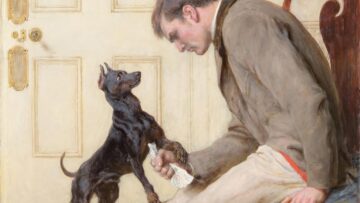 In the 19th and early 20th century, under English and Unites States law, jilted lovers could sue former partners for breaking their hearts. ‘Heartbalm torts’, which continue to be on the rulebooks of some US states to this day, were a category of legal actions that could be brought against romantic misconduct. The underlying idea was that wrongful romantic or sexual behaviour could cause harm that should be compensated by its causer. The sufferer of such harm, in turn, was entitled to receive damages, or solatium, from the inflictor. Most popular among the heartbalm torts were actions for broken engagements, adultery, and seduction.
 Two-thirds of the world’s food comes today from
  I
I Author
  A scientist who successfully treated her own