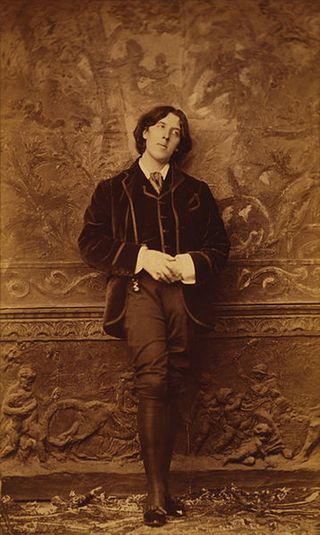
Guy de Maupassant

From The Guardian:

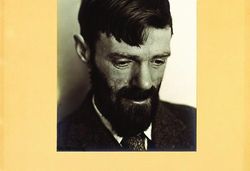
Guy-de-Maupassant-008“He is a better writer than you think,” Malcolm Lowry once said of Guy de Maupassant. This comment, made to David Markson, indicates the conundrum Maupassant presents to readers. A hugely influential writer of short stories, the sheer mass of his extremely uneven body of work – 300 stories, 200 articles, six novels, two plays, and three travel books churned out between 1880 and 1891 – can obscure his genius like clouds around an alp. Yet while many of those 300 stories fail to rise beyond the anecdotal, nearly a quarter are very good, and within them stands a core of indisputable classics. It shouldn't be doubted that Maupassant is one of the most important short-story writers to have lived. It was to the detriment of Maupassant's work – although not his bank balance – that his career coincided with a demand from French newspapers for stories of around 1-2,000 words. Jostling with news and faits divers, these stories were by necessity laconic and attention-grabbing, and Maupassant, whose severe economy was a model for Hemingway, had a great facility for producing them. The irony, however, is that Maupassant's best works are much longer. The spareness, learned in his youth from the poet Louis Bouilhet, is still there – as in the opening of “Hautot & Son” (1889), where, as Sean O'Faolain writes, “the scene is brilliantly and swiftly painted, with three lines for the countryside and six for the sportsmen” – but the stories' scope helps avoid the glibness that can mar his shorter work. When Bouilhet died another family friend, Gustave Flaubert, took on Maupassant's literary education, counselling his impatient charge to hold off from publishing until he was ready (although from 1875 several stories crept into print under pseudonyms). The fruit of this long labour was “Boule de Suif”, which Flaubert lived just long enough to read and proclaim a masterpiece.

…It's certainly difficult to find much meaning in Maupassant's final years, which were as lurid as any plot he ever concocted. By 1885 he was suffering memory lapses and eye problems, and would sometimes see his double sitting at his desk. These were early symptoms of the syphilis he most probably contracted during his hedonistic twenties (a period he recreates in an unusually touching story of 1890, “Mouche”). By late 1891 he was convinced his brain was pouring from his nose and mouth, and thought his urine was made of diamonds. “My mind”, he told a friend, “is following dark valleys”. He slit his throat in Cannes on New Year's Day, 1892, and spent the last 18 months of his life in a Parisian asylum. “M Maupassant is reverting to the animal”, his doctor wrote a few days before his death, aged 42.

More here.

Faith Healing

Kathleen Norris in The New York Times:

This is a daring and urgent book, written after the author learned he had a rare, incurable and unpredictable cancer. But it is not a conventional memoir of illness and treatment. Beyond informing us that he received his dire news in a “curt voice mail message,” Christian Wiman says very little about his experience of the medical world. He is after bigger game. More than any other contemporary book I know, “My Bright Abyss” reveals what it can mean to experience St. Benedict’s admonition to keep death daily before your eyes.

…In reflecting on the meaning of Christ’s passion for his own life, Wiman finds that it reveals that “the absolutely solitary and singular nature of extreme human pain is an illusion.” It is the resolutely incarnational nature of the religion that draws him in. “I am, such as I am, a Christian,” he writes, “because I can feel God only through physical existence, can feel his love only in the love of other people.” His love for his wife and children, he realizes, is both human and entirely sacred. And here the poet comes to the fore, insisting on the right to embrace contradiction without shame. “I believe in absolute truth and absolute contingency, at the same time. And I believe that Christ is the seam soldering together these wholes that our half vision — and our entire clock-bound, logic-locked way of life — shapes as polarities.” This pithy and passionate book is not easy, but it is rewarding. Wiman’s finely honed language can be vivid and engaging. He describes his childhood home as “a flat little sandblasted town in West Texas: pump jacks and pickup trucks, . . . a dying strip, a lively dump, and above it all a huge blue and boundless void” that he admits, with typical acuity, “I never really noticed until I left, when it began to expand alarmingly inside of me.” He exhibits a poet’s concern for precision, writing, for example, that “the sick person becomes very adept at distinguishing between compassion and pity. Compassion is someone else’s suffering flaring in your own nerves. Pity is a projection of, a lament for, the self.” This is, above all, a book about experience, and about seeking a language that is adequate for both the fiery moments of inspiration and the “fireless life” in which we spend most of our days. It is a testament to the human ability to respond to grace, even at times of great suffering, and to resolve to live and love more fully even as death draws near.

More here.

REFLECTIONS ON WOOLWICH

Kenan Malik in Padaemonium:

ScreenHunter_209 May. 24 18.331. It was a mad, barbarous attack, more akin to a particularly savage form of street violence than to a politically motivated act. What was striking about the incident was not just its depravity but the desire of the murderers for that depravity to be captured on film. This was narcissistic horror, an attempt to create a spectacle, enact a performance, and generate media frenzy. In that it succeeded. We should not provide the act with greater legitimacy by rationalizing it in political or religious terms. Even to call it a terrorist act is to give it too much credibility.

2. Brutal nihilism and narcissistic hatred are central threads of contemporary jihadism. This is as true of 9/11 and 7/7 and the Boston bombing as it is true of the Woolwich murder. But while 9/11 and 7/7 were degenerate acts, the Woolwich attack shows how much more degenerate such attacks have become over the past decade. This was jihadism as depraved street violence.

3. Such degenerate nihilism is not peculiar to jihadists. It drove the twisted, paranoid fantasies of Anders Breivik, the Norwegian mass killer, who wanted ‘to create a European version of al-Qaeda’. It underlay the mass shootings in America in Aurora and Sandy Hook. Such acts remain rare. But the inchoate, disengaged, misanthropic rage upon which they draw, and the hatred of people and the indifference to one’s actions that they express, has become typical of a very contemporary form of violence. The fact that Breivik claimed that he was waging a war in defence of Christendom, or that the Woolwich attackers shouted ‘Allahu Akhbar’ does not make them any less degenerate or nihilistic, or any more ‘political’, than the perpetrators of the Aurora or Sandy Hook killings.

More here.

A Commencement Address

Brodskyandmississippi

On what would have been his 73rd birthday, my old teacher Joseph Alexandrovich Brodsky's commencement address to the 1984 graduating class of Williams College, in the NYRB:

Given its volume and intensity, given, especially, the fatigue of those who oppose it, Evil today may be regarded not as an ethical category but as a physical phenomenon no longer measured in particles but mapped geographically. Therefore the reason I am talking to you about all this has nothing to do with your being young, fresh, and facing a clean slate. No, the slate is dark with dirt and it’s hard to believe in either your ability or your will to clean it. The purpose of my talk is simply to suggest to you a mode of resistance which may come in handy to you one day; a mode that may help you to emerge from the encounter with Evil perhaps less soiled if not necessarily more triumphant than your precursors. What I have in mind, of course, is the famous business of turning the other cheek.

I assume that one way or another you have heard about the interpretations of this verse from the Sermon on the Mount by Leo Tolstoy, Mahatma Gandhi, Martin Luther King, and many others. In other words, I assume that you are familiar with the concept of nonviolent, or passive, resistance, whose main principle is returning good for evil, that is, not responding in kind. The fact that the world today is what it is suggests, to say the least, that this concept is far from being cherished universally. The reasons for its unpopularity are twofold. First, what is required for this concept to be put into effect is a margin of democracy. This is precisely what 86 percent of the globe lacks. Second, the common sense that tells a victim that his only gain in turning the other cheek and not responding in kind yields, at best, a moral victory, i.e., quite immaterial. The natural reluctance to expose yet another part of your body to a blow is justified by a suspicion that this sort of conduct only agitates and enhances Evil; that moral victory can be mistaken by the adversary for his impunity.

There are other, graver reasons to be suspicious. If the first blow hasn’t knocked all the wits out of the victim’s head, he may realize that turning the other cheek amounts to manipulation of the offender’s sense of guilt, not to speak of his karma. The moral victory itself may not be so moral after all, not only because suffering often has a narcissistic aspect to it, but also because it renders the victim superior, that is, better than his enemy. Yet no matter how evil your enemy is, the crucial thing is that he is human; and although incapable of loving another like ourselves, we nonetheless know that evil takes root when one man starts to think that he is better than another. (This is why you’ve been hit on your right cheek in the first place.) At best, therefore, what one can get from turning the other cheek to one’s enemy is the satisfaction of alerting the latter to the futility of his action. “Look,” the other cheek says, “what you are hitting is just flesh. It’s not me. You can’t crush my soul.” The trouble, of course, with this kind of attitude is that the enemy may just accept the challenge.

Twenty years ago the following scene took place in one of the numerous prison yards of northern Russia.

Hannah Arendt, Guilty Pleasure

Hannaharendt_hoberman_052213_620pxIn Tablet, J. Hoberman reviews Margarethe von Trotta's biopic of Hannah Arendt, starring the wonderful Barbara Sukowa:

It’s not every week that you get to see a movie about an intellectual contretemps, let alone one that rocked the Jewish world. Indeed, in a way, Von Trotta and screenwriter Pamela Katz have attempted something far more difficult and potentially absurd than making a documentary, namely setting out to dramatize an upheaval in the life of the mind. The only filmmaker who has ever really turned the trick is Roberto Rossellini in his early-’70s telefilmsSocrates, Descartes, and Blaise Pascal. (Would that he had also essayed Spinoza!)

Von Trotta and Katz could not possibly do justice to the outrage—and outrageous abuse—that Arendt inspired, or to the breadth of her continents-spanning life and thought. A sprinkling of flashbacks notwithstanding, it’s Arendt in Jerusalem and on Eichmann that Von Trotta considers in her film.

Greatly simplified, Arendt’s three great sins were 1) suggesting that the “desk murderer” Eichmann was a mediocre opportunist rather than the devil incarnate (and thus all the more frightening); 2) publicly discussing and denouncing the role of Nazi-appointed Jewish Councils in the Final Solution; and 3) examining the judicial basis for the trial itself. Arendt, however subtle in her analysis, was not given to understatement; still, to a large degree the tumult she inspired was a case of blaming the messenger. (For a pithy, reasoned historical contextualization of the reaction to Arendt’s report, see Peter Novick’s The Holocaust in American Life.)

As a film, Hannah Arendt is a sort of hybrid and not just because it is half in German. The movie is a didactic docu-drama, part old-school Soviet “publicist” film in its idealized, ideological representation of historical figures, and part Hollywood biopic in its entertainingly kitschy notion of how they might have interacted in real life.

The Faraway Nearby

The-Faraway-Nearby-1

Many stories are told about the T’ang dynasty artist Wu Daozi, sometimes named as one of the three great sages of China: that he ignored color and only painted in black ink, that he transgressively painted his own face on an image of the Buddha, that he painted a perfect halo in a single stroke without the aid of compasses, that he painted pictures of the dragons who cause rain so well that the paintings themselves exuded water, that the Emperor sent him to sketch a beautiful region and reprimanded him for coming back emptyhanded, after which he painted a 100-foot scroll that replicated all his travels in one continuous flow, that he made all his paintings boldly and without hesitation, painting like a whirlwind, so that people loved to watch the world emerge from under his brush. One story about him I read long ago I always remembered. While he was showing the Emperor the landscape he had painted on a wall of the Imperial Palace, he pointed out a grotto or cave, stepped into it, and vanished. Some say that the painting disappeared too. In the account I thought I remembered, he was a prisoner of the Emperor who escaped through his painting. When I was much younger I saw another version of this feat that impressed me equally.

more from Rebecca Solnit at Guernica here.

truth is harder than fiction

African-lives

In recent years, African literature has broken free of what Wole Soyinka called the “orange ghetto” of the Heinemann African Writers Series, which in 1962 launched the series with the one African book that everyone seems to know: Chinua Achebe’s Things Fall Apart. Writers from around the continent—José Eduardo Agualusa, Doreen Baingana, Mia Couto, Emmanuel Dongala, Nuruddin Farah, Petina Gappah, Yasmina Khadra, Zakes Mda, Maaza Mengiste, Abdellah Taïa—continue to win awards and gain international recognition. From Nigeria alone, authors like Chris Abani, Chimamanda Ngozi Adichie, Teju Cole, Helon Habila, E.C. Osondu, and Helen Oyeyemi have joined the pantheon already occupied by Achebe, Ben Okri, Wole Soyinka, and Amos Tutuola. A steady stream of anthologies has introduced American readers to fresh voices from Africa. But something has been missing. These anthologies have focused almost exclusively on fiction, ignoring a wealth of extraordinary true-life narratives.

more from Geoff Wisner at The Quarterly Conversation here.

the sprite-like Reykjaviker

Iceland-landscapeLARGE

When Icelanders talk to Americans about Iceland, sooner or later talk is going to turn to fairies, or hidden people, or elves. And while it seems many Icelanders do truly believe in those things, often you’ll get a response like the novelist Sjón gave Leonard Lopate the other day: “If you actually lean on an Icelander, most of us will confess to believing that nature has the power to manifest itself in a form understandable to humans. So the hidden people, you know, we would say, ‘Well of course I don’t believe that there are actually cities inside our mountains, but it’s possible that nature has a way of manifesting itself in a human form to, you know, have an interaction with the humans.’” Similarly, when Americans talk about Iceland, sooner or later (probably sooner) we’re going to start talking about one specific fairy, or hidden person, or elf. And despite my not having any photos or videos to back it up, you’ll have to believe me that last week at Scandinavia House, the sprite-like Reykjaviker you’re thinking of did indeed manifest herself in a striking, stiff, white-and-purple dress for a ten-minute interaction with book-reading humans on behalf of her longtime friend and collaborator Sjón.

more from David Bukszpan at Paris Review here.

Friday Poem

Three Questions

How can it be
that the one sure thing
worth repeating
from a year that slips
between the hands
like kite string,
and is hauled into
the next like a
favorite kite,
is what I think is
a Japanese maple
from the far end
of November,
firing through half
a suburban block
with its not yet burnt-
through extravagance
of orange? Or that
that one tree on
that one block
seen on that one day
in the course of
this one short life
is enough, though clearly,
despite the lies
its leaves are, or
my need to trust
the impossible stories
hanging from its limbs,
it is enough? Or even
that the world, even
this one, can offer so little and
so much at once
and mean them both?
.
.
by Ralph Black
from Turning Over The Earth
Milkweed Editions

Thursday, May 23, 2013

Race Is Not Biology

From The Atlantic:

Race%20is%20not%20biology%20mainDuring the past two weeks, much outrage has arisen over former Heritage Foundation staffer Jason Richwine's Harvard doctoral dissertation, which speculated that IQ differences between “Hispanic” and “non-Hispanic' populations were genetically rooted. The claims mirrored those of Richard Herrnstein and Charles Murray's scurrilous The Bell Curve: Intelligence and Class Structure in American Life, which made similar claims about the intelligence of blacks. (Murray receives thanks in Richwine's dissertation acknowledgments and wrote recently in National Review Online in defense of Richwine.) The fury continues. In the past couple days, a group of scholars has circulated a petition excoriating Harvard for approving the dissertation and condoning scientific racism in the process. Their petition situates Richwine within an odious lineage stretching back to the era of eugenics and charges that his work rests on shoddy intellectual foundations. (These scholars are right: the late J. Phillipe Rushton, best known for claiming associations among race, brain size, and penis length, is cited by Richwine.) A group of 1,200 Harvard University students has also put together their own petition.

But the attacks on Richwine are missing something far more insidious than neo-eugenic claims about innately inferior intelligence between races. The backlash against Richwine and Murray, after all, gives some indication that their views are widely considered beyond the respectable pale in the post- Bell Curve era. Richwine and Murray are really extreme branches of a core assumption that is much more pervasive and dangerous because it isn't necessarily racist on the surface: the belief in biological “races.” This first assumption is required to get to claims like Richwine's, which argue that between Race A and Race B, differences exist (in “intelligence” or whatever else) that are grounded in the biological characteristics of the races themselves. Public outcry always greets the second Richwine-Murray-esque claim. But the first assumption required to reach it is more common and based on as shaky an intellectual foundation, even as it continues to escape equal scorn. Even so, the critique of biologically innate race is hardly new. In 1972, the Harvard biologist Richard Lewontin famously observed more genetic variation within populations than between them, undercutting the case for fixed and timeless genetic boundaries that demarcated “races.”

More here.

The Gut-Wrenching Science Behind the World’s Hottest Peppers

From Smithsonian:

Burning-Desire-peppers-117 tribes of Nagaland are united, historically, by an enthusiasm for heads. The Nagas: Hill Peoples of Northeast India—my reading matter on the two-hour drive from Dimapur to Kohima, in the state of Nagaland —contains dozens of references to head-taking but only one mention of the item that has brought me here: the Naga King Chili (a.k.a. Bhut Jolokia), often ranked the world’s hottest. “In the Chang village of Hakchang,” the anthropologist J. H. Hutton is quoted as saying in 1922, “…women whose blood relations on the male side have taken a head may cook the head, with chilies, to get the flesh off.” Hutton’s use of “cook” would seem to be a reference to Chang culinary practice. Only on rereading did I realize the Chang weren’t eating the chilies—or the flesh, for that matter—but using them to clean the skull.

Such is the perplexing contradiction of the genus Capsicum: condiment and industrial solvent, pleasure and pain. I’ve come to Nagaland to confront the conundrum on its home turf at the annual all-tribe get-together, the Hornbill Festival, which includes a Naga King Chili-Eating Competition. The last known head-taking raid occurred sometime in the last century. (The verb “taking” is preferred over hunting. You do not hunt heads. You hunt people and then take their heads.) Most Nagas are Baptists now. Nonetheless, they appear to have pride in their gruesome heritage. A crossbeam on the front of the Chang exhibit building on the festival grounds is decorated with a row of cephalic bas-reliefs; lest anyone mistake them for family portraiture, the neck stalks drip red. Men in loincloths stand outside on a break from rehearsing a warrior dance. I hold out a Bhut Jolokia I’ve been carrying in my jacket like a concealed weapon. I want to see who’s tough enough. Only one man steps closer. He points to the chili and uses an English word all Chang men know. “One of the enemy!”

It’s a sensible assessment. The chili pepper does not want to be your friend. It wants to hurt you so badly you turn it loose.

More here.

Daniel Dennett’s seven tools for thinking

Daniel Dennett in The Observer:

ScreenHunter_207 May. 23 16.39RESPECT YOUR OPPONENT

Just how charitable are you supposed to be when criticising the views of an opponent? If there are obvious contradictions in the opponent's case, then you should point them out, forcefully. If there are somewhat hidden contradictions, you should carefully expose them to view – and then dump on them. But the search for hidden contradictions often crosses the line into nitpicking, sea-lawyering and outright parody. The thrill of the chase and the conviction that your opponent has to be harbouring a confusion somewhere encourages uncharitable interpretation, which gives you an easy target to attack.

But such easy targets are typically irrelevant to the real issues at stake and simply waste everybody's time and patience, even if they give amusement to your supporters. The best antidote I know for this tendency to caricature one's opponent is a list of rules promulgated many years ago by social psychologist and game theorist Anatol Rapoport.

How to compose a successful critical commentary:

1. Attempt to re-express your target's position so clearly, vividly and fairly that your target says: “Thanks, I wish I'd thought of putting it that way.”

2. List any points of agreement (especially if they are not matters of general or widespread agreement).

3. Mention anything you have learned from your target.

4. Only then are you permitted to say so much as a word of rebuttal or criticism.

One immediate effect of following these rules is that your targets will be a receptive audience for your criticism: you have already shown that you understand their positions as well as they do, and have demonstrated good judgment (you agree with them on some important matters and have even been persuaded by something they said). Following Rapoport's rules is always, for me, something of a struggle…

More here.

Physicists Create Quantum Link Between Photons That Don’t Exist at the Same Time

Adrian Cho in Science:

ScreenHunter_206 May. 23 16.32Now they're just messing with us. Physicists have long known that quantum mechanics allows for a subtle connection between quantum particles called entanglement, in which measuring one particle can instantly set the otherwise uncertain condition, or “state,” of another particle—even if it's light years away. Now, experimenters in Israel have shown that they can entangle two photons that don't even exist at the same time.

“It's really cool,” says Jeremy O'Brien, an experimenter at the University of Bristol in the United Kingdom, who was not involved in the work. Such time-separated entanglement is predicted by standard quantum theory, O'Brien says, “but it's certainly not widely appreciated, and I don't know if it's been clearly articulated before.”

Entanglement is a kind of order that lurks within the uncertainty of quantum theory. Suppose you have a quantum particle of light, or photon. It can be polarized so that it wriggles either vertically or horizontally. The quantum realm is also hazed over with unavoidable uncertainty, and thanks to such quantum uncertainty, a photon can also be polarized vertically and horizontally at the same time. If you then measure the photon, however, you will find it either horizontally polarized or vertically polarized, as the two-ways-at-once state randomly “collapses” one way or the other.

More here.

Loneliness, isolation and desperate yearning

TLS_Dirda_345351h

Even William Faulkner acknowledged his importance, calling him “the father of my generation of American writers and the tradition of American writing which our successors will carry on. He has never received his proper evaluation”. While Anderson’s prose can sometimes take on sonorous, biblical rhythms or echo the grandstanding rhetoric of county-fair oratory, his best short fiction manages to combine the folksiness of Mark Twain, the naturalist daring of Theodore Dreiser (to whom he dedicated his collection Horses and Men), and, more surprisingly, a linguistic freshness and simplicity he discovered in Gertrude Stein’s Tender Buttons and Three Lives. Above all, though, Anderson exhibits that distinctive tenderness for his characters, despite all their flaws and foibles, that we associate with Russian writers like Chekhov and Turgenev. He once called the latter’s Memoirs of a Sportsman “the sweetest thing in all literature”. If that’s true, Winesburg, Ohio must be one of the most quietly bittersweet. In a cycle of linked vignettes, what we might now describe as a mosaic novel, the book portrays the loneliness, isolation and desperate yearning of the citizens of an 1890s town in the middle of farm country.

more from Michael Dirda at the TLS here.

the height of printmaking

Article_inset_perl_2

Rarely have life’s sweetness and bitterness been embraced with more evenhanded genius than in the work of Jacques Callot. The seventeenth-century French printmaker finds an ethics of vision—a way of grappling with whatever the world has to offer—in the indomitable force and lucidity of his line. Revered from his own day down to ours by those who see possibilities for transcendence in the printmaker’s technical know-how, Callot has nevertheless been a fairly minor figure in the art history books, no matter that some of his impressions of the horrors of war are as indelible as Goya’s and that his reflections on the pleasures of the theater and the fairground rival those of Rubens and Watteau. Within the frequently Lilliputian dimensions of his prints—some of the most famous ones are little more than two inches high—Callot represented beggars, gypsies, soldiers, actors, and the ladies and gentlemen of the court. He etched Biblical stories, royal festivals, hunts, battles, gardens, landscapes, and seascapes. “Princes & Paupers: The Art of Jacques Callot,” mounted at the Museum of Fine Arts in Houston, is a brave attempt to raise Callot’s profile. It has been many years since this country saw a major show with a catalogue devoted to an artist I would rank among the peerless image makers and storytellers of European art. Allow yourself to succumb to Callot’s work and you will experience a concentrated high.

more from Jed Perl at TNR here.

On Pankaj Mishra

Image_column-one

From the Ruins of Empire ends on a prolonged note of despair. “No convincingly universalist response exists today to Western ideas of politics and economy,” Mishra writes, “even though these seem increasingly febrile and dangerously unsuitable in large parts of the world.” He sees everywhere an ascendant Asia capable of challenging the West for resources, territory and market share. Where Mishra’s ur-generation of Asian intellectuals seemed to agree on the necessity of Western science, so their descendants seem to have settled on one-track Western-style economic development. “The Graduate Students Who Remade Asia” could be the subtitle for the yet-to-be-written history of those US- and UK-trained economists who undertook the market-centered reforms of the 1980s. For Mishra, “the revenge of the East” only means it will repeat the West’s mistakes on a larger scale. This already appears to be happening: in March, the BRICS announced the creation of a development fund meant to be their answer to the World Bank and the IMF. It is unlikely to be a gentler civilizer of nations.

more from Thomas Meaney at The Nation here.

A young Houston couple is planning to give away $4 billion—but only to projects that prove they are worth it. Can they redefine the world of philanthropy?

Brad Reagan in the Wall Street Journal:

ScreenHunter_205 May. 23 14.23Most billionaires tend to write checks to good causes they're part of, hospitals where they were treated or universities they attended. These are the so-called “grateful-recipient” donors. Or there are donors who make sizable gifts to meet an obvious need in a community, such as hunger or education. But at a time when charitable giving in the U.S. is still down from its peak in 2007, the Arnolds want to try something new and somewhat grander. John says the goal is to make “transformational” changes to society.

The Arnolds want to see if they can use their money to solve some of the country's biggest problems through data analysis and science, with an unsentimental focus on results and an aversion to feel-good projects—the success of which can't be quantified. No topic is too ambitious: Along with obesity, the Arnolds plan to dig into criminal justice and pension reform, among others. Anne Milgram, the former New Jersey attorney general hired to tackle the criminal-justice issue, has a name for all this: She calls it the “Moneyball” approach to giving, a reference to the book and movie about how the Oakland A's used smart statistical analysis to upend some of baseball's conventional wisdom. And the Arnolds are in no hurry for answers. Indeed, they believe patience is a key resource behind their giving.

More here.

Thursday Poem

Djinn

Haunted, they say, believing
the soft, shifty
dunes are made up
of false promises.

Many believe
whatever happens
is the other half
of a conversation.

Many whisper
white lies
to the dead.

“The boys are doing really well.”

Some think
nothing is so
until it has been witnessed.

They believe
the bits are iffy;

the forces that bind them,
absolute.
.
.

by Rae Armantrout
from Poetry, Vol. 192, No. 3, June
publisher: Poetry, Chicago, 2008