
Phil Christman in Plough:
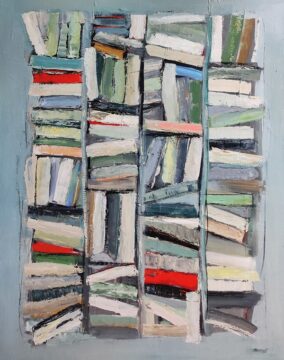 To wake up one morning and learn that one’s job might soon be “disrupted,” or outright eliminated, by the emergence of an overhyped new technology that excites rich people is – let’s start here – a pretty common experience by now. It puts you in good company. A club that includes linotype-machine operators, taxi drivers, some farm workers, and the original Luddites, but somehow never includes capital owners or their profligate children: this is, all things considered, not a bad club, and one would wish to join it but for the sparsity of the accommodations. But if the prediction of redundancy comes true, this solidarity in misfortune will probably prove cold comfort.
Say, for example, you’re a college English teacher, and a significant portion of the nation’s venture capitalists seems convinced that a machine can now do – or will soon do, very soon, just a few more gigatons of water from now – what you are supposedly training your students to do. Say as well that these same machines, supposedly, are only one or two more clicks of Progress’s wheel away from being able to judge and grade the work thus generated. Clearly, you and your thousands of colleagues are now free to seek exciting new opportunities in our ever-moving economy – that is, to reap the punishment that you deserve for having cared about writing and reading in the first place. You ought to have learned to code, a skill that is itself also supposedly on its way to being rendered redundant by this new technology. Funny how that works out.
More here.
Enjoying the content on 3QD? Help keep us going by donating now.
 W
W Philosophers tend to tolerate a high degree of personal strangeness in one another. More specifically, they tend not to worry – at least explicitly or on the record – about whether the weird philosophical beliefs and the weird non-philosophical actions of a colleague might have a common source. The methodological norm rather is that ideas must stand or fall on their intrinsic merits; apart from anything else, this is probably good politics. Making the obvious psychological peculiarities of an author too operative a consideration within academic life might risk implicating an impractically large number of people. (And in that case, one probably wouldn’t trust most of them to apply the relevant criteria accurately anyway.) But this does make philosophy different from other areas of life, where we readily make informative connections, in both directions, between the strangeness of the person and the strangeness of his beliefs, often with a view to discrediting one or the other.
 Philosopher Peter Godfrey-Smith has devoted his career to examining how animal minds evolved. He blends formidable analytical skills with a deep curiosity about the natural world, mostly experienced at first hand in his native Australia. While writing his latest book, Living on Earth, he spent many hours scrutinizing noisy parrots and cockatoos in his back garden, weeks observing gobies building underwater towers made of shells and seaweed and years closely watching
  The political spasm that gripped South Korea last night has been widely seen as a portent of doom, but it need not be. Taking a page from
  T
T AI has become uncannily good at aping human conversational capabilities. New research suggests its powers of mimicry go a lot further, making it possible to replicate specific people’s personalities. Humans are complicated. Our beliefs, character traits, and the way we approach decisions are products of both nature and nurture, built up over decades and shaped by our distinctive life experiences.
 V
V
 The Question of Palestine was published in 1979, one year after Said’s pivotal book Orientalism and two before Covering Islam—a trilogy that helped found post-colonial theory and develop a framework to critique the West’s stereotypical and often racist lens of the Arab and Muslim world. The Question of Palestine was particularly noteworthy for being the first English-language book to narrate the Palestinian experience and deconstruct Zionism as a settler-colonial project.
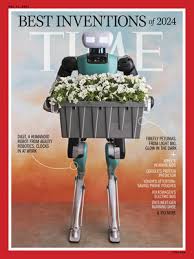 Toi Labs TrueLoo
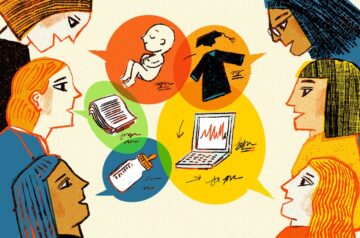 Cecilia hadn’t expected the video to resonate so deeply. She often watched online talks about her field of research. But this one didn’t just present pioneering scientific ideas; it put into words the uncomfortable reality she had been grappling with. She was nearly 30 years old and single, and she had recently interviewed for a postdoc position that would require her to uproot her life yet again. She couldn’t ignore a growing question: whether and how she would be able to have children. The talk, by anthropologist Marcia Inhorn, explored the silent struggles many highly educated women face in balancing their careers not just with motherhood, but with what comes before: relationships and planning for a family. It was an “aha!” moment. Cecilia sent it to her friend and fellow academic Erika, who responded immediately: “Why haven’t we talked about this before?”
 While behind the wheel of a car, a significant level of distraction can accompany one action in particular: phone usage. For some, this can result in severe driving impairment. It represents a serious danger hidden within the connective rhythms of our everyday lives.