

Scott Alexander at Astral Codex Ten:
Last month, I challenged 11,000 people to classify fifty pictures as either human art or AI-generated images.
I originally planned five human and five AI pictures in each of four styles: Renaissance, 19th Century, Abstract/Modern, and Digital, for a total of forty. After receiving many exceptionally good submissions from local AI artists, I fudged a little and made it fifty. The final set included paintings by Domenichino, Gauguin, Basquiat, and others, plus a host of digital artists and AI hobbyists.
1: Most People Had A Hard Time Identifying AI Art
Since there were two choices (human or AI), blind chance would produce a score of 50%, and perfect skill a score of 100%.
The median score on the test was 60%, only a little above chance. The mean was 60.6%. Participants said the task was harder than expected (median difficulty 4 on a 1-5 scale).
How meaningful is this? I tried to make the test as fair as possible by including only the best works from each category; on the human side, that meant taking prestigious works that had survived the test of time; on the AI side, it meant tossing the many submissions that had garbled text, misshapen hands, or some similar deformity. But this makes it unrepresentative of a world where many AI images will have these errors.
More here.
Enjoying the content on 3QD? Help keep us going by donating now.
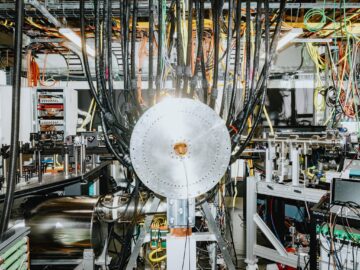 Big-name investors including Bill Gates, Jeff Bezos, Vinod Khosla and Sam Altman have staked hundreds of millions of dollars on this, fusion’s potential
  I
I
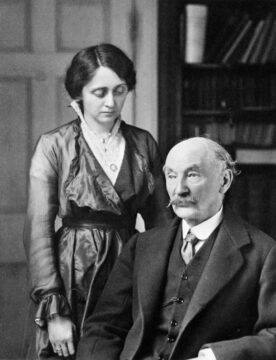 The Monty Python sketch of Thomas Hardy writing “The Return of the Native” takes place inside a packed soccer stadium with an announcer providing play-by-play analysis of the author’s glacial writing process. In hushed tones, the announcer says that Hardy has started to write, but wait, “oh no, it’s a doodle … a piece of meaningless scribble.” At last, Hardy writes “the,” but then crosses it out. In the time it takes to play an entire soccer match, he barely produces a sentence. In fact, Hardy was a speedy writer. He created “The Mayor of Casterbridge” so quickly that if he were outside, he “would scribble on large dead leaves or pieces of stone or slate that came to hand,” Paula Byrne writes in a new biography, “
 C
C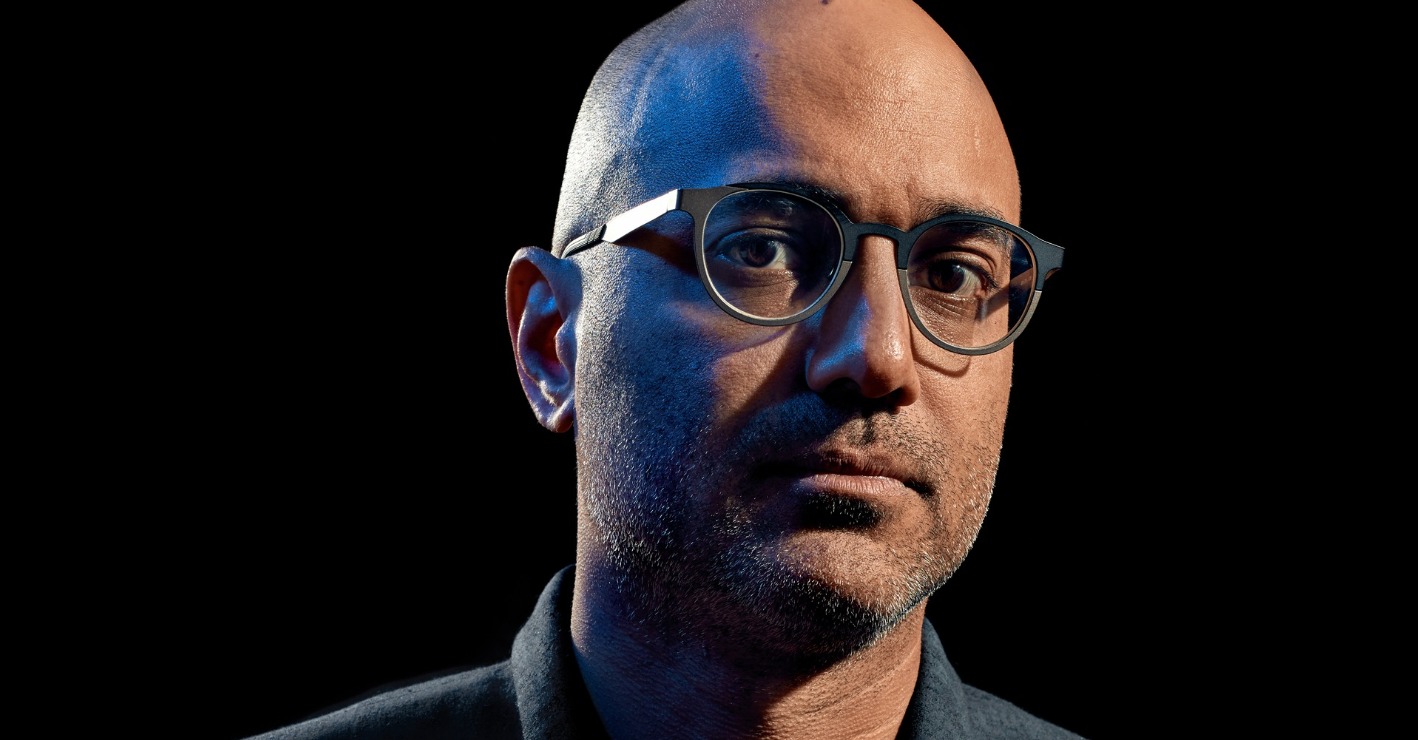 McNeal, the new play by Ayad Akhtar, who won the Pulitzer Prize for Disgraced, focuses on an egocentric, self-destructive white male novelist, played by Robert Downey, Jr. The fictional Jacob McNeal—think Mailer or Roth at their worst—wins the Nobel Prize early in the play, but he’s guarding a secret: his latest novel was composed with an uncredited coauthor, an AI chatbot. The production, which considers the controversial notion that artificial intelligence might be a useful creative tool, closes on November 24 after a nearly sold-out run at Lincoln Center. Despite a largely negative critical reception, the show has touched a nerve, which in my view is one of the jobs of a serious writer.
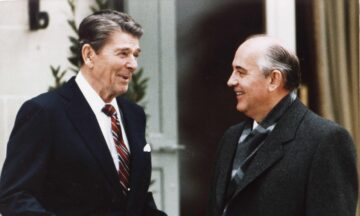 Decades of agonisingly difficult negotiations built up a dense structure of treaties, agreements and even a few unilateral moves dealing with offensive and defensive nuclear weapons of short, medium and long range, with provisions for testing, inspections and an overflight regime for mutual observation. Often the two sides would only give up systems they no longer wanted. Frequently the language of the agreements was the basis of future friction. On the US side, the political price of securing Senate ratification of treaties could be extremely high.
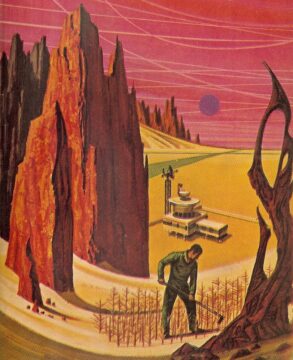 Dick’s use of the name New Israel in Martian Time-Slip is pretty stock. Dick traveled beyond North America only once, to a conference in Metz, France, where he delivered a legendary speech titled “If You Find This World Bad, You Should See Some of the Others”—baffling his French fans by opening an early window into the mystical, visionary search that would preoccupy him for the remainder of his life. Then he went home to Orange County, California. His impression of Israel may essentially be derived from Leon Uris’s Exodus, or from some other heroic fifties representation; he principally employs the Israelis in Martian Time-Slip as an anonymous and implacable counterpoint to the abject ineptitude of the U.S. colonists—to highlight the haplessness of their attempts to farm and irrigate the harsh Martian desertscape. As in the excerpt above, the Israelis present a mirror for shame. This matches, of course, a typical midcentury U.S. liberal’s reaction formation, after the discovery of the German and Polish death camps: the Jew as shame trigger, with the survivors idealized for their resilience and strength.
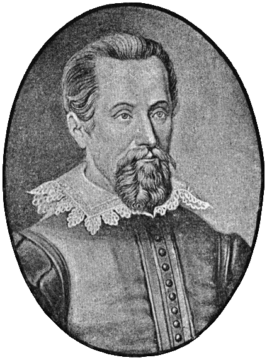 The year is 1617. His name is Johannes Kepler (December 27, 1571–November 15, 1630) — perhaps the unluckiest man in the world, perhaps the greatest scientist who ever lived. He inhabits a world in which God is mightier than nature, the Devil realer and more omnipresent than gravity. All around him, people believe that the sun revolves around the Earth every twenty-four hours, set into perfect circular motion by an omnipotent creator; the few who dare support the tendentious idea that the Earth rotates around its axis while revolving around the sun believe that it moves along a perfectly circular orbit. Kepler would disprove both beliefs, coin the word orbit, and quarry the marble out of which classical physics would be sculpted. He would be the first astronomer to develop a scientific method of predicting eclipses and the first to link mathematical astronomy to material reality — the first astrophysicist — by demonstrating that physical forces move the heavenly bodies in calculable ellipses. All of this he would accomplish while drawing horoscopes, espousing the spontaneous creation of new animal species rising from bogs and oozing from tree bark, and believing the Earth itself to be an ensouled body that has digestion, that suffers illness, that inhales and exhales like a living organism.
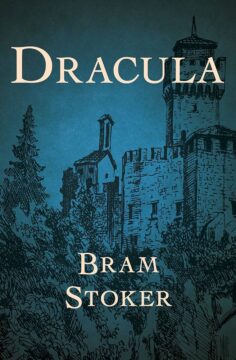 The vampire as it’s developed over the past century of popular culture, from Dracula onward, is different from the folkloric eastern European creature—a gloaming animal of the night, subaltern to humanity—though elements have obviously been preserved. Stoker’s titular count is arguably as super-human as he is monstrous. “I am Dracula; and I bid you welcome,” the Transylvanian count tells Jonathan Harker, the English solicitor organizing the sale of London real estate to the undead aristocrat. “Come in, the night air is chill, and you must need to eat and rest.” Where the skeletons in that Bulgarian basement were of people understood (fairly or not) by their neighbors as feral, rabid, and wild, Dracula is urbane and sophisticated, cosmopolitan and sexy.
 The Sun rises every day. Water boils at 100°C. Apples fall to the ground. We live in a world in which objects behave the same given the same circumstances. We can imagine living in a different world: a world that constantly changes, a world in which the Sun does not rise every day, a world in which water one day boils at 50°C, and at 120°C another day, a world in which apples sometimes fall from trees and sometimes rise into the sky. Only because we live in a world that displays stable regularities are we able to reliably shape our environment and plan our lives.
 Dr. Adam Rodman, an expert in internal medicine at Beth Israel Deaconess Medical Center in Boston, confidently expected that chatbots built to use artificial intelligence would help doctors diagnose illnesses.
 Poems written by AI are preferred to those written by humans, according to a new study. The non-expert poetry readers who participated were more likely to judge AI-generated poems as being written by humans than those actually written by humans. The