
Category: Recommended Reading
The Education of Abraham Cahan (and Seth Lipsky)
Ezra Glinter in Forward:

A few days later, Abraham Cahan, then at the height of his power as editor of the Yiddish-language Forverts, editorialized on the massacre. Although his words stood in contrast to those of the Communist newspaper Frayhayt, which considered the attack a revolt against British and Zionist imperialism, they expressed a nuanced point of view. The underlying cause of the massacre, he wrote, was a universal failing — a “dark chauvinism” that was at “the root of all wars, of all misfortunes.” But he also compared the tragedy to a “Third Destruction,” invoking the sacking of the temples in Jerusalem and placing the event in a history of specifically Jewish suffering. National identity could be the cause of conflict, he realized, but also its target.
Cahan had not always been so sensitive to Jewish trauma; 48 years earlier, when pogroms broke out in Ukraine after the assassination of Czar Alexander II, he was downright indifferent. “Even though the pogrom brought dread into the heart of every Jew, I must admit that the members of my group were not disturbed by it,” he later wrote in his autobiography,“The Education of Abraham Cahan.” “We regarded ourselves as human beings, not as Jews. There was only one remedy for the world’s ills, and that was socialism.”
More here.
Thursday, October 17, 2013
Bleak House
Charles Simic in the New York Review of Books:

Anyone who averts his eyes from the hopeless lives many of our fellow citizens lead and tells himself and others that these men and women only have themselves to blame, is either a fool or a soulless bastard.
More here.
Key to Ants’ Evolution May Have Started With a Wasp
Carl Zimmer in the New York Times:
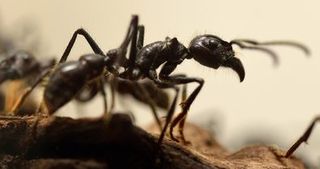
It’s thus no surprise that many biologists — Dr. Ward among them — have long wondered how ants evolved. In the journal Current Biology, Dr. Ward and colleagues at the University of California, Davis, and the American Museum of Natural History, have now published an evolutionary tree of ants and their closest relatives that may provide the answer.
The authors conclude that the ancestors of ants were wasps. Not just any wasps, though: the closest relatives of ants turn out to include mud dauber wasps, which make pipe-shaped nests on the walls of buildings.
More here.
Amazing Story: Cornfield Bomber
The Larkin Amis friendship
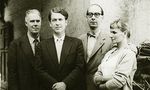
The best recipe for a successful literary friendship, as perhaps for any other sort, is a solid base of common ingredients spiced with touches of absolute difference: English literature’s most celebrated double acts – Wordsworth and Coleridge, Auden and Isherwood, Amis and Larkin – are all like that. Each pair has a background of broadly compatible class and education, shared background interests and cultural tastes; yet as writers they diverge in ways that both sustain and endanger their relationships. Kingsley Amis had an explicit, if ironic, sense of the footsteps in which he and Philip Larkin were following: “Well with you as the Auden and me as the Isherwood de nos jours, ‘our society’ is not doing so bad”, he told his friend in October 1957.
That date – on the face of things quite a late one for a pair who had met at Oxford sixteen years earlier – is in itself significant. Until the mid-1950s, it hadn’t been at all certain who was to be the Auden and who the Isherwood. That became clear not so much with the publication as with the critical reception of Amis’s Lucky Jim in 1954 and Larkin’s The Less Deceived in 1955.
more here.
The American Way of Death
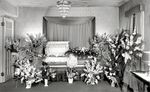
When The American Way of Death was published in 1963, a typical funeral in the United States involved thorough embalming, a spackling of cosmetics, and hundreds of dollars of flowers heaped upon an open casket. The whole affair was likely to cost over a thousand dollars, at a time when the median annual income in the country was just $5,600. A funeral was often one of the largest single expenditures a family made, after a house and car, yet morticians justified the hefty price tag by claiming the ceremony offered almost magical curative powers. They placed particularly great stock in providing the bereaved with a reassuring last image of the deceased, known in the industry as a “memory picture.” In the trade literature of the time, this image was seen as a balm to grief, a means of facing up to the finality of death without countenancing the disquieting signs of decomposition. The cost—Americans spent $1.6 billion on funerals in 1960—was also said to be a natural result of consumer desires, particularly the much trumpeted postwar American desire to have the best of everything.
more here.
In Antarctica, maps are a little different
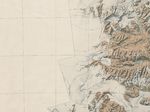
Captain Scott discovered the 34-mile Taylor Glacier on his first expedition, the one that sailed south in 1901. Named after Griffith Taylor, one of Cook’s geologists, the glacier lies at the head of an arid valley created by the advances and retreats of glaciers through the Transantarctic Mountains. These dry valleys, partially free of ice for about 4m years, are dotted with saltwater basins—you can see some of them on the map—and they form one of the most extreme deserts in the world. NASA tested robotic probes there before dispatching them on interplanetary missions. One of the engineers told me, “This is as close to Mars as we can get.”
My crew at Lake Bonney, funded by the National Science Foundation, were melting holes in the 12-foot lid of ice that covered the lake and lowering sediment traps to the bottom. It was complex, fraught and expensive work, and their shifts often extended to 30 hours straight. Down south, it’s hard to keep an ice hole open for three months. The team waged a constant battle against the Big Freeze. Over supper (usually pasta with freeze-dried vegetable sauce), the guys—yup, all guys—talked about the organic carbon sloshing around at the bottom of the lake and the ribboned crystals trapped in the ice cover, and asked each other questions about the microbial life going about its business in the soupy, nitrate-rich water.
more here.
Thursday Poem
World Greater Than We Make
—ruin: total destruction or disintegration
rendering something formless, useless, or
valueless. -American Heritage Dictionary
1.
The ruin I'm thinking of spilled down the entire hillside,
blocks of stone like dice shaken in the cup of the sky.
A place that invites whispering or song. Darkly inviting
as the slaughterhouse collapsed beside a lonely road.
Crazed china, the lightning-bolt symmetry of cracks.
A ruin is the bones of a thing slowly exposed by time,
wind, water. The fin of an old Caddy rusting in a circle
of trees on a high ridge. The ribs of a boat
rocking on sand. Colors only waiting can paint.
All gashes are old gashes. No blood.
2.
I wander Manaus, city of perpetual ruin,
where the walls grew new layers all by themselves,
where a man sits writing a novel neither of us knows
I will translate eight years later. I am alone
and inexplicably happy. I lean back off the curb
into traffic to fill my eyes with the grand,
decayed facade, spindly papaya trees
at attention in second story windows.
I bend to the gutter for a chip of tile, twirl it
under my chin like a buttercup: it says
I love this accident.
3.
The dictionary is dead (and it was a good one): the ruin
is spilling still. The farthest thing from worthless,
it is a sadness made beautiful over time—or is it beauty
mad sad? A silent clash of meanings we can
picnic in. We say a lot about ourselves
with the buildings we build, but their ruins speak
with other than human voices. See how ruins gladly
join earth and sky, how the natural world bends down, creeps in,
to meet them. More fools we, to preserve or construct
the stone and wood we borrow, instead of simply watching
as gorgeous chaos slowly gathers back its own.
.
by Ellen Doré Watson
from We Live in Bodies
Alice James Books, 1997
Kanye West Knows you think he sounded nuts on kimmel
Cord Jefferson in Gawker on plausibly deniable racism:

Read more here.
was donna tratt’s new novel worth the wait?
Kamila Shamsie in The Guardian:
It is dangerous to write openings as compelling as Donna Tartt's. In The Secret History, the one-page prologue gives us a murder and a narrator who has helped to commit it. The Little Friend starts with the death of a child who, by page 15, is found hanging by a piece of rope from a tree branch, his red hair “the only thing about him that was the right colour any more”. And now, in The Goldfinch, Tartt has a 50‑page two-part opening. In the first section, the narrator, Theo Decker, is holed up in an Amsterdam hotel, looking at newspapers written in Dutch, which he can't understand; he is searching for his name in articles illustrated with pictures of police cars and crime scene tapes. Before any of this is explained, the story moves back 14 years to the day Theo's mother dies, when he is on the cusp of adolescence. Her death takes place in New York's Metropolitan Museum, as a consequence of an exploding bomb – mother and son are in separate rooms when the bomb blast occurs, and the descriptions of Theo regaining consciousness in the wreckage, and trying to find his way out of the ripped-apart museum before returning home, expecting to find his mother there, are written in astonishingly gripping prose. This is, of course, where the danger comes in: if, at the end of the kind of set piece to which the word “climactic” should emphatically apply, you still have 700 pages to go, aren't you setting your readers up for disappointment? Astonishingly, the answer is no.
…Plot and character and fine prose can take you far – but a novel this good makes you want to go even further. The last few pages of the novel take all the serious, big, complicated ideas beneath the surface and hold them up to the light. Not for Tartt the kind of clever riffs, halfway between standup comedy and op-ed columns, which are too commonly found in contemporary fiction. Instead, when plot comes to an end, she leads us to a place just beyond it – a place of meaning, or, as she refers to it, “a rainbow edge … where all art exists, and all magic. And … all love.”
More here.
Of Mark Twain and Hopping Frogs
From Science:
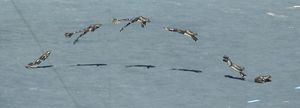
…In 2009, Henry Astley, then a Ph.D. student at Brown University, and colleagues brought a video camera in hopes of learning more about how far frogs can jump. The frogs perform their hops on the floor of a stadium, one at a time, through days of qualifying rounds. “Fortunately, it turns out we were able to measure the frog jumps without getting in anyone's way, by videotaping the arena from a seat in the stands,” Astley says. During the contest, an announcer says the name of each frog. “Quite a few Kermits,” Astley says. “Mr. Slimy, things like that.” Then it's time for the “frog jockey” to motivate his or her amphibian. “They literally will lunge their whole body after the frogs, imitating a predator—reaching for it and yelling and everything, trying to scare it.” (The local agricultural association has a frog welfare policy.) When the researchers got back to the lab with more than 20 hours of high-definition video, they measured the length of each jump. Fifty-eight percent of the 3124 jumps they recorded were longer than 1.295 meters, the longest jump reported in the scientific literature. One athletic bullfrog covered 2.2 meters in a single bound. Unsurprisingly, frogs jumped by professionals—those committed entrants who catch their own frogs every year and screen them for jumping ability ahead of time—managed longer jumps.
More here.
Wednesday, October 16, 2013
Italo Calvino: Letters 1941–1985
Leland de la Durantaye in the Boston Review:

Italo Calvino’s most famous novel, If on a Winter’s Night a Traveler (1979), includes just such a formula in its title but does not begin with it. Its first lines are: “You’re beginning to read Italo Calvino’s new novel If on a Winter’s Night a Traveler. Relax. Take it in. Dispel every other thought. Let the world around you fade.” A few pages later the voice addressing you walks you back through how you came to find yourself in this position: “You went to the bookstore and bought it. You did the right thing.” This voice then turns back the clock still earlier, telling you of your past experience with books, of the other books in the bookstore and the many categories into which they fall, “Books You Haven’t Read, which were frowning at you from the tables and shelves, trying to intimidate you,” and which are not to get you down because
you know you must never allow yourself to be awed, that among them there extend for acres and acres the Books You Needn’t Read, the Books Made For Purposes Other Than Reading, Books Read Even Before You Open Them Since They Belong To The Category Of Books Read Before Being Written.
This voice soon returns you to your home—or, at least, a home—sees to it that you are—or a character with whom you are to identify is—comfortable and ready to begin doing what you have been doing: reading. “You prepare to recognize the unmistakable tone of the author. No. You don’t recognize it at all.” After a moment of uncertainty, you are told that “you prefer it this way, encountering something and not yet quite knowing what it is.”
More here.
Iraq war claimed half a million lives, study finds
Joseph Brownstein in Al Jazeera:
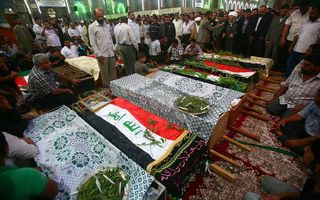
The study, — a collaboration of researchers in the U.S., Canada and Iraq appearing in the journal PLoS Medicine — included a survey of 2,000 Iraqi households in 100 geographic regions in Iraq. Researchers used two surveys, one involving the household and another asking residents about their siblings, in an attempt to demonstrate the accuracy of the data they were collecting. Using data from these surveys, researchers estimated 405,000 deaths, with another 55,800 projected deaths from the extensive migration in and emigration from Iraq occurring as a result of the war.
The researchers estimated that 60 percent of the deaths were violent, with the remaining 40 percent occurring because of the health-infrastructure issues that arose as a result of the invasion — a point they emphasized in discussing their research, since the figure is higher than those found in previous studies.
More here.
Aristotle at the Döner Kebap Stand
Justin E. H. Smith in his own blog:

It is with respect to animals, in particular, that these folk commitments might be thought at once to carry with them significant moral implications. Ordinarily, animals are taken as individual beings par excellence, and this at least since Aristotle said, in the Categories, that what he means by 'substance' is really just 'this particular horse or man' (to paraphrase).
Animals lose their substantial unity in slaughter and preparation, yet even there they frequently maintain their conceptual unity: for Thanksgiving, e.g., a family has a turkey, and that is as much a single, individual entity as the living, strutting tom that preceded it. The further we move down the scale of ritual importance, it seems, the more likely the creature, following its slaughter, is going to be treated as a mass, or, ironically, as a 'substance' not in the Aristotelian sense but in the decidedly modern sense (of which the dreaded 'pink slime' is arguably a limit case, much like prime matter in Aristotle's scheme).
More here.
Jellyfish are taking over the seas, and it might be too late to stop them
Gwynn Guilford in Quartz:
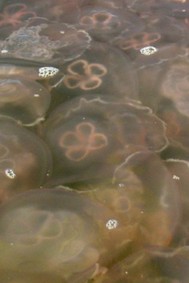
En masse, jellyfish are a bigger problem. “The [moon jellyfish swarm] phenomenon…occurs at regular intervals on Sweden’s three nuclear power plants,” says Torbjörn Larsson, a spokesperson for E.ON, which owns Oskarshamn. Larsson wouldn’t say how much revenue the shutdown cost his company, but noted that jellyfish also caused a shutdown in 2005.
Coastal areas around the world have struggled with similar jellyfish blooms, as these population explosions are known. These blooms are increasing in intensity, frequency, or duration, says Lucas Brotz, a jellyfish expert at the University of British Columbia.
Brotz’s research of 45 major marine ecosystems shows that 62% saw an uptick in blooms (pdf) since 1950. In those areas, surging jellyfish numbers have caused power plant outages, destroyed fisheries and cluttered the beaches of holiday destinations. (Scientists can’t be certain that blooms are rising because historical data are too few.)
More here. [Thanks to Tunku Varadarajan.]
Dispatches from India 2: On Hiring Domestic Help in India
Usha Alexander in Shunya's Notes:
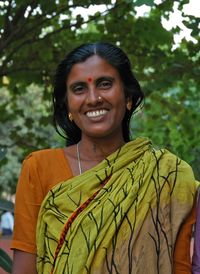
Days later, another neighbor introduced us to her cleaning woman, newly arrived from West Bengal. ‘Does she speak Hindi?’ I asked. ‘No, she doesn’t speak Hindi or English or any language!’ the neighbor blurted with vague, exasperated disgust, while the short Bangla woman stood smiling shyly behind her; she was aware we were speaking of her but not of what we said.
I had heard such comments before in other middle-class Indian living rooms, when the workers whom we invite daily into our homes were cast by their employers as a mysterious band of them, their collective virtues and vices debated or condemned: they steal; they are lazy and don’t work; they are careless and clumsy, prone to breaking things; they’ve become ‘too smart’ and know how to play you. When our maid returned to work after being out just 3 or 4 days due to a slipped disk in her back, my neighbor remarked that ‘they recover quickly’ from illness and injury.
More here.
Sean Carroll: Is Time Real?
Adam Smith on the Death of David Hume
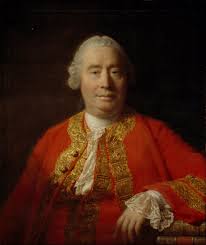
From James Fieser's ([email protected]) Hume Archives, over at Brad DeLong's blog:
Dear Sir,
It is with a real, though a very melancholy, pleasure that l sit down to give you some account of the behaviour of our late excellent friend, Mr. Hume, during his last illness.
Though, in his own judgment, his disease was mortal and incurable, yet he allowed himself to be prevailed upon, by the entreaty of his friends, to try what might be the effects of a long journey. A few days before he set out, he wrote that account of his own life, which, together with his other papers, he has left to your care. My account, therefore, shall begin where his ends.
He set out for London towards the end of April, and at Morpeth met with Mr. John Home and myself, who had both come down from London on purpose to see him, expecting to have found him at Edinburgh. Mr. Home returned with him, and attended him during the whole of his stay in England, with that care and attention which might be expected from a temper so perfectly friendly and affectionate. As I had written to my mother that she might expect me in Scotland, I was under the necessity of continuing my journey.
More here.
The Power of Patience
Jennifer L. Roberts in Harvard Magazine:
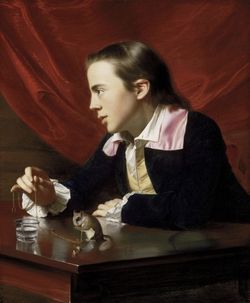
I want to focus today on the slow end of this tempo spectrum, on creating opportunities for students to engage in deceleration, patience, and immersive attention. I would argue that these are the kind of practices that now most need to be actively engineered by faculty, because they simply are no longer available “in nature,” as it were. Every external pressure, social and technological, is pushing students in the other direction, toward immediacy, rapidity, and spontaneity—and against this other kind of opportunity. I want to give them the permission and the structures to slow down.
More here.