As Humans Change Landscape, Brains of Some Animals Change, Too

22zimmer-span-articleLarge

Carl Zimmer in the NYT:

Evolutionary biologists have come to recognize humans as a tremendous evolutionary force. In hospitals, we drive the evolution of resistant bacteria by giving patients antibiotics. In the oceans, we drive the evolution of small-bodied fish by catching the big ones.

In a new study, a University of Minnesota biologist, Emilie C. Snell-Rood, offers evidence suggesting we may be driving evolution in a more surprising way. As we alter the places where animals live, we may be fueling the evolution of bigger brains.

Dr. Snell-Rood bases her conclusion on a collection of mammal skulls kept at the Bell Museum of Natural History at the University of Minnesota. Dr. Snell-Rood picked out 10 species to study, including mice, shrews, bats and gophers. She selected dozens of individual skulls that were collected as far back as a century ago. An undergraduate student named Naomi Wick measured the dimensions of the skulls, making it possible to estimate the size of their brains.

Two important results emerged from their research. In two species — the white-footed mouse and the meadow vole — the brains of animals from cities or suburbs were about 6 percent bigger than the brains of animals collected from farms or other rural areas. Dr. Snell-Rood concludes that when these species moved to cities and towns, their brains became significantly bigger.
Oppenheimer: The Shape of Genius

Dyson_1-081513_jpg_470x755_q85

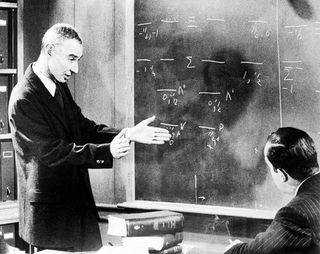
Freeman Dyson reviews Ray Monk's in Robert Oppenheimer: A Life Inside the Center in the NYRB:

Why another book about Robert Oppenheimer? Many books have been written and widely read, ranging from the impressionistic Lawrence and Oppenheimer of Nuel Pharr Davis to the scholarly American Prometheus of Kai Bird and Martin Sherwin. Ray Monk says he wrote his book because the others gave too much weight to Oppenheimer’s politics and too little weight to his science. Monk restores the balance by describing in detail the activities that occupied most of Oppenheimer’s life: learning and exploring and teaching science.

The subtitle, “A Life Inside the Center,” calls attention to a rarer skill in which Oppenheimer excelled. He had a unique ability to put himself at the places and times at which important things were happening. Four times in his life, he was at the center of important events. In 1926 he was at Göttingen, where his teacher Max Born was one of the leaders of the quantum revolution that transformed our view of the subatomic world. In 1929 he was at Berkeley, where his friend Ernest Lawrence was building the first cyclotron, and with Lawrence he created in Berkeley an American school of sub-atomic physics that took the leadership away from Europe. In 1943 he was at Los Alamos building the first nuclear weapons. In 1947 he was in Washington as chairman of the General Advisory Committee of the United States Atomic Energy Commission, giving advice to political and military leaders at the highest levels of government. He was driven by an irresistible ambition to play a leading part in historic events. In each case, when he was present at the center of action, he rose to the occasion and took charge of the situation with unexpected competence.

It is often helpful to have several books covering the same territory. Since different writers have different viewpoints, each book will do better in some areas and worse in others. The most valuable contribution of Monk’s book is to give a detailed picture of two groups of people who played an important role in Oppenheimer’s life: the tightly knit society of wealthy German New York Jews to which his parents belonged, and the small army of security officers who monitored his social and political activities when he was engaged in secret work in Berkeley and Los Alamos.

more on fat asses

TLS_KING_364429k

Changes during the early nineteenth century revolutionized responses to fat. A new focus on statistics brought with it the concept of weight norms, and advances in chemistry suggested that sugar intake and fat were closely related. Fat was now considered unburned fuel, whereas before it was thought of in very different terms, related to an early understanding of the body as rooted in liquids and humours. And as technology slowly moved into the domestic sphere, people weighed themselves more. One consequence: “There is an intensified will to thinness in the second half of the nineteenth century”, and it is a consequence that falls differentially on women. Indeed, an enduring response to fatness, a response that stands impervious to change with the century, society, or culture is the double standard “between”, Vigarello explains, “the male case where relatively big sizes are tolerated” and “the female case where thinness is obligatory”. The gendered aspect of fatness, a phenomenon which results in “two adipose cultures”, is a star point in Vigarello’s book; his discussion of the “disparities of alimentation” at work within France’s class structure is another. By 1920, Georges Vigarello tells us, obesity was viewed in much the same terms as it is today: “The fat person is both an aesthetic threat and a health risk”. As he readily admits, what is new is what is emphasized by Lustig and Moss: the runaway nature of it, the global nature of the problem.

more from Barbara J. King at the TLS here.

make it new?

Guernica-ezra-pound-e1376426503364

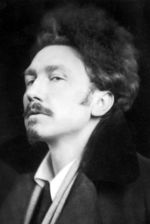
It should not be necessary to argue at any length that the slogan “Make It New” is the most durably useful of all modernist expressions of the value of novelty. In certain accounts, such as Gay’s Modernism: The Lure of Heresy, these three words are assumed to sum up most of what modernism stands for: “In short, modernists considered Ezra Pound’s famous injunction, ‘Make It New!,’ a professional, almost a sacred obligation.” Scholars as eminent and yet as utterly different from one another as Richard Rorty, Frank Lentricchia, Jackson Lears, Fredric Jameson, and David Damrosch have used this phrase to make various points about modern life, art, or literature. Some of these citations are vague and atmospheric, even anonymous, as the slogan is often used without specific reference to Pound. But this is perhaps an additional tribute to his influence, as the slogan has become so ubiquitous as to have lost its trademark status, like Kleenex or the Xerox copy. The actual genealogy of the phrase “Make It New” has been established by Pound scholars and is well known to those among them who specialize in Pound’s relation to China, but it is so often misdated and for that matter misquoted (tagged with a spurious exclamation mark) that its genesis is worth recounting in some detail. The crucial fact to begin with is that the phrase is not originally Pound’s at all.

more from Michael North at Guernica here.

mod v trad

Mod-shoes-tassel-loafers-80s-mods

In a lovely 1963 piece on Miles Davis, Kenneth Tynan quoted Cocteau to illuminate the art of his ‘discreet, elliptical’ subject: Davis was one of those 20th-century artists who had found ‘a simple way of saying very complicated things’. Jump to 1966 and the meatier, beatier sound of a UK Top 20 hit, the Who’s ‘Substitute’, a vexed, stuttering anti-manifesto, with its self-accusatory boast: ‘The simple things you see are all complicated!’ You couldn’t find two more different musical cries: Davis’s liquid tone is hurt, steely, recessive, where Townshend’s is upfront, impatient, hectoring. One arrow points in, the other out. But somewhere in the journey from one to the other, from cool, cruel blue to Townshend’s three-minute psychodrama – ‘I look all white/but my dad was black’ – was the brief, paradoxical flare of Mod: the story of how a small cabal of British jazz obsessives conducting a besotted affair with the style arcana of Europe and America somehow became an army of scooter-borne rock fans, draped in the ambiguous insignia of RAF targets and Union Jacks. What Richard Weight calls the ‘very British style’ of Mod found its initial foothold in late 1950s Soho with the arrival of the jazz ‘modernists’, who defined themselves in strict opposition to the reigning gatekeepers of Trad.

more from Ian Penman at the LRB here.

Thursday Poem

Doing Without

…………… it's an interesting
custom, involving such in-
visible items as the food
that's not on the table, the clothes
that are not on the back
the radio whose music
is silence. Doing without
is a great protector of reputations
since all places one cannot go
are fabulous, and only the rare and
enlightened plowman in his field
or on his mountain does not overrate
what he does not or cannot have.
Saluting through their windows
of cathedral glass those restaurants
we must not enter (unless like
burglars we become subject to
arrest) we greet with our twinkling
eyes the faces of others who do
without, the lady with the
fishing pole, and the man who looks
amused to have discovered on a walk
another piece of firewood.

by David Ray
from Gathering Firewood, 1974
Wesleyan University Press, Middletown, CT

Self-Fashioning in Society and Solitude

From Harvard Magazine:

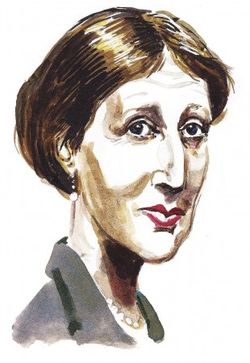
WoolfSelf-fashioning is part of the age-old purpose of higher education, particularly in the liberal arts and sciences. The key point is to be aware, sometimes, that this is happening—to deliberately engage in fashioning—not just let events and experiences sweep you along without your conscious participation. Richard Brodhead expressed this well in his speech to the entering class as dean of Yale College in 1995: “You’ve come to one of the great fresh starts in your life, one of the few chances your life will offer to step away from the person you’ve been taken for and decide anew what you would like to become.” In this mood, students typically see college as a place where a new stage of life’s journey begins. “Incipit Vita Nova” was one motto of my alma mater, Wellesley, and it surely seemed appropriate at the time.

You now have this incredible opportunity to shape who you are as a person, what you are like, and what you seek for the future. You have both the time and the materials to do this. You may think you’ve never been busier in your life, and that’s probably true; but most of you have “time” in the sense of no other duties that require your attention and energy. Shaping your character is what you are supposed to do with your education; it’s not competing with something else. You won’t have many other periods in your life that will be this way until you retire when, if you are fortunate, you’ll have another chance; but then you will be more set in your ways, and may find it harder to change. You now also have the materials to shape your character and your purposes: the rich context, resources, incomparable opportunities that Harvard provides. And the combination of time and materials is truly an opportunity to treasure. My purpose in this essay is to think with you about how you might use this time and these materials wisely, with full awareness that this experience will be unique for each of you, but also the conviction that since countless other men and women have set out on the same journey, they can offer some perspectives that will be helpful to you now.

More here.

Obesity Kills More Americans Than Previously Thought

From ColumbiaNews:

Obesity is a lot more deadly than previously thought. Across recent decades, obesity accounted for 18 percent of deaths among Black and White Americans between the ages of 40 and 85, according to scientists. This finding challenges the prevailing wisdom among scientists, which puts that portion at around 5%.

…This study is the first to account for differences in age, birth cohort, sex, and race in analyzing Americans’ risk for death from obesity. “Past research in this area lumped together all Americans, but obesity prevalence and its effect on mortality differ substantially based on your race or ethnicity, how old you are, and when you were born,” says Dr. Masters. “It’s important for policy-makers to understand that different groups experience obesity in different ways.” The researchers analyzed 19 waves of the National Health Interview Survey linked to individual mortality records in the National Death Index for the years 1986 to 2006, when the most recent data are available. They focused on ages 40 to 85 in order to exclude accidental deaths, homicides, and congenital conditions that are the leading causes of death for younger people.

…In the groups studied, Black women had the highest risk of dying from obesity or being overweight at 27 percent, followed by White women at 21 percent. Obesity in Black women is nearly twice that of White women. White men fared better at 15%, and the lowest risk for dying from being obese was 5%, for Black men. While White men and Black men have similar rates of obesity, the effect of obesity on mortality is lower in Black men because it is “crowded out” by other risk factors, from high rates of cigarette smoking to challenging socioeconomic conditions. There were insufficient data to make estimates for Asians, Hispanics, and other groups due to the highly stratified nature of the methodology.

More here.

Wednesday, August 21, 2013

How the Light Gets Out

TheSocialBrain

Michael Graziano in Aeon Magazine:

Lately, the problem of consciousness has begun to catch on in neuroscience. How does a brain generate consciousness? In the computer age, it is not hard to imagine how a computing machine might construct, store and spit out the information that ‘I am alive, I am a person, I have memories, the wind is cold, the grass is green,’ and so on. But how does a brain become aware of those propositions? The philosopher David Chalmers has claimed that the first question, how a brain computes information about itself and the surrounding world, is the ‘easy’ problem of consciousness. The second question, how a brain becomes aware of all that computed stuff, is the ‘hard’ problem.

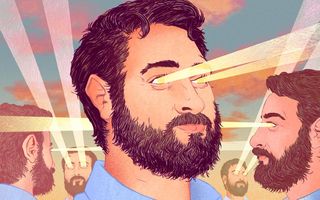
I believe that the easy and the hard problems have gotten switched around. The sheer scale and complexity of the brain’s vast computations makes the easy problem monumentally hard to figure out. How the brain attributes the property of awareness to itself is, by contrast, much easier. If nothing else, it would appear to be a more limited set of computations. In my laboratory at Princeton University, we are working on a specific theory of awareness and its basis in the brain. Our theory explains both the apparent awareness that we can attribute to Kevin and the direct, first-person perspective that we have on our own experience. And the easiest way to introduce it is to travel about half a billion years back in time.

On the Death of Democratic Higher Education

Rick_perlstein_100

Rick Perlstein in The Nation:

Here’s a personal observation with a political thrust: if I were single, I don’t think I could handle dating a graduate student in the humanities or the social sciences. Or someone with a PhD but not a tenure-track job. Or perhaps even a junior professor working for tenure. When I close my eyes and think of friends who’re sweating their way up that greasy poll to find steady work as a professional scholar, the images I come up with are of people at wits’ end, often hardly capable of healthy relationships at all.

I think of one, a recently minted history doctorate, for whom a two-year postdoctoral fellowship fortuitously dropped from the sky—but whom before that happened I regularly had to almost literally talk down from the ledge, so frazzled was she by the thought of piecing together more years with a $15,000 income; or maybe (she didn’t have any teaching lined up for this fall when the postdoc came through) no income at all.

I think of another, a gifted and committed teacher, the single mother of a disabled son, whose employer, a downtown commuter college, began cutting her course load the more experienced she got—the better she got—because it was cheaper to hire teachers who were green. She referred to this as her “poverty summer,” and I think she was near to the ledge too.

There’s another guy, a romance languages doctorate from one of the world’s great research universities, also a gifted and committed teacher. He came from a working-class background—his dad drives a truck for Coca-Cola, and he himself has had jobs like warehouseman and forklift driver. Because of all that, he possessed a psychological profile that made thriving in academia difficult: namely, he is self-possessed, confident and utterly lacking in the other-directed brown-nose-itutde that is the mark of the modern professional managerial class. When he realized that most critical theory wasn’t to his taste, he avoided it—except when he had to parrot it back to his professors to pass his field exams. He also didn’t frantically seek lines on his curriculum vitae, grinding the same research into half a dozen all-but-identical conference papers. He didn’t suck up. Instead, all he did was write a brilliant dissertation with a timely and politically relevant theme, in elegant, readable prose. All the while he feasted upon books about every subject under the sun (an insatiable auto-didact; his love of knowledge burns more brightly than that of just about anyone I’ve ever met, and outshines every professor I know. Simultaneously, a natural-born teacher, he joyfully practiced the arts of citizenship just about every day of the week in the form of long and passionate and generous e-mails to his working-class relatives, most of them Christian conservatives, teaching them about the sins of the national security state, the historical accomplishments of the welfare state, and so on and so forth. In a better world, academia would beat a path to his gentleman’s door. Instead, he knows tenured employment is almost unimaginable. So he’s applied to about a hundred jobs this summer, desperate to keep up with his mortgage—every kind of job, including one as an on-campus building manager. He finally ended up with a year-long contract at a private school teaching science to eighth graders. Though he has no particular interest in and no experience with science, he’s glad to be working at all.

I think about a junior professor I know, also at a great research university—I have to be careful here; academics are petty, and who knows what identifying detail might set off one of (his or her) colleagues on whom the rest of (her or his) professional life depends—who is up for tenure this year.

waking to waking life

Ethanandjulie

When Waking Life, the sixth film by writer-director Richard Linklater, drifted into theaters in late 2001, I, for one, was not prepared. My memory of the first viewing recalls mainly my own impatience — an unusual movie falling victim to mood. Rather than being enveloped by its cloudy, rotoscopic dream world or engaged by the simultaneously floaty and weighty intellectual axis traversed by its nameless protagonist, I felt left out, stuck in the immediate world, with its new threat-level rainbow and clenched posture of dread. Taking another look almost twelve years later, in the wake of writing about Linklater’s Before trilogy and marriage at the movies for the August issue of Harper’s, I had a much different response. Perhaps I’m a little sea-blind, or riding a swell of admiration for a director whose sensibility has only clarified and grown more consistent with time (spoiler alert: I love the Before films). But I sensed throughout Waking Life echoes of the trilogy’s themes: memory, dream life, the nature of reality; the way all three work within and without a person to form his or her (or their) story; and cinema’s essential sympathies and fidelities to that process.

more from Michelle Orange at Harper’s here.

wittgenstein’s help

Ludwig-Wittgenstein-008

My dog-eared copy of Philosophical Investigations still bears the scars of my 19-year-old student self. Among the underlinings and margin notes are the scribbled phone numbers of former girlfriends now, alas, forgotten: Lynda 2814749, Lucy 2854633, Soni 2845590. From the third year of university, this book was a constant companion. Part notepad, part diary, part address book, but wholly and life-changingly inspirational. Wittgenstein’s familiar, intense face peers through a coffee stain from the light green cover, bearing the look of a man ill at ease with the world, like some secular saint whose distance from the rest of humanity is both his gift and his curse. And yet, the photograph is so out of kilter with what I learned from the book itself. For the photograph invites a sense that there is something absolutely extraordinary going on inside Wittgenstein’s head, something unique, something tantalisingly beyond comprehension.

more from Giles Fraser at The Guardian here.

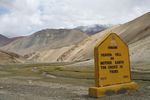
the third pole

1376648001617

I came to the Himalayas not because of a dream of mountains or of animals, but because of a map. I first encountered it in the municipal library I visited as a child. It was a looming sandstone affair, the type beloved of Andrew Carnegie, ornamented and buttressed in a grand Victorian style. You entered directly from the street through varnished wooden doors heavy with brass and glass. There was a grand corridor, a cool mineral smell, and stairs of pale granite scuffed by a century of soles. Thanks to the indulgence of my parents, as well as the egalitarianism of the Scots library system, I was given a ticket to enter the adult library from the age of eight. Once there, I’d often sit down on the scratchy brown carpet tiles and lose myself in the reference atlas. One of the most astonishing features of the atlas was that nearly half of it was index – an infinity of names, in microscopic print, of towns and villages, rivers and mountains, that I could never hope to see. Even at that age I knew it was unlikely I’d ever walk the streets of Télé or Tele, or wake up in Telele or Telén*, though I still held out hopes for New York, Cairo, or Montevideo.

more from Gavin Francis at Granta here.

A Wilderness of Thought: Childhood and the poetic imagination

Richard Lewis in Orion Magazine:

The blur of light
conquers the dark.
I awake dazzled.

—David, age 11

THE WIND WAS SCURRYING across the streets of New York, and the children had just arrived at school. I’d recently begun working with children in poetry and drama, and that morning I had the good fortune of beginning my day in a large open space of a room with a group of ten-year-olds. We gathered ourselves in a small circle and spoke of the rush and impatience of the autumn air that seemed to have brought us there. I asked everyone to take their arms and imitate the wind’s movement, and it was instantly clear that we needed more elbow room—so I suggested we get up and move like the wind. What I thought might turn into bedlam was suddenly a wonderfully expressive dance in which each child’s arms and legs, hands and feet were turning and moving in individual ways, as if they had found something in the wind that they already knew. When it seemed appropriate to slow down, I asked everyone to find a space on the floor and, if the image of the wind was still clear to them, to write down what they had seen and felt.

My meadow is beautiful.
It has doves,
Morning Dew
And my laughter.

—Aisha

Mmm . . . I smell that smell. I feel like
a reindeer ready to rest in a free world,
waiting for my mother to feed me so I can
rest.

—Baholoame

My meadow feels like
The gala of all meadows.
There are roses blooming,
Buttercups growing,
Daisies smiling,
Pansies swaying in the wind,
Black-eyed susans growing . . .

—Dwayne

The slither of light is very beautiful.
As I look through it I can see the world.

—Jennifer

More here.

From Gunpowder to Teeth Whitener: The Science Behind Historic Uses of Urine

From Smithsonian:

Urine_sampleThe saying goes that one person’s waste is another’s treasure. For those scientists who study urine the saying is quite literal–pee is a treasure-trove of scientific potential. It can now be used as a source of electric power. Uine-eating bacteria can create a strong enough current to power a cell phone. Medicines derived from urine can help treat infertility and fight symptoms of menopause. Stem cells harvested from urine have been reprogrammed into neurons and even used to grow human teeth. For modern scientists, the golden liquid can be, well, liquid gold. But a quick look back in history shows that urine has always been important to scientific and industrial advancement, so much so that the ancient Romans not only sold pee collected from public urinals, but those who traded in urine had to pay a tax. So what about pee did preindustrial humans find so valuable? Here are a few examples:

Urine-soaked leather makes it soft: Prior to the ability to synthesize chemicals in the lab, urine was a quick and rich source of urea, a nitrogen-based organic compound. When stored for long periods of time, urea decays into ammonia. Ammonia in water acts as a caustic but weak base. Its high pH breaks down organic material, making urine the perfect substance for ancients to use in softening and tanning animal hides. Soaking animal skins in urine also made it easier for leather workers to remove hair and bits of flesh from the skin.

The cleansing power of pee: If you’ve investigated the ingredients in your household cleaners, you may have noticed a prevalent ingredient: ammonia. As a base, ammonia is a useful cleanser because dirt and grease–which are slightly acidic–get neutralized by the ammonia. Even though early Europeans knew about soap, many launderers preferred to use urine for its ammonia to get tough stains out of cloth. In fact, in ancient Rome, vessels for collecting urine were commonplace on streets–passers-by would relieve themselves into them and when the vats were full their contents were taken to a fullonica (a laundry), diluted with water and poured over dirty clothes. A worker would stand in the tub of urine and stomp on the clothes, similar to modern washing machine’s agitator.

More here.

Wednesday Poem

An Inquiry into the Nature and Causes of the Wealth of Nations
.
Compiling this landmark anthology of poetry in English
about dogs and musical instruments is like swimming through bricks.
To date, I have only, “On the Death of Mrs. McTuesday’s Pug,
Killed by a Falling Piano,” a somewhat obvious choice.
True, an Aeolian harp whispers alluringly
in the background of the anonymous sonnet, “The Huntsman’s
Hound,”
but beyond that — silence.
.
I should resist this degrading donkey-work in favor of my own
writing,
wherein contentment surely lies.
But A. Smith stares smugly from the reverse of the twenty pound
note,
and when my bank manager guffaws,
small particles of saliva stream like a meteor shower
through the infinity of dark space
between his world and mine.
.
by Simon Armitage
from Poetry, May 2013

Pakistan’s most successful artist, Shahzia Sikander, is barely known in her own country

Ayeda Iftikhar in Newsweek:

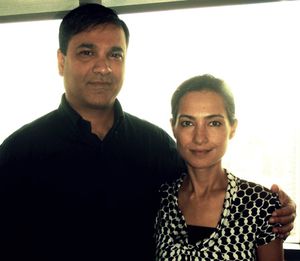
283514_10150281101629425_474467_nHer works are part of the permanent collections of some of the world’s most famous museums—the Museum of Modern Art, the Whitney, the Guggenheim. In 2005, The New York Times called her an “an artist on the verge of shaking things up.” The year before that, Newsweek counted her among the clutch of overachieving South Asians “transforming America’s cultural landscape.” Shahzia Sikander, arguably Pakistan’s most famous living modern artist, has been wowing the international art world with her multidisciplinary works inspired from Mughal-era miniature painting techniques and tropes. She’s been scoring accolades since graduating from the Rhode Island School of Design in 1995. Last year, the U.S. secretary of State awarded her the Inaugural Medal of Art. She’s previously won a MacArthur “Genius Grant.” While Pakistan hasn’t entirely ignored Sikander—she won the President’s National Pride of Honor award in 2005—she’s hardly a household name in her home country, and viewed by Pakistani critics as an outlier. We spoke with Sikander recently about her art and life. Excerpts:

From the National College of Arts in Lahore to the pinnacle of the global art scene, what’s the journey been like for you?

Complex, the way life is. It’s hard to summarize more than two decades in a single answer—besides, the journey is still unfolding. In retrospect I would have, perhaps, made some different decisions, but I’m appreciative of all the opportunities and detours I experienced that helped me develop my ability to think and express.

You’ve rarely held any shows in Pakistan, why?

Not being invited in any serious manner to exhibit works in Pakistan is an issue. Compounding the situation is also the fact that almost all of my work got collected rapidly by international museums in the late 1990s and early 2000s. To show the work, it has to be loaned directly from the [collecting] institutions. It was never as simple as putting the work in a suitcase to be brought over to Pakistan to exhibit.

More here.

Borges, Politics, and the Postcolonial

Borges-by-Sara-Facio

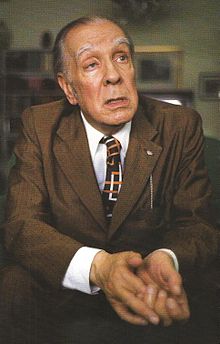
Gina Apostol responds to Mark O'Connell's New Yorker review of two new books about Borges, in the LA Review of Books:

Certainly, Borges’s statements about his indifference to politics are alarming:

I am not politically minded. I am aesthetically minded, philosophically perhaps. I don’t belong to any party. In fact, I disbelieve in politics and in nations. I disbelieve also in richness, in poverty. Those things are illusions. But I believe in my own destiny as a good or bad or indifferent writer.

To be honest, as I read this, I start laughing. You can, of course, believe Borges — why not, if he says so? But you can also see him performing his double act, enacting the writer Borges, the provocative, public intellectual that the I abhors in that terse masterpiece, “Borges and I.” Interestingly, O’Connell begins his review with a quote from that instructive story:

“I like hourglasses,” [the I narrator] writes, “maps, eighteenth-century typography, the taste of coffee, and the prose of Stevenson; [Borges] shares these preferences, but in a vain way that turns them into the attributes of an actor.”

And yet when it comes to Borges’s actorly statements about politics, O’Connell fails to give the writer the benefit of Borges’s own skepticism of his public self.

What is it about the writer in the First World that wants the Third World writer to be nakedly political, a blunt instrument bludgeoning his world’s ills? What is it about the critic that seems to wish upon the Third World the martyred activist who dies for a cause (O’Connell: “In his own country, six coups d’etat and three dictatorships” — one hears exclamation points of disappointment)? Where does this goddamned fantasy come from — that fantasy of the oppressed Third World artist who must risk his life to speak out, who’s not allowed to stay in bed and just read Kidnapped? I have to say, look at it this way: It only benefits dictatorships when all the Ken Saro-Wiwas die — and the loss of all the Ken Saro-Wiwas diminishes us all. Why is it not okay that an old man in Argentina lives for his art — and yet it is okay for a writer in The New Yorker whose country is targeting civilians abroad in precision assassinations to merely sit and write reviews about dead Argentines whose political feelings are insufficiently pronounced? Where is the great American artist leading his fellow citizens in barricades against the NSA? And why are these New Yorker critics not calling them out for their “refusal to engage with politics”?

Although it is amusing to imagine a blind librarian in Buenos Aires brandishing his weapons of Kipling tomes against the old junta, it is less possible to imagine Jonathan Franzen or Jeffrey Eugenides risking jail at all for any reason. Why are Americans allowed to be more cowardly than others?

Tuesday, August 20, 2013

Bosnia and Syria: Intervention Then and Now

Michael Ignatieff in the Boston Review:

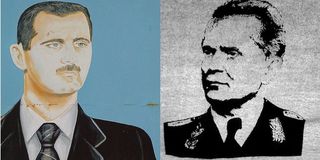
ScreenHunter_285 Aug. 20 16.03When state order collapses, as it did in Yugoslavia in the 1990s, as it is doing now in Syria, chaos unleashes existential fear among all the groups who had once sheltered under the protection of the state. Such fear makes it difficult to sustain multi-confessional, pluralist, tolerant orders when dictatorship falls apart. When state order collapses, every confessional or ethnic group asks one question: Who will protect us now?

As Sunni, Alawite, Christian, Druze and Shia ask this question, they know the only possible answer is themselves. In a Hobbesian situation—a war of all against all—each individual gravitates back to the security offered by their clan, sect or ethnic group, or more precisely, to those individuals within those groups who offer armed protection. This is especially the case when dictatorships collapse, for in this case a security vacuum emerges on top of a political one. In a state that never permitted mobilization of political parties across sectarian, clan, or ethnic divides, none of these groups has learned to trust each other in a political order. They may share a hatred of the dictator and a fear of what comes next, but not much else. Politics has never brought them together before. Now they are faced with security dilemmas and they conclude, rationally enough, that they can only face these dilemmas alone, in the safety of their own group. Such was the case in the former Yugoslavia. Such is the case now in Syria.

More here.