
Theme for English B
The Instructor said
Go home and write
Go home and write
a page tonight.
And let that page come out of you—
Then, it will be true.
……..
I wonder if it’s that simple?
I am twenty-two, colored, born in Winston-Salem.
I went to school there, then Durham, then here
to this college on the hill above Harlem.
I am the only colored student in my class.
The steps from the hill lead down into Harlem,
through a park, then I cross St. Nicholas,
Eighth Avenue, Seventh, and I come to the Y,
the Harlem Branch Y, where I take the elevator
up to my room, sit down, and write this page:
……..
It’s not easy to know what is true for you or me
at twenty-two, my age. But I guess I’m what
I feel and see and hear, Harlem, I hear you:
hear you, hear me—we two—you, me, talk on this page.
(I hear New York, too.) Me—who?
Well, I like to eat, sleep, drink, and be in love.
I like to work, read, learn, and understand life.
I like a pipe for a Christmas present,
or records—Bessie, bop, or Bach.
I guess being colored doesn’t make me not like
the same things other folks like who are other races.
So will my page be colored that I write?
……..
Being me, it will not be white.
But it will be
a part of you, instructor.
You are white—
yet a part of me, as I am a part of you.
That’s American.
Sometimes perhaps you don’t want to be a part of me.
Nor do I often want to be a part of you.
But we are, that’s true!
As I learn from you,
I guess you learn from me—
although you’re older—and white—
and somewhat more free.
……..
This is my page for English B.
……..
by Langston Hughes
This is my page for English B.
……..
by Langston Hughes
from the Poetry Foundation
……..
……..
Enjoying the content on 3QD? Help keep us going by donating now.
 Much of literary culture regards the Gothic genre as an archaic embarrassment—gloomy ruins and paranormal lovers that serious practitioners have learned to dismiss. Yet such dismissals neglect a basic fact of literary history. Intimations of demonic realms and spectral forces emerged in tandem with the English novel, several early examples of which featured devil pacts, reanimation, ghost ships, and homunculi. Furthermore, neither British Romanticism nor French Symbolism would have been as consequential or interesting without Gothic writings by Johann Wolfgang von Goethe and Samuel Taylor Coleridge, Edgar Allan Poe and Charles Baudelaire. Indeed, one could argue that a nascent version of European Modernism emerged in the mid-1800s when Baudelaire began publishing his translations of Poe’s fiction, an enterprise foundational to the composition of Les Fleurs du mal (first published in 1857, definitive edition posthumously in 1868).
 “Bitch” is a word with bite. Once a straightforward insult, it is now used in so many different ways that it’s no longer clear what it means. Bitch is a linguistic chameleon: there are good bitches and bad bitches; boss bitches and perfect bitches; sexy, difficult, dangerous or even psycho bitches. After so many variations and attempts to reject or reclaim the word, some now wear the label defiantly, while others still have it thrown at them. Its evolution is messy, complicated and revealing.
 A German mathematician, Gerd Faltings, is this year’s winner of the Abel Prize, an honor that is regarded as mathematics’ version of the Nobel Prize. Dr. Faltings, 71, is best known for solving a problem that had puzzled mathematicians for decades. He showed that a class of equations possessed a finite number of solutions.
 In Immanuel Kant’s Prolegomena to Any Future Metaphysics (1783), Oliver sounded almost comically exasperated as he responded to a rambling critique Kant makes of David Hume (whom Oliver revered): “Immanuel,” he wrote, as if speaking directly to the philosopher across the centuries, “you are totally confused!”
 For decades, economists have known that using gross domestic product (GDP) alone
  Pakistan as a possible mediator in America’s war against Iran is not a surprise. Pakistan and its powerful military leader, Gen. Asim Munir, has held meetings with both Iran and Saudi Arabia, spoke out against the war in Iran, while ensuring Saudi Arabia the security pact the two have signed is airtight and inviolable.
 Floating in a warm, nutritious bath, the slices of mouse brain buzzed with electrical activity. Researchers gave them a few zaps, and parts of the hippocampus strengthened their wiring.
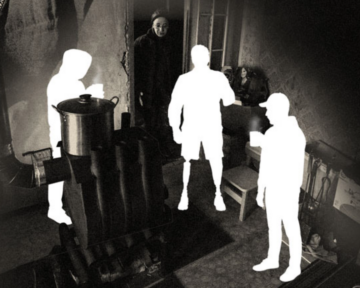 In late 2022, an ambulance pulled up to a bombed-out apartment building in this village outside Kyiv. Three people emerged. One wore a gray hoodie, another a baseball cap. Both had masks covering their faces.
 Place a measuring cup in your backyard every time it rains and note the height of the water when it stops: Your data will conform to a bell curve. Record 100 people’s guesses at the number of jelly beans in a jar, and they’ll follow a bell curve. Measure enough women’s heights, men’s weights, SAT scores, marathon times — you’ll always get the same smooth, rounded hump that tapers at the edges.
 As in much of the world, AI has become part of everyday life in
  The world of literature has lost one of its most luminous stars. Jeelani Bano, a titan of Urdu literature and a fierce advocate for the marginalized, passed away on Sunday (March 1), leaving behind a legacy that stretched far beyond the borders of her beloved Hyderabad. According to her family sources, she was a social architect who used her pen to bridge the gap between tradition and modernity. From her first short story in 1954 to her crowning achievements as a Padma Shri recipient and Doctor of Literature, Bano’s career spanned seven decades of relentless creative output. Jeelani Bano’s impact was global. Her stories—deeply rooted in the soil of the Deccan—found home in the hearts of readers from Moscow to Madison.