
Category: Recommended Reading
Stories about Millennials’ character flaws aren’t just wrong; they’re cover for the real perpetrators of crimes against the future
The following was adapted from a commencement speech delivered to the Independent Concentrators of Brown University at their diploma ceremony on Sunday, May 25, 2014, in Providence, Rhode Island. Miriam Markowitz is deputy literary editor of The Nation.
Miriam Markowitz in The Nation:

Standing here, looking at you today, I am in awe. Not of your accomplishments, which I believe are many, or your character, which I’ve no doubt is stalwart and true, but at the thing I can see with my own eyes: your youth.
Seriously, I’m impressed. Which can only mean one thing: I’m old.
I mean, not that old, just a decade further along than you lot. But at 32, a few centuries ago I’d be middle-aged, or older. Maybe close to dead. Now that 30 is the new 20—or something like that, I don’t know—there’s a lot of confusion these days about whom we consider “adults” and who are “just kids.” So let’s say, for now, that because I am standing at this lectern, having been asked to dispense some words of wisdom about life going forward, that I am an adult. And I am going to do one of the things adults like doing best: I’m going to talk at you.
By that I mean I’m going to tell you a story, and I’m hoping that it won’t be a boring one. It isn’t supposed to be, according to conventional wisdom, because it’s a story about what many adults would say is your favorite subject: yourselves.
More here.
Wilde’s world of journalism
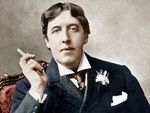
Again and again, Wilde writes amusingly but passionately against small-mindedness and chauvinism, and is supremely irritated by dullness. He is a gifted polemicist, as his spats with the American painter Whistler demonstrate, and he is skilled at using polemics as a means of self-promotion. He has a positive passion for picking out banal statements, which he enjoys quoting with minimal commentary, hanging his victims out to dry. Even more crucially for a reviewer who worked largely on commissions, Wilde can always be trusted to make something interesting out of unpromising subject matter. So, of a collection by the American poet and artist Atherton Furlong, he writes that it is “a form of poetry which cannot possibly harm anybody, even if translated into French”; while J. Sale Lloyd’s Scamp is dismissed as one of those novels that “are possibly more easy to write than they are to read”. When Wilde was given boring books to review, he did something daring and brilliant with them: he turned them into Oscar Wilde.
One of the most rewarding ways of reading Wilde’s journalism is therefore as a giant workshop for the making of the Wilde that readers know better from his more famous writings of the 1890s. It is in the journalism that Wilde comes up for the first time with many of the ideas and phrases that he would reuse in critical essays such as “The Decay of Lying” or “The Critic as Artist”.
more here.
the 100th anniversary of James Joyce’s Dubliners
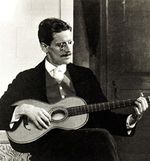
In Dubliners there are three kinds of people: old people, young people, and priests. The priests are mysterious, inaccessible, with yellow teeth or yellowing faces in photographs that hang on the wall. Priests are never main characters in Dubliners. They are peripheral figures, topics of conversation. They are also, generally, dead. The priests of Dublin have a special role, or once did, and almost no one seems to know what it is.
The first priest we meet, Father Flynn (in “The Sisters”), is the priest with the most clues. His life story is told in fragments, in hearsay, by his neighbors and by his sisters after Father Flynn has gone. Father Flynn used to be rather interesting, we learn, but had grown tiresome. Something queer about him, uncanny, one of those peculiar cases, wide awake and laughing to himself in the confession box. “I am not long for this world,” Father Flynn often told the boy, before Flynn had his series of strokes. Flynn’s epiphany in the confession box led him directly to paralysis and finally, to death.
James Joyce didn’t have much use for priests; he thought that priests like Father Flynn had lost their sight, their ability to focus their spiritual eye. Joyce’s characters often say things like, “We are an unfortunate priest-ridden race and always were and always will be till the end of the chapter. … A priest-ridden Godforsaken race” (A Portrait of the Artist as a Young Man). Like the rest of the Dubliners, Father Flynn experiences his epiphanies, but is unable to reflect upon them, to know them. This is a task for artists.
more here.
Mad Music: Charles Ives, the Nostalgic Rebel
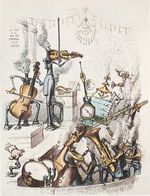
If Ives’s music remains a source of doubt, doubt is also one of its great themes. The essential Ivesian gesture is an answer followed by a question. At a key juncture in the slow movement of the “Concord” Sonata, for instance, Ives builds to a climax on the famous four-note figure from the opening of Beethoven’s Fifth Symphony. In the wake of a thunderous C minor arrival, nearly inaudible wrong notes appear out of nowhere, “ruining” the achieved moment. They instill a double doubt, of understanding and perception; they represent harmonic uncertainty, but you also aren’t entirely sure that you heard them. The gesture feels almost comical at first, then acquires meaning: a delayed awareness of ambiguous overtones hiding in the clearest chords.
Many of Ives’s most important pieces are about blurred or doubtful perception. The beloved song “The Housatonic at Stockbridge” depicts a morning walk in haze and mist, while hearing a hymn from a church across the river. The loss of information, the disintegration of the tune, is essential to the beauty, like the crackle and hiss of old recordings: a failure that connotes authenticity.
more here.
How Maya Angelou became the voice of America
Laura Miller in Salon:
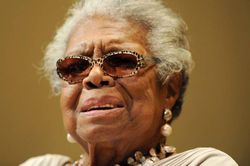
…As the years went by, Angelou’s poetry and public statements increasingly moved toward that most popular of all American literary forms, the uplifting and inspiring maxim. No doubt channeling the grandmother whose industry, self-reliance and ambition she admired so much, she licensed her name to a line of Hallmark cards. The poetry world might frown on such popularization, but the public adored her and found in her words both wisdom and comfort. Angelou’s is a style that lends itself well to the realm of social media, with its informal habit of sharing and passing along quotations and mottos, so it’s no surprise she maintained an active Twitter feed up until five days before her death. Her last message — “Listen to yourself and in that quietude you might hear the voice of God” — conveys the boundless warmth, hope and serenity that made her so beloved.
More here.
Thursday Poem
The Moment
The moment when, after many years
of hard work and a long voyage
you stand in the center of your room,
house, half acre, square mile, island, country,
knowing at last how you got there,
and say, I own this,
is the same moment the trees unloose
their soft arms from around you,
the birds take back their language,
the cliffs fissure and collapse,
the air moves back from you like a wave
and you can't breathe.
No, they whisper. You own nothing.
You were a visitor, time after time
climbing the hill, planting the flag, proclaiming.
We never belonged to you.
You never found us.
It was always the other way around.
.
by Margaret Atwood
from Eating Fire
Houghton Mifflin
Malnutrition in children mars gut microbiome
Jyoti Madhusoodanan in Nature:

To determine the composition of normal microbiota and how they develop, a team of researchers from the United States and Bangladesh, led by Jeffrey Gordon of Washington University in St Louis, Missouri, took monthly faecal samples from 12 healthy children from the slum over the first two years of life. Using DNA sequencing to distinguish the different bacteria present (the microbiome), the team compared the diversity and proportions of different species in the samples, and found that the relative abundances of 24 species in particular strongly correlated with the child's age when the sample was taken. Gordon and his colleagues found that the proportions of the 24 species changed as the children grew older, and that particular microbial compositions correlated with age across all the children. The team tested their model on 38 healthy, well-nourished children from the same area, and found that it accurately predicted these children's ages. When the researchers analysed the gut microbiota of starving children from the same part of Dhaka, however, they found that the microbial composition did not correspond to the children's actual age. Instead, it was that expected in a younger child.
More here.
Wednesday, June 4, 2014
Paul Krugman On Inequality Denial
Paul Krugman in the New York Times:
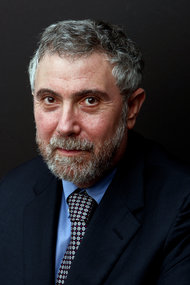
Nor will it surprise you to learn that nothing much has changed. Not only do the usual suspects continue to deny the obvious, but they keep rolling out the same discredited arguments: Inequality isn’t really rising; O.K., it’s rising, but it doesn’t matter because we have so much social mobility; anyway, it’s a good thing, and anyone who suggests that it’s a problem is a Marxist.
What may surprise you is the year in which I published that article: 1992.
Which brings me to the latest intellectual scuffle, set off by an article by Chris Giles, the economics editor of The Financial Times, attacking the credibility of Thomas Piketty’s best-selling “Capital in the Twenty-First Century.” Mr. Giles claimed that Mr. Piketty’s work made “a series of errors that skew his findings,” and that there is in fact no clear evidence of rising concentration of wealth. And like just about everyone who has followed such controversies over the years, I thought, “Here we go again.”
More here.
When microbes kill us, it’s often by accident
Ed Yong in Aeon:
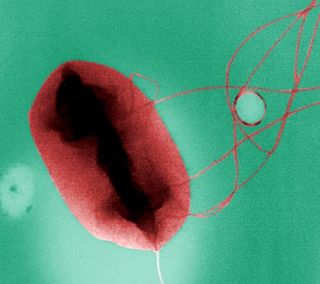
But a growing number of studies show that our anthropocentric view is sometimes unjustified. The adaptations that allow bacteria, fungi and other pathogens to cause us harm can easily evolve outside the context of human disease. They are part of a microbial narrative that affects us, and can even kill us, but that isn’t about us. This concept is known as the coincidental evolution hypothesis or, as the Emory University microbiologist Bruce Levin described it in 2008, the ‘shit happens’ hypothesis.
More here.
The Washington Ballet’s hardest dance moves in slow motion
Twenty years after Nicole Brown Simpson’s murder, thoughts on Socrates, St. Augustine, If I Did It, and the nature of guilt
Morgan Meis in The Smart Set:
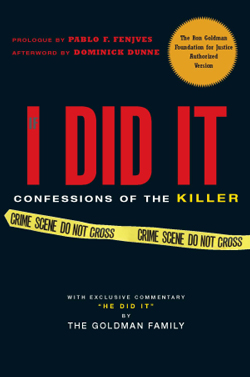
The book refers to that now-infamous night twenty years ago, June 12, 1994, when O.J.’s wife Nicole Brown Simpson was killed along with Ronald Goldman. Ron Goldman was, most likely, a man at the wrong place at the wrong time, a waiter returning a pair of glasses left at a restaurant by Nicole’s mother. Or maybe he was romantically involved with Nicole. Either way, it doesn’t matter anymore. Ron Goldman was caught up in the events of that night and was killed. After O. J. Simpson’s trial ended in a not-guilty verdict in 1995, there was another trial. This was a civil trial, brought by Ronald Goldman’s family. That trial reached verdict in 2007. O. J. Simpson was found liable for the wrongful death of Ronald Goldman. The Goldman family was awarded $33.5 million dollars in damages. They also received the publishing rights of If I Did It. The Goldmans were ordered by the judge of the civil trial to publish the book as a way to collect damages, (O. J. having nowhere near $33.5 million dollars readily to hand), and to prevent O. J. from profiting from the “wrongful death.” It was the members of the Goldman family who decided to call the author of If I Did It “The Killer.”
If I Did It includes an introduction by the Goldman family, a prologue by Pablo Fenjves explaining how the book was written, a history of the trial, an afterword by the journalist Dominick Dunne, and an epilogue by the Goldman’s lawyer Peter T. Haven. The sheer polyphony is enough to confuse anyone.
More here.
New tests prove what librarians have long believed: this book’s cover is made of human skin
Alexis C. Madrigal in The Atlantic:
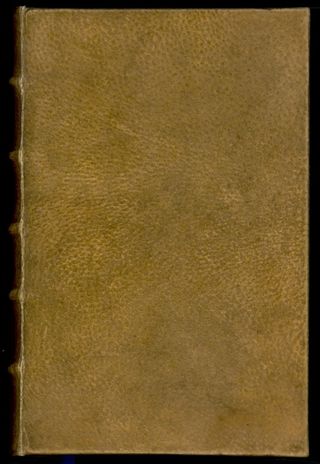
No? Well, a quick refresher: some books, since the 16th century but before our own time, were bound in human skin. Why? “The confessions of criminals were occasionally bound in the skin of the convicted,” Harvard librarian Heather Cole explained, “or an individual might request to be memorialized for family or lovers in the form of a book.”
Qué romantico!
Anyway, we know it happened because people refer to it happening in the literature of the time, and also because some books bore inscriptions that literally said that they were bound in skin.
But such tomes are suspect. You can't just trust anyone who says they've bound a book in human skin. For example, one had this inscription, but turned out to bestupid sheepskin:
The bynding of this booke is all that remains of my dear friende Jonas Wright, who was flayed alive by the Wavuma on the Fourth Day of August, 1632. King Mbesa did give me the book, it being one of poore Jonas chiefe possessions, together with ample of his skin to bynd it.
And so, I am happy to report, the Houghton Library's copy of Arsène Houssaye’s Des destinées de l’ame “is without a doubt bound in human skin,” Cole, who is the assistant curator of modern nooks and manuscripts at the library, reports in a new blog post.
More here.
THE GOOD, THE BAD, AND THE WHITE MAN’S MEXICO NOVEL
John Washington in Terrain:

But rather than spend your lucubratory late nights pencil-tapping, muse-channeling, or violence-gazing as you craft your masterpiece, you might just come to the country with a recorder. Because the story, let’s call it “your” story—of kidnappings, hunger, jungle uprisings, street shootouts, or Holy Death—is being lived right now probably better than you can plot it out. And the stories aren’t exoticized or eroticized. That’s to say, Studs Turkel would probably do better here than Thomas Pynchon; Upton Sinclair better than Stephen King.
More here.
German museum exhibits Van Gogh’s ear replica grown from relative’s cells
Jonathan Jones in The Guardian:
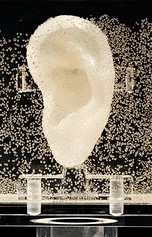
Now it has been regrown from genetic material supplied by the great-great-grandson of Vincent's brother Theo. It is on display at a museum in Germany and Diemut Strebe, the artist behind this resurrection of art's most famous missing body part, hopes to tour it to New York. Will the ear get its own seat on the plane? Will it become an art world star?
Van Gogh's ear is one of the great icons of modern culture. When Allen Ginsberg called a poem Death to Van Gogh's ear! the severed ear of this painter and letter-writer of compulsive beauty and melancholy was already such a totem of popular culture that Ginsberg was sick of it. In the 1956 film Lust for Life, the harrowing ear removal is acted out by Kirk Douglas. This artistic gesture of self-harm has since then become a cliche of extreme creative behaviour.
More here.
SIX QUESTIONS WITH HARRIET HARRIS
From the website of the San Francisco Opera:
You might know actress Harriet Harris from her recurring roles on hit TV shows like Frasier, DesperateHousewives, Ally McBeal, Nurse Betty, and more. Or from her many feature films, or her Tony Award-winning turn on Broadway in Thoroughly Modern Millie. But one place that Harris has yet to make her debut is on the San Francisco Opera stage, which she will do in this summer's grand production of Show Boat. In today's blog post, we ask Harris six questions about her experience here at San Francisco Opera.
It’s not very often that we have the privilege of having a Tony Award winner (Thoroughly Modern Millie, 2002) join our cast! What has it been like to be part of an opera production as compared to a Broadway production?
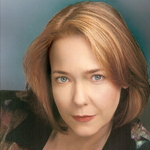 It's similar to being away from home on a business trip. You awaken in a not too familiar hotel, but you remember that it's a good hotel. For instance, there is a light switch within reach. It's just a matter of how high to reach and does one try the right or left side first. The first rehearsal was probably the best example of this. The opera singers arrived knowing their parts music and book. The actors did not. Actors almost always learn their lines in rehearsal. Whoever is playing Hamlet will probably get a jump on rehearsing, but not Claudius or Gertrude. It became clear that rehearsal means something else in the opera world. A good deal of time is spent introducing more and more elements into the same scene. The singing has been beautiful from the first day and now that we have an orchestra, it is thrilling. The sitzprobe, which is always the best day in a musical, was a revelation. Thirty two strings! That doesn't happen on Broadway. At certain moments from this symphony of lusciousness a banjo emerges as lone and wonky clarion — it's divine. Another aspect of the opera is realizing the depth of experience the company has with each other. It is in some cases years of interaction and love. In a play, it maybe two out of eight actors may have worked together before. Here it seems upwards of 40 out of 60 people have a history!
More here.
Do Rats Know When They Don’t Know?
Mary Bates in Wired:

In studies with rhesus monkeys, apes, and two-year-old children, experimenters placed several opaque tubes horizontally in front of the subjects. Their job was to choose the one tube that contained a piece of food. When the experimenter placed the food into one of the tubes in full view of the subjects, they all chose the correct tube. But on some trials, a barrier was placed in front of the tubes so they couldn’t see which tube the experimenter loaded with food. On these trials, children, apes, and rhesus monkeys bent down to look through the tubes until they found the one with food and then chose it. This seems to indicate that they knew they were uninformed about the correct choice and thus took appropriate action to gather the information they needed.
More here.
A rethinking of homogeneity
Peter Dizikes in Phys.Org:
Apfelbaum drives home this point in a new article, “Rethinking the Baseline in Diversity Research,” published in the journal Perspectives on Psychological Science. Apfelbaum and his co-authors—Katherine Phillips of Columbia University and Jennifer Richeson of Northwestern University—believe there are two reasons to consider new approaches to diversity studies. For one thing, by certain objective measures, homogeneous groups sometimes produce effects on their members that are more anomalous than the effects that diverse groups produce—such as Apfelbaum found in his study on self-serving bias and group dynamics. More broadly, people may incorrectly assume that “homogeneity and diversity are just two sides of the same coin,” Apfelbaum says.
More here.
Tuesday, June 3, 2014
David Graeber: Savage capitalism is back – and it will not tame itself
David Graeber in The Guardian:
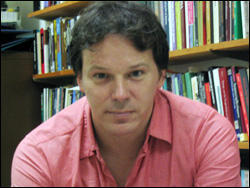
“If you look at America, there were all sorts of scams like that back in the 19th century with railroads and the like,” I remember one cheerful, bespectacled Russian twentysomething explaining to me. “We are still in the savage stage. It always takes a generation or two for capitalism to civilise itself.”
“And you actually think capitalism will do that all by itself?”
“Look at history! In America you had your robber barons, then – 50 years later – the New Deal. In Europe, you had the social welfare state … “
“But, Sergei,” I protested (I forget his actual name), “that didn't happen because capitalists just decided to be nice. That happened because they were all afraid of you.”
He seemed touched by my naivety.
At that time, there was a series of assumptions everybody had to accept in order even to be allowed to enter serious public debate. They were presented like a series of self-evident equations. “The market” was equivalent to capitalism. Capitalism meant exorbitant wealth at the top, but it also meant rapid technological progress and economic growth. Growth meant increased prosperity and the rise of a middle class. The rise of a prosperous middle class, in turn, would always ultimately equal stable democratic governance. A generation later, we have learned that not one of these assumptions can any longer be assumed to be correct.
More here.