
Jeannette Cooperman at The Common Reader:
 Fussier friends would shiver in the mid-October wind, but Ann Mandelstamm is in her eighties and still hiking, so I grab a table on the patio. Just as I open the menu, she arrives, clad in a sporty navy sweater and jeans and wearing her trademark red lipstick, her red-gold hair pulled back with combs. She sits, her movements as lithe and graceful as ever. She has always had a quiet, midcentury glamour about her—the Kate Hepburn sort, impatient with frippery. Neither of us even mentions moving indoors.
It is good to see her; it has been more than a year. She is animated and fun, teasing the server as she orders: “I had authority in my voice, didn’t I? I used to teach high school.” We talk about books and, with a sigh, politics, then split a pizza. Somehow Ann has always managed to go deep—think hard, read tough stuff, fight for justice—yet remain delighted by the world.
As the plates are whisked away, she says, “I have something for you,” and hands me a sheet of paper. “Not many people know,” she says. “I’m going to mail this to my dearest friends just before.”
“Before….?” I smile and take the sheet, wondering what she is up to. Skimming, I catch phrases: not something I arrived at without deliberation…. I have lived my life as well as I could…. limited resources on this planet…. what purpose could I serve by living on another five or ten years?
She has decided to end her life.
My mind goes blank with shock.
More here.
Enjoying the content on 3QD? Help keep us going by donating now.
 After the Soviet bloc began to disintegrate on his watch, Reagan was—and still is—mythologized as the primary victor of the Cold War.
 Billions of cells die in your body every day. Some go out with a bang, others with a whimper. They can die by accident if they’re injured or infected. Alternatively, should they outlive their natural lifespan or start to fail, they can carefully arrange for a desirable demise, with their remains neatly tidied away.
 The U.S. population will age and continue to see low growth in 2025, three experts have told Newsweek.
 In his newsletter, Sam Harris
 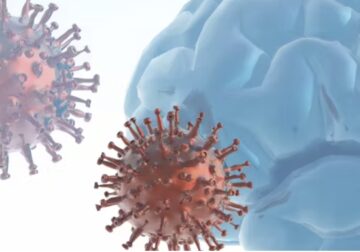 Here are some of the most important studies to date documenting how COVID-19 affects brain health:
 Even if you haven’t read Robert Musil’s unfinished modernist masterpiece, The Man Without Qualities, you probably agree that it has a great title. If you have read it, I’m sure you agree, because the novel returns obsessively to the theme of how its main character, Ulrich, can’t quite get his act, or, more fundamentally, his personality, together. But I’ve come up with an even better title. I think Musil should have called his novel The Man Without Philosophy.
 “All Life Long,” the title of the most recent album by the composer and organist Kali Malone, is taken from a poem by the British Symbolist author Arthur Symons: “The heart shall be weary and wonder and cry like the sea, / All life long crying without avail, / As the water all night long is crying to me.” The poem appears as an epigraph in W. E. B. Du Bois’s “The Souls of Black Folk,” which is where Malone found it. Beneath Symons’s lines, Du Bois supplies musical notation for the opening phrase of the spiritual “Nobody Knows the Trouble I’ve Seen.” The topic, then, is sorrow, songs of sorrow, sounds of sorrow.
 I
I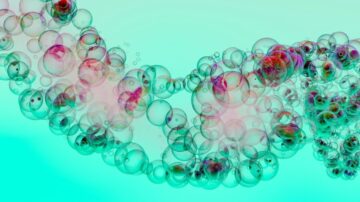 Exosomes are tiny bubbles made by cells to carry proteins and genetic material to other cells. While still early, research into these mysterious bubbles suggests they may be involved in aging or be responsible for cancers spreading across the body.
 When asked why he didn’t begin writing novels until his 30s, the celebrated Czech author Milan Kundera said he didn’t have the requisite experience when he was younger. “This jerk that I was, I wouldn’t like to see him,” he added. Many of us look back at our former selves and wince to recall our immaturity. We vary quite a lot in the degree to which we feel friendly toward, and connected to, both our former and our future selves. Psychologists call this trait self-continuity, and suggest that it carries enormous weight in determining our long-term well-being.
 My New Year’s resolutions have always had one thing in common: They’ve been all about me. Some years I’ve vowed to pick up my high school French again; some years I’ve sworn off impulse shopping; and some years (OK, every year) I’ve promised myself I’d go to bed earlier. The goal, though, has always been the same: to become a better, happier version of myself. But while there’s nothing wrong with self-improvement, experts say that focusing on our relationships with the people around us may go a long way to making us happier.