
Category: Recommended Reading
Does Moving Poor People Work?

Thomas B. Edsall in the NYT:
Under the aegis of the “Moving to Opportunity” program, begun during the first administration of Bill Clinton, the Department of Housing and Urban Development randomly selected a large pool of low-income families with children living in public housing in Baltimore, Boston, Chicago, Los Angeles and New York. Ninety-eight percent of the families were headed by women; 63 percent were black, 32 percent Hispanic, and 3 percent white; 26 percent were employed, 76 percent were receiving welfare, and families had an average income of $12,709 in 2009 dollars.
These families, 4604 of them, to be exact, were then divided into three groups. An experimental group of 1,819 families was offered “Section 8 rental assistance certificates or vouchers that they could use only in census tracts with 1990 poverty rates below 10 percent”; 855 accepted the offer and became part of the study. A second group of 1,346 families was offered more traditional “Section 8” rent subsidy vouchers that could be used in anyneighborhood; 848 accepted.
A control group composed of 1,439 families stayed in public housing and became part of the study. The purpose of the relocation initiative, according to Department of Housing and Urban Development, was to test the “long-term effects of access to low-poverty neighborhoods on the housing, employment and educational achievements of the assisted households.” Researchers also studied how relocation affected the health of those who accepted vouchers.
A paper published in the May 2013 issue of the American Economic Review, “Long-Term Neighborhood Effects on Low-Income Families: Evidence From Moving to Opportunity,” found that after 10 to 15 years, moving out of high-poverty public housing through the M.T.O. program showed mixed results.
There were some positive developments, according to the primary author of the paper, Jens Ludwig, a professor of economics at the University of Chicago and the project director for a final assessment of the M.T.O. program. Ludwig and his six co-authors found improvement in “several key adult mental and physical health outcomes.” These included significantly lowered risk of diabetes and obesity, as well an improved level of “subjective well-being.”
But the Ludwig study also found that “changing neighborhoods alone may not be sufficient to improve labor market or schooling outcomes for very disadvantaged families.” Ludwig reported that this particular form of assistance from HUD –a housing voucher that allowed recipients to move into a “low poverty” area – had “no consistent detectable impacts on adult economic self-sufficiency or children’s educational achievement outcomes, even for children who were too young to have enrolled in school at baseline.”
More here.
Wednesday Poem
With a Pen
A child will come to understand the meaning in their name
A tribe will retrace their pathway to the beginning of their totem
A people might preserve their culture for tomorrow’s generations
A simple prophecy in graffiti on a city wall, some rock paintings. . .
In a songbook a poet might begin an existence
Injustice will begin to see his nemesis in the distance
The simplest words might inspire a mother’s strength for her children
When love and laughter are prescribed for a family as their medicine
Planets in rotation in a cypher will write life a hook
Didn’t Ayi Kwei preserve our history in the pages of unpublished books?
Matigari told of the wisdom alive in one’s reading of the modern stars
The tales of freedom in this hunger that houses burning butterflies
Bantu liked our beauty and consciousness in the depth of apartheid
Oa Magogodi mic’d it in our first language, spoken word
We recite it on stages and pages upon which the unspoken will be heard
If in the beginning was the word, then someone must have understood that with a pen
A lonely heart will dwell in remembrance, the beauty of life with a loved one
A politician will authorize the massacre of protestors taking a father from a daughter and son
A starved soul will protest silently against that which has made him weak
A writer will alter the language a people’s consciousness speaks
An oppressive system will draw up title deeds depriving people of their ancestral home
I will write all night to inspire you and go back home all alone
An officer will incarcerate a man that refuses to bribe him and
A sick mind will stab to death another life with a pen
An artist will dwell in solitude with a pen
Politicians will steal many ballot boxes with a pen
Voices will not be silenced by violence with a pen
Ideas won’t die unseen
Recorded for tomorrow with a pen
Retrieved from yesterday with a pen
Yet today some will be too afraid to hold a pen in their hand
.
by Tswarelo Mothobe
publisher Poetry International, 2014
Tuesday, September 16, 2014
Independent Journalism in Egypt Today, and the Case of Mahmoud Abu Zeid
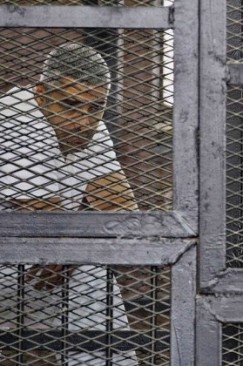
Patrick Keddie in the LA Review of Books (AP Photo/Hamada Elrasam):
JAMMES AND SHAWKAN were in trouble. A police officer was standing on Jammes’s toes and a line of police trucks had arrived. The officer stared into Jammes’s face for several minutes. He slapped him when he tried to speak. Jammes was advised to keep looking down at his feet, half obscured by the officer’s boots. His friend Shawkan, just behind him, endured the same treatment.
Louis Jammes, a French photographer, and “Shawkan,” the nickname for Egyptian photojournalist Mahmoud Abu Zeid, had arrived early that morning, August 14, 2013, at the Rabaa Al-Adawiya sit-in of mostly pro-Muslim Brotherhood supporters. The Brotherhood-affiliated President Mohamed Morsi had been ousted by the military in early July, following huge protests against him. Rabaa square, east Cairo, had become an encampment of at least80,000 overwhelmingly peaceful protesters calling for Morsi’s reinstatement. The authorities had lost patience with the six-week old sit-in; most people knew that it would soon be cleared and that it was likely to happen at the end of Ramadan.
When Jammes and Shawkan arrived that morning, they watched the camp awaken. There were many families there — men, women, and children. The photographers were shown a new field hospital that had been set up to care for the anticipated casualties of the coming clearance. It was not long afterward that the security forces made their advance into the camp.
Jammes wanted to stay with the sit-in but Shawkan preferred to be behind military lines. “Shawkan was a little afraid of the Brotherhood,” recalls Jammes. “I was really afraid of the military myself but Shawkan trusted them.” Jammes asked Shawkan a couple of times if he was certain it was the right decision; he was sure the armed forces would not allow them to photograph the clearance.
When the security forces began to fire on the sit-in, Jammes and Shawkan crossed behind them. They were perhaps 10 or 20 meters behind the frontline, crouching behind cars, running between armored vehicles and taking photos alongside the military as they pushed forward against the ranks of protesters defending the camp.
More here.
The Calculus of Contagion
Adam Kucharski in Aeon (Photo by Dominique Faget/Afp/Getty):
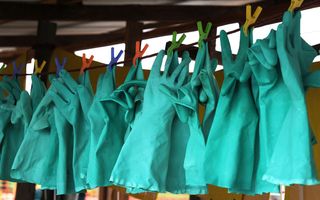
There are several ways to estimate the reproduction number of an infection. If we know how long people are infectious for – and hence the average time between each ‘generation’ of disease cases – we can estimate the reproduction number by looking at how quickly the epidemic grows. Alternatively, we can estimate it by calculating the average age at which people experience their first infection. The more infectious a disease is, the sooner a person will become infected.
By calculating reproduction numbers, we can quantify and compare different infections. Measles is at the wildfire end of the scale. In an unvaccinated population, it has a reproduction number that lies somewhere between 12 and 18. This explains why measles has always been a childhood disease; a high reproduction number drives down the average age of infection. In contrast, the 1918 pandemic influenza strain – the infamous ‘Spanish flu’ – had a reproduction number of around 2 or 3. Because the disease came with a high fatality rate, even this relatively low reproduction number was enough to create widespread devastation. In the middle, we have infections such as polio (5 to 7) and mumps (4 to 7).
Although the reproduction number does not tell us how fast an infection will spread from person to person, it does show how much effort is required to eradicate a disease through vaccination. For a disease such as measles, we need to vaccinate a lot of the population to reduce the average number of secondary cases, and hence get the reproduction number below that crucial value of 1. But the reproduction number isn’t just useful for studying familiar infections. It can also help us deal with new disease threats.
More here.
Marguerite Yourcenar’s Coup de Grâce is a great World War I book, except it isn’t about World War I
Our own Morgan Meis in The Smart Set:
It is also highly appropriate to read in the dying days of this summer, the summer of 2014. That’s because this summer is the hundred-year anniversary of the beginning of World War I. The guns started firing on June 28, 1914. By mid-August, young European men were dying by the tens of thousands, victims of a war that redefined organized, industrial killing for the modern age.
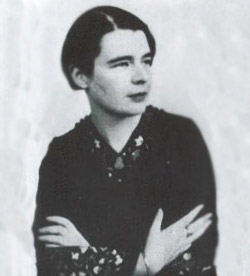
The book I am speaking of, Coup de Grâce by Marguerite Yourcenar, does not actually take place during WWI. It takes place during the Baltic wars (1918-20) that emerged directly out of WWI. The Soviets attacked Estonia, Latvia, and Lithuania, taking advantage of the chaos left by the Great War. The Germans got involved – defending their own damaged imperial interests – as did the Brits. The Baltic wars quickly turned into a nice, vicious and now largely forgotten little series of wars.
Still, Coup de Grâce is, at its heart, a WWI book. It explores what happens to individual lives as those lives came up against historical forces of massive destruction. It shows us the remnants of an older, pre-war European sensibility in its dying gasps. WWI killed off what was left of the 19th century and ushered in the modern world to come. That’s been repeated so often it has become a truism, a cliché. So how do you tell a real story of the traumas of the WWI era without being trite and abstract?
More here.
Universalizing Settler Liberty
Nikhil Pal Singh in Jacobin:
Yet recent conversations about empire and capitalism have tended to operate in isolation, with little attention paid to how they are bound together and what these interconnections might mean for projects of social change.
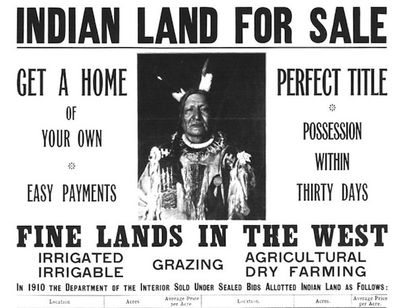
Aziz Rana’s book, The Two Faces of American Freedom, now out in paperback, embodies a sustained attempt to link these two conversations. It presents a historical account of the relationship between external projections of power and internal judgments of economic liberty in the United States.
Rana, an associate professor of law at Cornell University, argues that the American experience is best understood as one of “settler empire.” English colonists, along with their descendants, viewed society as grounded in an ideal of freedom that emphasized continuous popular mobilization and direct economic decision-making.
However, this ideal was politically bound to territorial conquest and to the dispossession and control of marginalized groups. These practices of liberty and subordination were not separate currents, but rather two sides of the same coin. Even today, he argues, the legacies of settler empire shape and sustain the twin dynamics of racial exclusion and economic exploitation.
More here.
Blinding them with science: Is development of a banned laser weapon continuing?
Dan Drollette Jr in Bulletin of the Atomic Scientists:

The research got quite far along; in 1995, Human Rights Watch identified at least 10 different laser blinding programs of concern, which the military ran under the names “laser countermeasure system,” BOSS, Persuader, LX-5, Saber 203, TLOS, Green Laser, Nighthawk, and Y-Blue, among others. In that same year a treaty, the New Protocol on Blinding Laser Weapons, was adopted by the United Nations; it banned such weaponry, and Bulletin contributing editor William Arkin penned a full-page story applauding the ban. He wrote: “The humanitarian considerations of this potentially horrific new chapter in warfare far outweighed the minor—and redundant—military benefit.”
But while the weapon itself was banned, research into laser weaponry was not, so work on it continued, under other rubrics.
More here.
Noam Chomsky on Scottish Independence
How the curtains came down on Calcutta’s professional theatre
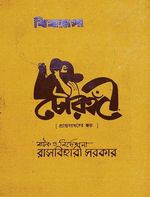
THE 1980S WERE A BLEAK TIME in the Communist-ruled state of West Bengal, with the economy a strangled mess of unemployment and industrial lock-outs. Being an intellectual in Bengal very much overlapped with being on the left, if not in fact being a Marxist. And theatre had been a touchstone for leftist politics ever since the Indian People’s Theatre Association was set up in 1942, under the cultural wing of the Communist Party of India. A revolutionary politics called for a revolutionary aesthetic. For example, third theatre, a radical, experimental movement pioneered by the visionary playwright and director Badal Sircar in the late 1960s, completely eschewed the proscenium in favour of the street. By the 1980s, theatre was closely allied with the protest marches that choked Calcutta’s roads every other day. It was a vehicle to advance the political conscience of the nation-state, and of radical, left-leaning groups within it.
It is this story of twentieth-century Bengali theatre that is most prominently archived in academic and public memory. Indeed, the story of left-leaning, experimental theatre is the one most often told about the pan-Indian stage. Minerva, however, was one of several venues for a kind of theatre that, in the 1980s, had just about another decade of flickering life left in the city of labour unrest and street demonstrations. This was the commercial theatre of pleasure and entertainment, also known as “professional” or “board” theatre, which was confined to a cluster of north-Calcutta playhouses, none of them very far from Sonagachi.
more here.
in donetsk
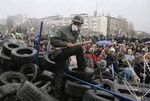
I decided to leave Donetsk after seeing a man getting shoved into the trunk of a car by a group of armed men in fatigues. ‘Get the fuck in there, blyad’!’ one of them shouted at him. The man was blindfolded and had his hands bound behind his back. He was unsteady on his feet, either because he was drunk or they’d beaten him, or both. This was going on a few paces from the headquarters of the DNR, where Mishin was working on an organisation chart for his proposed ministry of sports.
I got on the train and travelled to Kramatorsk and Slovyansk, where the war had begun. Slovyansk, in particular, was a revelation. I had seen photos and videos of it under occupation, when people were being shot in the street. A month after the rebels had left, people were walking around eating ice cream. There were still plenty of ruined buildings, but the atmosphere was almost festive. I saw a group of children who were so cute and happy I wanted to take a photo. I asked their mothers if this was all right, and they said yes, except, they added, they weren’t from Slovyansk. They had come from Yenakievo, Yanukovych’s hometown, where the fighting between government forces and the rebels was fierce. Slovyansk, once a byword for the war, had become a place where people took refuge from it.
more here.
William S Burroughs and the hallucinogenic vine yagé

In 1953, two years after he had shot Joan Vollmer, his common-law wife, in a drunken William Tell routine at the Bounty Bar in Mexico City, William Seward Burroughs embarked on a South American quest in search of yagé, a hallucinogenic vine used by the shamans of the Upper Amazon for healing and divination. In Puerto Limon, under its hallucinogenic influence, he saw neon blue flashes, a diaspora of multi-racial travellers; and he caught his first glimpse of the “Composite City”. In letters written to Allen Ginsberg from Pucallpa on the Ucayali River he reported yagé’s capacity to extend consciousness, induce automatic obedience and alter mindset. He also warned his friend of its propensity to derange the senses and bring about acute states of sensitivity that were beyond description.
I must give up the attempt to explain, to seek any answer in terms of cause and effect and prediction, leave behind the entire structure of pragmatic, result seeking, use seeking, question asking Western thought.
I first heard about yagé as a sixteen-year-old reader of Richard Spruce’s Notes of a Botanist on the Amazon and the Andes, compiled between 1849 and 1864 and posthumously published by his friend Alfred Russel Wallace in 1908. It was five years later that I first began reading Burroughs and resolved to become a neurologist. Reading Spruce convinced me that the natural world and its plant kingdom held most of the secrets to understanding and manipulating the chemical systems of the human brain.
more here.
Tuesday Poem
To understand war you have to understand that war is a political tool
meant to terrorize as well as kill. It's an insanity always claiming some
god's sanction—Anon.
To Just Nothing
This is what the war ended up being about:
we would find a V.C. village,
and if we could not capture it
or clear it of Cong,
we called for jets.
The jets would come in, low and terrible,
sweeping down, and screaming,
in their first pass over the village.
Then they would return, dropping their first bombs
that flattened the huts to rubble and debris.
And then the jets would sweep back again
and drop more bombs
that blew the rubble and debris
to dust and ashes.
And then the jets would come back once again,
in a last pass, this time to drop napalm
that burned the dust and ashes to just nothing.
Then the village
that was not a village any more
was our village.
by Corporal Charles Chungtu, U.S.M.C.
from Unaccustomed Mercy
Texas Tech University Press, 1989
Monday, September 15, 2014
Perceptions
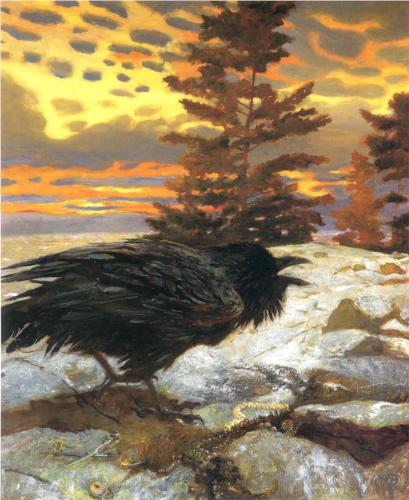
CATSPEAK
by Brooks Riley

Sunday, September 14, 2014
Short skirts and niqab bans: On sexuality and the secular body
Jennifer A. Selby and Mayanthi L. Fernando in The Immanent Frame:
Introduced in Québec in March 2010, Bill 94 proposed requiring women to unveil their faces if they wanted to work in the public sector or access public services, including hospitals, universities, and public transportation. The bill was eventually tabled and was followed in November 2013 with Bill 60, which demanded in more generalist language the removal of conspicuous religious signs in order to dispense or use public services in the province. These Québécois bills—which have not passed—echo the logic of the April 2011 French law targeting the niqab (face veil) and banning the “dissimulation of the face” in public spaces. Both French and Québécois proponents of these laws cited gender equality and women’s emancipation—which they deemed foundational to French and Québécois values—as their primary goal. Despite Québec’s long insistence that it espouses a third path between Canadian multiculturalism and the French Jacobin model, Québec and France have increasingly converged to promote a model of secularism in which liberty and equality are articulated as sexual liberty and sexual equality. In fact, these niqab restrictions represent a broader secular-liberal discourse—what Joan W. Scott calls “sexularism”—that posits secularism as the best guarantor of women’s sexual freedom and sexual equality and, therefore, as that which distinguishes the West from the woman-oppressing rest, especially from Islam.
Much has been written on secularist reactions to veiling, some of it on this blog. Most of that scholarship focuses on the problems that the veil, and Islamic piety more generally, pose for political secularism. Here, we try to provide a somewhat different reading that follows recent work arguing that, like forms of religiosity, secularity too includes a range of ethical, social, and physical dispositions, hence the need to apprehend the secular via its sensorial and affective dimensions and not only its political ones.
More here.
Evolution’s Random Paths Lead to One Place

Emily Singer in Quanta Magazine (photo by Sergey Kryazhimskiy):
In his fourth-floor lab at Harvard University, Michael Desai has created hundreds of identical worlds in order to watch evolution at work. Each of his meticulously controlled environments is home to a separate strain of baker’s yeast. Every 12 hours, Desai’s robot assistants pluck out the fastest-growing yeast in each world — selecting the fittest to live on — and discard the rest. Desai then monitors the strains as they evolve over the course of 500 generations. His experiment, which other scientists say is unprecedented in scale, seeks to gain insight into a question that has long bedeviled biologists: If we could start the world over again, would life evolve the same way?
Many biologists argue that it would not, that chance mutations early in the evolutionary journey of a species will profoundly influence its fate. “If you replay the tape of life, you might have one initial mutation that takes you in a totally different direction,” Desai said, paraphrasing an idea first put forth by the biologist Stephen Jay Gould in the 1980s.
Desai’s yeast cells call this belief into question. According to results published in Science in June, all of Desai’s yeast varieties arrived at roughly the same evolutionary endpoint (as measured by their ability to grow under specific lab conditions) regardless of which precise genetic path each strain took. It’s as if 100 New York City taxis agreed to take separate highways in a race to the Pacific Ocean, and 50 hours later they all converged at the Santa Monica pier.
The findings also suggest a disconnect between evolution at the genetic level and at the level of the whole organism. Genetic mutations occur mostly at random, yet the sum of these aimless changes somehow creates a predictable pattern. The distinction could prove valuable, as much genetics research has focused on the impact of mutations in individual genes.
More here.
Reflections on the Independence Referendum
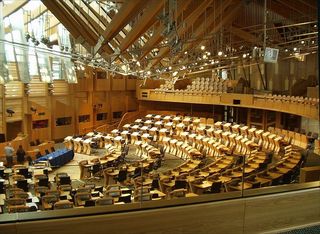
As we approach the referendum on Scottish independence, several pieces reflect on its meaning and implications. Tariq Ali, John Burnside, T.J. Clark, Linda Colley, David Craig, Tom Devine, Norman Dombey, Anne Enright Colin Kidd, Ross McKibbin, Ferdinand Mount, Tom Nairn, Glen Newey, Hugh Pennington, and David Runciman offer their thoughts in the LRB. Runciman:
The independence referendum is the first of three votes that will help determine the future shape of British politics. The second is the next general election, which is now just nine months away. The third is a possible in-out referendum on EU membership. There is a nightmare scenario here (at least, a nightmare for many Scots and for a few of us south of the border): Scotland votes ‘No’, the Tories win the election and then Scotland, along with the rest of the UK, finds itself out of Europe on the back of the majority view of little Englanders. It’s still odds against that sequence of events, but not by enough of a margin to bring much comfort. I suppose it’s possible that an EU referendum could follow the pattern of the Scottish one: a serious and extended political argument that, for all the nastiness round the edges, generates principled positions on both sides and allows the defenders of the status quo to make their case and have it heard. But I rather doubt it.
Whatever happens on 18 September, it is hard to imagine that the argument ends here. If Scotland chooses to remain part of the UK, it will still be jarring each time a UK-wide decision binds it into a fate it would not have chosen for itself. The pressure for change will grow, not diminish. At the same time, English nationalism is going to rear its head at some point, especially if the result of a ‘No’ vote is greater concessions to Scottish devolution. The other regions are going to want their say. The status quo inside the UK is defensible in the short term but not sustainable in the long run. When it comes to the UK’s position inside the EU it may be the other way round.
More here. William Dalrymple in The Telegraph:
We Scots are far from an oppressed minority. In domestic matters we already run ourselves, and since devolution has given us control on almost all domestic issues, it is only on our place in the world that this vote will have any tangible effect. While I am proud of some of the moral stands made by the Scottish Parliament – such as giving asylum to Palestinians from Gaza, and the opposition the Scots Nationalists made to Tony Blair’s wrongheaded invasion of Iraq – we can continue to make those important moral stands in the Scottish Parliament while also influencing the real world from No 10 Downing Street.
Independence probably won’t be a catastrophe. We are a talented nation. Scots remain as ambitious and highly educated as ever. Emotionally I fully understand the excitement that the prospect of independence brings, and if it does come I will proudly apply for my Scottish passport. Nevertheless, if the drumbeat of freedom excites my heart, my head remains extremely wary. Pragmatism has always been an excellent Scottish quality and it seems to me that independence will be both a massive and unnecessary gamble, socially and politically divisive, and something that will limit rather than enhance the opportunities open to my children and grandchildren.
After centuries of Anglo-Scottish warfare, which led to many more Floddens than Bannockburns, the success of a united Great Britain was no small achievement for the Scots. It made us richer, and it made us bigger. For the first time in our history we played a major role in the world.
More here. Michelle Schwarze on what Adam Smith would say about Scottish independence?
Scotland is poised to vote on the merits of its union with England, but not for the first time. During the intellectually vibrant Scottish Enlightenmentof the 1700s, Adam Smith — the famed Scottish philosopher and economist who sought to explain what made nations prosperous — grappled with similar questions about the advantages and disadvantages of the Acts of Union of 1707. Smith expressed sympathy with those who had opposed the Union immediately following its passage, because the “infinite good” that Scotland experienced post-independence was a “very remote and very uncertain” prospect to Scots in 1708. Scottish voters currently face a converse question: Have conditions changed sufficiently to suggest that Scotland would be more prosperous post-union?
More here.
This Isthmus of a Middle State
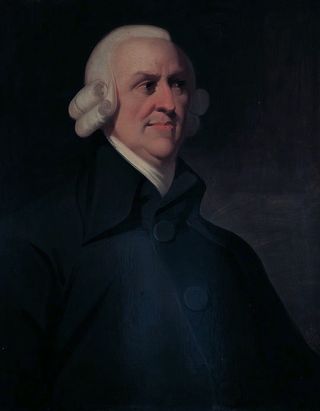
Robert Paul Wolff over at his website:
One must indeed have turned a deaf ear to the chatter of the public square not to have heard the constant invocation of The Middle Class. Politicians, pundits, bloggers, even economists speak of nothing else. Presidential hopefuls mouth the phrase more often than teenager girls say “like.” But a moment's reflection will reveal that “middle class” is a rather odd phrase indeed. In truth, a great deal of ideological insight into contemporary America can be achieved simply by meditating on the phrase “middle class.” It is the purpose of this blog post to initiate such a meditation.
As always, a little history is a useful propaedeutic. Old Regime France understood itself to be composed of three Estates, each with its own system of laws and courts, its own customs of dress, and its own sources of income. The First Estate was the Clergy, who owed a double allegiance, to Versailles and to Rome. The Second Estate was the Aristocracy, whose status rested on its possession of the great inherited accumulations of agricultural land. The Third Estate was the Bourgeoisie, which [originally] meant the craftsmen and merchants who lived in walled cities [orbourgs.] The members of the Third Estate were in many cases a great deal wealthier than some of the impecunious aristocrats, and the clergy, of course, controlled vast estates which, however, belonged to the Church, so the classification into Estates was in no way intended to be an indication of relative wealth. The vast majority of men and women in Old Regime France, needless to say, did not belong to any Estate. They were, one might say, beneath the law.
With the dramatic termination of the last vestiges of feudalism, the system of Estates passed into history. When Adam Smith and his followers undertook to analyze the new society emerging from feudalism, they sorted people not into Estates but into Classes according to the position they occupied in the economic organization and processes of the society.
More here.
How Corrupt Are Our Politics?
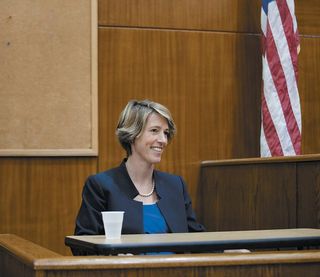
David Cole reviews Zephyr Teachout's Corruption in America: From Benjamin Franklin’s Snuff Box to Citizens United, in the NYRB (photo by Lauren Lancaster):
The US attorney for the Southern District of New York, Preet Bharara, is now investigating whether the governor or others violated federal laws by obstructing corruption investigations. Cuomo’s response has been to strong-arm former commission members into issuing public statements supporting him that contradict their own earlier complaints, and simultaneously to assert that since the commission was a creation of the executive branch, any obstacles he may have put in its path cannot possibly constitute interference. So much for independence.
In light of these problems, it is perhaps not surprising that Cuomo appears more threatened than he should be by a challenge in the primary for governor from Zephyr Teachout, an obscure law professor from Fordham Law School. Teachout has less than $200,000 in her campaign coffers as compared to Cuomo’s $32 million. Cuomo sued to bar Teachout from running for governor on the ground that she had not resided for the requisite five years in New York State, even though she has been employed at Fordham Law School and had an apartment in New York since June 2009. A trial court found Teachout eligible to run in the primary scheduled for September 9, and a court of appeals affirmed. Cuomo can’t really be concerned that she will pose a serious challenge at the polls. But Teachout’s central focus—as both a candidate and a professor of law—is on fighting corruption, and right now, that may well be Cuomo’s Achilles heel.
Indeed, according to Teachout, corruption is not just Cuomo’s—or New York’s—problem. It is the most pressing threat that our democracy faces. And the problem, as Teachout sees it, is that those in power refuse to admit it. Just as Cuomo shut down the Moreland Commission’s inquiry into corruption, so the Supreme Court, by adopting an ahistorical and improperly narrow view of corruption, has shut down an exploration of the very real threat that unrestricted campaign spending actually poses to our democracy.
More here.