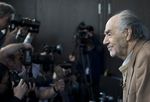
George Sluizer (1932-2014)

161726588Ryan Gilbey at The New Statesman:

The Dutch director George Sluizer, who has died aged 82, made only one perfect work: The Vanishing. There are surprisingly few filmmakers who can even match that tally. This 1988 picture follows its own remorseless logic to the natural conclusion, and makes no compromises or concessions along the way. It is so unsettling and strange that to put it in the Thriller or Horror section, or to call it Psychological Drama, would be to diminish it, and give only the feeblest impression of its powers. At the beginning of the film, a woman disappears during a pit-stop that she and her boyfriend make in the middle of a long drive. Years later, the bereft man is contacted by the person who abducted her and offered a choice that is tantalising and terrifying.

Sluizer directs with unshakable calm throughout. Stanley Kubrick told him it was “the most horrifying picture I’ve ever seen”. When he asked whether it was even more horrifying than Kubrick’s own The Shining, the senior director replied that it was. Kubrick’s producer, Jan Harlan, explained: “The Vanishingwas real. The Shining was a ghost film. A huge difference.”

more here.
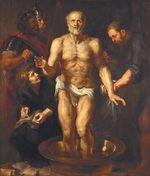
How Stoical Was Seneca?

Beard_1-100914_jpg_250x1108_q85Mary Beard at The New York Review of Books:

The problem about Seneca is that it was always difficult to pin him down (and so it remains). What Tacitus is saying, in his carefully chosen words, is that in his last hours he was “shaping…still” an imago of himself that he had been working on, revising, and adjusting for most of his life, in many different forms. Like it or not, there is something elusive, even a whiff of “spin,” about Seneca.

Romm finds a vivid symbol of that elusiveness in the surviving likenesses of the philosopher (“images” in yet another sense). Before the nineteenth century, the favored image of Seneca (now demoted to “Pseudo-Seneca”) was “a gaunt, haggard, and haunted” portrait sculpture that has survived in several ancient versions. It is not named, but it so matched everyone’s preconceptions of what the elderly philosopher must have looked like that it was simply assumed to be him. In 1813, however, a double-sided portrait—showing two male heads, back to back—was unearthed in Rome, probably dating to the third century AD: one was clearly labeled, in Greek, “Socrates,” the other, in Latin, “Seneca” (“the two sages joined at the back of the head like Siamese twins sharing a single brain,” as Romm has it).

more here.

The colossal government failure that obstructed a potentially major medical breakthrough

Tom Shroder in Salon:

The therapeutic properties of the synthetic compound MDMA, which would soon become known on the street as Ecstasy, were discovered by Alexander “Sasha” Shulgin, a leading researcher for Dow Chemical in the late 1950s and early 1960s who had been so awed by the psychoactive effects of mescaline that he decided to devote his life to experimenting with similar compounds, which he concocted in a backyard lab at his home in Lafayette, California. When he cooked up MDMA and “taste-tested” the drug in the 1970s, he thought he’d discovered a pleasant “no-calorie martini.” Then he increased the dose. The world cracked open.

“I am afraid to turn around and face the mountains,” he wrote in his lab notes, “for fear they will overpower me. But I did look, and I am astounded. Everyone must get to experience a profound state like this. I feel totally peaceful. I have lived all my life to get here, and I feel I have come home. I am complete. I feel absolutely clean inside, and there is nothing but pure euphoria. I have never felt so great, or believed this to be possible.” Shulgin urgently contacted his friend, the psychiatrist Leo Zeff, who following the lead of pioneering researchers in the 1950s and early 1960s, had been using psychedelic drugs like LSD, mescaline and psilocybin to assist in therapy with private patients. In 15 years of psychedelic practice, he hadn’t done any formal studies of his results, but his patients often said they felt they accomplished more in one session with Zeff than they had in years of traditional therapy. By the time Shulgin contacted him, Zeff was ready to retire — until he tried the MDMA.

More here.

India’s spacecraft beams back first Mars photos

Gulab Chand in PhysOrg:

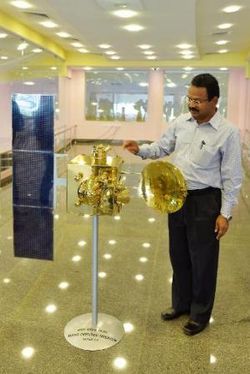
AnindianspacIndia became the first Asian country to reach Mars on Wednesday when the unmanned Mangalyaan spacecraft entered the planet's orbit after a 10-month journey, all on a shoestring budget. The mission, which is designed to search for evidence of life on the planet, is a huge source of national pride for India as it competes with Asian rivals for success in space. India beat rival neighbour China, whose first attempt flopped in 2011 despite the Asian superpower pouring billions of dollars into its programme.

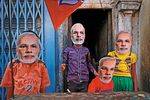
At just $74 million, India's mission cost less than the estimated $100 million budget of the sci-fi blockbuster “Gravity”. It also represents just a fraction of the cost of NASA's $671 million MAVEN spacecraft, which successfully began orbiting the fourth planet from the sun on Sunday. India now joins an elite club of the United States, Russia and Europe who can boast of reaching Mars. More than half of all missions to the planet have ended in failure. No single nation had previously succeeded on its first go, although the European Space Agency, which represents a consortium of countries, pulled off the feat at its first attempt. Scientists presented the Mars photos on Thursday to Prime Minister Narendra Modi who was on hand in the command centre to witness the achievement. “The success of our space programme is a shining symbol of what we are capable of as a nation,” a jubilant Modi said on Wednesday.

More here.

Thursday Poem

Today I'm Going to Start Living Like a Mystic

Today I am pulling on a green wool sweater and walking across the park in a dusky snowfall.  The trees stand like twenty-seven prophets in a field, each a station in a pilgrimage—silent, pondering.  Blue flakes of light falling across their bodies are the ciphers of a secret, an occultation.  I will examine their leaves as pages in a text and consider the bookish pigeons, students of winter.  I will kneel on the track of a vanquished squirrel and stare into a blank pond for the figure of Sophia.  I shall begin scouring the sky for signs as if my whole future were constellated upon it.  I will walk home alone with the deep alone, a disciple of shadows, in praise of the mysteries. 


by Edward Hirsch
from Lay Back the Darkness
Knopf/Random House, Inc

Wednesday, September 24, 2014

the architecture of stories

BuildingStories_ChrisWareMerve Emre and Christian Nakarado at The Point:

At the crossroads of architecture and the comic is Mazzucchelli’s Asterios Polyp, the love story of architecture professor Asterios Polyp—an unwieldy, snobbish, weak-chinned scrap of a man—and his lovely wife Hana. Asterios is one of the paper architects of the 1980s and 1990s avant-garde, a tight-knit coterie of poststructuralist designers who took their cues directly from French philosopher Jacques Derrida’s understanding of architecture as a form of writing. Like Derrida’s one-time collaborator Peter Eisenman, Asterios’s reputation rests on “his designs, rather than on the buildings constructed from them.” Nothing he has designed has ever been built. Rather, his career is an accumulation of riddles, abstractions and analogues, systems and sequences “governed by their own internal logic.” They take little by way of inspiration from the material world and give next to nothing back. Asterios Polyp, we could conclude, is the story of a man who could have authored a savvier version of Yes Is More.

Mazzucchelli draws Asterios as an extension of his intellectual sensibilities, a not-so-subtle takedown of architectural theory that’s delightful to behold in comic form. At his most pedantic moments—lecturing a class on Apollonian versus Dionysian design, or boasting about his sexual prowess at a faculty meeting—Asterios’s body morphs into an artist’s mannequin, a cool blue assemblage of hollow geometries that bear no relationship to the world around him.

more here.

Martin Amis’s “The Zone of Interest.”

140929_r25510-320-240-1Joyce Carol Oates at The New Yorker:

When Theodor Adorno declared, in 1949, that “to write poetry after Auschwitz is barbaric,” he could hardly have anticipated the ensuing quantity of poetry and prose that actually concerned itself with the Holocaust, still less its astonishing range and depth. The category now encompasses the densely narrated psychological-historical realism of André Schwarz-Bart and Imre Kertész, the Kafka-inspired dreamscapes of Aharon Appelfeld, and, later, the elliptical, deeply original fictions of W. G. Sebald. As the generations of firsthand witnesses give way to younger generations, literary works that confront the subject have often been more circumspect; recent novels by Susanna Moore and Ayelet Waldman achieve their emotional power by focussing upon characters peripheral to the terrible European history that has nonetheless altered their lives. The conflagration must be glimpsed indirectly, following Appelfeld’s admonition that “one does not look directly into the sun.”

Such circumspection has not been Martin Amis’s strategy in approaching the Holocaust. The Nazi death camps at Auschwitz provide a setting for Amis’s tour de force “Time’s Arrow: or The Nature of the Offense” (1991), in which the lifetime of a Nazi doctor-experimenter is presented in reverse chronological order, from the instant of his death (as the affable American Tod Friendly) to his conception (as the ominously named German Odilo Unverdorben), witnessed by a part of himself that seems to be his conscience, or his soul.

more here.

Why India’s boom years have been a bust

Deb_whatisindia_ba_img_0Siddhartha Deb at The Nation:

But why did India, a success story not so long ago, need to be Modi-fied at all? Throughout the 1990s and 2000s, sliced open by neoliberal knives into a realm of information technology, real estate and conspicuous consumption, the country was widely celebrated, both by its own elites and its Western boosters, as having entered the realm of true democracy. The four previous decades of postcolonial India were consigned to a conceptual darkness that was sometimes called “socialism” and sometimes, in a slightly more accurate reference to the heavy bureaucratic role of the centralized state, the “license-permit Raj.” In contrast to this was the celebration of the present: the new, market-friendly nation, tiger rising and “India Shining” (the latter a slogan coined by the BJP in its failed re-election bid in 2004), and particularly its growth as measured by GDP, averaging 8 to 9 percent throughout the first decade of the new millennium and peaking at 10.3 percent in 2010. Fed largely by flows of foreign capital and inherently weak, the tiger has since shrunk to the size of a goat, with growth having fallen to 4.7 percent in 2014—which goes some way toward explaining why both the Indian oligarchs and sections of the population turned against the Congress Party toward the end of its ten-year rule and began to clamor for Modi to take over.

more here.

Studying history with hypotheticals

Cass R. Sunstein in The New Republic:

ScreenHunter_810 Sep. 24 18.31As everyone knows, the supreme court 
ruled six–three for Al Gore in the great dispute over the Florida recount in 2000. As everyone also knows, Gore emerged as the ultimate victor in that recount, and with his poetic and moving inauguration address he managed to unify a badly divided nation. For a long period, the Gore years continued the peace and prosperity established under President Clinton, punctuated by the successful prevention of an apparent terrorist plot in 2001, by the enactment of health care reform in 2003 (mocked by critics as GoreCare), and by aggressive steps to reduce greenhouse gas emissions, culminating in the historic Copenhagen Protocol, ratified by the U.S. Senate in 2005.

It was not until the nation’s financial collapse, beginning in 2007, that Gore’s presidency started to unravel. Senator John McCain, a longtime critic of Gore’s “failure to respect free markets,” succeeded in convincing the American public that the collapse was partly a product of the Democratic Party’s “regulatory overreach,” and he was able to trounce Senator Joseph Biden in the 2008 election. Now in his second term, McCain has presided over a successful recovery (with unemployment levels down to 8 percent from their high of 13 percent in 2010). But his own legislative agenda, including repeal of GoreCare and immigration reform, has been stymied by what McCain calls the “do-nothing Senate,” 
which has a slim Democratic majority. Many insiders think that the Democratic nominee in 2016 will be Minnesota Senator Amy Klobuchar. According to University of Chicago law professor Barack Obama, a specialist on election law, “Klobuchar is perfectly positioned to win her party’s nomination—and to triumph in the general election as well. She’s audacious.”

What if Jesus had never been crucified? Can we imagine a world without Christianity? Suppose that Germany won World War II. What would Europe and the United States be like now? Imagine that Kennedy had not been assassinated. Would the Vietnam war have been avoided? Would the 1960s have been fundamentally different? Would Reagan have become president? Would the Soviet 
Union still exist?

More here.

FRAN LEBOWITZ TO TOURISTS: “STAY HOME”

David Hershkovits in Paper:

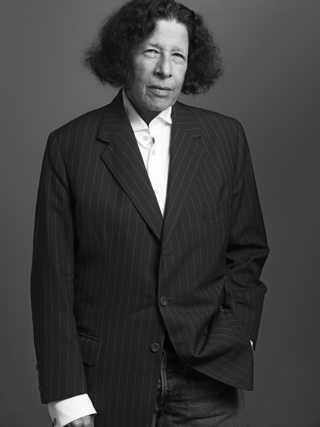
Fran_GuruFran Lebowitz loves to talk — so much so that when Martin Scorsese made a documentary about her he called it Public Speaking. But before she was one of the world's greatest talkers, she made her name as a writer; first at Andy Warhol's Interview and then with two collections of acerbic essays, Metropolitan Lifeand Social Studies. While a long-running writer's block limited her to an occasional magazine piece and two children's books, it liberated her voice to keep talking and developing into the type of personality that could only exist in NewYork City, specifically Manhattan, the only place she will consider living. An original gangster by any standard, she's completely self-invented and did it her way — sardonic, entertain- ing, insightful — inspiring a generation of humorists who followed. Even though Lebowitz is back to writing again (working on a novel she's been incubating), that doesn't mean she's stopped talking. On a recent summer day she sounded off on everything from Lena Dunham to gay marriage, and we did the only thing you really can do when Fran starts talking — we listened.

New York, Mike Bloomberg and Rich People In Politics
I would say that the changes in New York that I most object to came under Michael Bloomberg, and I would have objected to these if I was 20 or if I was 12. The second that Bloomberg appeared on the political scene, I objected to him. Most people didn't know who he was so they didn't object to him, but I did know who he was, and I did object to him. I object to people who are rich in politics. I don't think they should be allowed to be in politics. It is bad that rich people are in politics, it is bad for everybody but rich people, and rich people don't need any more help. Whenever people say, “Oh he earned his money himself,” I always say the same thing: “No one earns a billion dollars. People earn $10 an hour, people steal a billion dollars.”

More here.

An Orangutan Learns to Fish

Ferris Jabr in The New Yorker:

Jabr-Orangutans-690In 1990, while visiting a research camp in central Borneo, the primatologist Anne Russon saw an orangutan nicknamed Supinah attempt to make fire. Supinah sauntered toward an ashy fire pit, picked up a stick glowing with embers, and dipped it into a nearby cup full of liquid. Russon thought that the cup contained water, but it in fact held kerosene. Fortunately, that bath did little more than dampen the wood. Yet Supinah persisted: she got a second glowing stick, blew on it, fanned it with her hands, and rubbed it against other sticks. She never got the right steps in the right order to start a fire, but what foiled her was not her innate intelligence. She had a clear goal in mind and the right kind of brain to achieve it. She just needed a little more practice.

At the time, Russon was visiting Camp Leakey, which the anthropologist Biruté Galdikas established, in 1971, to study orangutans, just as Jane Goodall and Dian Fossey had done, in Africa, to observe chimpanzees and gorillas, respectively. Since then, Galdikas, Russon, and a handful of other orangutan specialists have learned firsthand just how intelligent and resourceful the animals really are. Some of their mental skills may exceed those of their great-ape brethren. Michelle Desilets, executive director of the Orangutan Land Trust, has summarized the unique intellect of orangutans like this: “They say that if you give a chimpanzee a screwdriver, he’ll break it; if you give a gorilla a screwdriver, he’ll toss it over his shoulder; but if you give an orangutan a screwdriver, he’ll open up his cage and walk away.”

Compared with chimpanzees, which are highly excitable, orangutans seem far more sober and considerate. They move deliberately and often spend a good deal of time silently watching before deciding how to act. At Camp Leakey, the orangutans had plenty of opportunity to observe and imitate people. They soon developed a habit of stealing canoes, paddling them downriver, and abandoning them at their destinations.

More here.

Human Ingenuity Can Fix Past Mistakes and Shape the Future

Simon Warrall in National Geographic:

In her new book, The Human Age, Diane Ackerman, best-selling author of The Zookeeper's Wife and A Natural History of the Senses, takes us on a journey into the Anthropocene: the era in which humans have both mastered and degraded the natural world. Ranging across the globe, she shows how our unique talent for self-awareness and our technological prowess can help us overcome today's global challenges. Speaking a few days before what may be the largest ever climate change demonstration, in New York, she talked about the Frozen Ark, where the DNA of vanishing species is being collected, introduced us to an orangutan with an iPad and a group of Alaskan Inuits threatened by rising sea levels, and expressed her optimism about the future.

Book-talk-human-age-01_83925_600x450You call our era the Anthropocene age. Can you explain?

Human beings have been on the planet for about 200,000 years, but if you think about it, most of the wonders we identify with contemporary life came about in the past 200 years. And in the past 20 years, they've been advancing at a mind-boggling pace. We've now changed the course of rivers, we've changed the outline of continents, we've created giant megacities, and we've even played golf on the moon. We've so dominated our landscape that the coalition of scientists believes we have to change the name of the era in which we're living. We're in the Holocene, a geologic era like the Jurassic for the dinosaurs. But [scientists would] like to change it to something that conveys more of our imprint on the planet, the Anthropocene, which translates as the human age. And I think it's a very good idea.

More here.

On/off switch for aging cells discovered, may hold the key to ‘healthy aging’

From KurzweilAI:

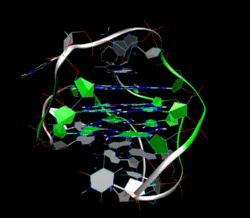
Telomer-structureScientists at the Salk Institute have discovered an on-and-off “switch” in cells that points to a way to encourage healthy cells to keep dividing and generating, for example, new lung or liver tissue — even in old age — and may hold the key to healthy aging. In our bodies, newly divided cells constantly replenish lungs, skin, liver and other organs. However, most human cells cannot divide indefinitely — with each division, a telomere (a cellular timekeeper at the ends of chromosomes) shortens. When this timekeeper becomes too short, cells can no longer divide, causing organs and tissues to degenerate, as often happens in old age. But there is a way around this countdown: some cells produce an enzyme called telomerase, which rebuilds telomeres and allows cells to divide indefinitely.

However, in a new study published September 19 in the journal Genes and Development, scientists at the Salk Institute have discovered that telomerase, even when present, can be turned off. “Previous studies had suggested that once assembled, telomerase is available whenever it is needed,” says senior author Vicki Lundblad, professor and holder of Salk’s Ralph S. and Becky O’Connor Chair. “We were surprised to discover instead that telomerase has what is in essence an ‘off’ switch, whereby it disassembles.” Understanding how this “off” switch can be manipulated, thereby slowing down the telomere shortening process, could lead to treatments for diseases of aging (for example, regenerating vital organs later in life).

More here.

Wednesday Poem

.
The Last Chapter is The Longest
Speaker 2

Every door opened and walked through recalls
all other doors —that first glimpse of the next room
its bric-a-brac reflecting what you knew and
how old you were and
what style shirt hung over a chair and
which program was on TV and
who else lay on the couch the night you met her and
when your first kiss led to which ceremony and
what gifts from then survived so many years and
why another door shut behind you that last time together and
how empty rooms seemed then without her to share those memories
of all the doors you opened together and
what color you decided to paint those walls after she had gone and
which car you drove to drop off the child at her place and
when you watched her door close and
how much time it took to find another door and
knock expectantly like you had before
.

by Michael Chrisman
from Little Stories, New Poems by Michael Chrisman

Tuesday, September 23, 2014

The Peculiar Journey of “Orange”

Ben Zimmer in the Visual Thesaurus:

OrangesAs has become the custom for the LinguaFile series on Lexicon Valley, I presented the hosts Mike Vuolo and Bob Garfield with a mystery word. This time, I had them guess the word that Eminem discussed in a 2010 interview on “60 Minutes” with Anderson Cooper: “People say that the word ___ doesn't rhyme with anything, and that kind of pisses me off, because I can think of a lot of things that rhyme with ___.” Bob figured out right away that it was orange, that eminently unrhymable word. Or not so unrhymable for Eminem, as he freestyles: “I put my orange four-inch door hinge in storage, and ate porridge with George.” I was amused to find out that Eminem's quasi-rhyming of orange has its roots in versifying going back to Walter William Skeat in an 1865 issue of Notes and Queries (not to mention a couple of dirty limericks collected by the great folklorist Gershon Legman).

The question that immediately came up had a less-than-obvious answer: Which came first, the color orange or the fruit orange? Many people are tempted to say the color, because it seems so basic to our vocabulary, but its “basicness” is relatively recent in the history of English. In the 1969 book Basic Color Terms, Brent Berlin and Paul Kay posited a kind of evolutionary sequence of terms in a language. The sequence starts with white and black, then proceeds to red, then green and yellow, then blue, then brown, and eventually to orange and purple (both unrhymable in English, as it turns out). The earliest evidence for the use of orange as a color term in English comes from 1512, several centuries after the other terms had been established. In Old English, you would need to say “yellow-red” (ġeolu-rēad) to describe something orange-colored.

More here.

tinkering around the edges of the third world war

Int-syria-1206Giles Fraser at The Guardian:

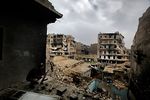
But despite my considerable reservations, it is still useful to invoke one aspect of the just war tradition and apply it to the current conflict in the Middle East: just wars require not only proportionality but also a reasonable chance of success. And the problem with so much of the west’s military involvement in Iraq, in particular, is that it has precious little conception of what success actually looks like. Bombing Islamic State is no more than a tinkering around the edges of a massive conflagration that is now increasingly being compared in scale to the thirty years war.

The sectarian conflict between Sunni and Shia, ignited first by the Iranian revolution and then deepened by the ill-advised western invasion of Iraq, is of a much greater order of magnitude than that acknowledged by Obama’s hands-off drone and air-strike approach.

We are witnessing a shift in the political tectonic plates throughout the whole of the Middle East and beyond into Africa, and the west’s apparently surgical involvement will probably do little more than generate some short-term satisfaction that we are doing something.

more here.

ben lerner’s 10:04

Cover00Christian Lorentzen at Bookforum:

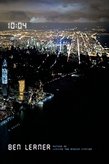
So 10:04 is a novel of intensities, an unfolding present. Some of this present is personal. At the start, Ben is diagnosed with “an entirely asymptomatic and potentially aneurysmal dilation of my aortic root” that could turn the artery into “a whipping hose spraying blood into my blood.” He’s also trying to impregnate his best friend Alex by artificial insemination (“fucking you would be bizarre,” she tells him). And he’s casually dating a conceptual painter named Alena with a taste for autoerotic asphyxiation. Other strands of the novel put Ben into contact with aspects of the city. He tutors an eight-year-old boy named Roberto, a well-drawn character but also a surrogate-son figure and an emissary from the immigrant class—Ben is constantly aware of being served by people who speak Spanish. Politics enters in the form of an Occupy protester who uses Ben’s shower and eats a meal he cooks, and an Adderall-addled student fixated on environmental apocalypse. Ben sits at the bed of a hospitalized mentor, who represents a connection with a vanishing avant-garde. He publishes a story in the New Yorker, fretting over whether he’ll let its editors “standardize” his work. After he signs his book deal, there’s an interlude in Marfa, Texas, where he sees the specter of Robert Creeley.

more here.

the mysterious Elena Ferrante’s Neapolitan novels

ID_POPKIN_FERRANTE_AP_001Nathaniel Popkin at The Smart Set:

Since the English publication last year of the second novel in the series, Story of a New Name (Europa Editions, 2013), critics have lauded the mysterious Ferrante, whose true identity is unknown. They’ve praised her particularly for her skill in rendering the fraught relationship between Elena and her childhood friend Lina (alternatively called Lila). Indeed, she draws the lines of the deepest love and of momentary hate, of jealousy and manipulation, guilt and fear, with spectacular control and insight. Give Ferrante a paragraph, and she’ll burnish the page with brilliant, fiery life.

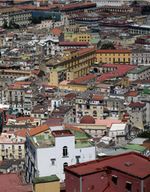
But underlying every nuance of personality here, every desire, every awakening, is the neighborhood, Naples, and the broad landscape of Italian cities, all in tension. This is “the infinite and the parochial,” as I attempted to conceptualize the opposite poles of urban life in Song of the City, my first book on Philadelphia. “It’s easy to become trapped in the parochial city,” I wrote, describing the neighborhood’s power of “exclusion and denial, stratification and fear.” On the other hand, “the infinite city is like the world itself. It is flat and wide and vast and in it everyone, everything can be known and explored.” For most of us and certainly for Elena and Natalie, “our relationship with the city stretches somewhere between the parochial and the infinite. Take away the parochial and the remains are cold, commodified spaces where personal, local connections do not exist. There are no neighborhoods, no neighbors, just glances. Dismiss the infinite from the city and what’s left is a village. The expectations are already known, the outcomes understood. The only way out is to leave.”

more here.