The Diversity of Islam

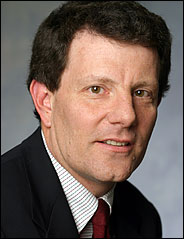
Nicholas Kristof in the New York Times:

Kristof.new.184A few days ago, I was on a panel on Bill Maher’s television show on HBO that became a religious war.

Whether or not Islam itself inspires conflict, debates about it certainly do. Our conversation degenerated into something close to a shouting match and went viral on the web. Maher and a guest, Sam Harris, argued that Islam is dangerous yet gets a pass from politically correct liberals, while the actor Ben Affleck denounced their comments as “gross” and “racist.” I sided with Affleck.

After the show ended, we panelists continued to wrangle on the topic for another hour with the cameras off. Maher ignited a debate that is rippling onward, so let me offer three points of nuance.

First, historically, Islam was not particularly intolerant, and it initially elevated the status of women. Anybody looking at the history even of the 20th century would not single out Islam as the bloodthirsty religion; it was Christian/Nazi/Communist Europe and Buddhist/Taoist/Hindu/atheist Asia that set records for mass slaughter.

Likewise, it is true that the Quran has passages hailing violence, but so does the Bible, which recounts God ordering genocides, such as the one against the Amalekites.

More here.

The moment of uncertainty

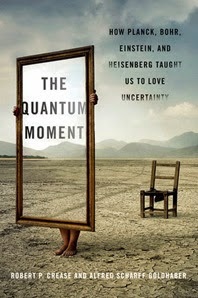
An interview of Robert Crease, historian and philosopher of science at Stony Brook University, New York, on the cultural impact of Heisenberg’s principle on homunculus: Image

What led Heisenberg to formulate the uncertainty principle? Was it something that fell out of the formalism in mathematical terms?

That’s a rather dramatic story. The uncertainty principle emerged in exchange of letters between Heisenberg and Pauli, and fell out of the work that Heisenberg had done on quantum theory the previous year, called matrix mechanics. In autumn 1926, he and Pauli were corresponding about how to understand its implications. Heisenberg insisted that the only way to understand it involved junking classical concepts such as position and momentum in the quantum world. In February 1927 he visited Niels Bohr in Copenhagen. Bohr usually helped Heisenberg to think, but this time the visit didn’t have the usual effect. They grew frustrated, and Bohr abandoned Heisenberg to go skiing. One night, walking by himself in the park behind Bohr’s institute, Heisenberg had an insight. He wrote to Pauli: “One will always find that all thought experiments have this property: when a quantity p is pinned down to within an accuracy characterized by the average error p, then… q can only be given at the same time to within an accuracy characterized by the average error q1 ≈ h/p1.” That’s the uncertainty principle. But like many equations, including E = mc2 and Maxwell’s equations, its first appearance is not in its now-famous form. Anyway, Heisenberg sent off a paper on his idea that was published in May.

How did Heisenberg interpret it in physical terms?

He didn’t, really; at the time he kept claiming that the uncertainty principle couldn’t be interpreted in physical terms, and simply reflected the fact that the subatomic world could not be visualized. Newtonian mechanics is visualizable: each thing in it occupies a particular place at a particular time. Heisenberg thought the attempt to construct a visualizable solution for quantum mechanics might lead to trouble, and so he advised paying attention only to the mathematics. Michael Frayn captures this side of Heisenberg well in his play Copenhagen. When the Bohr character charges that Heisenberg doesn’t pay attention to the sense of what he’s doing so long as the mathematics works out, the Heisenberg character indignantly responds, “Mathematics is sense. That’s what sense is”.

Read more here.

THE LIFE OF A DESIGNER CELL

Oliver Morton in MoreIntelligentLife:

Science%20finalThe clear plastic bags contain a liquid somewhere between orange and pink; quite fetching, but more importantly an indication that the alkalinity is just right. They sit on metal shelves in a small, steel-lined room which, at a steady 37˚C, is more than warm. The setting, fragrance-free and almost silent, looks and feels purely industrial. But it is dedicated to life—as a molecular process of bewildering complexity, and as something worth saving. This room is on a campus in South San Francisco where the biotech company Genentech—the first of its kind, now part of the Swiss pharma giant Roche—produces designer proteins. The liquid in the bags is an exacting cocktail of 50 nutrients and trace elements, mixed to a precision of a few parts per million. The purpose of the mixology, and of the temperature, and of all the other technologies and procedures here, is to create the best environment you could imagine—if your sense of what is good had been built up by the millions of years of evolution that were required to create the ovaries of the Chinese hamster, and then modified with a few decades of intensive genetic tinkering. Because it is on keeping such ovary-derived cells as happy as possible that Genentech’s fortunes are based; they are the cells res­ponsible for mass-producing antibodies that recognise and help the body regulate various sorts of target, notably cancers.

Quite how fast these fine-tuned cells make antibodies is not something Genentech likes to discuss, but the scientific literature has similar cells producing hundreds or even thousands per second. When you consider that each antibody requires the carefully co-ordinated production of four interwoven proteins and some precise adding of sugars to make a final product hundreds of times bigger and spectacularly more complex than an everyday pharmaceutical such as aspirin or morphine or warfarin, that rate sounds remarkable. But when you think of how many antibodies it takes to intervene in even a single human life, you realise that you need a remarkable amount of that remarkable quantity. You need remarkable squared—a system to mass-produce mass production.

More here.

New ‘lab-on-a-chip’ could revolutionize early diagnosis of cancer

From KurzweilAI:

Exosome-chip A new miniaturized biomedical “lab-on-a-chip” testing device for exosomes — molecular messengers between cells — promises faster, earlier, less-invasive diagnosis of cancer, according to its developers at the University of Kansas Medical Center and the University of Kansas Cancer Center. “A lab-on-a-chip shrinks the pipettes, test tubes and analysis instruments of a modern chemistry lab onto a microchip-sized wafer,” explained Yong Zeng, assistant professor of chemistry at the University of Kansas. Zeng and his fellow researchers developed the lab-on-a-chip initially for early detection of lung cancer — the number-one cancer killer in the U.S. Lung cancer is currently detected mostly with an invasive biopsy, after tumors are larger than 3 centimeters in diameter and even metastatic. Using the lab-on-a-chip, lung cancer could be detected much earlier, using only a small drop of a patient’s blood, according to Zeng.

The prototype lab-on-a-chip is made of a widely used silicone rubber called polydimethylsiloxane and uses a technique called “on-chip immunoisolation.” “We used magnetic beads of 3 micrometers in diameter to pull down the exosomes in plasma samples,” Zeng said. “To avoid other interfering species present in plasma, the bead surface was chemically modified with an antibody that recognizes and binds with a specific target protein — for example, a protein receptor — present on the exosome membrane. The plasma containing magnetic beads then flows through the microchannels on the diagnostic chip in which the beads can be readily collected using a magnet to extract circulating exosomes from the plasma.”

More here.

Thursday Poem

Forgetfulness
.

The name of the author is the first to go
followed obediently by the title, the plot,
the heartbreaking conclusion, the entire novel
which suddenly becomes one you have never read,
never even heard of,

as if, one by one, the memories you used to harbor
decided to retire to the southern hemisphere of the brain,
to a little fishing village where there are no phones.

Long ago you kissed the names of the nine Muses goodbye
and watched the quadratic equation pack its bag,
and even now as you memorize the order of the planets,

something else is slipping away, a state flower perhaps,
the address of an uncle, the capital of Paraguay.

Whatever it is you are struggling to remember,
it is not poised on the tip of your tongue,
not even lurking in some obscure corner of your spleen.

It has floated away down a dark mythological river
whose name begins with an L as far as you can recall,
well on your own way to oblivion where you will join those
who have even forgotten how to swim and how to ride a bicycle.

No wonder you rise in the middle of the night
to look up the date of a famous battle in a book on war.
No wonder the moon in the window seems to have drifted
out of a love poem that you used to know by heart.
.

by Billy Collins

Wednesday, October 8, 2014

Patient’s dramatic response and resistance to cancer drug traced to unsuspected mutations

From MedicalXpress.com:

CancerThe DNA of a woman whose lethal thyroid cancer unexpectedly “melted away” for 18 months has revealed new mechanisms of cancer response and resistance to the drug everolimus, said researchers from Dana-Farber Cancer Institute and the Broad Institute of MIT and Harvard. The investigators discovered two previously unknown mutations in the cancer's DNA. One made the woman's cancer extraordinarily sensitive to everolimus, accounting for the remarkably long-lasting response. The second mutation was found in the DNA of her tumor after it had evolved resistance to the drug 18 months after treatment started, according to the study published in the October 9 issue of the New England Journal of Medicine. The single case study illustrates how repeatedly sequencing a patient's cancer DNA – first prior to treatment and again when the tumor shows signs of resistance – can identify unsuspected “response” and “resistance” mutations that may help guide treatment of other patients. “This is personalized, precision medicine at its best,” said Jochen Lorch, MD, a thyroid cancer specialist at the Head and Neck Treatment Center at Dana-Farber and senior author of the report.

Having identified the mutation – in a gene called TSC2—that caused the patient's dramatic response to everolimus, researchers at Dana-Farber have opened a clinical trial to test the drug's effectiveness in other patients with TSC2 mutations. This type of trial, sometimes called a “basket” trial, is becoming more common as studies of patients who are “exceptional responders” are revealing previously unknown response mutations to a variety of drugs. A basket trial pools patients with a particular response mutation, regardless of the type of cancer they have.

More here.

Forgotten Aspects Of The First World War

One-hundred-years-of-oblivion_caravan-magazine_october-2014-01Vedica Kant at Caravan:

CLOSELY TIED IN with the West Asian campaigns is another, largely forgotten reality of the war—the magnitude of colonial troops’ involvement. The British campaign in Mesopotamia began wholly as an Indian Army operation, and nearly 40 percent of all Indians in the war served there. Indian troops also played a key role in campaigns in Egypt and Palestine; they were crucial in the capture of Jerusalem in 1917, and Haifa the following year. Nearly one and a half million men from India participated in the war, alongside two million Africans. In total, more than 4 million non-white men were recruited into the armies of the European empires.

So multi-cultural and multi-racial were the combatants that the German sociologist Max Weber said the Entente armies were comprised of “niggers, Gurkhas, and the barbarians of the world.” It put countries such as Britain—to take one example—into a novel situation. Having Indians kill white men in the battlefield could potentially upset the strict racial hierarchies of imperial rule. In the past, the British had avoided using the Indian Army against white enemies (such as in the Boer War of 1899–1902, when they fought the Dutch settlers of two independent Boer republics in southern Africa.) In this war, however, necessity trumped ideology. Indians, Moroccans, Algerians and Senegalese Tirailleurs served in key European battles, including those at Ypres, the Somme, Neuve Chapelle and Loos.

more here.

The Closed Mind of Richard Dawkins

1d5d31360061f174ef74d628004b0b74John Gray at The New Republic:

For all his fervent enthusiasm for science, Dawkins shows very little interest in asking what scientific knowledge is or how it comes to be possible. There are many philosophies of science. Among them is empiricism, which maintains that scientific knowledge extends only so far as observation and experiment can reach; realism, which holds that science can give an account of parts of the world that can never be observed; irrealism, according to which there is no one truth of things to which scientific theories approximate; and pragmatism, which views science theories as useful tools for organizing and controlling experience. If he is aware of these divergent philosophies, Dawkins never discusses them. His attitude to science is that of a practitioner who does not need to bother with philosophical questions.

It is worth noting, therefore, that it is not as a practicing scientist that Dawkins has produced his assaults against religion. As he makes clear in this memoir, he gave up active research in the 1970s when he left his crickets behind and began to write The Selfish Gene. Ever since, he has written as an ideologue of scientism, the positivistic creed according to which science is the only source of knowledge and the key to human liberation. He writes well—fluently, vividly, and at times with considerable power. But the ideas and the arguments that he presents are in no sense novel or original, and he seems unaware of the critiques of positivism that appeared in its Victorian heyday.

more here.

Henry Cowell at San Quentin

Cowellyoung6Charlie Haas at Threepenny Review:

When Cowell was a boy, his single mother was too poor to afford a piano, so “For one hour every day I practiced in my mind,” he wrote inHow and Why I Compose. “I sat down at the desk and practiced listening…to cultivate my mind to hear sounds which became more and more complicated as time went on.” At San Quentin he was allowed only an hour a week at a piano but he began to write music in his head again; sometimes he would jerk around to the rhythms while he worked in the prison jute mill, till the guards made him stop. He wrote in a letter: “You asked whether the prisoners were of the type portrayed in the movies—I must frankly say that I haven’t seen one! On the surface, they impress one as being a rather rough and ready, good-natured group, something like army men. It is only when one becomes better acquainted with them, that their lack of feeling for ethical behavior becomes evident… I cannot convey to you how extraordinary is the experience of being thrown in with such a motley crew…the whole thing is really an experience which, if not too protracted, one would not wish to have missed.”

It’s a relief, reading Joel Sachs’s biography, Henry Cowell: A Man Made of Music, to learn that Cowell’s prison years went as peacefully as they did. As an adolescent he was abstracted, asocial, and beaten up frequently.

more here.

Feeling Good about Feeling Bad

Nathan Thrall in the London Review of Books:

15798334Ari Shavit is a Haaretz columnist admired by liberal Zionists in America, where his book has been the focus of much attention. In April 1897 his great-grandfather Herbert Bentwich sailed for Jaffa, leading a delegation of 21 Zionists who were investigating whether Palestine would make a suitable site for a Jewish national home. Theodor Herzl, whose pamphlet The Jewish State had been published the year before, had never been to Palestine and hoped Bentwich’s group would produce a comprehensive report of its visit for the First Zionist Congress which was to be held in Basel in August that year. Bentwich was well-to-do, Western European and religious. Herzl and most early Zionists were chiefly interested in helping the impoverished and persecuted Jews of Eastern Europe, but Bentwich was more worried about the number of secular and emancipated Jews in Western Europe who were becoming assimilated. A solution to the problems of both groups, he believed, could be found by resurrecting the Land of Israel in Palestine.

At the end of the 18th century, roughly 250,000 people lived in Palestine, including 6500 Jews, nearly all of them Sephardic. By 1897, when Bentwich’s delegation made its visit, the Jewish share of the population had more than tripled, with Ashkenazi Zionist immigration pushing it up towards 8 per cent. Bentwich, Shavit writes, seems not to have noticed the large majority of Gentiles – the Arab stevedores who carried him ashore, the Arab pedlars in the Jaffa market, the Arab guides and servants in his convoy. Looking out from the top of a water tower in central Palestine, he didn’t see the thousands of Muslims and Christians below, or the more than half a million Arabs living in Palestine’s twenty towns and cities and hundreds of villages. He didn’t see them, Shavit tells us, because most lived in hamlets surrounded by vacant territory; because he saw the Land of Israel as stretching far beyond the settlements of Palestine into the deserts of present-day Jordan; and because there wasn’t yet a concept of Palestinian national identity and therefore there were no Palestinians.

Bentwich’s blindness was tragic, Shavit laments, but it was necessary to save the Jews.

More here.

David Lynch’s new exhibition at the Pennsylvania Academy of the Fine Arts

Morgan Meis in The Smart Set:

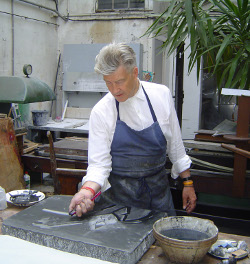
IC_MEIS_LYNCH_AP_001All is not well. But we do not see that at first. The white house and the white picket fence are in perfect order. The sky is blue and bright. The flowers are red and yellow. The grass is green. We’re surrounded by primary colors and clarity.

The man watering his lawn doesn’t notice the kink in the hose. The water pressure is building. The pressure in his neck builds, too. Suddenly, the man grabs his neck and falls to the ground. He is having a heart attack, or a stroke. The water from the hose shoots into the air as he falls. The man’s little dog bites ferociously at the stream. The camera pans down into the grass, into the muck of the soil and the writhing creatures beneath. Here, in the mud and the grime, nothing is primary in color. Nothing is clear or distinct. All is not well.

These are the opening shots of Blue Velvet, David Lynch’s now-classic film noir-ish offering from 1986. As the movie progresses, we find out that beneath the surface of Middle American banality, strange doings are afoot. A drug-sniffing maniac (Dennis Hopper) has kidnapped a local woman’s (Isabella Rosselini) husband and son. More disturbingly, the woman may actually enjoy the sexual torture her abductor puts her through. The two locals who get pulled into the drama (Kyle MacLachlan and Laura Dern) nearly succumb to the dark sexuality and violence themselves. All is very much not well.

But what is the point?

Blue Velvet seemed to interrogate Middle American blandness in order to reveal the disturbing violence and sexuality it hides. This has led some critics to complain that the movie amounts to rather ham-fisted satire.

More here.

The history of the Digital Revolution

Christina Pazzanese in the Harvard Gazette:

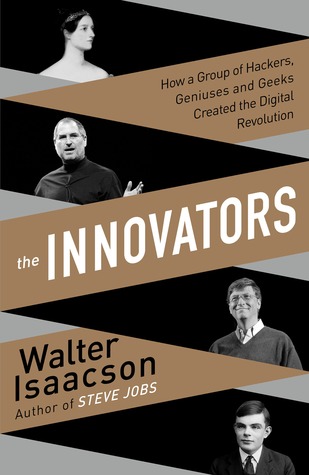
21856367Isaacson ’74 is the best-selling author of landmark biographies of Jobs, Albert Einstein, and Benjamin Franklin. A former journalist who has headed CNN and Time magazine, Isaacson is currently CEO of the Aspen Institute, an educational and policy studies think tank in Washington, D.C., as well as a Harvard Overseer. He spoke with the Gazette about what he learned in his research and how truly lasting innovation is often found where our humanity meets our machinery.

GAZETTE: What drew you to a subject as complicated and fluid as the history of the Digital Revolution?

ISAACSON: I was always an electronics geek as a kid. I made ham radios and soldered circuits in the basement. My father and uncles were all electrical engineers. When I was head of digital media for Time Inc. in the early 1990s, as the Web was just being invented, I became interested in how the Internet came to be. When I interviewed Bill Gates, he convinced me that I should do a book not just about the Internet, but its connection to the rise of the personal computer. So I’ve been working on this for about 15 years. I put it aside when Steve Jobs asked me to do his biography, but that convinced me even more there was a need for a history of the Digital Age that explained how Steve Jobs became Steve Jobs.

GAZETTE: You’re known for your “Great Man”-style biographies, and yet this is a story about famous, seminal figures and the lesser-knowns who contributed to the Digital Revolution in some way. Can you tell me about that approach?

ISAACSON: The first book I did after college (with a friend) was about six not very famous individuals who worked as a team creating American foreign policy. It was called “The Wise Men.” Ever since then, I’ve done biographies. Those of us who write biographies know that to some extent we distort history. We make it seem like somebody in a garage or in a garret has a “light-bulb moment” and the world changes, when in fact creativity is a collaborative endeavor and a team sport. I wanted to get back to doing a book like “The Wise Men” to show how cultural forces and collaborative teams helped create the Internet and the computer.

More here.

Wednesday Poem

Destiny

They deliver the edicts of God
without delay
And are exempt from apprehension
from detention
And with their God-given
Petasus, Caduceus, and Talaria
ferry like bolts of lightning
unhindered between the tribunals
of Space and Time

The Messenger-Spirit
in human flesh
is assigned a dependable,
self-reliant, versatile,
thoroughly poet existence
upon its sojourn in life

It does not knock
or ring the bell
or telephone
When the Messenger-Spirit
comes to your door
though locked
It'll enter like an electric midwife
and deliver the message

There is no tell
throughout the ages
that a Messenger-Spirit
ever stumbled into darkness

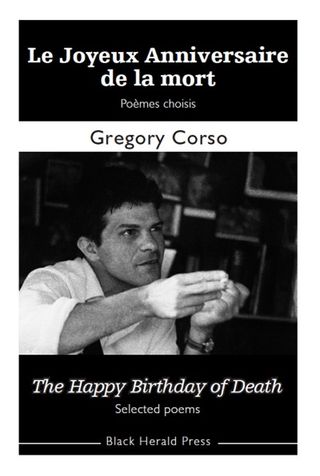
by Gregory Corso

Gregory Corso French Translation

New French translation of Gregory Corso's poetry


The Metaphysical Club

From delanceyplace:

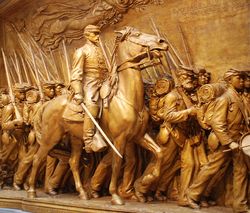
Robert_gould_shaw_memorial_-_detailRobert Gould Shaw, (portrayed by Matthew Broderick in the stirring 1989 film Glory), was a wealthy young Bostonian and a second lieutenant in the 2nd Massachusetts Infantry when he was approached by his father in late 1862 to take command of a new All-Black Regiment, the 54th Massachusetts Infantry. At first he declined the offer, but after careful thought, he accepted the position. He and his troops were immortalized on July 18, 1863, when they assaulted Confederate Battery Wagner. As the unit hesitated in the face of fierce Confederate fire, Shaw led his men into battle by shouting, “Forward, Fifty-Fourth, forward!” As he lead his men forward he was shot through the chest three times and died almost instantly. Years later, it was William James, viewed by some as the most brilliant American of the nineteenth century, who gave the dedication speech at the unveiling of a memorial in Shaw's honor. Note that the 1859 publication of Charles Darwin's Origin of the Species formed the intellectual backdrop for that era, and thus is understandably present in James's speech: “In 1897 the Commonwealth of Massachusetts erected a monument on Boston Common, designed by Augustus Saint-Gaudens and dedicated to Robert Gould Shaw, the man who had led the Fifty-Fourth and had died at Fort Wagner. William James was invited to deliver the oration at the unveiling. It is the finest of his speeches. Shaw had begun the war as a private in the Seventh New York Regiment, and was then commissioned an officer in the Second Massachusetts before accepting, in the winter of 1863, the colonelcy of the Fifty-Fourth, the so-called black regiment. Veterans of all Shaw's regiments were in the audience when James spoke. Shaw was being honored for having been a valiant soldier, James told them, but that was not what made him worthy of a memorial. For the instinct to fight is bred into us through natural selection; it hardly needs monuments or speeches to be reinforced. 'The survivors of one successful massacre after another are the beings from whose loins we and all our contemporary races spring,' James said; ' … pugnacity is the virtue least in need of reinforcement by reflection.

“What had made Shaw admirable, James explained, was not 'the common and gregarious courage' of going off to fight. It is that more lonely courage which he showed when he dropped his warm commission in the glorious Second to head your dubious fortunes, [soldiers] of the Fifty-fourth. That lonely kind of courage (civic courage as we call it in peace-times) is the kind of valor to which the monuments of nations should most of all be reared. For the survival of the fittest has not bred it into the bone of human beings as it has bred military valor; and of five hundred of us who could storm a battery side by side with others, perhaps not one could be found who would risk his worldly fortunes all alone in resisting an enthroned abuse. “A great nation is not saved by wars, James said; it is saved 'by acts without external picturesqueness; by speaking, writing, voting reasonably; by smiting corruption swiftly; by good temper between parties; by the people knowing true men when they see them, and preferring them as leaders to rabid partisans or empty quacks.' This is the behavior that monuments should honor.

More here.

Tuesday, October 7, 2014

Antal Szerb’s journey by midnight

1590177738.01.LZZZZZZZJulie Orringer at The Millions:

In August 1936, the thirty-six-year-old Hungarian writer Antal Szerb—acclaimed both for his fiction and for his influential History of Hungarian Literature—traveled to Italy for what he suspected would be the last time. The journey was a romantic farewell, the coda of a long obsession with the country, its art, its history, its people, its language, its ancient towns, and their narrow back streets. Szerb had lived in Italy as a young man, between 1924 and 1929, and the place had never relinquished its hold on him. “I initially wanted to go to Spain,” he wrote in his 1936 travel journal, “…but it occurred to me that I simply must go to Italy, while Italy remains where it is, and while going there is still possible. Who knows for how much longer that will be; indeed, for how much longer I, or any of us, will be able to go anywhere? The way events are moving, no one will be allowed to set foot outside his own country.” (He may as well have said, particularly no one of Jewish origin; though baptized a Catholic, he was the son of Jewish parents and was conscious of the growing threat Europe’s Jews faced.) His sense of urgency was, of course, prescient: within a few years a trip like the one he undertook in 1936 would indeed have become impossible. But the unusual combination of obsession, urgency, clear-eyed judgment, and foreboding that drew him to Italy helped to shape the brilliant and surprising work he produced on his return to Hungary:Journey by Moonlight, one of the most indelible novels of Szerb’s troubled century.

more here.

the notion of family

Atoya-ruby-frazier-aunt-midgie-and-grandma-ruby-2007-from-the-notion-of-family-aperture-2014-1Jane Harris at Paris Review:

LaToya Frazier’s first monograph, The Notion of Family, documents the decline of Braddock, Pennsylvania—a once-prosperous steel-mill town that employed generations of African American workers—alongside the hardships of Frazier’s family, who grew up there. Issues of class and race underscore the mostly black-and-white photographs in the collection, which is arranged as a kind of family album: intimate, collaboratively produced portraits of Frazier and her mother in mirrors and on beds, are presented with derelict scenes of collapsed buildings, vacant lots, and boarded-up stores.

Frazier provides short texts with each image—wistful snippets of memory and anecdote merge with facts and statistics. Illness is nearly a constant. As Laura Wexler points out in an accompanying essay, Braddock’s hospital, which eventually housed the town’s only restaurant and therefore became its de facto meeting place, “is as much or more a fixture in this album and this family than the school, the factory, the library, the market, the taxi stand, the pawnshop, or any other institution.”

more here.

How I Rewired My Brain to Become Fluent in Math

4385_65f148c815a4ebfaf8eb150460ba94fc

Barbara Oakley in Nautilus:

In the years since I received my doctorate, thousands of students have swept through my classrooms—students who have been reared in elementary school and high school to believe that understanding math through active discussion is the talisman of learning. If you can explain what you’ve learned to others, perhaps drawing them a picture, the thinking goes, you must
understand it.

Japan has become seen as a much-admired and emulated exemplar of these active, “understanding-centered” teaching methods. But what’s often missing from the discussion is the rest of the story: Japan is also home of the Kumon method of teaching mathematics, which emphasizes memorization, repetition, and rote learning hand-in-hand with developing the child’s mastery over the material. This intense afterschool program, and others like it, is embraced by millions of parents in Japan and around the world who supplement their child’s participatory education with plenty of practice, repetition, and yes, intelligently designed rote learning, to allow them to gain hard-won fluency with the material.

In the United States, the emphasis on understanding sometimes seems to have replaced rather than complemented older teaching methods that scientists are—and have been—telling us work with the brain’s natural process to learn complex subjects like math and science.

The latest wave in educational reform in mathematics involves the Common Core—an attempt to set strong, uniform standards across the U.S., although critics are weighing in to say the standards fail by comparison with high-achieving countries. At least superficially, the standards seem to show a sensible perspective. They propose that in mathematics, students should gain equal facility in conceptual understanding, procedural skills and fluency, and application.

The devil, of course, lies in the details of implementation. In the current educational climate, memorization and repetition in the STEM disciplines (as opposed to in the study of language or music), are often seen as demeaning and a waste of time for students and teachers alike. Many teachers have long been taught that conceptual understanding in STEM trumps everything else. And indeed, it’s easier for teachers to induce students to discuss a mathematical subject (which, if done properly, can do much to help promote understanding) than it is for that teacher to tediously grade math homework. What this all means is that, despite the fact that procedural skills and fluency, along with application, are supposed to be given equal emphasis with conceptual understanding, all too often it doesn’t happen. Imparting a conceptual understanding reigns supreme—especially during precious class time.

More here.