
Category: Recommended Reading
Figs by D H Lawrence
Disgust is often used as a tool of persuasion. But are gut feelings ever a reliable guide in questions of right and wrong?
Carol Hay in Aeon:

The group has been haunting me for years; when I was in grad school, their designated free-speech zone happened to be right outside my cubicle window. Most years, I took advantage of my location to plaster the window with pro-choice signs of my own. A few years ago, they visited the campus where I’m now an assistant professor, setting up their grisly billboards in a 20-foot circle right in the middle of campus. Several of my students, tickled at the prospect of witnessing their visibly pregnant, feminist ethics professor debate the morality of abortion, managed to convince me to try to talk to the protesters. It went about as well as you might expect.
What went considerably better was the response from the rest of the student body. After the initial shock wore off and they came to understand that, as a public university, we were obliged to respect the protesters’ rights to free speech, the students mounted a spirited counter-protest.
More here.
Main To Khelungi Un Sang Hori
Note: For Nazli.
Aga Khan Museum
Nadia Al-Issa in Art Asia Pacific:
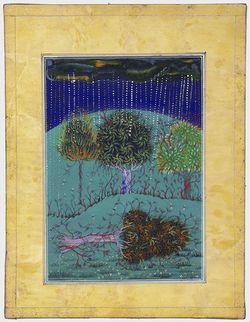
…Connecting the Ismaili Centre and the Aga Khan Museum is the centerpiece of the Aga Khan Park: inspired by the gardens at Humayun’s Tomb in Delhi, the Taj Mahal in Agra, and the Alhambra Palace in Grenada, Spain, Djurovic’s design is a contemporary take on the Islamic “Garden of Paradise.” The Aga Khan Park’s centerpiece harkens back to the Charbagh, a traditional Persian garden divided into four parts by walkways or water channels that intersect at a central fountain or pool. In Djurovic’s rendition, concrete paths separate four granite-lined reflecting pools and converge onto a massive central pool flanked by flowering serviceberry trees. Adjacent to the reflecting pools is a site-specific floor painting by contemporary Pakistani artist Imran Qureshi. Part of the museum’s inaugural show, “The Garden of Ideas: Contemporary Art from Pakistan,” the installation renders a landscape of violently splattered foliage and delicately executed flowers, which speaks to the complex process of domesticating nature and nature’s inherent unruliness.
Picture: IMRAN QURESHI, Rise and Fall, 2014
More here.
Sunday Poem
Closet Case
.
why is it
that you always
say the most significant
things
when you’re walking away
or
looking into your closet
searching
for something to wear
you must know
I think
that I cannot make out
what you’re saying
and then
you hold it
against me
like an old
belt
that’s too tight
to wear anymore
why is it
that you always
tell me later
that you told me
things
earlier
and make me feel
as if I was there
hanging
next to your old
wool sweater
that you used to love
but no longer
wear?
.
by Bill Schneberger
efusing Marcuse: 50 Years After One-Dimensional Man
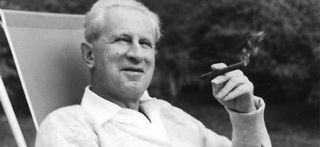
Stephen Whitfield in Dissent (photo from Wikimedia Commons):
However closely or accurately New Leftists and others might have read One-Dimensional Man, as well as Marcuse’s subsequent works, he was once taken very seriously. He helped to define the zeitgeist in a way that needs to be understood, if not resurrected. But in the decades since the New Left crested and collapsed, has the stature of any intellectual fallen more dramatically than that of Herbert Marcuse?
To be sure, his reputation has not faded into utter oblivion. An International Herbert Marcuse Society still holds biennial conferences, and anthologies and monographs on his work continue to appear. But they are not central to academic discourse and tend to be reviewed only in specialized journals.
In 1987, the social critic Russell Jacoby traced a downward trajectory in the vitality and scope of the American intelligentsia, yet his The Last Intellectuals mentions Marcuse only briefly. Eight years later, One-Dimensional Man did not make the Times Literary Supplement list of the hundred most influential books published since the end of the Second World War. Nor did the TLS cite any of Marcuse’s other works—not even what he regarded as his “most important book,” Eros and Civilization: A Philosophical Inquiry Into Freud (1955), the volume that had presumably irritated Pope Paul VI.
Marcuse’s stature has shrunk even as scholarly interest in other exemplary figures of the Frankfurt School has intensified. Consider Theodor W. Adorno and Walter Benjamin. Each of them dealt directly, explicitly and frequently with cultural questions, and far less with political ones. Yet they have recently been the subjects of massive biographies, which make the case for their continuing salience in grasping the implications of modernity itself. Marcuse is associated with the crisis of Marxism, however, in a way that they are not. The “crisis” could be defined as Marxism’s historical entanglement with the tyrannies of Stalinism and Maoism, or its imminent demise given the capacity of capitalism to generate mass acceptance and even allegiance that doomed any hope of systematic change. Even though Marcuse’s dissertation topic had addressed the way that novelists portray artists (the Künstlerroman), his death roughly coincided with the emergence of cultural studies, which marked an abrupt shift in academic fashion.
More here.
Wishing Away the World Without the West
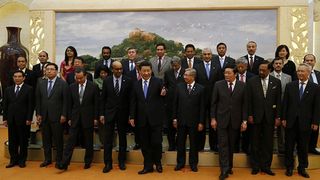
Naazneen Barma, Ely Ratner and Steve Weber in The Monkey Cage over at the Washington Post (photo Takaki Yajima/AFP):
In our original World Without the West essay (2007), we argued that emerging powers are preferentially engaging with each other — “routing around” the Western liberal order rather than joining it or trying actively to undermine it. This argument attracted two main criticisms. Consistent with realist theories of international politics, the first critique posits that what we’re witnessing today is simply the early stages of an eventual attempt to overthrow the liberal order. (We disagree, but we’ll save that one for another day.) On the other side of the spectrum, however, is the view articulated by Voeten that a combination of interests, inducements and constraints will lead countries like China to ultimately conform, more or less, to the way the United States and the West have done business for the last 70 years.
The crux of our disagreement with this liberal internationalist perspective largely revolves around two questions. Will Chinese-led multilateral institutions “really fundamentally challenge the existing order or have profound implications for China’s ties to global multilateral institutions?” And even when they have similar functional objectives — on issues like regional stability, counterterrorism or poverty alleviation — will their approach be sufficiently different from liberal practice so as to diverge from prevailing norms and institutions? Voeten thinks the answer is no to both these questions.
We disagree because we think it’s overly optimistic to assume that Chinese interests and behavior will conform quite so neatly to the post-WWII system. And, to put a finer point on it, we believe both logic and evidence are now frequently pointing in the opposite direction.
More here.
Saturday, November 22, 2014
The Banality of Islamic State: How ISIS Corporatized Terror
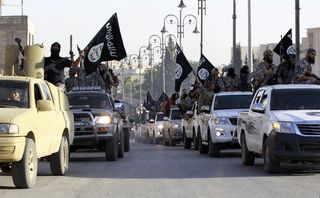
Cam Simpson in Bloomberg Businessweek (Photograph by Reuters):
The group’s leaders portray themselves as akin to seventh century warriors thundering forth on horseback to expand their religious empire by sword. They call their car bombs “steeds” and their drivers the “death admirers, the knights of martyrdom.” But in many important ways they have much less in common with medieval warriors than they do with modern bureaucrats, and a successful attempt to defeat them may require understanding their logistics, their financing, and their management structure as much as their extreme theology.
It may sound bizarre for a group calling itself a caliphate, but the foundation of its management model, as identified by experts, is more akin to that of General Motors than it is to a religious dynasty from the Dark Ages. After decades, we may have arrived at the ultimate professionalization of terror.
During a routine January 2007 patrol in Anbar province, in a town along the Euphrates called Tuzliyah al Gharbiyah, a unit of U.S. Marines stumbled on a cache of nine documents in a roadside ditch. They included financial records, payrolls, supply purchase records, administrative records, and other details of fund flows into and out of a single local cell in Anbar of a group then calling itself the “Islamic State of Iraq.” Not long after, Iraqi militiamen working with the U.S. stormed a home in a town farther down the Euphrates. They found a computer hard drive holding ledgers with 1,200 files detailing the finances and operations of provincial-level managers overseeing the cell and others like it across Anbar province.
Taken together, the Anbar records allowed for a forensic reconstruction of the back-office operations of a terrorist insurgency from its local level up to its divisional headquarters. The data were handed over to the National Defense Research Institute of Rand Corp., a U.S. Department of Defense-funded think tank based in Santa Monica, Calif. Seven researchers set out to determine what the ledgers, receipts, memos, and other records meant. What they concluded in a 2010 report, written for then-Defense Secretary Robert Gates, should be familiar to students of business management: The group was decentralized, organized, and run on what’s called the “multidivisional-hierarchy form” of management, or M-form for short.
More here.
the life of larkin
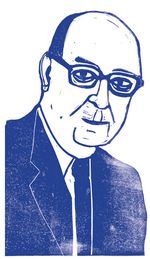
James Booth’s new biography of Philip Larkin is not very exciting, perhaps because Booth has the sense to leave the exciting writing to Larkin. But it is very welcome. If you believe that Larkin (1922-85) wrote some of the best English-language poems of modern times, then it has been a trial to see his questionable track record as an everyday human being get in the way of his reputation as an artist.
The obfuscation happened in a hurry, only a few short years after Larkin’s death. His pair of distinguished literary executors, Anthony Thwaite and Andrew Motion, served him faithfully with a selection of his letters (edited by Thwaite) and a biography (written by Motion). Unfortunately for Larkin’s image — which had been fairly staid until then, the poet having lived a quiet and mostly provincial life as a university librarian — it became evident that he had indulged himself in racist and sexist language. It had not occurred to the executors that they might have prefaced their respective volumes with a health warning in capital letters pointing out what should have been obvious: that Larkin talked that way only in his private life; that he believed his letters to be part of his private life, too; and that in his public life he was courteous and charming to anyone he met, of whatever gender or racial background.
more here.
Patrick Modiano’s ‘Suspended Sentences’
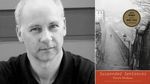
When Patrick Modiano won the Nobel Prize for literature in October, a lot of readers (myself included) were taken by surprise. Until now, he has been relatively unknown in the U.S., although he is a bestseller in his native France and winner of the Prix Goncourt who has published steadily since his first novel, “La Place de l'Étoile,” appeared in 1968, and co-wrote the screenplay for Louis Malle's 1974 movie “Lacombe Lucien.”
Like that film, much of Modiano's fiction has roots in the paradoxes of the Vichy era, which remains, for him, a matter of both personal and collective history. Born in 1945, he grew up estranged from his father, a black marketeer, and has called himself “a product of the dunghill of the Occupation, that bizarre time when people who should have never met did meet and by chance produced a child.”
Such tensions are very much at work in “Suspended Sentences,” a book that gathers three novellas originally published between 1988 and 1993 and now available in English for the first time. “I thought I'd written them discontinuously, in successive bouts of forgetfulness,” Modiano has said of these efforts, “but often the same faces, the same names, the same places, the same sentences recur from one to the other.
more here.
Whitewashing Imperialism
When the media erases the crimes of US imperialism, they make future atrocities more likely.
Emanuel Stoakes in Jacobin:
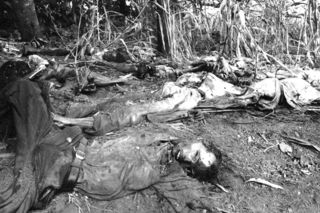
Romero, as the piece explains, was “one of the heroes of the liberation theology movement in Latin America”; his criticism of atrocities committed by the US-backed Salvadoran armed forces precipitated hisassassination at mass in March 1980.
Shortly before his killing, Romero wrote to President Carter pleading him to end military aid to the ruling junta, predicting that such support would “surely increase injustice here and sharpen the repression that has been unleashed against the people’s organizations fighting to defend their most fundamental human rights.”
Carter declined to directly reply, while Romero’s murder would prevent him from seeing his bitter prophecy not only fulfilled, but exceeded: El Salvador soon descended into outright civil war, a conflict that lasted for another twelve years, displacing over a million people and claiming the lives of 75,000, most of them killed by the regime.
More here.
on ‘Air Raid’, by Alexander Kluge
In 1977, in a review for Der Spiegel of a short-story collection by Alexander Kluge, the poet and translator Hans Magnus Enzensberger wrote: “Among well-known German authors Kluge is the least well-known.” What was true then is even truer now, still more so outside his own country. Born in 1932, starting out as a lawyer working for celebrated Frankfurt School theorist Theodor Adorno in the 1950s, then as an assistant to Metropolis director Fritz Lang, Kluge is a direct link to many of the giants of 20th-century German art and ideas.
He’s also a polymath who moves between literature, philosophy and the moving image with equal facility, and has made decisive contributions to each of those fields. He was a key figure behind the Oberhausen Manifesto in 1962 that, like the similarly revolutionary Nouvelle Vague in France, championed expressive freedoms on screen, and incubated the New German Cinema associated with Fassbinder, Herzog and Wenders. He created the first German film school at Ulm, directed many important films – among them Yesterday Girl (1966), which won the Silver Lion at Venice, and developed a much-debated theory of montage cinema that, in the demands it placed on viewers, enacted his belief that “film is composed in the head of the spectator; it is not a work of art that exists on the screen by itself”.
more here.
Guido Argentini Photographs
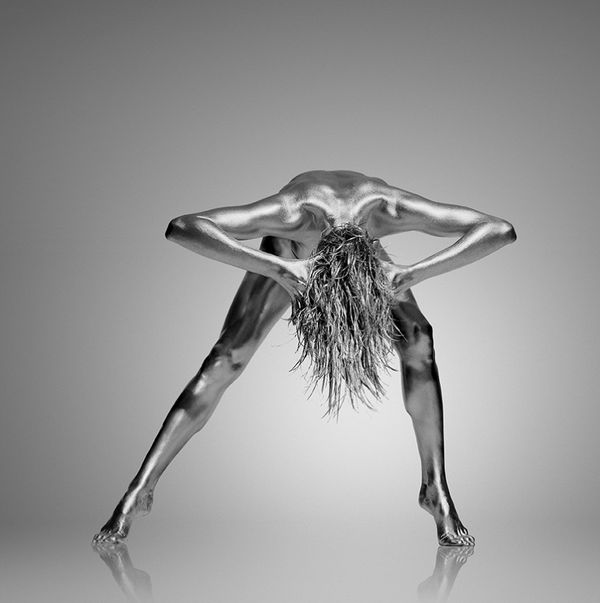
More here.
The rise of modern Stoicism
Stoicism is making a comeback, writes Joe Gelonesi, who explores ‘Stoic Week’, a university exercise which challenges participants to apply the advice of the ancient Stoics to their daily lives. Now in its third year, it's an experiment with a growing international following.
Joe Gelonesi at the website of the Australian Broadcasting Corporation:
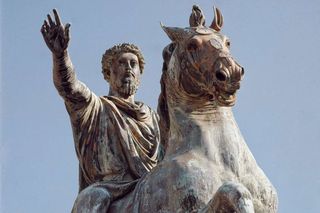
Although the original Hellenic school left few fragments, the great Roman Stoics, via Cicero, did a good deal to grow and magnify the tradition. Much of the modern Stoic urge is based on the ideas of Seneca, Marcus Aurelius and the slave-turned sage Epictetus.
The idea of staring down the world in a Stoic glare runs deep in our cultural veins, but its more theory than practice. To adopt an authentic Stoic life amidst the daunting surplus of pleasure and experience in the modern west seems curiously out of tempo. Yet an experiment with a handful of university students has been exported to a global audience seemingly hungry to learn the ways of the Stoic.
More here.
A southern Reformation
In The Economist:
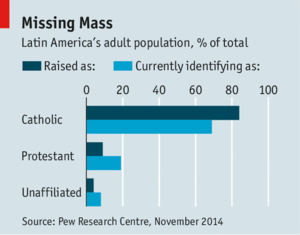
Pew’s study finds sharp variations from country to country. In four Central American countries—El Salvador, Guatemala, Honduras and Nicaragua—barely half of the population is still Catholic. Though 61% of Brazilian respondents say they are Catholic, 26% are now Protestant. In many other countries there are still firm Catholic majorities. Whatever their denomination, most Latin Americans remain deeply religious. Only Uruguay stands out as a bastion of secularism—a tradition dating back more than a century.
Two things distinguish Latin American Protestantism. First, it is mainly a result of conversion (see chart). Second, two-thirds of Latin American Protestants define themselves as Pentecostal. Much more often than Catholics, they report having direct experience of the Holy Spirit, such as through exorcism or speaking in tongues. Indeed, the words “evangelical” and “Protestant” are used interchangeably in the region. Pew finds that Latin American Protestants are conservative on social and sexual issues, such as gay marriage and abortion. As Catholics become more liberal on such questions, that points to looming American-style “culture wars”.
What is causing the shift to Protestantism? Academics have several hypotheses. Some hold that Pentecostalism resonates with Amerindian and Afro-Latin American belief in the spirit world. But Pew finds that many Catholics as well as Protestants in Latin America hold such beliefs.
A second theory stresses the appeal of Protestantism to urban migrants. David Stoll, an anthropologist at Middlebury College in Vermont, notes that such people have moved away from their extended families, attenuating their networks of support. Evangelical churches tend to operate on “family-like principles”, he says.
Read the rest here.
Bert Haanstra – Glas (1958)
why migration is a fundamental human right
Mohsin Hamid in The Guardian:
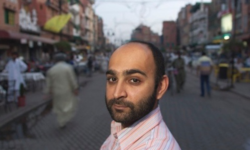
Most of my education has been in the American system. I suspect this has contributed to my discomfort with a great deal of what I see practised around me in Pakistan. I have friends who are non-Muslim; non-Muslims are legally persecuted here. I have friends who are gay; homosexuality is legally proscribed here. An African friend once told me after visiting that Pakistan was among the most blatantly racist places he had ever been. Pakistani laws discriminate against women. Pakistani courts fail to deliver any semblance of due process. Pakistani presidents are frequently unelected generals. My largely American-educated self is continually brimming with disappointment. Yet my largely American-educated self is profoundly disappointed by America, too. This is partly because the US’s bellicose excesses in foreign policy become more visible the closer you are to where American bombs are hitting the ground. But it is also because I studied American history with American teachers and American law with American professors.
More here.
Nuruddin Farah’s ‘Hiding in Plain Sight’
Laila Lalami in The New York Times:
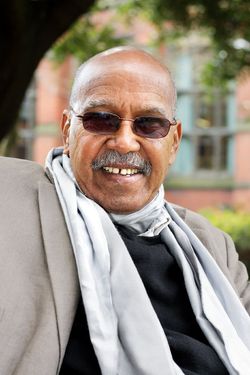
In his first novel, “From a Crooked Rib,” he wrote about a nomad girl who flees her family’s camp after they attempt to arrange a marriage for her with an older man. That book was followed by a trilogy, Variations on the Theme of an African Dictatorship, which explored the parallels between colonialism, patriarchy and dictatorship in Somalia, then still under Mohammed Siad Barre’s rule. Another trilogy, Blood in the Sun, examined the effect of internecine conflict, foreign aid and sexual violence on ordinary families. Though different in style from the Moroccan Tahar Ben Jelloun or the Egyptian Naguib Mahfouz, his work shares with them a preoccupation with capturing snapshots of a country in rapid transition. “Hiding in Plain Sight” may begin with a terrorist attack, similar to the one that shook the United Nations compound in Somalia last year, but this is not a novel about violence. It is, instead, a novel about grief and love.
More here.
Saturday Poem
Work
Cutting in the cane fields
or hacking back scrub,
it was something we were used to:
after all, we were farmers.
it was something we were used to:
after all, we were farmers.
We’d gather every morning
before setting out,
then cutting all day
in the jungle and marshes.
We’d come back exhausted,
well worthy of beer
and brochettes. Our wives
turned their backs in bed.
In those days was beef
and ribsteak in plenty.
We bore the knives ourselves:
slaughtering, jointing.
We feasted like the elegant kings
to whom were given
such bloody instructions
they jumped to the life to come.
by Steve Ely
from The Poetry Review, 104:1, Spring, 2014