
[Thanks to Farrukh Azfar.]
Category: Recommended Reading
This is why they hate us: The truth about the roots of Muslim extremism
Sarah Chayes in Salon:
Abd al-Rahman Atiya, killed in a drone strike in 2011, conceded that the 9/11 attacks had been launched because of hatred for some aspects of Western culture, but the main rationale was the U.S. role enabling Arab kleptocracies.
Yes we hate the corruptive financial lifestyle that does not please God . . . But . . . the more important reason is their . . . appointing collaborative regimes for them in our countries. Then they support these regimes and corruptive governments against their people, who demand freedom and want to abide by Islam.

More here.
Guantánamo Diary
Mark Danner in The New York Times:

“Guantánamo Diary” is the most profound account yet written of what it is like to be that collateral damage. One fall day 13 years ago Mohamedou Ould Slahi, a 30-year-old electrical engineer and telecommunications specialist, received a visit at his house in Noakchott, Mauritania, from two officers summoning him to come answer questions at the country’s intelligence ministry. “Take your car,” one of the men told him, as Slahi stood in front of his house with his mother and his aunt. “We hope you can come back today.” Listening to these words, Slahi’s mother fixed her eyes on her son. “It is the taste of helplessness,” he writes, “when you see your beloved fading away like a dream and you cannot help him. . . . I would watch both my mom and my aunt praying in my rearview mirror until we took the first turn and I saw my beloved ones disappear.” That was Nov. 20, 2001. Slahi’s mother has since died. Her son has never returned.
More here.
Friday, January 30, 2015
RoboCorp: Get ready for companies that run themselves

David Z Morris in Aeon (Photo by Gallery Stock):
Though retailers and service providers adopted Bitcoin en masse in 2014, financial servicers have been much more cautious. What this means is that there are still very few ways for users to convert Bitcoin or other cryptocurrencies into traditional currencies or commodities.
Partly in order to work around this, the BitShares trading platform offers participants no ownership of the commodities they’re nominally taking positions on. Instead, Larimer describes it as a ‘predictive market’, in which participants set commodity prices by taking positions – or, put more directly, by placing bets. BitShares is, for now, a digital version of the 19th-century bucket shops where the working classes would go to bet on stock‑market moves. This form of speculation is illegal in most US states, including Washington, California and Mississippi. But that could change quickly. As digital cash becomes integrated with more and more services, DACs [Distributed Autonomous Corporations] such as BitShares will almost certainly find ways to interface with real-world markets for gold, dollars and goods of all kinds. If those connections expand, the possibilities of DACs will expand with them.
Imagine, for instance, a bike-rental system administered by a DAC hosted across hundreds or thousands of different computers in its home city. The DAC would handle the day-to-day management of bikes and payments, following parameters laid down by a group of founders. Those hosting the management programme would be paid in the system’s own cryptocurrency – let’s call it BikeCoin. That currency could be used to rent bikes – in fact, it would be required to, and would derive its value on exchanges such as BitShares from the demand for local bike rentals.
Guided by its management protocols, our bike DAC would use its revenue to pay for repairs and other upkeep. It could use online information to find the right people for various maintenance tasks, and to evaluate their performance. A sufficiently advanced system could choose locations for new stations based on analysis of traffic information, and then make the arrangements to have them built.
More here.
Jonathan Chait and the New PC
Michelle Goldberg in The Nation (Reuters/Kacper Pempel):
Unlike some of Chait’s critics, I think there is such a thing as renascent political correctness. (He quotes my own writing on the subject in the piece.) Most writers I know, including quite lefty ones, talk about it a lot in private. But as many others have pointed out, his examples don’t quite work, because he conflates several different things. First, there’s the genuine suppression of speech, as with Omar Mahmood, the University of Michigan student who was fired from his school newspaper, and whose apartment was vandalized, for running afoul of lefty sensitivities. Then there are the annoying rhetorical tropes of online discourse, which can make good-faith argument impossible. (Accusing every man who disagrees with you of “mansplaining” is one of these, even though mansplaining is a real phenomenon.) Finally, there is energetic debate. Telling these last two apart is pretty subjective. I think the response to Giraldi was the third. He probably thinks it was the second.
At one point, Chait describes a torrent of online derision directed at his friend Hanna Rosin under the hashtag #RIPpatriarchy. In Chait’s version, the hashtag is a reaction to her book, The End of Men, which, he writes, “argued that a confluence of social and economic changes left women in a better position going forward than men, who were struggling to adapt to a new postindustrial order.” In fact, the hashtag was spurred by a related Slate piecewith the trollish headline, “The Patriarchy is Dead: Feminists, accept it.” The patriarchy not being dead, feminists did not accept it. That’s not stifling political correctness. It’s responding to speech with more speech.
Yet that’s not the end of the story. Sure, Rosin was wrong, and Giraldi wrong-headed. But the sheer volume of the rebukes, the loud public ostracism, probably felt hugely disproportionate. When you’re on the wrong end of one of these things, it can seem like your identity has been hijacked, rendering you a caricature of yourself. “Her response since then has been to avoid committing a provocation, especially on Twitter,” Chait writes of Rosin. He quotes her saying, “The price is too high; you feel like there might be banishment waiting for you.” Part of what Chait is describing as political correctness is the way social media has dramatically raised the psychic cost of voicing unpopular opinions, whether they have merit or not.
To which, I suspect, many on Twitter would reply boo-fucking-hoo. Indeed, the milieu Chait has imperfectly described has developed a whole lexicon to mock those who admit to feeling bruised by it: they have the sadz, they’re butthurt, they’re crying #maletears. For Twitter’s guardians of righteousness, if privileged journalists feel more inhibited about bucking lefty pieties, so much the better. If a certain sort of skeptical, contrarian liberal intellectual style is being endangered, they won’t mourn it.
More here.
Austerity vs. Democracy in Greece

Mark Blyth and Cornel Ban in Foreign Affairs (registration required) (image by (Kostas Tsironis / Courtesy Reuters):
It may be odd to use a Roman metaphor to describe a Greek political event, but in this case, it’s apt. Just as Julius Caesar crossed the Rubicon river because he could, in spite of the warnings of the Roman Senate not to, so Alex Tsipras, leader of the anti-austerity party, Syriza, has decided to try to end austerity in Greece, in spite of Europe’s leaders saying he shouldn’t. Whether Tsipras will succeed is still unclear, but whatever happens, his victory represents a crucial turning point for Europe—a signal that time has run out on austerity policies.
A “Tsipras” had to happen somewhere eventually, because there’s only so long you can ask people to vote for impoverishment today based on promises of a better tomorrow that never arrives. If voting for impoverishment brings only more impoverishment, eventually people will stop voting for it—and the timing of “eventually” will depend on when people’s assets run out. In the Greek case, backers of the incumbent New Democracy party and its austerity policies constitute that quarter of the electorate who still have assets (pensions, paper, and portfolios) after five years of depression and who want to preserve what they have. The 36 percent that voted for Syriza were the young, the asset-less, and the unemployed—people who either lost what they once had or never had much to begin with. Greece’s 1.9 percent of growth last year means essentially nothing to a society that has lost nearly 30 percent of GDP in a little over half a decade; on the current course, it would take, by latest estimates, two generations for the country to get back above water.
Syriza’s victory presents two lessons for the rest of Europe. First, no one votes for a 15-year-long recession. Second, you can’t run a gold standard in a democracy. Either the gold standard goes, or democracy goes, and that is the choice Europe may face sooner than it thinks.
The Euro is the gold standard that pretends that it’s not one—and therein lies the rub. While Europe has a plethora of national parliaments and free and fair elections, as well as a European parliament and multiple institutions with delegated power to represent the interests of citizens, once a country is a member of the eurozone, certain things happen that bypass any possible democratic checks. On the upside, its credit history gets rewritten. Greece and Italy get to borrow like Germany (with predictable results). On the downside, when a eurozone country is hit with an economic shock, it cannot respond to it through the exchange rate (devaluation) or by using the printing press (inflation). It must choose between default, which is not allowed, and balancing its books through internal devaluation (austerity). And if that means a couple of constitutional coups d’état have to happen in the heart of democracy to get the policies through, as happened in Italy and Greece in 2011, then so be it.
More here. Also see this interview with Mark Blyth.
why are we obsessed with talking animals?

Talking animal stories have their roots in a prehistory when, according to the literary scholar Egon Schwarz, professor emeritus at Washington University, consciousness had yet to distinguish between man and animal, ‘when people still believed in the possibility of slipping from one to the other, entirely according to desire or need’. And since then, talking animals have developed in a variety of rather amorphous ways to satisfy human desire; a kind of cipher for our own existential dilemmas.
Talking animals can provide us with joy and laughter. They can serve as a displacement for weaknesses and anger. And they can teach us very human lessons while simultaneously serving as a continual source of wonder. Think of Lewis Carroll’s menagerie of talking animals – from the White Rabbit to a Mouse offended by Alice’s bad manners – all of whom are animated by the wonder of childhood imagination. Or of Aesop’s animals designed to didactically instruct young minds toward the path of proper morality. Or of the canine narrator of Franz Kafka’s short story ‘Investigations of a Dog’ (1922), an ideal stand-in for the author’s alienated existence.
They can also serve to remind us of the idyllic pleasure of nature itself.
more here.
Confronting the Technological Society

How did we reach a point where “nothing at all escapes technique today”? Ellul offers a long genealogy of technique, from primitive man to the Greeks and Romans, to Christianity, the early modern era, and lastly the Industrial Revolution, when technique finally came into ascendancy. Ellul’s attention to social changes — technological, economic, legal, administrative, institutional — makes it a more earthy account of modern technical development than those frequently given that focus entirely on shifts in philosophical and religious outlooks. (This hints at the influence on Ellul of Marx, who famously rejected Hegel’s preoccupation with consciousness, rather than the material conditions of life, in understanding history.) While explanations from the history of ideas are not irrelevant for Ellul — although he probably dismisses them far too quickly — he considers them sorely lacking when it comes to explaining the rapid spread of technical development across Europe. A better explanation, he believes, can be found in the convergence of five phenomena in the nineteenth century: the availability of scientific knowledge amassed over centuries; population growth; an economy at once stable but adaptable; a clear intention on the part of the whole society to exploit technical possibilities in all areas; and perhaps most importantly social plasticity — that is, a society willing to surrender its religious and social taboos and to trade in the supremacy of traditional groups for that of the individual.
more here.
An American Family’s Curious Bond With Russia

It may sound incomprehensible—senseless, Constance Garnett would have put it, as she did in her translation of The Brothers Karamazov—but while the rest of the world may dread the return of the prolonged hostile stare-down known in the last half of the last century as the Cold War, in some ways, I welcome the refreeze. It plunges me into nostalgia for my 1970s and 1980s childhood in Michigan, Indiana, and Oklahoma, when my professor parents threw incessant pirozhki-and-samovar parties for Russian Club students and for the peaceable, intellectual Soviet émigrés who were landing in American college towns in those years, bringing news from behind the Iron Curtain and beet-and-mayonnaise salads. I suspect that writers of James Bond-type thrillers feel much the same way I do, though for different reasons. Since the demise of the USSR—and the KGB—in 1991, it’s been a stretch for them to keep roping Soviet-era villains into their plots; now they can breathe easy. In the 1990s and well into the aughts, during the post-Soviet thaw, I sometimes wondered if my parents’ obsession with the culture and history of the Soviet Union had been a mistake, a generational fluke. But now that bare-chested, border-crashing Vladimir Putin has brought back the jangling tensions of the good-old bad-old days, I am feeling some vindication. So, I imagine, are the dozens of midwestern students who fell under the spell of my parents’ Slavophilia, getting doctorates in Russian just before Americans stopped caring about the “Evil Empire” and Russian-language enrollments plummeted.
more here.
Genome Editing with CRISPR
Note: For Abbas. CRISPR is one of the four most beautiful scientific discoveries of the last 100 years in biology and has entirely changed the direction of our research.
Astra Zeneca drive to develop drugs from genome project
Pallab Ghish in BBC:

…The human genome project determined that humans had about 24,000 genes. These are found along the DNA double helix in every cell in the body. The decoding of the human genome 15 years ago led to the hope that doctors would eventually identify faulty genes responsible for specific diseases and eventually develop medicines to treat them. The principle is simple – drug companies would “snip out” the gene responsible for the disease from the patient's DNA, then use it to test drugs to see if they could fix the problem. At the time, US President Bill Clinton said: “Our children's children will only know cancer as a constellation of stars,” and hailed the completion of the project after a 10-year race that cost billions. And Tony Blair, then UK Prime Minister, who joined the Mr Clinton by satellite from Downing Street, added: “Every so often in the history of human endeavour, there comes a breakthrough that takes mankind across the frontier and into a new era.” Fifteen years on, one could wonder: “What new era?” There are only a handful of new medicines based on the human genome project, and, although Mr Clinton may eventually be proved right, cancer is still known as “cancer”. Progress has been hampered by two main factors. First, researches soon began to realise that most common illnesses were caused by any combination of tens of genes. Second, the genetic techniques to snip out specific genes are expensive and take a long time. Researchers have to make what are in effect “genetic scissors” tailor-made to the gene they want to snip out. This process can take months for each and every gene. But in recent years, scientists have developed a set of genetic scissors that can be quickly and cheaply tailored to cut out a specific gene. And this technique, called Crispr, will be the focus of the research programme.
More here.
Thursday, January 29, 2015
Who owns culture?
Kenan Malik in Pandaemonium:
More here.
Genetic Memory: How We Know Things We Never Learned
Darold Treffert in Scientific American:
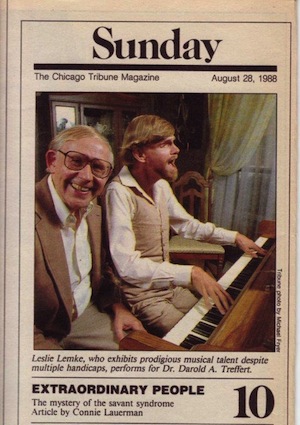
Leslie Lemke is a musical virtuoso even though he has never had a music lesson in his life. Like “Blind Tom” Wiggins a century before him, his musical genius erupted so early and spontaneously as an infant that it could not possibly have been learned. It came ‘factory installed’. In both cases professional musicians witnessed and confirmed that Lemke and Wiggins somehow, even in the absence of formal training, had innate access to what can be called “the rules” or vast syntax of music.
Alonzo Clemons has never had an art lesson in his life. As an infant, after a head injury, he began to sculpt with whatever was handy–Crisco or whatever–and now is a celebrated sculptor who can mold a perfect specimen of any animal with clay in an hour or less after only a single glance at the animal itself–every muscle and tendon perfectly positioned. He has had no formal training.
To explain the savant, who has innate access to the vast syntax and rules of art, mathematics, music and even language, in the absence of any formal training and in the presence of major disability, “genetic memory,” it seems to me, must exist along with the more commonly recognized cognitive/semantic and procedural/habit memory circuits.
Genetic memory, simply put, is complex abilities and actual sophisticated knowledge inherited along with other more typical and commonly accepted physical and behavioral characteristics.
More here.
Introduction to Utilitarianism
Andrew Sullivan retires from blogging

The second is that I am saturated in digital life and I want to return to the actual world again. I’m a human being before I am a writer; and a writer before I am a blogger, and although it’s been a joy and a privilege to have helped pioneer a genuinely new form of writing, I yearn for other, older forms. I want to read again, slowly, carefully. I want to absorb a difficult book and walk around in my own thoughts with it for a while. I want to have an idea and let it slowly take shape, rather than be instantly blogged. I want to write long essays that can answer more deeply and subtly the many questions that the Dish years have presented to me. I want to write a book.
I want to spend some real time with my parents, while I still have them, with my husband, who is too often a ‘blog-widow’, my sister and brother, my niece and nephews, and rekindle the friendships that I have simply had to let wither because I’m always tied to the blog. And I want to stay healthy. I’ve had increasing health challenges these past few years. They’re not HIV-related; my doctor tells me they’re simply a result of fifteen years of daily, hourly, always-on-deadline stress. These past few weeks were particularly rough – and finally forced me to get real.
more here. And I should say that we here at 3QD send him off into the real world with a special, heartfelt, blogger's salute.
the DICTIONARY OF UNTRANSLATABLES: A philosophical lexicon
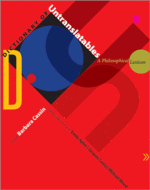
This extraordinary book, a huge dictionary of philosophical terms from many languages, is a translation of Vocabulaire européen des philosophies: Dictionnaire des intraduisibles, originally published in 2004, the brainchild of the French philosopher Barbara Cassin. If the original project was paradoxical, then the present version is doubly so: not just a dictionary of untranslatable words, but a translation of that dictionary. Rather than despair at the self-undermining self-referentiality of the whole idea, the editors rejoice in it. Indeed, moving the word “untranslatable” to the beginning of the English title proudly asserts the paradox even more forcefully than the original French title does, and forms what the English-language editor Emily Apter calls “an organising principle of the entire project”.
In her preface, Apter comments (apparently without irony) that “the extent of our translation task became clear only when we realised that a straightforward conversion of the French edition into English simply would not work”. She is right, of course: translation is almost never a straightforward conversion. This is why it is such a fertile subject for philosophy. Like so much in philosophy, theorizing about translation (and, of course, about the related concept of meaning) lurches between two unappealing extremes.
more here.
on Paul Thomas Anderson’s ‘Inherent Vice’

IT IS OBVIOUS BY NOW that Paul Thomas Anderson isn’t making individual movies so much as building an oeuvre block by block—the sturdiest, most resilient body of work by a big-time American director since Stanley Kubrick died and Martin Scorsese ran out of steam.
Big, ambitious, and American are the operative words. Boogie Nights (1997) and Magnolia (1999) were sprawling ensemble pieces that challenged Scorsese and Robert Altman on their own turf; in their concern with self-invented American Übermenschen and up-front eccentricity, There Will Be Blood (2007) and The Master (2012) engaged Orson Welles. Anderson’s smaller films, Hard Eight (1996) and Punch-Drunk Love(2002), pondered more marginal if equally echt-American types, and his latest movie, Inherent Vice, which stars Joaquin Phoenix as Thomas Pynchon’s hippie private eye Doc Sportello, falls into this category. A panoramic actor fest, it is also an extremely credible adaptation of the closest thing to an easy read by the writer whom some consider America’s greatest living novelist.
Structurally, Inherent Vice is pure School of Chandler, with Doc suckered into the plot by an old girlfriend, Shasta Fay Hepworth (Katherine Waterston), whose problems with her sugar daddy, scumbag developer Mickey Wolfmann (Eric Roberts), illuminate a classically Los Angeles real-estate scam . . . for starters. Behind it all is an “Indo-Chinese” drug cartel, a stand-in for the Vietnam War and ultimately a front for whatever cosmic antiplan you like—Doc Sportello being a sort of acidhead Don Quixote complete with intermittent sidekick, maritime lawyer Sauncho Smilax (Benicio Del Toro).
more here.
William Blake: Apprentice and Master
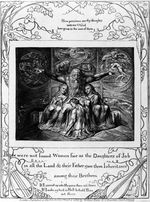
Just occasionally in Blake’s engravings there are pictures within pictures, and we get a glimpse of the life he thought images might lead in a better world. The most moving of these visions is Plate 20 of Blake’s Illustrations of the Book of Job. Job has survived his doubts and torments, and is telling the story to his daughters – in an earlier watercolour, they hold the instruments of Poetry, Painting and Music. No doubt the young women are taking their father’s narrative to heart, and in due course will rephrase it in terms appropriate to their arts: the lute and lyre are in the margins of the plate, ready to be strummed. But the first form of the story is visual: Job sits in a circular room – or maybe it is ten or 12-sided – and points towards two frescoed roundels on the walls left and right. Neither is unequivocally an episode from Job’s life – they could be analogous scenes from the story of the Fall – but the square panel over his head must be a version of ‘Then the Lord answered Job out of the Whirlwind.’ (It combines and condenses elements of Blake’s previous engraving of the subject.) As so often in Blake, the balance between positive and negative in the scene as a whole is precarious: Job is central and patriarchal (‘their Father gave them Inheritance among their Brethren’), and there is more than a touch of the baleful exhausted God-the-Father to him, heavy lids, pointing fingers and all. But there cannot be any doubt that the basic form and function of the room, with its echoes of the early 19th-century diorama (it is important that the plate was engraved in 1825), were meant to strike the viewer as wonderful – all-enveloping. Here were images at work.
more here.
What it’s like to be gay in modern India
Sandip Roy in The Telegraph:

When I first moved to the United States as a graduate student I could not wait to live by myself. The idea of a town where no one knew your name was just exhilarating.When I was moving back to India after 20 years in the US, many friends were aghast. How will you manage, they wondered uneasily. Twenty years of San Francisco can change you. How would I adjust to life back in a city without non-GMO Swiss chard, late-night carnitas quesadillas and gay bars? “Do they have gay bars in India?” well-meaning American friends asked me. Kolkata actually had the first Rainbow Pride parade in India back in 1999. But no, there were no gay bars here, though there were several men-only bars, no Leather Weekend street fairs with paddling stations, no same-sex marriages officiated by the city’s mayor. I knew and I understood that certain things I took for granted in a San Francisco lifestyle would just not work in India. Neighbours in San Francisco minded their own business. Neighbours in India minded your business. While the gay movement in the US was focused on marriage equality, in India it had its hands full trying to overturn a Victorian era anti-sodomy law that had hung around after the British had packed up and left. India had changed dramatically in the last decade when it came to visibility of gay issues in the media but there was still a fog of Don’t Ask Don’t Tell around issues of sexuality.
More here.
Stomach-acid-powered micromotors
From KurzweilAI:

In the experiment, the mice ingested tiny drops of solution containing hundreds of the micromotors, which are 20 micrometers long. The motors become active as soon as they hit the stomach acid and zoom toward the stomach lining at a speed of 60 micrometers per second. They can self-propel like this for up to 10 minutes. This propulsive burst improved how well the cone-shaped motors were able to penetrate and stick in the mucous layer covering the stomach wall, explained Zhang. “It’s the motor that can punch into this viscous layer and stay there, which is an advantage over more passive delivery systems,” he said. The researchers found that nearly four times as many zinc micromotors found their way into the stomach lining compared with platinum-based micromotors, which don’t react with and can’t be fueled by stomach acid. Wang said it may be possible to add navigation capabilities and other functions to the motors, to increase their targeting potential. Now that his team has demonstrated that the motors work in living animals, he noted, similar nanomachines soon may find a variety of applications including drug delivery, diagnostics, nanosurgery and biopsies of hard-to-reach tumors.
More here.