
Tom Kemeny at The Conversation:
 One need only glance at headlines about Jeff Bezos, Elon Musk and other super-wealthy individuals to understand that wealth in America is increasingly concentrated in fewer and fewer hands. Inequality is sharply on the rise.
Until now, however, little has been known about where the richest households are located, which cities are the most unequal and how these trends have evolved.
In a new analysis I conducted with my colleagues, we reveal where wealth is most concentrated within and between communities, cities and states. The result is GEOWEALTH-US – the first data that tracks the geography of wealth in the United States and how it has changed since 1960.
The overall picture is worrying. The wealthiest cities in the U.S. are now almost seven times richer than the poorest regions, a disparity that has almost doubled since 1960. Meanwhile, especially in urban coastal areas, wealth has become highly concentrated in the hands of a few. The picture from the geography of wealth suggests we are even more divided than we thought.
More here.
Enjoying the content on 3QD? Help keep us going by donating now.
 US science has been transformational for the United States and for the world. Research today is a hugely collaborative enterprise. The big discoveries and innovations happen when researchers are able to communicate with, learn from, visit, and live and work with researchers in different countries. This allows for the efficient exchange of knowledge and for the best and brightest to work together no matter where they happen to have been born, giving breakthroughs the best chance of success. We urge you and your administration to ensure that the United States continues to welcome researchers from all parts of the world.
 David Lynch once said he was inspired to become a filmmaker when, while painting, he inexplicably heard a gust of wind and saw the artwork move on canvas.
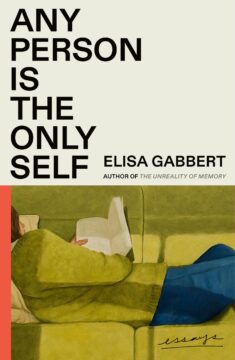 Here is some of the greatest, most practical advice I’ve heard on how to start reading poetry: “A poem is best read in the light of all the other poems ever written. We read A the better to read B (we have to start somewhere; we may get very little out of A). We read B the better to read C, C the better to read D, D the better to go back and get something more out of A.”
 Asterisk: I wanted to start by asking you about your work on prison gangs in California. How did these gangs come to be?
 The association between alcohol and cancer isn’t new news – scientists have been
  Down a tree-lined street near my grandmother’s house in Tehran is a mosque where locals go to chat, rest, and sometimes even pray. In the back of the mosque, behind a small library, is an office for a youth group that organizes volunteers to teach classes, run food drives, get together on religious holidays, and take trips to impoverished villages on Tehran’s outskirts to build schools. Whenever I visit my grandmother’s house during Muharram, a holy month for Shia Muslims, I see its members handing out food and sweets. The group has branches in most mosques across Iran: within a twenty-minute walk from my grandmother’s house, there are probably half a dozen. They receive a government budget, and they host political events, like celebrations of the anniversary of the 1979 Revolution. Millions of Iranians are members; many are teenagers or young adults, separated into boys’ and girls’ groups.
 Benjamin and Lācis’s “Naples” gives its readers a glimpse of a unified world of cross-relationships, in which discontinuous elements are somehow all implicated in one another and intermingled. In their telling, Naples, with its “rich barbarism,” blissfully flouted the bourgeois norms of northern Europe without knowing it. Streets were treated as living rooms and living rooms were treated as streets; festivals invaded every working day; the division between night and day was never neatly observed. To Benjamin and Lācis’s delight, Neapolitans had not received the news about the evacuation of the sacred from the modern world. In one of the article’s scenes, a Catholic priest accused of indecent offenses is described being led down a street while a crowd shouts insults at him. Suddenly, when a wedding procession passes by, the priest gives the sign of a blessing, and his pursuers fall to their knees.
 More Americans are surviving cancer, but the disease is striking young and middle-aged adults and women more frequently, the
 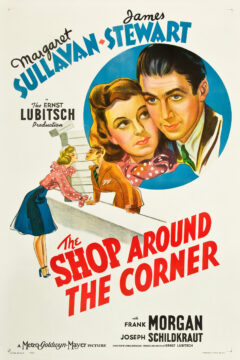 Lubitsch scholars have often remarked on the simplicity of The Shop Around the Corner. This is true in a technical sense. There are no trick angles, long shots, travelings, flashbacks, elaborate sets. The story was filmed sequentially in less than a month. In an interview in the New York Sun, Lubitsch called it “a quiet little story that seemed to have some charm.” His remark alludes to the comical, error-ridden romance between two shop employees. But there is a second storyline, less discussed, whose protagonist is Matuschek (Frank Morgan), the owner of the shop. If one watches through his eyes, one sees a different movie than the romantic comedy that it’s universally taken to be. From this perspective, there is nothing funny or romantic about the film. Pauline Kael distinguished between the plays and the screenplays of Samson Raphaelson, who wrote the script, by noting that the former are not lighthearted: “They aspired to be more than comedies; there was always a serious kernel.” His screenplay for The Shop Around the Corner is an exception to Kael’s rule, for the Matuschek material contains a kernel of seriousness buried inside a comedy.
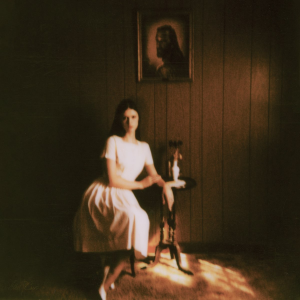 If you want to make it big as a musician today, there are several criteria you might try to meet. A clearly defined aesthetic. A readiness to become an “icon”. And songs easily truncated for social media posts, preferably with references to the zeitgeist or memorable lyrics that can themselves help to shape it.
 Philosophers have not been particularly attentive to stones. This might be surprising given the myth of the philosopher’s stone—a magical rock that, when ground into a powder or made into an elixir, was said to grant immortality or turn things to gold. Alchemy was at the heart of the ancients’ infatuation with stones. In our modern era of chemistry, physics, and the scientific method, such ideas are considered outlandish. We’ve grown too rational for alchemy. Stones are simply stones. Stony. Not magic. Not babies.
 The paper adds to a small but growing body of evidence that today’s most advanced AI models are becoming capable of strategic deception. Earlier in December, the AI safety organization Apollo Research