the funny parts of Geoff Dyer

1330572054669.cachedJonathan Gibbs at Threepenny Review:

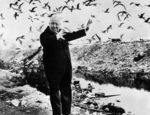
The great risk of this essay is that I analyze to death any love, affection, or appreciation anyone might have for the funny bits in Geoff Dyer’s books. My defense comes down to this: seeing as there are so many funny bits in his books, isn’t it odd that they get discussed so seldom? The comedy in Dyer’s oeuvre, it seems to me, is taken as a given, as the light ground to the text that allows the dark, serious, big stuff to stand forth.

That’s one risk, to add to the two general risks we admiring Dyer critics run. Firstly, of taking an academic approach to a writer who took such great delight in burning in disgust a collection of academic essays on D.H. Lawrence—“How could it have happened? How could these people with no feeling for literature have ended up teaching it, writing about it?” And secondly, of saying anything too directly complimentary about a writer who states he has “little instinct for personal reverence and, though I’ve not exactly been inundated with offers, I know I would hate to be revered myself.”

He does make it clear that it’s reverence for the person that is unacceptable. Reverence for the work is fine—for about ten seconds. Perhaps this would be a good point to bring in his line (I’m not quite sure where it originates, but it crops up in plenty of interviews) about writing an inch from life: “I like to write stuff that’s only an inch from life, from what really happened, but all the art is of course in that inch.”

more here.

An Introduction to Homeopathy

Harriet Hall in The Skeptical Inquirer:

Hahnemann_kleinIn 1800, conventional medicine was a disaster. Doctors weakened patients with bloodletting and purging, they poisoned them with mercury and other harmful substances, and they often killed more patients than they cured. Dr. Samuel Hahnemann was looking for safer, more effective ways to help his patients. He had an epiphany after he took a dose of cinchona bark and developed symptoms similar to those of malaria, the disease cinchona was supposed to treat. He extrapolated from this one observation to conclude that if any substance causes a symptom in healthy people it can be used to treat the same symptom in sick people. He formulated this as the first law of homeopathy,similia similibus curentur, usually translated as “like cures like.” He diluted his remedies so that they would no longer cause symptoms; this led to his second law of homeopathy, the law of infinitesimals, which states that dilution increases the potency of a remedy. When he observed that his remedies worked better during house calls than in his office, he attributed it to jostling in his saddle bags, so he added the requirement of “succussion,” specifying that remedies must be vigorously shaken (not stirred) by striking them against a leather surface at every step of dilution.

Homeopathic remedies are usually labeled with the notation X or C, corresponding to ten and one hundred. 15C would mean that one part of remedy was diluted in 100 parts of water, one part of the resulting solution was again diluted in 100 parts of water, and the process was repeated fifteen times. Hahnemann died before Avogadro’s number was available to calculate how many molecules are present in a volume of a chemical substance. Today we can calculate that by the thirteenth 1:100 dilution (13C), no molecules of the original substance remain. Hahnemann typically used 30C remedies.

More here.

In Pakistan, fear has become mundane – will the Peshawar attack change anything?

Samira Shackle in New Statesman:

PeshawarBy now, you are probably familiar with the bare facts of the case. This morning, at around 10am local time (5am GMT), militants wearing army uniforms stormed a school in Peshawar, a violence-wracked city in Pakistan’s north-west. They killed children and teachers, taking others hostage. At present, the death toll stands at 126. The majority of the dead are aged between 12 and 16. Scores more are injured, and according to spokespeople for the Tehreek-e-Taliban Pakistan (TTP), which carried out the attack, hundreds are being held hostage – although the numbers are not verified. The Pakistani army says it has killed six terrorists and is searching for more. The operation is still ongoing. The Army Public School and Degree College teaches the children of military personnel as well as the children of civilians. The TTP says the attack is revenge for the Pakistani military’s current operation in the tribal areas of Pakistan; it claims it attacked a school “because the government is targeting our families and females”. Tens of thousands of people have been displaced since the military operation began in June. Operation Zarb-e-Azb (literally, “sharp strike”) aims to attack the power structure of the TTP and associated groups, and to clear out the militants’ safe haven once and for all. Since the start of the offensive, Pakistan has been waiting for the reprisal attacks that the group promised. But even in the blood-soaked context of Pakistan – a country that has lost well over 40,000 innocents to terrorist attacks since 2001 – this morning’s incident in Peshawar is shocking. It is difficult to match the sheer horror and senselessness of the mass slaughter of children. Perhaps aware of the potential damage to its cause, the TTP has said that its gunmen have been instructed “not to kill minor children”; scant comfort for the families of the scores of older children who have already been murdered.

…The question now is whether this incident will actually change anything. There is a chance that the sheer brutality of the event will answer some of the internal political debates about how best to tackle the terrorist threat. As recently as spring, the Pakistani government was pursuing talks with the Taliban, even as violent attacks across the country surged. Many in the mainstream political right wing still agitate for appeasement and negotiations rather than a military operation. And amongst the wider population, there is a fault-line of people who explicitly or tacitly support the actions of the TTP and associated groups, even as they suffer the effects of this campaign of terror. Some commentators have suggested that the sheer brutality of this assault will undermine the arguments of those who would like to see negotiations with the TTP, and will perhaps reduce that element of support amongst the wider populace.

More here.

Why does the Pakistani military pick unwinnable fights?

Muhammad Idrees Ahmad in The Nation:

Ahmad_praetorianinstincts_ba_imgPakistan suffers from an enduring sense of vulnerability that was born of the calamities that attended its creation. It was the trauma of partition that formed Pakistan’s national psyche. The new nation inherited all of British India’s security challenges but with a fraction of its resources. In the post-partition distribution of state assets, it got the short end of the stick. Its military was formed from the rump of the old British Indian Army. Handicapped and impoverished, it had to contend with a troubled western frontier where Afghanistan—the only country to vote against its admission to the United Nations—was making irredentist claims. Its eastern neighbor, India, bore it even less good will. Its most populous province, Bengal, was separated by over a thousand miles of hostile territory.

The latent threats were not long in materializing. Pakistan went to war with India over Kashmir shortly after partition. The partition protocols had given the subcontinent’s princely states the right to accede to Pakistan or India. Among these were three large Muslim-majority states: Junagadh, Hyderabad and Kashmir. India forcefully annexed the first two. The third had a Hindu maharaja ruling over a 77 percent Muslim population. In a controversial move, the British had awarded India a land corridor to Kashmir. Fearing that Kashmir would suffer the fate of Junagadh and Hyderabad, members of Pakistan’s military and political establishments conspired to infiltrate tribal militants into the valley. Alarmed by insurgent advances, the maharaja appealed to India’s British governor general, Lord Mountbatten, who agreed to intervene if the maharaja signed the instrument of accession. In short order, Indian troops marched in and beat back the tribesmen, triggering the first shooting war between the two nascent states. India appealed to the UN, and the Security Council passed Resolution 47, which called for an immediate cease-fire and a plebiscite to decide the future of Kashmir. The resolution was never implemented.

More here.

A Meditation on the Art of Not Trying

John Tierney in The New York Times:

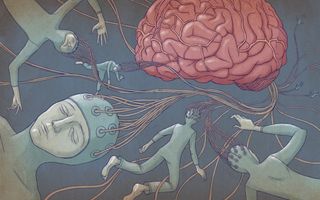
ArtJust be yourself. The advice is as maddening as it is inescapable. It’s the default prescription for any tense situation: a blind date, a speech, a job interview, the first dinner with the potential in-laws. Relax. Act natural. Just be yourself. But when you’re nervous, how can you be yourself? How you can force yourself to relax? How can you try not to try? It makes no sense, but the paradox is essential to civilization, according to Edward Slingerland. He has developed, quite deliberately, a theory of spontaneity based on millenniums of Asian philosophy and decades of research by psychologists and neuroscientists. He calls it the paradox of wu wei, the Chinese term for “effortless action.” Pronounced “ooo-way,”it has similarities to the concept of flow, that state of effortless performance sought by athletes, but it applies to a lot more than sports. Wu wei is integral to romance, religion, politics and commerce. It’s why some leaders have charisma and why business executives insist on a drunken dinner before sealing a deal. Dr. Slingerland, a professor of Asian studies at the University of British Columbia, argues that the quest for wu wei has been going on ever since humans began living in groups larger than hunter-gathering clans. Unable to rely on the bonds of kinship, the first urban settlements survived by developing shared values, typically through religion, that enabled people to trust one another’s virtue and to cooperate for the common good. But there was always the danger that someone was faking it and would make a perfectly rational decision to put his own interest first if he had a chance to shirk his duty. To be trusted, it wasn’t enough just to be a sensible, law-abiding citizen, and it wasn’t even enough to dutifully strive to be virtuous. You had to demonstrate that your virtue was so intrinsic that it came to you effortlessly. Hence the preoccupation with wu wei, whose ancient significance has become clearer to scholars since the discovery in 1993 of bamboo strips in a tomb in the village of Guodian in central China. The texts on the bamboo, composed more than three centuries before Christ, emphasize that following rules and fulfilling obligations are not enough to maintain social order.

These texts tell aspiring politicians that they must have an instinctive sense of their duties to their superiors: “If you try to be filial, this not true filiality; if you try to be obedient, this is not true obedience. You cannot try, but you also cannot not try.” That paradox has kept philosophers and theologians busy ever since, as Dr. Slingerland deftly explains in his new book, “Trying Not to Try: The Art and Science of Spontaneity.” One school has favored the Confucian approach to effortless grace, which actually requires a great deal of initial effort.

More here.

Monday, December 15, 2014

Sunday, December 14, 2014

Trust Thomas Piketty on economic inequality, Ignore what he says about literature

Ted Underwood, Hoyt Long, and Richard Jean So in Slate:

ScreenHunter_909 Dec. 14 19.16Six-hundred-page books about economics translated from French don’t usually become best-sellers. Part of the reason Thomas Piketty’s Capital in the Twenty-First Century has been so widely read is that it refuses to be just a book about economics. It traces the history of economic inequality with graphs of wealth and income, arguing that the past several decades have seen soaring disparity between the 1 percent and the rest of us. But it also shows how inequality shaped individual lives with stories drawn from novels. When Piketty spoke to President Barack Obama’s Council of Economic Advisers in April, even they responded to the literary aspect of his work, quibbling over his interpretation of Balzac.

As literary historians, we’re thrilled to see economists arguing over details in a novel. But Piketty’s claims about fiction and inequality are important enough to probe in more depth, which is why we decided to test some of them on a scale only recently made possible by computers. Piketty’s account of literary history turns out to be wrong—but wrong in a way that casts a surprising new light on the way novels dorespond to the changing economic fortunes of people in the real world.

Novels by Balzac and Jane Austen matter for Piketty because they dramatize the immobility of a 19th-century world where inequality guaranteed more inequality—a world our own century is beginning to resemble once again. Since returns on capital were reliable, especially for large fortunes, the best way to get ahead was to start out ahead; income from labor could never catch up. The stability of 19th-century wealth is felt not only in plots that center on inheritance, but also, Piketty adds, in the references that flesh out a fictional world.

More here.

Slavery and Capitalism

Sven Beckert in The Chronicle of Higher Education:

Slavery capitalismIf capitalism, as many believe, is about wage labor, markets, contracts, and the rule of law, and, most important, if it is based on the idea that markets naturally tend toward maximizing human freedom, then how do we understand slavery’s role within it? No other national story raises that question with quite the same urgency as the history of the United States: The quintessential capitalist society of our time, it also looks back on long complicity with slavery. But the topic goes well beyond one nation. The relationship of slavery and capitalism is, in fact, one of the keys to understanding the origins of the modern world.

For too long, many historians saw no problem in the opposition between capitalism and slavery. They depicted the history of American capitalism without slavery, and slavery as quintessentially noncapitalist. Instead of analyzing it as the modern institution that it was, they described it as premodern: cruel, but marginal to the larger history of capitalist modernity, an unproductive system that retarded economic growth, an artifact of an earlier world. Slavery was a Southern pathology, invested in mastery for mastery’s sake, supported by fanatics, and finally removed from the world stage by a costly and bloody war.

Some scholars have always disagree with such accounts. In the 1930s and 1940s, C.L.R. James and Eric Williams argued for the centrality of slavery to capitalism, though their findings were largely ignored. Nearly half a century later, two American economists, Stanley L. Engerman and Robert William Fogel, observed in their controversial book Time on the Cross(Little, Brown, 1974) the modernity and profitability of slavery in the United States. Now a flurry of books and conferences are building on those often unacknowledged foundations. They emphasize the dynamic nature of New World slavery, its modernity, profitability, expansiveness, and centrality to capitalism in general and to the economic development of the United States in particular.

Read the rest here.

A Partisan Divide in the Face of Our National Shame

Serge Schmemann in The New York Times:

SergeThere is no way that the Senate Intelligence Committee’s report on the C.I.A. could have been anything less than devastating, but at least it could have been a demonstration of how a great democracy confronts terrible acts it committed at a time of high stress and confusion, how it acknowledges the wrong and seeks ways to prevent it from ever happening again. Yet even before the report was released, it had been relegated to fodder in the tedious and agonizingly petty partisan squabbling that has become the norm in Washington. Senator Dianne Feinstein, chairwoman of the committee, deserves great credit for her perseverance in having at least the executive summary of the report released despite the resistance of Republicans and the timidity of the White House.

…The head of the C.I.A., John O. Brennan, and other apologists for the agency are now arguing that the interrogators were “patriots,” and that the problem consisted of some officers who went “outside the bounds” of the rules. But if the people who ordered, justified and inflicted the waterboarding, “rectal hydration” and the like were patriots, why did the White House keep it secret even from members of its own administration? The report cites a striking internal C.I.A. memo relaying instructions from the White House to hide the program from then-Secretary of State Colin L. Powell, because he would “blow his stack if he were to be briefed on what’s going on.” That the White House felt compelled to withhold the C.I.A.’s clandestine activities from a distinguished soldier who was serving as its own secretary of state is a clear indication that those who ordered these abuses knew perfectly well what they amounted to.

More here.

Sunday Poem

Corner of 50th St. and Fifth Av.

Taking my usual walk
I run into sirens flashing red, turning
and a small crowd
watching the dark-haired man
with the thin mustache,
PR about 30
maricón, a voice in the crowd shouts.

Two uniforms have his head
wedged down in the gap
between the bucket seats,
red sirens turning turning
just over his head.

Another pulls down his pants
holds him tight around the waist
the fourth pummels
the pale orbs over and over
till the PR's face is flushed
the cop's fist red
the sirens turning turning.
The first two look bored
eyes drifting slowly
over the crowd
not meeting our eyes.
He just thud got out thud of jail
I hear a Rican say
thud, the cop's arms like baseball bats.
Finally the thuds end.
They pull his head out of the crack,
pull pants over livid cheeks,
manacled hands going down
to cover his buttocks

the sirens turning turning
I wade through the thick air thinking
that's as close as they let themselves get
to fucking a man, being men.
.

by Gloria Anzaldúa
from Borderlands/La Frontera, The New Mestiza
Aunt Lure Books, San Francisco, 1999

Death is Iconic

Lapata in Chapati Mystery:

Death-is-iconic-2-214x300This summer, Israel bombarded the Gaza Strip, killing hundreds of civilians, bombing schools and hospitals, and even UNRWA shelters. This might just have been another chapter in the ongoing occupation of Palestinian territories, but this summer, there was something new: an unprecedented number of photographs and videos made it through to the international community via twitter and other social media platforms. Those who refuse to believe the extent of the humanitarian disaster in Gaza, or who believe the oppression of the Palestinian people is strategically justified for the survival of the Israeli state, were in denial about the many images rushing into the rest of the world.

Most famously, George W. Bush’s former speech writer, David Frum, latched onto a conspiracy theory that held that a series of images of two Palestinian brothers expressing raw grief over the death of their father whom they’d just brought to the hospital was simply a piece of propaganda. According to this theory, the photographs were staged, and this could be seen from the fact that in one, the more distraught brother had blood on his hands, and in another, he did not. The blood had been added for effect, went the theory. Unfortunately for Frum and his ilk, these photos had been taken by numerous professional photographers working for international news services, who spoke up and outlined the sequence of events, showing that while the men arrived at the hospital soaked in blood, in the interim, as their father lay in the operating room, they’d washed their hands.

More here.

The Dirty Little Secret of Cancer Research

For 50 years, scientists have ignored widespread cell contamination, compromising medical research. Why are they so slow to fix it?

Jill Neimark in Discover:

ScreenHunter_908 Dec. 14 12.16In the field of thyroid cancer, 58-year-old Kenneth Ain is a star. As director of the thyroid oncology program at the University of Kentucky at Lexington, Ain has one of the largest single-physician thyroid cancer practices in the country and more than 70 peer-reviewed publications to his name. Until recently, Ain was renowned for a highly prized repository of 18 immortal cancer cell lines, which he developed by harvesting tissue from his patients’ tumors after removal, carefully culturing them to everlasting life in vials. Laboratories around the world relied on the “Kentucky Ain Thyroid,” or KAT lines, both to gain insight into cellular changes in thyroid carcinoma and to screen drugs that might treat the disease, which strikes more than 60,000 Americans each year.

n June 2007, all that changed. Ain attended the annual Endocrine Society meeting in Toronto, where Bryan Haugen, head of the endocrinology division at the University of Colorado School of Medicine, told Ain that several of his most popular cell lines were not actually thyroid cancer. One of Haugen’s researchers discovered that many thyroid cell lines their laboratory stocked and studied were either misidentified or contaminated by other cancer cells. Those included some of Ain’s. They were now hard at work unraveling the mystery.

There was a disaster brewing — it just wasn’t yet official.

Ain was shocked, and justifiably so. Research based on such false cell lines would undermine the understanding of different cancers and possible treatments, and clutter the scientific literature with bogus conclusions.

More here.

Isis: the inside story

One of the Islamic State’s senior commanders reveals exclusive details of the terror group’s origins inside an Iraqi prison – right under the noses of their American jailers.

Martin Chulov in The Guardian:

ScreenHunter_907 Dec. 14 12.10In the summer of 2004, a young jihadist in shackles and chains was walked by his captors slowly into the Camp Bucca prison in southern Iraq. He was nervous as two American soldiers led him through three brightly-lit buildings and then a maze of wire corridors, into an open yard, where men with middle-distance stares, wearing brightly-coloured prison uniforms, stood back warily, watching him.

“I knew some of them straight away,” he told me last month. “I had feared Bucca all the way down on the plane. But when I got there, it was much better than I thought. In every way.”

The jihadist, who uses the nom de guerre Abu Ahmed, entered Camp Bucca as a young man a decade ago, and is now a senior official within Islamic State (Isis) – having risen through its ranks with many of the men who served time alongside him in prison. Like him, the other detainees had been snatched by US soldiers from Iraq’s towns and cities and flown to a place that had already become infamous: a foreboding desert fortress that would shape the legacy of the US presence in Iraq.

More here.

Saturday, December 13, 2014

How neoconservatives led US to war in Iraq

Robin Yassin-Kassab in The National:

DownloadMeticulously researched and fluently written, Muhammad Idrees Ahmad’s The Road to Iraq: The Making of a Neoconservative War is the comprehensive guide to the neoconservatives and their works.

The book’s larger story is of the enormous influence wielded by unelected lobbyists and officials over the foreign policies of supposed democracies, their task facilitated by the privatisation and outsourcing of more and more governmental functions in the neoliberal era. (Similar questions are provoked by the state-controlled or corporate media in general, as it frames, highlights or ignores ­information.)

The more specific story is of how a small network of like-minded colleagues (Ahmad provides a list of 24 key figures), working against other unelected officials in the State Department, military and intelligence services, first conceived and then enabled America’s 2003 invasion and occupation of Iraq, a disaster that continues to overshadow regional and global relations today.

The first crop of neoconservatives emerged from a Trotsky­ist-tinged 1930s New York Jewish intellectual scene; they and their descendants operated across the political-cultural spectrum, in media and academia, think tanks and pressure groups. Hovering first around the Democratic Party, then around the Republicans, they moved steadily rightwards, and sought to form a shadow defence establishment. During the Cold War they were fiercely ­anti-Soviet. Under George W Bush they shifted from the lobbies into office.

The neoconservative worldview is characterised by militarism, unilateralism and a firm commitment to Zionism.

More here.

An Unsteady History of Drunkenness

Kristen D. Burton in The Appendix:

ScreenHunter_905 Dec. 13 19.45During an evening of carousing and drinking at a Salisbury tavern, a soldier and his comrades were drinking to one another’s health. Then the soldier did the unthinkable: he drank to the health of the Devil. Boldly daring the Devil to appear, the soldier claimed that if the Devil did not, it was proof that neither the Devil, nor God, existed. The soldier’s drinking companions quickly fled the room out of fear, but they returned “after hearing a hideous noise, and smelling a stinking savour.” After returning to the room, the soldier had vanished, and all they found was a broken window, the iron bar within it bowed and covered in blood. The soldier was never heard from again.

This peculiar tale, told in 1682 by the Anglican minister Samuel Clarke, made up a part of his warning to all regarding the treacherous fates that awaited drunkards. The soldier made the fatal error of losing his wits and drinking to the health of the Devil, inviting the evil being into his world. This story, however, was only one of the terrifying possibilities outlined by Clarke. Illness, madness, bodily and spiritual destruction, and–ultimately–death comprised the tragic fates that awaited every drunkard.

Such critiques and warnings initially did little to sway daily drinking practices, but over time, the cries of those who stood in opposition to alcohol steadily grew louder. Murmurs in the mid-seventeenth century–shocked at the sudden increase of cheaply available spirituous liquors–increased to a roar of condemnation throughout the decades of the following century. By the turn of the nineteenth century, the damnations against alcohol had become a deafening clamor that came in the form of speeches, books, medical inquiries, and artwork. One aspect often featured in such anti-liquor declarations were the drunkards themselves–more specifically, the drunkard’s unsteady, untrustworthy body.

More here.