
Shigehiro Oishi in The Guardian:
 What if I told you that we could all be rich? Not in dollars or pounds, yen or rupees, but a completely different type of currency. A currency measured in experiences, adventures, lessons learned and stories told. As a social psychologist, I have dedicated my research career to a simple, but universal question: what makes for a good life, and how can we achieve it? For much of human history, we have been presented with two possibilities: pursuing a life of happiness, or a life of meaning. Each of these paths has its benefits and proponents, but decades of psychological research have also revealed their limits.
The current cultural conception of happiness, for example, can work against us finding fulfilment. Historically, happiness tended to be defined as the result of “good luck” and “fortune”. Today many expect it to come from individual effort and success. But this, in turn, makes unhappiness and negative emotions such as sadness or anger seem like personal failures.
More here.
Enjoying the content on 3QD? Help keep us going by donating now.
 THIS book made me, by turn, wince, squirm, smile wryly, and gasp in surprise and in horror. It is not for the fainthearted. King has produced a comprehensive and detailed historical account of the way in which four different parts of women’s bodies — breasts, clitoris, hymen, and womb — have been viewed, interpreted, and treated, by society, medicine, and the Church, and mainly by men. She reaches back into classical times and around the globe to other than Western civilisations.
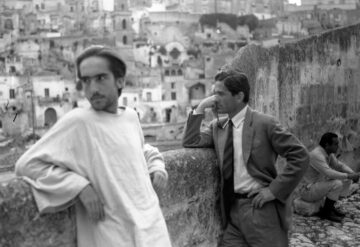 One of Pier Paolo Pasolini’s remarkable early accomplishments was the long poem that lent its title to his 1961 collection of poetry, La Religione del mio tempo, or “The Religion of My Time.” And while religion was many things to Pasolini, what he was most religiously devoted to might have been the idea of being of his time. His writing—whether in the form of poetry, fiction or polemic, among which he passionately blurred the distinctions—staked a great deal on immediacy. In this sense it was close to speech: an intervention in the moment as much as a message for futurity.
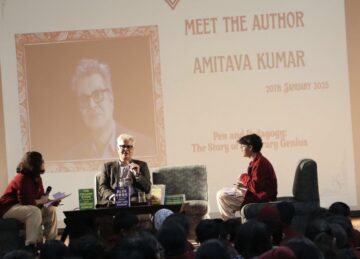 Let’s call the student R. The principal of the school I was visiting said to others in the room soon after I arrived in her office, “Where is R.? Oh, he has a story to tell you.”
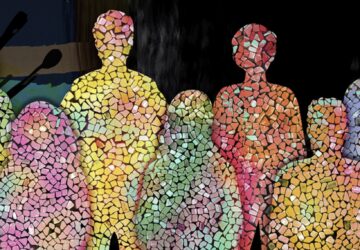 Scientists have long known that DNA-copying systems make the occasional blunder — that’s how cancers often start — but only in recent years has technology been sensitive enough to catalog every genetic booboo. And it’s revealed we’re riddled with errors. Every human being is a vast mosaic of cells that are mostly identical, but different here or there, from one cell or group of cells to the next.
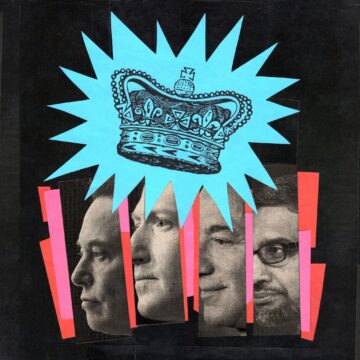 Washington is filled with lobbying offices and fund-raisers because powerful interests believe something is gained when dollars are spent. They are right. We have come to expect and accept a grotesque level of daily corruption in American politics — abetted by a series of Supreme Court rulings that give money the protections of speech and by congressional Republicans who have fought even modest campaign finance reforms. But we have at least some rules to limit money’s power in politics and track its movements.
 We all know that time seems to pass at different speeds in different situations. For example, time appears to go slowly when we travel to unfamiliar places. A week in a foreign country seems much longer than a week at home. Time also seems to pass slowly when we are bored or
 Every sentence of “In Dreams Begin Responsibilities” was elegant and foreboding. The mother is having second thoughts; the father is exaggerating his fortune. Delusions of grandeur, and Delmore hasn’t even been conceived. There is no affection here. Regrets only.
 Confusion and anxiety is rippling through the US health-research community this week following
  THE EDITORS OF VERGE Books, Peter O’Leary and John Tipton, continue to lavish love on books wholly deserving of the care. Take Joseph Donahue’s two-volume Terra Lucida XIII–XXI (2024) as the most current example: Musica Callada and Near Star come housed in a box clad in a deep-loam brown cloth, the color of leaf-rot, fungal fecundity itself. Such care, if it’s truly meaningful, is so only because it adorns a poetry whose nature shares the same cosmic ethic. Joseph Donahue is a poet for whom, couplet by couplet, poetry is the principal way of tuning a life to the deeper orders of the world, where even death’s irreparable rift is a complement to life’s wild loveliness. For Donahue, the poem is the primary tool for understanding the weird work living is.
 DALLAS — The place where the dead may be brought back to life is a drab, single-story building in an office park next to a semitruck lot. Inside, between rows of incubators and microscopes, Beth Shapiro and her team are attempting a feat straight out of science fiction: reviving the dodo, a bird that’s been extinct for more than three centuries. A growing group of scientists is trying to bring back extinct animals, an idea that is drawing closer than ever due to recent advances in gene editing.
 It was a pregnancy craving for
  Thomas Lynch may be the only major poet-undertaker writing in English, which must count as a surprise. The two professions seem so perfectly aligned—or rather, so hopelessly entwined. Death poetry is almost its own genre in English, filling up the anthologies: Emily Dickinson’s “Because I could not stop for Death”; Robert Frost’s “Fire and Ice”; and most famously, Dylan Thomas’s “Do Not Go Gentle Into That Good Night.” Even as our poets ponder birth, beauty, and desire, we expect them to keep the end in view. A major poet who did not wrestle with death would be like a horse who only makes right turns.
 In the words of Danny Hillis, the man who conceived the clock in 1989, long before Bezos became involved: “You have to get away from the idea of direct progress and surrender that kind of control in order to find your way.”