Yascha Mounk at his own Substack:
Yascha Mounk: You have an interesting and distinguished political career and have also made a lot of forceful arguments in the public sphere. One of the interesting contributions you’ve made recently is to say that we live in a moment of “technofeudalism.”
To those of my listeners who think that’s a catchy phrase but aren’t quite sure what it means, what does that entail? What makes this moment an instance of technofeudalism?

Yanis Varoufakis: Well, to get to that point we have to agree on where we were. Capitalism, as far as I’m concerned, is a socioeconomic mode of production that came out of feudalism and what characterises it is that we shifted from a society where power stemmed from owning land, land ownership granting you the extractive power to amass economic rent from your peasants and from vassals and so on to a situation where power stemmed from owning not the land, per se, but the machines—the electricity networks, railway networks and so forth. And then your wealth accumulation took the form of accumulating profits, which is not at all the same as rents.
The point I’m making, to cut a very long story short, is that in the last 10 years after the 2008 crisis, we have now shifted to another socioeconomic mode of production where it is the ownership of a particular mutation of capital which I call cloud capital (it’s what lives in our phones, it’s algorithmic capital, digital capital) is a very different, very brand new, unprecedented form of capital.
More here.
Enjoying the content on 3QD? Help keep us going by donating now.

 But the problem with advice is not conceptual. Atwood’s disappointed acolytes were hoping not for a kind of guidance that is analytically impossible but for one that is merely in severe decline.
 The second hour of “Gone with the Wind,” the bold, almost brazenly romantic Civil War epic that won ten Academy Awards, is largely a portrait of hell. “The skies rained death,” the screen reads. General William Tecumseh Sherman and his Union Army have brutally taken Atlanta during a hard-fought campaign, at a combined cost of nearly seventy-five thousand casualties. Scarlett O’Hara, a wealthy white Southerner, picks her way out of the city, passing the littered remains of wagons and men while vultures hover overhead. All the plantation houses she sees have been reduced to charred ruins.
 O
O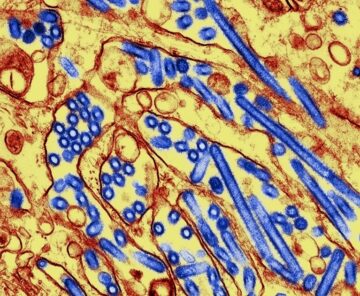 Ten months on from the shocking discovery that a virus usually carried by wild birds
 …As for putting on the airs of religion and spirituality, this is probably both the saddest and desperate pose of all and one, if you are a believer, that perilously approaches blasphemy in its violation of the 3rd commandment: “Thou shalt not take the name of the Lord thy God in vain.”No wonder then that despite all the holy muttering there is no hint of the pathos and depth that can be conveyed by genuine religious art and sentiment even to sensitive non-believers. It is more spiritually sterile than the secular world it reviles.
 In 2009, Jonathan Weissman was hunting for a new way to spy on
  Robert Eggers’s new version of Nosferatu is not my favorite contemporary vampire movie (that would have to be Ana Lily Amipour’s A Girl Walks Home Alone at Night [2014]), or even my favorite Eggers film. The Lighthouse (2019), an extraordinary and idiosyncratic nightmare, is probably more true to Murnau’s Expressionist ideals, and the sublime potential of the Gothic, than this remake. For the first hour I didn’t know why Nosferatu was being remade at all – surely this was a mistaken project from the beginning since Murnau’s inimitable 1922 classic remains incorruptible from beyond the grave. As the second half of the film unfolded into abject madness, and afterwards thinking through the film with friends, however, Eggers’s Nosferatu has stayed with me, its shadows deepening as its various challenges to its predecessors have seeped into the frame.
 B
B Other than fairy tales — which were, by and large, originally compiled for adult audiences — children’s literature from the past holds little of interest for children today. Consider one of the earliest known examples of a book targeted at children, James Janeway’s A Token for Children from 1671. A typical story in this collection tells us how young a child was when he memorized the catechism, how passionately he cared for the souls of his brothers and sisters, and how obedient and respectful he was with his elders. It might quote at length from one of his prayers and end by describing his peaceful death from the plague at the age of 10. Every story in Token ends in this way, with a boy or girl rewarded for his or her piety with a happy early death.
 My WhatsApp exploded over the weekend as we received an early Chinese New Year surprise from DeepSeek. The Chinese AI firm launched its reasoning model last week, and analysts belatedly woke up to it. The firm’s consumer app jumped to number 1 in the Apple AppStore and American stock markets, overly indexed on big tech, are taking a pounding.
 A typical human lifespan is approximately three billion heartbeats in duration. Lasting that long requires not only intrinsic stability, but an impressive capacity for self-repair. Nevertheless, things do occasionally break down, and cancer is one of the most dramatic examples of such breakdown. Given that the body is generally so good at protecting itself, can we harness our internal security patrol – the immune system – to fight cancer? This is the hope of Nobel Laureate James Allison, who works on studying the structure and behavior of immune cells, and ways to coax them into fighting cancer. This approach offers hope of a way to combat cancer effectively, lastingly, and in a relatively gentle way.
 There are certain places in the world where the boundaries between past and present seem porous, almost arbitrary. The air is cool and quiet in the mornings on the Knepp estate in Sussex, England — quiet, that is, except for the lilt of birdsong and the rumbling beat of hooves. The landscape is one of fields and copses, of dense, tangled shrubbery and shifting, murky pools. The green sward is low and neatly cropped, churned up in many places by the tread of heavy animals. The decade is the 2020s, but it might as well be the 1820s — or a far more ancient era yet. A woman gazing out over the Knepp estate one misty morning might imagine herself looking over a medieval common, or even a vista out of the long-lost Neolithic, and her intuition would not be much wrong. Yet at Knepp, of all places, this deep sense of antiquity is an illusion.