Yanis Varoufakis: Germany won’t spare Greek pain – it has an interest in breaking us

Yanis Varoufakis in The Guardian:

8b2a294e679e0bef245c5573564c1fe6_400x400Greece’s financial drama has dominated the headlines for five years for one reason: the stubborn refusal of our creditors to offer essential debt relief. Why, against common sense, against the IMF’s verdict and against the everyday practices of bankers facing stressed debtors, do they resist a debt restructure? The answer cannot be found in economics because it resides deep in Europe’s labyrinthine politics.

In 2010, the Greek state became insolvent. Two options consistent with continuing membership of the eurozone presented themselves: the sensible one, that any decent banker would recommend – restructuring the debt and reforming the economy; and the toxic option – extending new loans to a bankrupt entity while pretending that it remains solvent.

Official Europe chose the second option, putting the bailing out of French and German banks exposed to Greek public debt above Greece’s socioeconomic viability. A debt restructure would have implied losses for the bankers on their Greek debt holdings.Keen to avoid confessing to parliaments that taxpayers would have to pay again for the banks by means of unsustainable new loans, EU officials presented the Greek state’s insolvency as a problem of illiquidity, and justified the “bailout” as a case of “solidarity” with the Greeks.

To frame the cynical transfer of irretrievable private losses on to the shoulders of taxpayers as an exercise in “tough love”, record austerity was imposed on Greece, whose national income, in turn – from which new and old debts had to be repaid – diminished by more than a quarter. It takes the mathematical expertise of a smart eight-year-old to know that this process could not end well.

More here.

28 Days in Cleveland

Morgan Meis in Art Hopper:

Corrie-Slawson_I-80W-from-CLE-Tonys-East-Peroia-620x417I came to Cleveland carrying the same bias with which most visitors arrive. I thought I was coming to a broken city. Cleveland was broken, I assumed, for the same reason that all the other cities and towns of the Rust Belt are broken. The jobs went away, more or less, when heavy industry collapsed. What was left was a city gutted. The famous Cuyahoga River fire of 1969 still burned in my own consciousness (as I suspect it does for many) as the city’s primary symbolic event. The river itself caught fire. It still seems an incredible and outrageous event. How does a river become so polluted that it catches fire?

I remember listening to the Randy Newman song “Burn On” when I was a little kid.

Cleveland, city of light, city of magic
Cleveland, city of light, you’re calling me
Cleveland, even now I can remember
‘Cause the Cuyahoga River goes smokin’ through my dreams

Burn on, big river, burn on

Mr. Newman was employing a high degree of irony and humor when he called Cleveland a “city of light” and a “city of magic.” Paris is called “The City of Light” because it is so beautiful and because of its historical role in The Enlightenment. Randy Newman called Cleveland the “city of light” because he saw it as a hell on Earth, an environmental catastrophe where the rivers burn night and day.

More here.

40 great quotes about marriage

From The Telegraph:

Marriage“If you are afraid of loneliness, don't marry

Anton Chekhov (1860-1904)

“The trouble with some women is that they get all excited about nothing – and then marry him.”

American singer Cher (1946-)

“Basically my wife was immature. I'd be in my bath and she'd come in and sink my boats”

Comedian Woody Allen (1935-)

“I was married by a judge. I should have asked for a jury.”

Comedian and actor Groucho Marx (1890-1977)

“I was dating a transvestite, and my mother said, 'Marry him, you'll double your wardrobe'”

Comedian Joan Rivers (1933-2014)

“I don't think my wife likes me very much, when I had a heart attack, she wrote for an ambulance”

Irish comedian Frank Carson (1926-2012)

“She was as sated with him as he was tired of her. Emma had rediscovered in adultery all the banality of marriage.”

Gustave Flaubert (1821-1880)

“Love: a temporary insanity curable by marriage”

Ambrose Bierce (1842-c1914)

More here.

‘Go Set a Watchman’ Gives Atticus Finch a Dark Side

Michiko Kakutani in The New York Times:

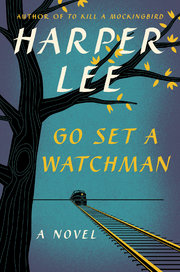
BOOKLEE1-master180We remember Atticus Finch in Harper Lee’s 1960 classic, “To Kill a Mockingbird,” as that novel’s moral conscience: kind, wise, honorable, an avatar of integrity who used his gifts as a lawyer to defend a black man falsely accused of raping a white woman in a small Alabama town filled with prejudice and hatred in the 1930s. As indelibly played by Gregory Peck in the 1962 movie, he was the perfect man — the ideal father and a principled idealist, an enlightened, almost saintly believer in justice and fairness. In real life, people named their children after Atticus. People went to law school and became lawyers because of Atticus. Shockingly, in Ms. Lee’s long-awaited novel, “Go Set a Watchman” (due out Tuesday), Atticus is a racist who once attended a Klan meeting, who says things like “The Negroes down here are still in their childhood as a people.” Or asks his daughter: “Do you want Negroes by the carload in our schools and churches and theaters? Do you want them in our world?”

In “Mockingbird,” a book once described by Oprah Winfrey as “our national novel,” Atticus praised American courts as “the great levelers,” dedicated to the proposition that “all men are created equal.” In “Watchman,” set in the 1950s in the era of the Brown v. Board of Education decision, he denounces the Supreme Court, says he wants his home state “to be left alone to keep house without advice from the N.A.A.C.P.” and describes N.A.A.C.P.-paid lawyers as “standing around like buzzards.”

More here.

R.I.P, Omar Sharif

Over at The Wire (India):

When Omar Sharif, as Sherif Ali, rode on a camel on to the shimmering desert in Lawrence of Arabia, the world discovered a new movie star. Cast opposite Peter O’Toole, who played the eponymous T.E. Lawrence, Sharif quickly became a heartthrob among female fans and continued to be one for years afterwards.

Sharif was already a big name in Egypt’s movie scene, having attained fame from his very first film Siraa Fil-wadi (The Burning Sun) in 1954. He had trained in the Royal Academy of Dramatic Arts (RADA), but it was his swarthy good looks that captivated audiences.

Legend has it that India’s own Dilip Kumar was offered the Lawrence of Arabia role by David Lean but he turned it down and Sharif was selected. Sharif later confessed he did not understand why Lawrence was such a success, since it only had shots of people on camels walking from one side to the other.

More here.

James Tate (1943 – 2015)

James-tate-and-gordon-cairnie-by-elsa-dorfman-1Jeffery Gleaves at The Paris Review:

James Tate, who wrote that the main challenge of poetry “is always to find the ultimate in the ordinary horseshit,” died yesterday in Massachusetts at age seventy-one. Winner of the Pulitzer Prize, the National Book Award, and the William Carlos Williams Award, Tate’s poems were “always concerned to tell us that beneath the busyness and loneliness of our daily lives, there remains in us the possibility for peace, happiness and real human connection,” wrote Adam Kirsch in the New York Times.

Tate was born in Missouri but lived in Amherst, Massachusetts, since 1971. “I’ve imagined that every character and every single event takes place in this town, Amherst,” he once confessed. But John Ashbery once opined that Tate is a “poet of possibilities, of morph, of surprising consequences, lovely or disastrous, and these phenomena exist everywhere.”

His poetry is often described as absurdist, and indeed the speakers in his poems come across as bewildered narrators who are as inquisitive as they are clueless—which is all part of their charm. His poetry has also been described as comic, ironic, hopeful, lonely, and surreal; “I love my funny poems,” he said, “but I’d rather break your heart. And if I can do both in the same poem, that’s the best.

more here.

Will walking in the shoes of a Syrian refugee or an Etonian help you empathise?

16246720010_4ef38408fa_k

Liv Constable-Maxwell in New Statesman:

“Every major city has a holocaust museum, so why shouldn’t they have an empathy museum”, says Roman Krznaric. He is talking to me about his newest venture, the Empathy Museum.

It's a project that aims to salvage us from our self-absorbed and narcissistic lives by engaging with people we may not normally come across. These are words I’ve heard already on the promo video for the museum, but am no less struck by the uncomfortable premise.

Empathy, it seems, is quite the hot topic. The Independent reports that, despite the hours we spend online communicating with one another, “empathy is not spreading effectively”, while I’m sure everyone will be relieved to read the Guardian’s claim that empathy “could be the thing that saves us [from extinction]”.

Which is why Krznaric is giving us all a helping hand. He has spent the last few years co-founding The School of Life with Alain De Botton, a project that aims to promote “emotional intelligence” through culture. Its courses, which include titles such as “The Art of Sadness” and “The Secret History of Your Emotions”, promise to enlighten you for the small sum of £45 a session.

Krznaric’s attentions have now turned to the creation of a museum all about empathy. A travelling, interactive project that will open in September, as part of London's Totally Thames festival.

The key thinking behind the museum is to take us away from our “hyper-individualistic society”, moving “from an age of introspection to an age of outrospection” (buzzphrases I recognise well from Krznaric’s promotional work).

“I define empathy as to be able to step into someone else’s shoes,” remarks Krznaric.

Which might explain the “empathy shoe shop”. It’s an activity where you wear shoes that belong to someone else. “They may be those of a Syrian refugee, or a Chinese factory worker,” Krznaric tells me. “You will be wearing headphones and hear a recording of them talking about their own lives.

More here.

Sheeps and Dogs: On “Far From the Madding Crowd”

Far-from-crowd-243x366

Stephanie Bernhard in The LA Review of Books:

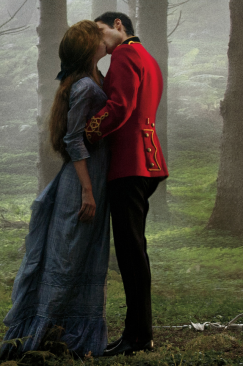
ADAPTING A NOVEL with a plot as unwieldy as that of Thomas Hardy’sFar From the Madding Crowd (1874) for the screen requires compromise: the film must either remove a number of scenes that appear in the novel or squeeze as many scenes as possible into a watchable span of time. Thomas Vinterberg’s recent adaptation almost always opts for the latter technique, and the result is a film that is completely dutiful, very attractive, and mostly dull.

In fairness to Vinterberg, Hardy’s Far From the Madding Crowd is crowded with so much confounding, brilliant, baroquely intricate action that to remove a single element from a retelling risks toppling the whole story. Hardy packs a fallen woman tale, an untimely death, a mysterious disappearance, and a feminist bildungsroman into a central romance in which not two but three suitors — the shepherd Gabriel Oak (Matthias Schoenaerts), the farmer William Boldwood (Michael Sheen), and the soldier Frank Troy (Tom Sturridge) — compete for the hand of Bathsheba Everdene (Carey Mulligan), that wonderfully vexing, eternally modern creation for whom the phrase “fiercely independent” must have been invented. Every time she twitches, the novel quakes with great drama. Agitated, perhaps, by the novel’s inexhaustible action, Henry James famously complained that “everything human in the book strikes us as factitious and insubstantial; the only things we believe in are the sheep and the dogs.”

More on the sheep and the dogs in a moment. James may have despised the rustic, exaggerated humans of Far From the Madding Crowd, but quickly after panning the book he stole its human plot for The Portrait of a Lady (1881). He deleted the sheep and dogs and clothed his humans more fashionably, but the bones of the story are the same. A bright, beautiful, ferociously independent young woman fends off marriage proposals from two appealing men who offer to raise her social and economic status; instead, after inheriting a dazzling pile of property, she accepts the hand of a vile man who requires her to support him. In both novels, the heroine’s continuous indecision (and eventual disastrous decision) makes for a compelling drama, dense with dramatic irony.

But there is a key difference between James’s novel and Hardy’s, one crucial for filmmaking, and it involves the sheep and dogs.

More here.

‘Midnight’s Furies,’ by Nisid Hajari

12TASEER-master675Aatish Taseer at The New York Times:

Few books need more urgently to be written than a definitive oral history of the 1947 partition of India. The partition, even by the standards of a bloody century, was hideous; it left between one and two million people dead and displaced 15 million others; it caused the dismemberment of a syncretic society and led to the largest forced migration in the history of humanity. The generation that lived through that terrible time is on its way out, taking its unrecorded memories.

In “Midnight’s Furies,” a fast-moving and highly readable account of the violence that accompanied the partition, Nisid Hajari sets himself a more modest task: How did two nations with so much in common end up such inveterate enemies so quickly?

Hajari answers this question with a dramatization of the violent year that preceded partition. The dramatis personae are introduced, as per conventions established by Richard Attenborough’s “Gandhi.” There is the “famously handsome” Jawaharlal Nehru with his “high, aristocratic cheekbones and eyes that were deep pools — irresistible to his many female admirers”; there is the “mystical, septuagenarian” Mahatma Gandhi; there is the monocled, slightly sinister Mohammad Ali Jinnah, “cheekbones jutted out of his cadaverous face like the edges of a diamond”; and, lastly, there is Lord Louis Mountbatten, “tall and tanned,” the “Hollywood version of a British prince.”

more here.

is beauty the deepest law of nature?

8708c622-9b75-4f24-979c-315db940d6f8Andrea Wulf at the Financial Times:

The question that Frank Wilczek poses in this book sounds simple — “Does the world embody beautiful ideas?” — but the answer is complicated. It’s a long “meditation”, as the Nobel laureate physicist calls it, on the idea of beauty as the organising principle of the universe, and also a eulogy on the importance of beauty as a source of inspiration for scientists past and present.

Wilczek chooses a historical approach because it allows him to move from simpler to more complex ideas, gently easing the reader into his argument. He begins with thinkers such as Pythagoras and Plato, moves on to Kepler and Newton, and ends with quantum physics. “In beauty we trust, when making our theories,” Wilczek believes, and so did many before him. Pythagoras’s theorem about right-angled triangles reveals the beautiful relationship between numbers and shapes, while Newton used mathematics to understand the fundamental laws of nature. In the 1860s James Clerk Maxwell’s work brought together electricity, magnetism and light as part of one concept — a unifying idea of a physical reality that was made up of space-filling fields — and he explained this through a system of equations. When these equations are written “pictorially” or in terms of flows, Wilczek explains, they become “a dance of concepts through space and time”.

more here.

Friday, July 10, 2015

Will your self-driving car be programmed to kill you?

Matt Windsor at UAB News:

ScreenHunter_1249 Jul. 10 17.53Google’s cars can already handle real-world hazards, such as cars’ suddenly swerving in front of them. But in some situations, a crash is unavoidable. (In fact, Google’s cars have been in dozens of minor accidents, all of which the company blames on human drivers.) How will a Google car, or an ultra-safe Volvo, be programmed to handle a no-win situation — a blown tire, perhaps — where it must choose between swerving into oncoming traffic or steering directly into a retaining wall? The computers will certainly be fast enough to make a reasoned judgment within milliseconds. They would have time to scan the cars ahead and identify the one most likely to survive a collision, for example, or the one with the most other humans inside. But should they be programmed to make the decision that is best for their owners? Or the choice that does the least harm — even if that means choosing to slam into a retaining wall to avoid hitting an oncoming school bus? Who will make that call, and how will they decide?

More here.

What If Everything You Knew About Disciplining Kids Was Wrong?

Katherine Reynolds Lewis in Mother Jones:

ScreenHunter_1248 Jul. 10 17.42How we deal with the most challenging kids remains rooted in B.F. Skinner's mid-20th-century philosophy that human behavior is determined by consequences and bad behavior must be punished. (Pavlov figured it out first, with dogs.) During the 2011-12 school year, the US Department of Education counted 130,000 expulsions and roughly 7 million suspensions among 49 million K-12 students—one for every seven kids. The most recent estimates suggest there are also a quarter-million instances of corporal punishment in US schools every year.

But consequences have consequences. Contemporary psychological studies suggest that, far from resolving children's behavior problems, these standard disciplinary methods often exacerbate them. They sacrifice long-term goals (student behavior improving for good) for short-term gain—momentary peace in the classroom.

University of Rochester psychologist Ed Deci, for example, found that teachers who aim to control students' behavior—rather than helping them control it themselves—undermine the very elements that are essential for motivation: autonomy, a sense of competence, and a capacity to relate to others. This, in turn, means they have a harder time learning self-control, an essential skill for long-term success. Stanford University's Carol Dweck, a developmental and social psychologist, has demonstrated that even rewards—gold stars and the like—can erode children's motivation and performance by shifting the focus to what the teacher thinks, rather than the intrinsic rewards of learning.

More here. [Thanks to Yousaf Hyat.]

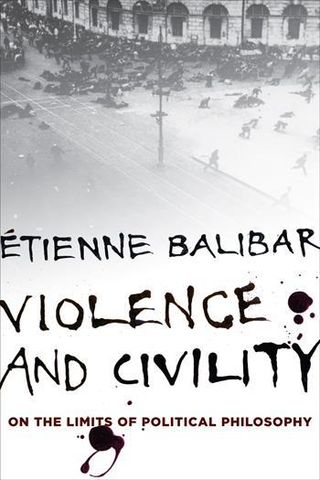
Violence and Civility: On the Limits of Political Philosophy

9780231153980

Todd May reviews Étienne Balibar's Violence and Civility: On the Limits of Political Philosophy, in Notre Dame Philosophical Review:

Étienne Balibar is one of the most rigorous thinkers of contemporary politics, especially European politics, that his generation in France has produced. A student of Louis Althusser, Balibar has consistently rejected shoehorning politics into a pre-given theoretical grid but has instead sought to understand political phenomena on their own terms. The current work is no exception. Violence and Civility, consisting of three re-worked chapters that were originally the 1996 Welleck lectures at Columbia bookended by a 1992 lecture on themes from Jacques Derrida's thought and a 2003 lecture from a conference in Paris, is an original and sustained attempt to consider the role violence and what Balibar calls “anti-violence” play in the formation of political relationships.

The book is dedicated to Derrida's memory. It is not hard to see why. Balibar sees a necessary haunting by violence of all political movements that seek to eliminate it — that is, all political movements. Thus there is an economy of violence and the attempt to suppress it with which political reflection must come to terms. Among the implications of this is that, contrary to many utopian political movements of the twentieth century, “we must renounce eschatological perspectives, even in their secularized forms, which, as we know, were always insistent in the revolutionary discourse about politics, especially in its communist variants.” (xiv)

What is violence, then? Balibar does not say. He notes that there are many forms of violence, and his examples include not only physical violence but also exploitation in the Marxist sense, domination, marginalization, and degradation. Much of the latter phenomena have been gathered under the rubric of structural violence, a term to which Balibar occasionally has recourse. However, what is of interest to him specifically are two forms of extreme violence, of what he calls cruelty, that are often intertwined but that, he insists, must be recognized in their distinct specificity. These he calls ultraobjective and ultrasubjective violence.

He contrasts these two forms of violence in this way:

the first [ultraobjective] kind of cruelty calls for treating masses of human beings as things or useless remnants, while the second requires that individuals and groups be represented as incarnations of evil, diabolical powers that threaten the subject from within and have to be eliminated at all costs, up to and including self-destruction. (52)

Or again:

one of which [ultraobjective] proceeds by way of an inversion of the utility principle and the transformation of human beings into not useful commodities but disposable waste, while the other proceeds by installing in place of the subject's will the fetishized figure of an 'us' reduced to absolute homogeneity. (61)

More here.

Gaudí’s Great Temple

Filler_1-062515_jpg_250x1230_q85Martin Filler at the New York Review of Books:

Although sacred structures of all sorts have been central to every culture throughout history, religious architecture has attained even greater importance in times of social upheaval. This was certainly true in mid-nineteenth-century Barcelona, the ancient Mediterranean port that became an economic powerhouse with the advent of industrialized textile manufacturing. As the strains caused by this rapid shift from small workshop to large factory production worsened, many felt that the Roman Catholic Church hierarchy was unresponsive to the travails of increasingly downtrodden urban laborers. Thus during the 1870s pious (and wealthy) barcelonés conceived a monumental building project for a working-class neighborhood that they hoped would stem religious disaffection by harking back to the devotional fervor, communal brotherhood, and civic pride fostered by the grand cathedral construction campaigns of the Middle Ages.

The result is one of the most celebrated shrines in Christendom, known in Catalan as the Temple Expiatori de la Sagrada Família (Expiatory Temple of the Holy Family). It was begun in 1882 using the conventional neo-Gothic designs of Francisco de Paula del Villar, who after two years of persistent quarrels with diocesan supervisors quit and handed the job over to his largely untested assistant Antoni Gaudí.

more here.

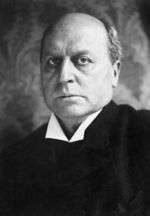
Colm Tóibín on Henry James

Beha-Henry-James-320Colm Tóibín at Bookforum:

In Washington Square, Henry James created a great bullying father who sought to control his daughter's destiny and prevent what he saw as a foolish marriage. In viewing his daughter as dull, Dr. Sloper missed what the reader of the novel began to see—Catherine Sloper was not merely sensitive but also deep, even passionate. Thus the book dramatized a matter that concerned James profoundly in both his life and his art—control and dominance within his own family and then within the families that he began to imagine during his long career as a novelist.

Henry James's brother William wrote that the novelist was “a native of the James family, and has no other country.” During their childhood and adolescence, the James children were taken back and forth across the Atlantic by their restless and wealthy father. They got to know France and England, but they barely felt at home in America. Because their father had no profession, he spent his time watching over his five children. By the time Henry was in his twenties, he was desperate to get away to Europe. His early letters show him depending on his parents for money and guidance, and using illness as a further excuse to stay away, but also to get sympathy and attention. He was deeply involved with his family for all of his life, but the relationship, like many of the relationships in his fiction, was ambivalent. James also treasured his own solitude, his own apartness and autonomy.

more here.

Laugh Lines

Margaret_Cho_top_credit_Mary_Taylor

Katie Halper interviews Margaret Cho in Guernica (Photograph by Mary Taylor):

Guernica: In your foreword to BITCHfest: Ten Years of Cultural Criticism From the Pages of Bitch Magazine, you write, “Whenever anyone has called me a bitch, I have taken it as a compliment. To me, a bitch is assertive, unapologetic, demanding, intimidating, intelligent, fiercely protective, in control—all very positive attributes…. These days, I strive to be a bitch, because not being one sucks.” Can “tasteless,” which is generally intended as an insult, also be a compliment?

Margaret Cho: Things that are in “bad taste” are often renegade and rebellious. They go against the status quo, and the laws of decorum and modesty. And that can be really thrilling. I’m a huge fan of the people and things that are considered the epitomes of tastelessness—things like drag and raunchy comedy. People like John Waters and Divine.

It’s always considered bad taste to comment on a tragedy right when it’s happening, but I love when something is considered too soon to talk about because then you can blast past that social censorship to get into something real. Often something that is in bad taste or considered to be in bad taste is something that’s just very true but that people are unwilling to discuss or comment on.

Guernica: What’s the saying? Comedy equals tragedy plus time?

Margaret Cho: Yes. But I don’t even think you need time. There’s no reason to wait.

Guernica: Did you expect such a backlash to your appearance at this year’s Golden Globes as Cho Yung Ja?

Margaret Cho: The response was out of proportion. But I think that sometimes people [who overreact or lash out] will hang on to their point just because they’re so embarrassed that they made it. They won’t set it down because they are the authors of these [disproportionate responses] and they have a lot to be embarrassed about.

More here.

Slavoj Žižek on Greece

Gettyimages-477311742Slavoj Žižek at The New Statesman:

This brings us to the crux of the matter: Tsipras and the former finance minister Yanis Varoufakis, who resigned on 6 July, talk as if they are part of an open political process where decisions are ultimately “ideological” (based on normative preferences), while the EU technocrats talk as if it is all a matter of detailed regulatory measures. When the Greeks reject this approach and raise more fundamental political issues, they are accused of lying, of avoiding concrete solutions, and so on. It is clear that the truth here is on the Greek side: the denial of “the ideological side” advocated by Dijsselbloem is ideology at its purest. It masks (falsely presents) as purely expert regulatory measures that are effectively grounded in politico-ideological decisions.

On account of this asymmetry, the “dialogue” between Tsipras or Varoufakis and their EU partners often appears as a dialogue between a young student who wants a serious debate on basic issues and an arrogant professor who, in his answers, humiliatingly ignores the issue and scolds the student on technical points (“You didn’t formulate that correctly! You didn’t take into account that regulation!”). Or even as a dialogue between a rape victim who desperately reports what happened to her and a policeman who continuously interrupts her with requests for administrative details.

more here.

Ingenious

Kevin Berger interviews Mazviita Chirimuuta in Nautilus:

What is your theory of color?

Going back to that problem about this dichotomy between the inner and outer, there’s been this tendency to say, “well, anything that’s subjective in our knowledge or in our experience isn’t on the same footing as things that we know about as being completely objective.” I say that this sort of difficulty that people have of accepting subjective aspects of experience and knowledge then leaves people to say well, “if color’s not part of physics, then it must be a complete illusion”; and I’m saying well, actually we need a way of theorizing subjectivity in such a way that we’ll just acknowledge that there are parts of our experience and our perceptual knowledge of things that are generated by the particular ways that we interact with the world.

As humans who have three kinds of photoreceptors, or two, or sometimes one kind of photoreceptor for daylight vision—that means we interact with the world in a particular way that informs our experience of the world. If our visual systems were built differently, our whole visual experience, and probably our knowledge of the world, would be quite different; but there’s nothing inherently problematic about that. So I think of color as a property, or something that can only be understood in terms of the particular ways that we interact with the world. That’s my way of saying that we should try and see those inner and outer domains as not as separate from each other as we think. Really, there’s this constant back and forth between the two and that’s how visual experience is generated, and knowledge maybe more generally.

How have you changed the debate about color?

The way the debate has standardly gone is to say, “well, if color is anything, if color exists, then it’s a property of objects.” So if you’re a realist, you’ll say “yeah, the maroon property belongs to this seat; the whiteness property belongs to that wall.” If you’re an anti-realist, you’ll just say “no, no objects have those properties; color doesn’t exist.” What I’ve done is say that actually, a better way of thinking about color is not as a property of objects, but as a property of interactions that perceivers have with objects. In my view, which is the view I call color adverbialism, there are perceptual processes that are going on all the time. Every time we look around a room, light’s bouncing off the walls into my eyes and my brain’s processing this information and I’m saying that that whole extended interaction between myself and my surroundings, that’s the thing that has color, not the objects that I see. So when I talk about what’s there in my surroundings, I say that color is my way of seeing those things, so I see that wall in a white way, so really the whiteness is modifying that perceptual experience. It’s more a property of the experience or that process, that activity I’m doing, rather than the wall itself.

More here.

Leisure activities: The power of a pastime

Chris Woolston in Nature:

JobAlbert Einstein mastered the violin. Richard Feynman banged bongos. Following in the tradition of multi-talented physicists, Federica Bianco likes to take a break from her research to punch people in the face. Bianco, an avid boxer who is also an astrophysicist at New York University, flew to Richmond, California, for her first professional bout in April. It did not go well for her opponent. Bianco pinned her competitor to the ropes with a flurry of punches and did not let up until the referee called the fight. It took just one minute and twenty seconds. “I didn't want to stop, but she was taking too much punishment,” Bianco says.

For Bianco, boxing is not just a hobby; it is a total mind-and-body escape from her work. “As a scientist, I'm thinking about all sorts of things all the time,” she says. “The ring is quiet. You get tunnel vision. The other person is trying to take off your head and you have to deal with that.”

At a time when competition for science funding and job promotions sometimes resembles a boxing match, many researchers have trouble conceiving of an active life outside the lab. Indeed, there can be subtle — or not so subtle — pressures to sacrifice leisure time and put aside other interests for the sake of the next experiment, paper or conference talk. But many scientists say that their pastimes make them better researchers by sharpening their minds, building confidence and reducing stress. Their experiences should offer hope to researchers who are feeling overwhelmed by the pressure of their jobs. Release can be just a ride, jump, joke or punch away.

To be sure, some senior researchers in academia and other sectors still look askance at hobbies or leisure activities. Ryan Raver, now a product manager at the biotechnology firm Sigma-Aldrich in St Louis, Missouri, recalls an instance at the University of Wisconsin–Madison when one of his thesis-committee members was reluctant to sign off on his PhD because he thought that Raver spent too much time blogging and playing lead guitar in a hard-rock band. “He thought I should have been more focused on my work,” Raver says. “But playing in the band helped me survive grad school. It kept my excitement and motivation up. It pushed me through the day.”

Sean Carroll, a physicist at the California Institute of Technology in Pasadena, wrote a blogpost advising scientists to choose their hobbies carefully, especially if they ever want to win tenure. Specifically, he counsels them to stay away from pastimes that could drain attention from science. “You are better off if your hobbies are nothing like your work,” he writes. “Permissible hobbies include skydiving, playing guitar, or cooking. Suspicious hobbies include writing of any sort (novels, magazine articles, blogs), programming or web stuff, starting a business, etc. Why? Because there's a feeling that this kind of activity represents time that could be spent on research.”
More here.