
Enjoying the content on 3QD? Help keep us going by donating now.
Category: Recommended Reading
Why the most digitally connected generation (Gen Z) is also the loneliest
Nicholas Carr at After Babel:
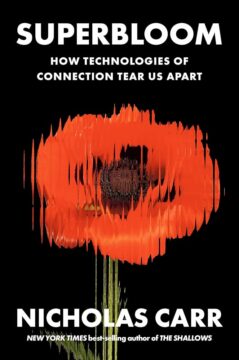 Self-expression is good, we tell ourselves, and it’s good to hear what others have to say. The more we’re able to converse, to share our thoughts, opinions, and experiences, the better we’ll understand one another and the more harmonious society will become. If communication is good, more communication must be better.
But what if that’s wrong? What if communication, when its speed and volume are amped up too far, turns into a destructive force rather than a constructive one? What if too much communication breeds misunderstanding rather than understanding, mistrust rather than trust, strife rather than harmony?
Those uncomfortable questions lie at the heart of my new book, Superbloom: How Technologies of Connection Tear Us Apart. Drawing evidence from history, psychology, and sociology, I argue that our rush to use ever more powerful online media technologies to ratchet up the efficiency of communication has been reckless. Even as the unremitting flow of words and images seizes our attention, it overwhelms the sense-making and emotion-regulating capacities of the human nervous system.
More here.
Enjoying the content on 3QD? Help keep us going by donating now.
Thursday Poem
What is There, Where is Nothing?
The two interpretations of time
(the measure of “when” with regard to
events Aristotle wanted; the entity
that runs even when nothing happens,
according to Newton), can be
repeated for space.
This is what we speak of when we ask “when?”
Space is what we speak of when we ask “where?”
If I ask “Where is the Colosseum?” One
possible answer is: “It’s in Rome.”
If I ask “Where are you?” a possible answer
might be: “At home.”
To reply to the question “Where is something?” means
to indicate something else that is around that thing.
If I say “In the Sahara,” you will visualize me
surrounded by sand dunes.
Aristotle was the first to discuss in depth and with
acuity the meaning of “space,” or “place,” and to
arrive at a precise definition: the place of a thing
is what surrounds that thing.” As in the case of time,
Newton suggests that we should think differently.
The space defined by Aristotle, the enumeration of
what surrounds each thing, is called
“relative, apparent, and common” by Newton, but he
calls space itself “absolute, true, and mathematical”
which exists even where there is nothing.
by Carlo Rovelli
from The Order of Time
Riverhead Books, NY, 2018
Enjoying the content on 3QD? Help keep us going by donating now.
Microplastics Build Up in Human Organs, Especially the Brain
Laura Tran in The Scientist:
 Micro- and nanoplastics (MNPs) are everywhere—from the air we breathe to the food we eat—but their impact on human health is not entirely clear. While cell culture and animal studies hint at potential harm, understanding what this means for people is far more complex. Researchers like Matthew Campen, a biochemist and environmental scientist at the University of New Mexico, investigate how inhaled pollutants, including MNPs, affect cardiovascular and neurological health. He and his team focused on these particles’ accumulation and distribution in human organs.
Their findings, published in Nature Medicine, revealed that MNPs accumulated at higher levels in the brains of deceased individuals compared to livers or kidneys with a greater buildup in individuals with dementia.1 In addition, plastic concentrations were higher in 2024 than in 2016 across these organs, suggesting a steady rise in environmental plastic exposure. These results underscore the urgent need to understand exposure routes, uptake, clearance pathways, and the potential health consequences of MNPs, particularly in the brain.
More here.
Enjoying the content on 3QD? Help keep us going by donating now.
5 Black Leaders that Shaped the Labor Movement
From National Education Association:
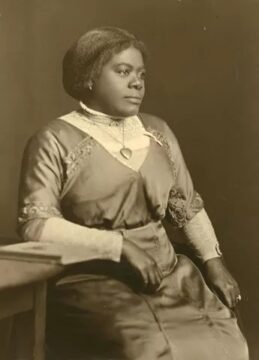 Mary McLeod Bethune (1875-1955)
Born during Reconstruction to parents who had been enslaved, Mary McLeod Bethune grew up walking five miles to a Presbyterian mission school where a teacher noticed her dedication and recommended her for a college scholarship—setting Bethune on a path to change her career and the world. In 1904, with $1.50 and five young students, the now-legendary Mary McLeod Bethune started a school for Black girls in Florida that became today’s Bethune-Cookman University. Two decades later, Bethune was elected as the first woman president of the National Association of Teachers in Colored Schools (NATCS), later renamed the American Teachers Association (ATA), which would eventually merge with the National Education Association to become the union we know today.
More here. (Note: In honor of Black History Month, at least one post will be devoted to its 2025 theme of “African Americans and Labor” throughout the month of February)
Enjoying the content on 3QD? Help keep us going by donating now.
Quentin Tarantino on “Chungking Express”
Enjoying the content on 3QD? Help keep us going by donating now.
Chungking Express at 30
J. M. Tyree at the New England Review:
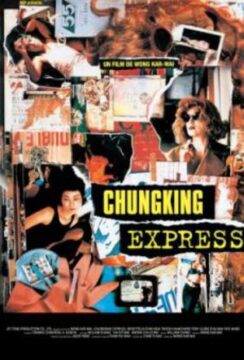 Celebrating film anniversaries always seems ephemeral, but when a film has been part of your life for three decades, there are good reasons to pause, rewind, review, and reassess both the film and your memories of it. You notice new things. The movie’s changed, you’ve changed, and the world has changed. Revisiting Wong Kar Wai’s Chungking Express on the thirtieth anniversary of its release in 1994, I rediscovered a film that is itself obsessed with dates and numbers. Expiration dates on tins of pineapple. Police badge numbers. Distances between people brushing past one another in crowded markets.
It isn’t necessary to know the movie’s plot before reading this collection of creative writers, who I asked to respond to Chungking Express at age thirty using any genre, length, or style they preferred. If you watch or rewatch the film, you’ll see actors who look good in their work clothes sharing meals and attempting to connect, chasing dreams of love that always fall just out of their reach, living in a painful and gorgeous world designed to separate everyone and wreck the timing of their yearnings.
more here.
Enjoying the content on 3QD? Help keep us going by donating now.
The Forgotten Media Theorist Harold Innis
Nicholas Carr at The New Atlantis:
 With its emphasis on media’s formative role in a society’s development, “Minerva’s Owl” would come to be seen as a founding document — maybe the founding document — of the academic discipline of media studies that emerged in the second half of the twentieth century. In 1964, the celebrated media savant Marshall McLuhan, who like Innis was a professor at the University of Toronto, wrote that he saw his own recent book, The Gutenberg Galaxy, as “a footnote to the observations of Innis.” The distinguished American educator and media theorist James Carey called Innis’s work “the great achievement in communications on this continent.”
Innis would not live to hear such praise. In 1952, the year after publication of The Bias of Communication, he died of prostate cancer, just fifty-eight years old. Unlike McLuhan, whose provocative work maintains a cultural currency, Innis and his more esoteric musings are today unknown to the general public. His name is rarely heard outside academic offices, conferences, and journals. But his ideas deserve a fresh look. Even though he died before he was able to complete his study of communication and civilization, his writings from seventy-five years ago shed an unexpectedly clear light on the media-induced cultural disturbances that trouble us today.
more here.
Enjoying the content on 3QD? Help keep us going by donating now.
DeepSeek, China, OpenAI, NVIDIA, xAI, TSMC, Stargate, and AI Megaclusters
Enjoying the content on 3QD? Help keep us going by donating now.
Wednesday, February 5, 2025
Gay life in India
Rishi Dastidar in The Guardian:
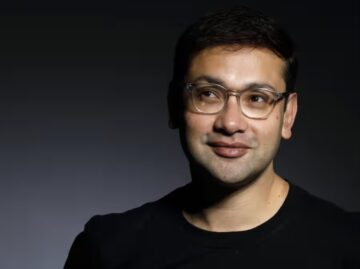 Santanu Bhattacharya turned heads with his 2023 debut novel One Small Voice, which intertwines the personal fallout after a boy watches a mob burn a Muslim man with a panoramic survey of how modern Indian society is changing – buckling, almost – with the rise of Hindu nationalism as its dominant ideology. It marked him out as a novelist able to tell the biggest of stories with the most precise and haunting of details.
His follow-up, Deviants, is even more ambitious. It tracks how India’s attitudes to homosexuality have shifted over the past 50 years, by following the lives of three gay men in the same family: Vivaan, a 17-year-old who can pass for 21 on dating apps; his uncle, nicknamed Mambro, growing up in the mid-1990s; and Sukumar, his great-uncle (or grand-mamu, and Mambro’s uncle), whom we meet in 1977, fitfully studying commerce in Kolkata.
Vivaan’s story is written as if dictated via voicenote: apt, as he lives and studies in the “Silicon Plateau” of Bengaluru, India’s hi-tech centre. Rather than feeling gimmicky, this gives his voice an attractive and vivacious quality, as he revels in the freedom he has online to hook up, to exist on the wild frontiers of contemporary sexuality, where one can be “heteroflexible, homoflexible, objectumsexual, omnisexual, skoliosexual, bi-curious”.
More here.
Enjoying the content on 3QD? Help keep us going by donating now.
What OpenAI’s DeepResearch means for search
Azeem Azhar at Exponential View:
 OpenAI released yet another add-on on to its growing suite of AI tools: DeepResearch. The product, which shares its name with Google Gemini’s Deep Research tool, also does near the exact same thing. For a given research question it will formulate a research plan and consult a variety of sources to provide a compelling research brief.
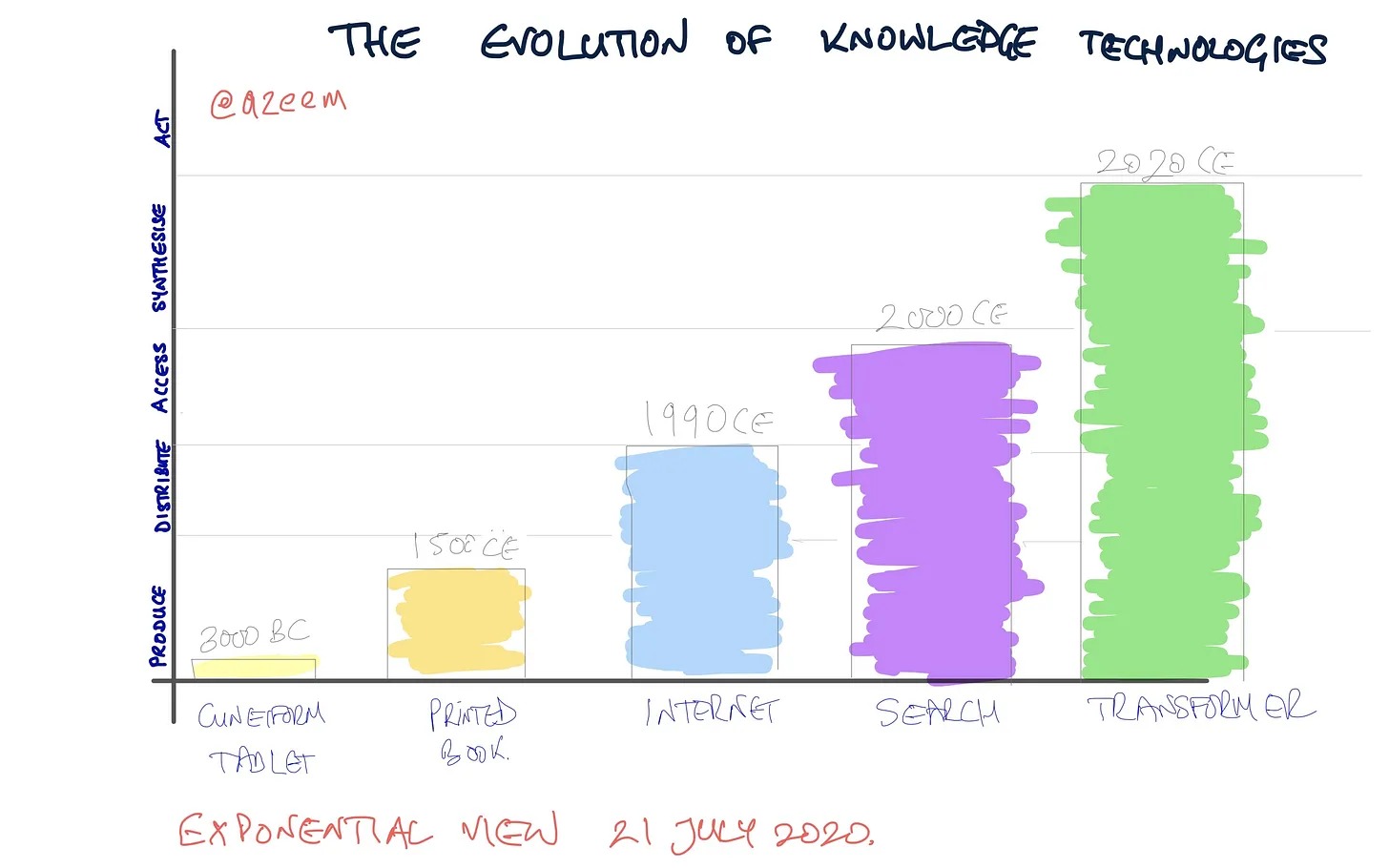
DeepResearch is a milestone in how we access and manipulate knowledge. When GPT-3 was first made available a few years ago, it quickly became clear that these LLM-based tools would create a new paradigm for accessing information. In A Short History of Knowledge Technologies, I argued:
[GPT-3] does something the search engine doesn’t do, but which we want it to do. It is capable of synthesising the information and presenting it in a near usable form.
Four years is an eternity in AI, of course. GPT-4 is much more powerful than GPT-3 and the new family of reasoning models, o1 and o3, are in a class of their own. DeepResearch from OpenAI goes much further than my short quote suggested.
More here.
Enjoying the content on 3QD? Help keep us going by donating now.
Pulitzer Prize-Winning Stanford Professor Richard Powers gives a novel-writing masterclass
Enjoying the content on 3QD? Help keep us going by donating now.
Eric Kaufmann on “The Third Awokening”
Yascha Mounk at his own Substack:
Yascha Mounk: I’ve read a lot of your work and have been in conversation with you for a long time. You’re somebody who approaches the growth and influence of what some people call wokeness, what I call the identity synthesis, what you and your recent work have called the Third Awokening, from a social scientific perspective.
Where do these ideas come from? How did they gain so much currency and why are you concerned about them?
 Eric Kaufmann: Obviously you in your book, The Identity Trap, give a pretty good account of one route, I think, towards this, which is sort of the whole idea of strategic essentialism that came out of left-wing intellectual thought. I know yourself and Francis Fukuyama and Chris Rufo and others have sketched out its development out of essentially the post-Marxist left. What I try to do in my book, The Third Awokening, is to look at the more liberal humanitarian, if you like, prong of this, which runs through psychotherapy and gets us towards a kind of humanitarian extremism. And so I put a lot of emphasis on this idea of cranking the dial of humanitarianism.
More here.
Enjoying the content on 3QD? Help keep us going by donating now.
Satyajit Ray and Claude Sautet – 1981
Enjoying the content on 3QD? Help keep us going by donating now.
Are the Internet and AI affecting our memory? What the science says
Helen Pearson in Nature:
 Adrian Ward had been driving confidently around Austin, Texas, for nine years — until last November, when he started getting lost. Ward’s phone had been acting up, and Apple maps had stopped working. Suddenly, Ward couldn’t even find his way to the home of a good friend, making him realize how much he’d relied on the technology in the past. “I just instinctively put on the map and do what it says,” he says.
Ward’s experience echoes a common complaint: that the Internet is undermining our memory. This fear has shown up in several surveys over the past few years, and even led one software firm to coin the term ‘digital amnesia’ for the experience of forgetting information because you know a digital device has stored it instead. Last year, Oxford University Press announced that its word of the year was ‘brain rot’ — the deterioration of someone’s mental state caused by consuming trivial online content.
“What you’ll see out there is all kinds of dire predictions about digital amnesia, and ‘we’re gonna lose our memory because we don’t use it anymore’,” says Daniel Schacter, who studies memory at Harvard University in Cambridge, Massachusetts.
More here.
Enjoying the content on 3QD? Help keep us going by donating now.
Eldridge Cleaver’s Soul on Ice—Still Relevant 50 years later
By Goth Grammarist:
 Cleaver was born into and lived in a segregated world and didn’t question it. Once segregation was made illegal*, he realizes the world he was in, writing “Prior to 1954, we lived in an atmosphere of novocain. Negroes found it necessary, in order to maintain whatever sanity they could, to remain somewhat aloft and detached from ‘the problem.’ We accepted indignities and the mechanics of the apparatus of oppression without reacting by sitting-in or holding mass demonstrations.” (Cleaver, 4-5) Most of the African American writers I have read either grew up before segregation ended or after.
He writes that “America has been a schizophrenic nation. It’s two conflicting images of itself were never reconciled, because never before has the survival of its most cherished myths made a reconciliation mandatory.” It was only when segregation was abolished that white America had to learn to share space with black America. And this, as Cleaver notes, allowed black people to become angry. This was when people were able to acknowledge those feelings some had kept ignoring. What is incredibly frustrating about Cleaver’s writing, is that it’s still relevant. He wrote over 1/2 a century ago and he was pissed off (rightly so) and demanded change. I wish he sounded dated. I wish his anger sounded unnecessary. But his words, his rhetoric could be written today.
More here. (Note: In honor of Black History Month, at least one post will be devoted to its 2025 theme of “African Americans and Labor” throughout the month of February)
Enjoying the content on 3QD? Help keep us going by donating now.
The films of Claude Sautet Defied The New Wave Fraternity
Sean Nam at The Baffler:
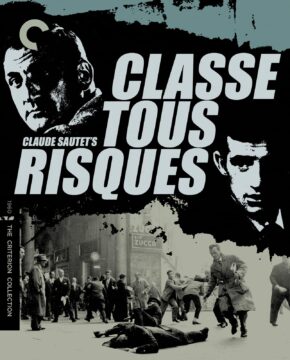 When the French crime film Classe tous risques—the English title, The Big Risk, fails to capture the pun on insurance policies and travel accommodations—premiered in Paris in March 1960, it was undercut by no less a modern heretic than Jean-Luc Godard, whose Breathless had premiered only a week before. Both films starred Jean-Paul Belmondo, an ex-boxer whose hardscrabble looks were belied by his soft pout. He plays underworld citizens in both films: In Breathless, the scapegrace Michel Poiccard, stroking his thumb across his lips in a pastiche of Humphrey Bogart, and in Classe tous risques a young louche named Éric Stark. The film’s director, Claude Sautet, was thirty-six at the time, having apprenticed for years as an assistant director of middling, prefab projects—George Franju’s Eyes Without a Face (1960), which Sautet cowrote, being a key exception. Sautet is mostly an unknown quantity in anglophone circles and Classe tous risques is probably his most recognizable achievement thanks to the Criterion Collection, which gave it one of its comprehensive DVD treatments in 2008.
more here.
Enjoying the content on 3QD? Help keep us going by donating now.
Wednesday Poem
THE ORIGIN OF LIGHT
For a thousand years, the nature of light
was a source of debate, a question
that split the learned, who wondered if sight
originated as a beam coming in
from outside-the sun-or as a substance
generated inside, a stuff we shoot
out, to bathe the world and its occupants?
Curious. I never knew of this dispute
until a patient, about week before he died
of cancer, told me the story of Ali
al-Hasan, the curious man who tried
staring into the sun for as long as he
could take it. When the pain became too sharp
to stand, he understood, but it was dark.
to stand, he understood, but it was dark.
by Jack Coulehan
from Rattle Magazine
Enjoying the content on 3QD? Help keep us going by donating now.
The Birth Of Naturalism
Peter Harrison at Aeon Magazine:
 Leaving aside these associations with Western triumphalism, Huxley’s version of history, in which supernaturalism is engaged in an enduring struggle with naturalism, suffers from two fatal flaws. First, past historical actors, and indeed many non-Western cultures, observe no clear distinction between the natural and the supernatural. Second, and somewhat paradoxically, religious assumptions about the way in which nature is ordered turn out to have been crucial to the emergence of a naturalistic outlook.
To most modern Westerners, the natural/supernatural distinction seems obvious and, well, natural. Yet, a few historians and social scientists have provided intimations of its historical and cultural novelty. In his classic book The Elementary Forms of the Religious Life (1912), the sociologist Émile Durkheim attempted to arrive at a definition of religion that fitted all of the relevant phenomena. He dispensed with the common assumption that ‘belief in supernatural beings’ was an essential component of religion, pointing out that ‘the idea of the supernatural arrived only yesterday.’ It has become increasingly apparent that Durkheim was understating the case: in most traditional cultures, the idea of the supernatural never arrived at all.
more here.
Enjoying the content on 3QD? Help keep us going by donating now.
Tuesday, February 4, 2025
“The Blessed Curse” by Sarmad Sehbai, Reviewed
Prashant Keshavmurthy in the Asian Review of Books:
 Fifteen years into his marriage, Noor Mohammad Ganju has never seen his wife naked. He lusts after her but sex, when she occasionally obliges him, is reduced by veils—literal and symbolic—to tedious and unimaginative coupling in the dark.
Negotiating with multiple folds of crumpled sheets, he would wander through the fluffy confusion, etching a figure in his mind, reading zips and buttons … At last, she would let him pull her shalwar half down and he would perform a missionary in her midwife position; a pantomime of awkward limbs and dull weight.
This early passage sets the tone for Sarmad Sehbai’s novel The Blessed Curse that, in 25 relatively short and vivid chapters, tells the increasingly absurdist story of the lengths to which a politically and militarily powerful trio of men will go to swell their ever-flagging male potency. The country is never named but is recognizably Sehbai’s home nation of Pakistan in which he has been, since the 1970s, esteemed as a poet and playwright in Urdu and Punjabi and as head of PTV’s theater department.
More here.
Enjoying the content on 3QD? Help keep us going by donating now.