
Category: Recommended Reading
james salter (1925 – 2015)
Sunday Poem
“The devil took Jesus to a high mountain
and showed him all the world and said, I'll
give you all of this if you'll worship me.”
.
The Third Temptation
LISTEN
He watched with all his organs of concern
How princes walk, what wives and children say;
Re-opened old graves in his heart to learn
What laws the dead had died to disobey.
And came reluctantly to his conclusion:
“All the arm-chair philosophers are false;
To love another adds to the confusion;
The song of pity is the Devil's Waltz.”
And bowed to fate and was successful so
that he was king of all the creatures:
Yet, shaking in his autumn nightmare, saw,
Approaching down a ruined corridor,
A figure with his own distorted features
That wept, and grew enormous, and cried Woe.
.
by W.H. Auden
from Selected Poems
Vintage Books, 1975
why we should all learn from the ancient Greeks
Edith Hall in The Guardian:
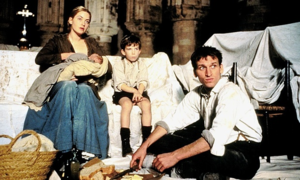
The best-known example is the hero of Thomas Hardy’s Jude the Obscure. Jude Fawley, a poor stonemason living in a Victorian village, is desperate to study Latin and Greek at university. He gazes on the spires and domes of the University of Christminster – they “gleamed” like topaz. The lustrous topaz shares its golden colour with the stone used to build Oxbridge colleges, but is one of the hardest minerals in nature. Jude’s fragile psyche and health inevitably collapse when he discovers just how unbreakable are the social barriers that exclude him from elite culture. Hardy was writing from personal experience: as the son of a stonemason himself, and apprenticed to an architect’s firm, he had been denied a public school and university education; like Fawley, he had struggled to learn enough Greek to read the Iliad as a teenager. Unlike Jude, Hardy rose through the social ranks to become a prosperous member of the literary establishment. But he never resolved his internal conflict between admiration for Greek and Latin authors and resentment of the supercilious attitude of some members of the upper classes who had been formally trained in them.
More here.
‘Yeh Tan Thaat Tambure Ka’ by Vidya Rao
In this song Kabir evokes the image of our body, our self, being like the five-stringed musical instrument – the tambura. Made of the four elements and containing the fifth element – shoonyata or emptiness – we hold within our self the capacity to resound to a higher sound. But only if we learn to be perfectly strung –
Saturday, June 20, 2015
How the stormy eloquence of Delmore Schwartz made possible the glittering prose of Saul Bellow
Vivian Gornick in The Nation:

What, exactly, was the “it” that the 22-year-old Kazin was so hungry for, sitting in the library in 1938? It was the English language. Not the American, the English. He was mad to read it, and also to write it, teach it, interpret it; to swallow it whole; to possess and be possessed by it. This was the “powerful amenity” he craved for his own life. Immigrant Jews who had fallen in love with English had been sitting in public libraries in New York since the 1880s, and many of them had longed to be intimates of the language in exactly the same way; but at the turn of the 20th century, to think of the language as anything other than a means to an end would have meant that you had climbed the ladder of acculturation three steps at a time. It wasn’t until the late 1930s, in the midst of the Great Depression, that this longing had begun to articulate itself with some real, rather than fantasy-ridden, hope of fulfillment. The first generation of college-educated Jews, born in America around 1914, was itself only half-in, half-out; but the hybrid experience alone allowed for their consideration of the exotic notion that English as a destiny might be seen as something other than utopian.
More here.
What happens when the sea swallows a country?
Rachel Nuwer at the BBC:

Yet amid all this, a sinking realisation constantly undermines the islands’ carefully manicured perfection. It’s the knowledge that all of this may soon be gone. The nation, with its low-lying islands, has been labelled the most at-risk country in South Asia from the impact of climate change. Even if the swooning honeymooners do not allow this thought to mar their vacation, for the ever-smiling staff members, it’s harder to ignore. “Of course I’m concerned about climate change, about the reef, the environment and pollution,” says Mansoor, a Maldivian who works at one of the resorts. “But what can I do? I don’t know.”
Climate change threatens waterfront developments and seaside cities around the world, but for some, the stakes are higher than simply having to move a few miles inland, or even having to relinquish large cities like Miami, Amsterdam and Shanghai. For the citizens of around six to 10 island nations, climate change could rob them of their entire country.
More here.
What does my headscarf mean to you?
‘Why Grow Up?’ by Susan Neiman

A great deal of modern popular culture — including just about everything pertaining to what French savants like to call le nouvel âge d’or de la comédie américaine — runs on the disavowal of maturity. The ideal consumer is a mirror image of a familiar comic archetype: a man-child sitting in his parents’ basement with his video games and his “Star Wars” figurines; a postgraduate girl and her pals treating the world as their playground. Baby boomers pursue perpetual youth into retirement. Gen-Xers hold fast to their skateboards, their Pixies T-shirts and their Beastie Boys CDs. Nobody wants to be an adult anymore, and every so often someone writes an article blaming Hollywood, attachment parenting, global capitalism or the welfare state for this catastrophe. I’ve written one or two of those myself. It’s not a bad racket, and since I’m intimately acquainted, on a professional basis, with the cinematic oeuvre of Adam Sandler, I qualify as something of an expert.
In the annals of anti-infantile cultural complaint, Susan Neiman’s new book, “Why Grow Up?,” is both exemplary and unusual. An American-born philosopher who lives in Berlin, Neiman has a pundit’s fondness for the sweeping generalization and the carefully hedged argumentative claim. “I’m not suggesting that we do without the web entirely,” she writes in one of her periodic reflections on life in the digital age, “just that we refuse to let it rule.”
more here.
BLOOMSBURY IN BUENOS AIRES
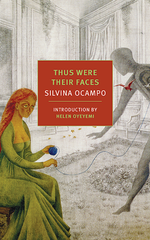
A popular critical shorthand describes Clarice Lispector as the Virginia Woolf of South America. A better analogy would be Silvina Ocampo. Benjamin Moser’s Lispector biographyWhy This World (2009) makes clear that as a poor Jewish immigrant who grew up in an isolated region, married a diplomat, and wrote most of her early fiction abroad, Lispector was a latecomer to her country’s Rio de Janeiro–based literary firmament. By contrast, Ocampo, like Woolf, was a descendant of 19th-century aristocrats, married a well-known man from her own social class, and spent nearly her entire career in the capital city where she was born. As Woolf was able to publish through her husband Leonard’s Hogarth Press, so Ocampo had at her disposal the magazine and publishing house of her sister Victoria’s famous Sur. Like the inhabitants of Bloomsbury, the Buenos Aires clique to which Ocampo belonged—an extension of the European-influenced Florida poetry movement of the 1920s—was cosmopolitan in its reading, apolitical or reactionary in its ideology, and sexually intertwined. In aesthetic terms, the writing of Ocampo, Jorge Luis Borges, Adolfo Bioy Casares, and Sur’s long-time managing editor, José Bianco, constituted a coherent literary statement. Until recently, this unity has been overlooked: Borges overshadowed the other three writers’ work, shrinking their achievements to acolytes’ imitations of a master. The reassessment of Bioy Casares’s fiction has begun to correct this imbalance; now it is Silvina Ocampo’s turn.
more here.
Novelist James Salter dies at 90

Salter's reputation as a novelist was made with 1967's “A Sport and a Pastime,” a story of an American's affairs in postwar France that was laudedby the New York Times as “a tour de force in erotic realism.”
In the 1975 novel “Light Years” Salter wrote, “Life is weather. Life is meals. Lunches on a blue-checked cloth on which salt has spilled. The smell of tobacco. Brie, yellow apples, wood-handled knives.”
He often considered the connection between writing and life. In his 1997 memoir “Burning the Days” he wrote, “In describing a world you extinguish it,” and, more optimistically, “Life passes into pages if it passes into anything.”
In 2013, at age 88, he surprised many readers with his first novel in 35 years. “All That Is” is a sweeping novel of an American soldier who returns from World War II to work in publishing and, over the course of four decades, seeks love and romance.
more here.
The 100 best novels: No 91 – Midnight’s Children by Salman Rushdie (1981)
Robert McCrum in The Guardian:

A page of Rushdie is a rich, jewel-encrusted tapestry of allusions, puns, in-jokes, asides, and the unconsidered trifles of popular culture. Some readers may find this diet close to indigestible, but Rushdie’s charm, energy and brilliance, with his sheer joie de vivre, justify the critic VS Pritchett’s verdict (in the New Yorker) that, with Midnight’s Children, “India has produced a great novelist… a master of perpetual storytelling”.
More here.
A Sea Change in Treating Heart Attacks
Gina Kolata in The New York Times:
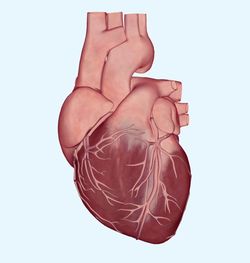
The reinvention of protocols to hasten treatment is part of a broad rethinking of how to tackle coronary heart disease, which accounts for one of every seven deaths in the United States or 375,000 a year. Just this month, powerful drugs from the first new class of medicines to lower bad cholesterol levels in a generation neared approval by the Food and Drug Administration, raising hopes that they will further reduce the death rate from heart disease. At the same time, new, less invasive methods for replacing aged heart valves are raising hopes that ailing patients will be able to live longer. And researchers are immersed in resolving issues that remain unsettled: the utility of stents to treat the heart pain known as angina and the ideal level for blood pressure.
More here.
Friday, June 19, 2015
Why Rachel Dolezal Still Matters After Charleston
Justin E. H. Smith in his own blog:
But then, yesterday, yet another racist attack by a homegrown terrorist took place, and even before the crime scene had been cleaned up we Americans were being scolded for having considered the possibility, for a moment, that racial categorisation (and the essentialism that flows from the practice) is something we might hope to move beyond. Right away, people were being referred to, in the identitarian manner, as ‘bodies’ instead of as people. And the fact of ‘being a black body’ was reinscribed back into the natural order of things. As Jelani Cobb wrote in The New Yorker, closing off the Dolezal affair, “The existential question of who is black has been answered in the most concussive way possible: the nine men and women slain as they prayed last night at the Emanuel African Methodist Episcopal Church, in Charleston, South Carolina, were black.”
But the existential question needs to be asked again and again, and the belief that there is a simple answer to it is part of the reason America cannot overcome its murderous pathology, cannot really end the Civil War. Rachel Dolezal grew up in a society that told her, constantly: “You're white, you're white, you're white,” and she seems to have thought to herself, “Really, now, can it be so simple as that?”
More here.
The Distributed Brainpower of Social Insects
Ed Yong in Not Exactly Rocket Science:
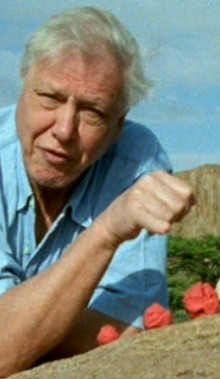
That sequence, from The Life of Mammals, is a wonderful demonstration of the social brain hypothesis—a bold idea, proposed in the 1980s, which suggests that living in groups drove the evolution of large brains. Social animals face mental challenges that solitary animals do not: they have to recognise the other members of their cliques, cope with fluid and shifting alliances, manage conflicts, and manipulate or deceive their peers. So as social groups get bigger, so should brains. This idea has been repeatedly tested and confirmed in many groups of animals, including hoofed mammals, carnivores, primates, and birds.
What about insects? Ants, termites, bees, and wasps, also live in large societies, and many of them have unusually big brains—at least, for insects. But in 2010, Sarah Farris from West Virginia University and Susanne Schulmeister from the American Museum of Natural History showed that in these groups, large brains evolved some 90 million years before big social groups. If anything, they correlated with parasitic body-snatching rather than group-living.
More here.
An Emotional Jon Stewart Drops the Comedy to Talk Charleston: ‘We Still Won’t Do Jackshit’
on blood writing
Perhaps the strangest object to surface after the 2003 US invasion of Iraq is known only as the Blood Quran. When I first heard its name, I pictured Dead Sea scrolls of carmine papyrus, quartered away in some limestone crypt. But while the words are ancient, the edition is new. Commissioned by the late Iraqi President Saddam Hussein on his 60th birthday, the book was printed in the blood of its patron. Over the course of two years (and twenty-something litres) master penman Abbas Shakir Joudi al-Baghdadi calligraphed 605 pages of sanguine verse. Now, kept under lock and key in a Baghdad mosque, the book presents a double bind. It has been ruled haram (forbidden) to copy the Quran in bodily fluids; it is also frowned upon to destroy a working copy of the sacred text. This exegetical uncertainty, the language’s messy entanglement with the actual life force of a former despot, and the surprisingly aesthetic quality of the object make it difficult to determine what should be done with the book of blood.
Knowingly or not, Hussein was acting in lineage with a number of religious precursors, real and imagined. The British Library holds a tenth-century copy of the Diamond Sutra, written in the blood of an ascetic octogenarian who pricked a finger when his nib ran dry. The Codex Gigas (or ‘Devil’s Bible’) might be the largest surviving medieval manuscript, but its red ink is rumored to have flowed through human veins before being set upon the page. H.P. Lovecraft’s Necronomicon, a fictitious grimoire that appears across his writing, was revised by horror director Sam Raimi into a work of anthropodermic bibliopegy—bound in skin, written in blood.
more here.
Pope Francis’s encyclical on climate change

Pope Francis’s encyclical on climate change, Laudato Si’, is the most astonishing and perhaps the most ambitious papal document of the past 100 years, since it is addressed not just to Catholics, or Christians, but to everyone on earth. It sets out a programme for change that is rooted in human needs but it makes the radical claim that these needs are not primarily greedy and selfish ones.
We need nature, he says, and we need each other. Our need for mutuality, and for giving, is just as real as the selfish aspects of our characters; the need for awe and stillness in front of nature is just as profound as any other human need. The care of nature and the care of the poor are aspects of the same ethical commandment, and if we neglect either one we cannot find peace. The environment, in the pope’s use of the word, is not something out there: nature as opposed to the human world. The term describes the relationship between nature and humans, who are inextricably linked and part of each other. It is that relationship that must be set right.
Starting from that premise, he launches a ferocious attack on what he sees as the false and treacherous appetites of capitalism and on the consumerist view of human nature.
more here.
On Kathy Acker and McKenzie Wark
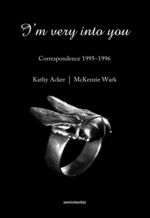
In 1995, Acker was touring in Australia, almost all of her major books already done. She was big in the way that avant-garde artists can be big: she was culty, glam, and cool. Acker embodies a lot of the things about 1990s femininity that are bang on trend right now: she was a tattooed confesser in silver jewellery and clompy boots, vocal about sex and vocal about vocalizing. In ‘95 Blood and Guts in High School and Great Expectations were selling pretty well. Wark was (and still is) a professor who thinks about screens and globalization and the way that we perceive events happening very far away via the little screens that are so close to us all the time. In 1995, Wark had just published Virtual Geography: Living With Global Media Events, a landmark achievement in media theory that made his name internationally, at least as far as such fame can go for an academic: one review was very positive, but referred to Wark as “she” throughout. Wark and Acker met in Sydney that year and, like so many human beings before them, didn’t stop at a kiss on the cheek. Two cool kids, tangled up. Plus ça change!
This book collects the after-messages following that short romance. The dialogue only spans a few weeks. Each email is timestamped, with Acker and Wark’s nerdy ‘90s email addresses repeated over and over again, page after page. They map the unwinding and rewinding and unwinding again of tension, attention, and affection, telling the story-about-nothing of the first truly great collection of electronic love letters.
more here.
Modern Romance
Alice Jones in The Independent:

It is all good fodder for stand-up and now, aged 32, good material for a book about love in the 21st century. The catalyst was a text message he sent to a girl he met at a party, which never got a reply. “Then I look on social media. I see her logged onto Facebook chat. Do I send a message? No! Don’t do that, Aziz. Be cool. Be cool. Later I check Instagram, and this clown Tanya is posting a photo of some deer. Too busy to write me back, but she has time post a photo of some deer?”
More here.