Free speech in an age of identity politics

Kenan Malik in Pandaemonium:

This is a transcript of my TB Davie Memorial lecture that I gave at the University of Cape Town on Thursday 13 August.

Freedom-of-speechIt is truly an honour and pleasure to be able to deliver this lecture, and to be able to follow the speakers who have gone before me, speakers such as Walter Sisulu, Wole Soyinke, Edward Said and Noam Chomsky. It is an honour, too, to be the fiftieth speaker in this great series. But being the fiftieth speaker raises an interesting question: Is there anything left to say about academic freedom that the 49 before me have not already said?

To appreciate why the debate about academic freedom is not yet exhausted, and probably never will be exhausted, we need to understand two points. First, that while there is something special about the academy that requires freedom of speech, there is nothing that should make us privilege academic freedom above other forms of freedom of expression. Freedom of expression is a right, not a privilege. We need to defend academic freedom. But we need to recognize, too, that freedom of expression in the academy is intimately related to freedom of expression more widely in society. Our ability to defend academic freedom is intimately linked to our ability and willingness to defend freedom of expression more widely. So, I will talk today about the academy and academic freedom. But I will talk much more about the wider social context of free speech and the assault upon it.

And second, to defend free speech, whether in the academy or in society more widely, we need to know not simply why freedom of expression is important but also in what ways that freedom is being threatened.

More here.

US Energy Secretary Ernest Moniz on the Iran deal

In the wake of the Iran nuclear deal announced last month, US Energy Secretary Ernest Moniz has become a prominent figure in the Obama administration's wide-ranging efforts to convince Congress and the American people to support the deal. In the process, the physicist and longtime MIT professor—who was a key advisor on the US team during negotiations with Iran—has been praised for his ability to translate complex science into language accessible to laymen (and lay-congressmen) and has at the same time become something of a media favorite.

John Mecklin in Bulletin of the Atomic Scientists:

ScreenHunter_1314 Aug. 15 19.07Bulletin: I’ll get right to it because I know you’re busy, and we have a short time window here. You and other administration officials have been on kind of a road show lately, explaining the Iran deal to a lot of different groups and people. Have you learned anything from doing that? Have any of the reactions surprised you?

Moniz: No, I don’t think so surprised. What I’m finding is, I think, that when all is said and done, the strengths of the nuclear dimensions of the agreement are being quite well appreciated. The two major issues that I think are on people’s minds are, number one, this idea that—of course it was part of the construct of the negotiation following the President’s strategic choice years ago—that the agreement is focused specifically on the nuclear weapons issue in Iran and is not, at the same time, addressing other regional issues that we have with Iran. But again, that was a choice made years ago.

Secondly, while the agreement very clearly is very restrictive on Iran’s nuclear program, say for 15 years, there’s a concern that okay, after 15 years they become a threshold state. But of course, we point out that they are today a threshold state. The difference is whether one is going to be confronted with a very large Iranian nuclear program essentially tomorrow, with little verification and, if the agreement is undermined, very little international unity, versus an Iran that could rebuild a substantial program after 15 years, but with considerable enhanced verification and international unity. So that’s kind of the reality.

More here.

Attack on the pentagon results in discovery of new mathematical tile

Joy as mathematicians discover a new type of pentagon that can cover the plane leaving no gaps and with no overlaps. It becomes only the 15th type of pentagon known that can do this, and the first discovered in 30 years.

Alex Bellos in The Guardian:

11bcfab5-92e3-45cb-abdd-01e1809e3f89-1020x612In the world of mathematical tiling, news doesn’t come bigger than this.

In the world of bathroom tiling – I bet they’re interested too.

If you can cover a flat surface using only identical copies of the same shape leaving neither gaps nor overlaps, then that shape is said to tile the plane.

Every triangle can tile the plane. Every four-sided shape can also tile the plane.

Things get interesting with pentagons. The regular pentagon cannot tile the plane. (A regular pentagon has equal side lengths and equal angles between sides, like, say, a cross section of okra, or, erm, the Pentagon). But some non-regular pentagons can.

The hunt to find and classify the pentagons that can tile the plane has been a century-long mathematical quest, begun by the German mathematician Karl Reinhardt, who in 1918 discovered five types of pentagon that do tile the plane.

(To clarify, he did not find five single pentagons. He discovered five classes of pentagon that can each be described by an equation. For the curious, the equations are here. And for further clarification, we are talking about convex pentagons, which are most people’s understanding of a pentagon in that every corner sticks out.)

Most people assumed Reinhardt had the complete list until half a century later in 1968 when R. B. Kershner found three more. Richard James brought the number of types of pentagonal tile up to nine in 1975.

More here.

Don’t Hate the Phone Call, Hate the Phone

Ian Bogost in The Atlantic:

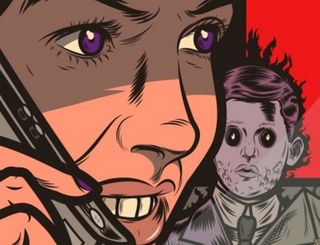
ScreenHunter_1313 Aug. 15 18.48One of the ironies of modern life is that everyone is glued to their phones, but nobody uses them as phones anymore. Not by choice, anyway. Phone calls—you know, where you put the thing up to your ear and speak to someone in real time—are becoming relics of a bygone era, the “phone” part of a smartphone turning vestigial as communication evolves, willingly or not, into data-oriented formats like text messaging and chat apps.

The distaste for telephony is especially acute among Millennials, who have come of age in a world of AIM and texting, then gchat and iMessage, but it’s hardly limited to young people. When asked, people with a distaste for phone calls argue that they are presumptuous and intrusive, especially given alternative methods of contact that don’t make unbidden demands for someone’s undivided attention. In response, some have diagnosed a kind of telephoniphobia among this set. When even initiating phone calls is a problem—and even innocuous ones, like phoning the local Thai place to order takeout—then anxiety rather than habit may be to blame: When asynchronous, textual media like email or WhatsApp allow you to intricately craft every exchange, the improvisational nature of ordinary, live conversation can feel like an unfamiliar burden. Those in power sometimes think that this unease is a defect in need of remediation, while those supposedly afflicted by it say they are actually just fine, thanks very much.

But when it comes to taking phone calls and not making them, nobody seems to have admitted that using the telephone today is a different material experience than it was 20 or 30 (or 50) years ago, not just a different social experience. That’s not just because our phones have also become fancy two-way pagers with keyboards, but also because they’ve become much crappier phones. It’s no wonder that a bad version of telephony would be far less desirable than a good one. And the telephone used to be truly great, partly because of the situation of its use, and partly because of the nature of the apparatus we used to refer to as the “telephone”—especially the handset.

More here.

How to think about Islamic State

Pankaj Mishra in The Guardian:

IsisViolence has erupted across a broad swath of territory in recent months: wars in Ukraine and the Middle East, suicide bombings in Xinjiang, Nigeria and Turkey, insurgencies from Yemen to Thailand, massacres in Paris, Tunisia and the American south. Future historians may well see such uncoordinated mayhem as commencing the third – and the longest and the strangest – of world wars. Certainly, forces larger and more complex than in the previous two wars are at work; they outrun our capacity to apprehend them, let alone adjust their direction to our benefit. The early post cold war consensus – that bourgeois democracy has solved the riddle of history, and a global capitalist economy will usher in worldwide prosperity and peace – lies in tatters. But no plausible alternatives of political and economic organisation are in sight. A world organised for the play of individual self-interest looks more and more prone to manic tribalism.

In the lengthening spiral of mutinies from Charleston to central India, the insurgents of Iraq and Syria have monopolised our attention by their swift military victories; their exhibitionistic brutality, especially towards women and minorities; and, most significantly, their brisk seduction of young people from the cities of Europe and the US. Globalisation has everywhere rapidly weakened older forms of authority, in Europe’s social democracies as well as Arab despotisms, and thrown up an array of unpredictable new international actors, from Chinese irredentists and cyberhackers to Syriza and Boko Haram. But the sudden appearance of Islamic State (Isis) in Mosul last year, and the continuing failure to stem its expansion or check its appeal, is the clearest sign of a general perplexity, especially among political elites, who do not seem to know what they are doing and what they are bringing about.

More here.

Saturday Poem

Bethel

A clear light, at all hours,
A girl at reception. And the evangelised
Stepping heavenward, up the wooden stairs,
Each with his version of Christ,

Showing the world a clean pair of heels
For Bible, drying out and three square meals –
And you, who sank your lance in Moby Dick,
Blissed-out, by the Skaggerak.

Nyhavn, Christianshavn
Mingling, splitting their cabin-lights –
Oil on water . . . Rustbuckets
In from Greenland, off the north Atlantic route,

Stinking tubs from Rekyavik, the Faroes.
Was it only yesterday
She Saved you, by a warehouse
Of flensed whales – the unadulterated joy

Of the first woman in years
On your skin, an Ishmael giving thanks
For a few words of English, the lingua franca
Of the homeless everywhere,

Knowing Bethel, ‘heavenly place’,
Brought back to yourself, in the after-trance,
By women in lights along the quays,
A laying on of hands?
.

by Harry Clifton
from The Winter Sleep of Captain Lemass
publisher: Bloodaxe, Newcastle, 2012

Friday, August 14, 2015

Violence is an unavoidable part of being human

Rowan Williams in the New Statesman:

ScreenHunter_1312 Aug. 14 19.35It would help if we had a single, clear story we could believe about violence – it’s getting worse because of this or that factor in our world, so we know whom to blame; it’s getting better as we all become more educated and secular, so we don’t have to worry in the long term. But the evidence is profoundly confusing.

Richard Bessel begins his lucid and well-documented book with a round-up of contemporary views, from those who think first of the astronomical statistics of humanly devised injury and death in the 20th century to those (like Steven Pinker in a much-discussed recent book) for whom what matters is the gradual change in sensibility that has made us simply more sensitive to the suffering of others – as well as the relative absence of major international conflict in the past half-century or so. As Bessel observes, Pinker’s statistics will seem a little academic if you happen to live in South Sudan or Syria (or Baltimore or Johannesburg).

The paradox of our era in the modern North Atlantic world is that while we are probably objectively more secure against the casual daily risk of violence than our ancestors, we are more anxious and more outraged by the prospect as well as the reality of violence, and more prone to extend its meaning to forms of offensive or menacing speech and action that would not have registered for those ancestors. We are, in a word, more preoccupied with violence; hence the subtitle, A Modern Obsession.

More here.

Earthworks, new and ancient, and the art of disappearance

PI_GOLBE_EARTHWK_FI_004Stefany Anne Golberg at The Smart Set:

On the day we went to see the Great Serpent Mound, the rain plunged from the sky. Lightning shot down to the cornfields and made the cornfields roar. Everything was dark. Guides recommend that you come to the Serpent early or late in the day, when shadows alongside it are deep and the winding shape becomes bolder. But on the day we visited, the whole of Ohio was shadow, save the neat green grass of the Serpent’s skin, which was oddly bright.

When the first European settlers came to farm southwestern Ohio, they found earthen lumps scattered all around the land. They did not know what these lumps could be — some farmers went about flattening them, others farmed around them. In the 1840s, a local doctor and a newspaper editor from the town of Chillicothe investigated the mounds. They discovered wooden structures inside, built to house the dead of Native tribes whose names are lost to us now. Jewelry and effigies were placed around the cremated remains to keep the spirits company. Then the Mound Builders covered over the structures with layers of soil and sand. As the generations passed, new dead were buried on top of the old, and more earth was put on top, until the mounds grew higher and higher and the little wooden structure collapsed within.

more here.

Welcome to the nerve-wracking reality of being Finland

HarpersWeb-Postcard-Finland-fullMasha Gessen at Harper's Magazine:

A year ago, Sofi Oksanen, Finland’s preeminent contemporary writer, took the podium at the PEN World Voices Festival in New York City. “Good evening, everyone,” she said, failing to smile. “I bring greetings from the bordering countries to Russia.” She paused to let the gravity of her nation’s geographic location sink in. She would devote the rest of her allotted seven minutes to a single, grim topic: the danger Russia poses to Western civilization. Other writers speaking that evening at Cooper Union’s Great Hall addressed societal and personal ills, some of staggering dimensions. But only Oksanen sounded genuinely scared. Indeed, she sounded like someone bringing a message from a country at war.

Three weeks later, Alexander Dugin, a once marginal philosopher whose ideas now seem to form the core of Putin’s politics, addressed a large crowd in Helsinki. He spoke of the threat that Western civilization poses to humanity and argued that Finland had a choice to make. It could stay with the West, which would increasingly pressure it to accept what he called a “posthuman,” and “postgender” reality, or it could side with Russia, which alone among the world’s powers was working to protect the traditional way of life. Dugin, whose long gray beard and dome-shaped forehead suggest a Russian Orthodox priest in civvies, stressed repeatedly that the choice would be Finland’s to make. “I am not advocating the annexation of Finland,” he said over and over again. “If I were, I would tell you.” If such a reassurance has ever calmed anyone, this was not the occasion.

more here.

thinking about the country

Fotolia_1974925_XSJake Bittle at The Point:

One of the first big splashes in American fiction this year was Ben Metcalf’s Against the Country, a three-hundred-plus-page tirade against the rural South by the former literary editor of Harper’s. In this novel, a narrator who happens to write exactly like Ben Metcalf recounts his childhood and adolescence in Goochland County, a real county in Virginia that almost every reviewer of the book has assumed is fictional. In fire-and-brimstone sentences that go on for hundreds of words, the narrator rages against those who glorify life in the countryside. Targets include Thomas Jefferson, Daniel Boone and Henry David Thoreau, but most importantly the pseudo-Metcalf’s own parents, who move the family to Goochland with the hope that living close to nature will be enriching. As Metcalf shows, the move proves to be just the opposite: Goochland, he tells us, is the land “in whose dirt our national evil was gestated, and out of whose grass it sprung, and on whose stock it immediately fed” (the sentence goes on for four more clauses). Nature, which Metcalf sees as malevolent, sets the stage for the ignorance that many Northerners see at the heart of Southern culture. Goochland provides “annoyance and lack and trepidation,” Metcalf says, “and what more is asked for our violence to germinate and grow?”

more here.

Rescuing Wildlife Is Futile, and Necessary

Helen MacDonald in the New York Times Magazine:

ScreenHunter_1311 Aug. 14 19.12We increasingly think that wild animals live in a world separate from our own, and that we are supposed to leave them there. We are happy to watch them and sometimes to feed them. But we physically interact with them only when they’re hunted, studied or in serious trouble. And the latter is usually our fault: We dislodge nests, soak seabirds in oil, hit deer and foxes with cars, pick up casualties from beneath glass windows and power lines. When I was 12, I reared a brood of baby bullfinches brought to me by a neighbor who had felled their nest tree. When the birds flew free, I felt I’d righted a wrong that thoughtlessness had perpetrated on the world. Against a backdrop of environmental destruction and species decline, anxieties about our impact on the natural world become tied to the tragedies suffered by individual animals. Just a few weeks ago, the news that an American hunter had illegally killed a lion called Cecil in Zimbabwe caused outrage across the world: It’s an apt illustration of how people care more about the fortunes of a single animal than those of its species. (It’s not as if people are furiously protesting the decline of large carnivores every day.) Tending animals until they are fit to be returned to the wild feels like an act of resistance, redress, even redemption. Rearing a single nest of finches in the 1980s didn’t halt the decline of bird populations. But my simple sense of the justice of saving them taught me simple, concrete things about finches I’d never otherwise have learned: how they slept, how they communicated, their idiosyncrasies.

More here. [For my sister Sughra Raza who is on a quest to save the wild elephants of the world.]

Will the Pope Change the Vatican? Or Will the Vatican Change the Pope?

As Francis makes his first U.S. visit, his emphasis on serving the poor over enforcing doctrine has inspired joy and anxiety in Roman Catholics.

Robert Draper in National Geographic:

ScreenHunter_1310 Aug. 14 18.58When about 7,000 awed strangers first encounter him on the public stage, he is not yet the pope—but like a chrysalis stirring, something astounding is already present in the man. Inside Stadium Luna Park, in downtown Buenos Aires, Argentina, Roman Catholics and evangelical Christians have gathered for an ecumenical event. From the stage, a pastor calls out for the city’s archbishop to come up and say a few words. The audience reacts with surprise, because the man striding to the front had been sitting in the back all this time, for hours, like no one of any importance. Though a cardinal, he is not wearing the traditional pectoral cross around his neck, just a black clerical shirt and a blazer, looking like the simple priest he was decades ago. He is gaunt and elderly with a somber countenance, and at this moment nine years ago it is hard to imagine such an unassuming, funereal Argentine being known one day, in every corner of the world, as a figure of radiance and charisma.

He speaks—quietly at first, though with steady nerves—in his native tongue, Spanish. He has no notes. The archbishop makes no mention of the days when he regarded the evangelical movement in the dismissive way many Latin American Catholic priests do, as an escuela de samba—an unserious happening akin to rehearsals at a samba school. Instead the most powerful Argentine in the Catholic Church, which asserts that it is the only true Christian church, says that no such distinctions matter to God.

More here.

The Hidden Connection Between Morality and Language

Cody Delistraty in Nautilus:

6877_876e8108f87eb61877c6263228b67256Tragedy can strike us any time, but that doesn’t mean we can’t make the best of it. When Frank’s dog was struck and killed by a car in front of his house, he grew curious what Fido might taste like. So he cooked him up and ate him for dinner. It was a harmless decision, but, nonetheless, some people would consider it immoral. Or take incest. A brother, who’s using a condom, and his sister, who’s on birth control, decide to have sex. They enjoy it but keep it a secret and don’t do it again. Is their action morally wrong? If they’re both consenting adults and not hurting anyone, can one legitimately criticize their moral judgment?

Janet Geipel of the University of Trento in Italy posed fictional scenarios like these to German-, Italian-, and English-speaking college students in each student’s native language and in a second language that they spoke almost fluently. What Geipel found in her July 2015 study is that “the use of a foreign language, as opposed to a native language, elicited less harsh moral judgments.” She concluded that a distance is created between emotional and moral topics when speaking in a second language.

People are more likely to act less emotionally and more rationally when speaking their second language, according to Geipel. Nelson Mandela seemed to have understood this dynamic decades ago when he said, “If you talk to a man in a language he understands, that goes to his head. If you talk to him in his language, that goes to his heart.”

The distinction is an important one: If moral decisions are contingent on the language in which they are posed then the decisions of people who must work in a foreign language on a daily basis—immigrants, international corporations, international institutions—would need to be reevaluated. Whether it’s Goldman Sachs in Paris or the United Nations in Burma, decisions made by people speaking their non-native languages appear to be less concerned with morality and more concerned with rationality and utilitarianism.

More here.

Fareed Zakaria writes open letter to Senator Charles Schumer about the Iran deal

Fareed Zakaria in the Washington Post:

Dear Sen. Schumer,

When you announced your decision to vote against the nuclear agreement with Iran, you explained your reasons in a nearly 1,700-word statement that is thoughtful in substance and civil in tone. And yet, in the end, I found it unconvincing.

I believe that the agreement is flawed. But it is the most intrusive, demanding and comprehensive set of inspections, verification protocols and snapback measures ever negotiated. Compare the detailed 159-page document with the United States' 1994 accord with North Korea, which was a vaguely worded four-page document with few monitoring and enforcement provisions.

You have three sets of objections, which I will get to, but you fail to note what must happen at the outset, before Iran gets widespread sanctions relief.

Iran must destroy 98 percent of its enriched uranium and all of its 5 percent to 20 percent enriched uranium, remove and store more than two-thirds of its centrifuges (including all advanced centrifuges), terminate all enrichment at its Fordow nuclear facility and render inoperable the key components of its Arak (plutonium) reactor. All of these steps must be completed to the satisfaction of the International Atomic Energy Agency.

It is difficult to imagine that a serious military campaign against Iran would set back its nuclear program as much as this deal does from the start. Fordow, for example, is buried deep in a mountain and would probably survive all but the most intense bombardment.

More here.

You eat what you read

Rebecca Tucker in National Post:

Fictitious_dishes_thebelljarWhen I think of Sylvia Plath, I think of crabmeat.

I think of tragedy too, and of the deceptively straightforward prose that characterized Plath’s short career as a novelist. But for one reason or another, the passage in The Bell Jar that has the most staying power is the one in which Plath details a ladies’ luncheon that gave everyone food poisoning: “When I finished the first plate of cold chicken and caviar, I laid out another,” Plath’s protagonist, Esther, recalls. “Then I tackled the avocado and crabmeat salad.” Food is a powerful narrative device, even (or, sometimes, especially) when it’s not being used to directly propel a story forward. The literary use of a meal, a snack, or a table setting can serve to provide, with great depth, the most context: in The Bell Jar, for instance, Plath could’ve described a poet Esther once met as deliberate, pretentious or effete; instead, she merely observed that he ate salad with his hands, making it seem like “the only natural and sensible thing to do.”

Cara Nicoletti’s new book, Voracious, is both a collection of such literary references to food and a psuedo-memoir, where recipes are used as a compelling narrative backbone. Nicoletti places memorable passages about food and eating within the context of her own life: Voracious is split into three sections — childhood, adolescence and college years, and adulthood — within which Nicoletti has catalogued a series of short essays about the importance of certain books, followed by a recipe she’s written based on a reference to food from each one. Her reflection on The Silence of the Lambs, for instance, has a recipe for crostini with fava beans and chicken liver mousse; a passage on Charlotte’s Web is accompanied, somewhat morbidly, by one for pea and bacon soup. Nicoletti’s recipe for The Bell Jar’s Crab-Stuffed Avocado appears mid-adolescence.

More here.

Sex does matter: Key molecular process in brain is different in males and females

From ScienceDaily:

BrainMany brain disorders vary between the sexes, but how biology and culture contribute to these differences has been unclear. Now Northwestern neuroscientists have found an intrinsic biological difference between males and females in the molecular regulation of synapses in the hippocampus. This provides a scientific reason to believe that female and male brains may respond differently to drugs targeting certain synaptic pathways. “The importance of studying sex differences in the brain is about making biology and medicine relevant to everyone, to both men and women,” said Catherine S. Woolley, senior author of the study. “It is not about things such as who is better at reading a map or why more men than women choose to enter certain professions.”

Among their findings, the scientists found that a drug called URB-597, which regulates a molecule important in neurotransmitter release, had an effect in females that it did not have in males. While the study was done in rats, it has broad implications for humans because this drug and others like it are currently being tested in clinical trials in humans.

More here.

Thursday, August 13, 2015

Can we reverse the ageing process by putting young blood into older people?

A series of experiments has produced incredible results by giving young blood to old mice. Now the findings are being tested on humans.

Ian Sample in The Guardian:

ScreenHunter_1309 Aug. 13 21.54For much of history, people sought to halt ageing to achieve immortality – or at least to live for hundreds of years. These days, scientists tend to have more modest aims. In wealthy nations, basic healthcare and medical advances have driven up lifespan for the past century. Five years from now, for the first time in human history, there will be more over-60s than children under five years old. In 2050, two billion people will be 60 or older, nearly double the number today.

Behind that statistic lies a serious problem. People are living longer, but they are not necessarily living better. The old struggle with chronic conditions, often many at once: cancer, respiratory disease, heart disease, diabetes, arthritis, osteoporosis, dementia.

Medical researchers tend to tackle these diseases separately. After all, the illnesses are distinct: cancer arises from mutated DNA; heart disease from clogged up blood vessels; dementia from damaged brain cells. The biological processes that underpin the pathologies vary enormously. Each, then, needs its own treatment. Yet some researchers take another view: the greatest driver of disease in old age is old age itself. So why not invent treatments for ageing?

More here.