The towering ego, serrated wit and prodigious literary output of Gore Vidal

D4adac9f-1079-4c35-8e4b-3591da7ce1c0Sarah Churchwell at the Financial Times:

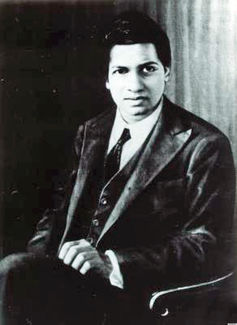
It is common practice for books to be given different titles in the US and the UK, but rarely do those titles express each country’s cultural character as clearly as the two given to Jay Parini’s new biography of Gore Vidal. In America, it is called Empire of Self: A Life of Gore Vidal. In the UK, one of Vidal’s more famous quips has been commandeered into a very British title: Every Time a Friend Succeeds, Something Inside Me Dies: The Life of Gore Vidal.

That switch from indefinite to definite article in the subtitle is also telling. There have been several biographies of Vidal, mostly written by their protagonist, notably in the remarkable memoir Palimpsest (1995), as well as a less remarkable authorised 1999 biography by Fred Kaplan that pleased few, including its subject. Comparisons are inevitable, and inevitably invidious: how do you compete with a consummate raconteur of razoring wit and sumptuous style, whose egotism famously shouldered everyone else out of the room?

Vidal’s output was also prodigious — some 50 published volumes, encompassing fiction, history, plays, essays, memoirs, and film and television screenplays. Most readers now agree that Vidal’s greatest legacy comprises the seven novels about America from 1776 to 2000 that make up the Narratives of Empire (Burr, Lincoln, 1876, Empire,Hollywood, Washington, D.C. and The Golden Age) and his collected essays, most of which were published in the gargantuan United States: Essays 1952—1992(1994). Retelling the story of a nation in these works, Vidal justly described himself as America’s biographer.

more here.

Timothy Snyder’s ‘Black Earth’

06Marrus-blog427Michael R. Marrus at the New York Times:

We may think we know about the Holocaust, Snyder seems to be telling his readers. But he then goes on to contend that “we” get it wrong: We fail to understand Hitler’s ecological viewpoint, we neglect the participation of non-Germans in the killing, we distort the meaning of the concentration camps, we misread the role of states in which massacres occurred, we are wrong about the place of science, among other mistakes. To rectify this mountain of errors, Snyder prescribes some antidotes: a global perspective, an appreciation of Hitler’s colonial policy toward other countries and a “multifocal” approach, “providing perspectives beyond those of the Nazis themselves.” Tilting at some rather elderly windmills, Snyder insists we see that “Hitler’s world­view did not bring about the Holocaust by itself” and that the subject must be viewed internationally, “for Germans and others murdered Jews not in Germany but in other countries.” Even minimally informed readers are likely to find at least some of Snyder’s so-called failures inapplicable and at least some of his remedies familiar. And few are very likely to be surprised when, as if this were a new revelation, he announces that “the Holocaust is not only history, but warning.”

Snyder’s title refers to the fertile, food-producing regions in the heart of Ukraine, in the southern part of the Soviet Union, where Hitler and Stalin allowed their ecological fantasies, fears and murderous ambitions to roam freely, each considering the fate of the region and its population as crucial to the outcome of colossal geopolitical struggles. These territories were a prize for which each was prepared to sacrifice millions, and in the pursuit of which the Jews became the central obsession of the Nazi dictator. This was the cradle of the Holocaust, Snyder says, Hitler’s effort to destroy a planetary enemy.

more here.

Is Maureen Dowd Necessary? Defanging a Hillary Basher

Anita Finlay in The New Agenda:

Dowd-2-zuma-300x169The stinging slights offered by several women who had wielded the written word in an effort to cut Hillary Clinton off at the knees were in a class by themselves. Sally Quinn of the Washington Post appeared on CBS’ The Early Show with Harry Smith to say that Hillary is “a tortured person,” “doesn’t know who she really is or what she wants” and “maybe what she really needs is a wonderful, loving relationship with somebody instead of just going after power and being this ambitious person that I think she thinks she oughta be.”[ii] Newsweek’s Eleanor Clift had referred to the Clintons as “the Corleones.” There were others. But none in the same orbit as Maureen Dowd of the New York Times, whose attacks against the Senator felt distinctly personal in tone. Dowd, along with her sister columnists, purported to know what was desirable and acceptable – in a successful woman, yet they all imagined Hillary existed to be in service of a man, thereby telegraphing an addiction to a mindset that has been limiting women for eons. The woman does not, by definition of her sex, have to put her own goals aside. While these ladies were paid by the column inch for opinion rather than fact, opinions infested by trash talk can penetrate the psyche over time, creating a convincing negative portrait of someone that is often disconnected from the facts of their record. Such was the case with Ms. Dowd’s pronouncements about Hillary Clinton:

“After saying she found her “voice” in New Hampshire, she has turned into Sybil. We’ve had Experienced Hillary, Soft Hillary, Hard Hillary, Misty Hillary, Sarcastic Hillary, Joined-at-the-Hip-to-Bill Hillary, Her-Own-Person-Who-Just-Happens-to-Be-Married-to-a-Former-President Hillary, It’s-My-Turn Hillary, Cuddly Hillary, Let’s-Get-Down-in-the-Dirt-and-Fight-Like-Dogs Hillary.”[iii]

By painting Senator Clinton as a person with bi-polar disorder, Maureen Dowd officially joined the ranks of the sexists, hinting that “Sybil” Hillary might blow up the world from the Oval Office if she were having a bad hair day. Male politicians adjust and amend their message and narrative out on the campaign trail regularly. They are not referred to as mentally unstable. Dowd also wrote that “experience does not beat excitement” and much to my chagrin and dismay, that was true. Obama’s bedazzling branding and the celebratory press treatment he received were much better explanations for Hillary’s difficulties in the primaries than Dowd implying she was some sort of psychopath.

More here. (Note: Older column but even more relevant today)

The Politics of Distraction

Mark Leibovich in The New York Times:

CatWe begin, as many discussions about politics today should, with an analogy to pro wrestling. Consider the ‘‘foreign object’’ routine: One combatant produces a concealed item, usually from under his tights — a pointed stick or some hand-size tool of menace — and proceeds to jab his opponent with it. He perpetrates this atrocity in full view of everybody except the referee, who remains oblivious because a complicit third party (perhaps a tag-team partner or a manager) is distracting him. Now consider our current Republican primary battle royale. Foreign objects might not exist literally in modern campaigns. But there are figurative devices, known as ‘‘shiny objects,’’ that rely on the same principles of distraction, outrage and misdirection. They also involve a hapless dupe in the middle of it all — in this case, us.

…Writing in Esquire, Charles P. Pierce said he had expected that Scott Walker would be doing better with the Republican electorate at this point. ‘‘What I did not anticipate,’’ Pierce wrote, was “the rise of the shiny object that is The Man Called Trump.’’ Pierce added that he also did not expect that Walker himself ‘‘would turn out to be such an unimpressive lump of cheese.''

Donald Trump ‘‘is the brightest and shiniest of all the bright, shiny objects,’’ said David Axelrod, a longtime Obama political adviser. Trump is like a one-man meteor shower of this genre. He sprays exhilarating antagonism upon all manner of Megyn Kellys, Mexicans or whoever his ‘‘loser’’ target of the day might be. He tweets around the clock, rides around in a shimmering helicopter and has that noggin of shimmering hair. He hurls us into the ropes until we find ourselves disoriented, careening against a turnbuckle: Where are we? How did we get here? The shiny-­object metaphor is not confined to the realm of politics. Business ­strategy, technology and marketing consultants have all referred to ‘‘bright, shiny objects’’ (or ‘‘B.S.O.s’’) to describe the fickle tastes of modern life. Urban Dictionary identifies ‘‘S.O.S.’’ (‘‘shiny-­object syndrome’’) as ‘‘a condition which causes an inability to focus on any particular person while online dating.’’ (By the same token, a number of commentators have dismissed Trump’s recent success in the polls as ‘‘just a summer fling.’’)

More here.

Saturday Poem

Summary of a Conversation

What does it mean to be authentic,
to run down the middle of Dizengoff Street and shout in Judeo-Arabic
Ana min el-Maghreb, ana min el-Maghreb”?
(I am from the Atlas mountains, I am from the Atlas mountains).

What does it mean to be authentic,
to sit in Café Roval in a colorful robe (an agal and a zarbiyah, kinds of clothing),
or declaim:
my name is not Zohar, I am Zaish I am Zaish (a Moroccan name).
Neither this nor that,
and nonetheless a different language strikes the mouth until gums crack,
and nonetheless spurned and beloved scents pounce
and I fall between the chairs
lost in the jumble of voices.

.
by Erez Biton
from Timbisert: A Moroccan bird
Publisher: Hakibbutz Hameuchad, Tel Aviv, 2005

Friday, September 4, 2015

Review: Two Years, Eight Months and Twenty‑Eight Nights by Salman Rushdie

Ursula K Le Guin in The Guardian:

ScreenHunter_1354 Sep. 04 17.24A “colossal fragmentation of reality” occurred in the 20th century, Salman Rushdie has said, and his novels enact and display that fragmentation with terror and glee. His new book assures us that reality has lately been crumbling more colossally than ever, and is about to come completely unglued. The climate destabilisation we are experiencing is only a foretaste of advancing chaos, which the author describes with considerable relish. Eschatological lightning strikes, oracular infants and local failures of gravity will become the norm, as the Dark Ifrits, the mischievous forces of disorder, begin to take advantage of the weakening of the fabric of the everyday.

The cumbrous title transcribes a certain number of days into years and months, but not the four weeks that would naturally complete it, because the word “Nights” is needed to suggest the original Thousand and One. Rushdie is our Scheherazade, inexhaustibly enfolding story within story and unfolding tale after tale with such irrepressible delight that it comes as a shock to remember that, like her, he has lived the life of a storyteller in immediate peril. Scheherazade told her 1,001 tales to put off a stupid, cruel threat of death; Rushdie found himself under similar threat for telling an unwelcome tale. So far, like her, he has succeeded in escaping. May he continue to do so.

At the idea of trying to summarise the plot, I shriek and fall back fainting on my seraglio couch. Rushdie has a fractal imagination: plot buds from plot, endlessly. There are at least 1,001 stories and substories, and nearly as many characters. All you need to know is that they’re mostly highly entertaining, amusing and ingenious.

More here.

Why are there no fish in the deepest deep sea?

R. R. Helm in Deep Sea News:

ScreenHunter_1353 Sep. 04 17.19Here’s a mystery: below 8,400 meters there are no fish. There are other creatures: sea cucumbers, anemones, tiny worms, but no one has ever seen a fish. At 8,370 meters? There are fish. But not below 8,400 meters. At its deepest the ocean reaches roughly 11,000 meters, so there is plenty of space. And right below 8,400 meters it’s equally cold, equally dark, equally middle-of-no-where as it is right above 8,400 meters. But there is some magic line at 8,400 meters, below which fish apparently cannot go. No one understands why this line exists. Or if perhaps one day we’ll find a fish that can, in fact, cross it. But for now, scientists do have some ideas.

More here.

India and Pakistan’s Dialogue of the Deaf

Mohammed Hanif in the New York Times:

ScreenHunter_1352 Sep. 04 17.10We are at it again. India and Pakistan are talking a lot these days, mostly about why they don’t want to talk to each other. Our national security advisers were supposed to meet last week. And they were supposed to talk about terrorism. Instead, they did what they do best: They hurled accusations at each other about how the other side doesn’t really know how to talk, and the meeting was canceled.

India accuses Pakistan of sponsoring terrorism in India. Pakistan accuses India of sponsoring terrorism in Pakistan, and of having bad manners. To India, it seems obvious that Pakistani militants were behind the 2008 attacks in Mumbai, and it is exasperated that the world won’t punish Pakistan for that. It is upset that the man accused in the attacks, Zaki-ur-Rehman Lakhvi, was released on bail after a leisurely trial in Pakistan, and was able to produce a baby while in prison. India is also upset that the plot’s alleged mastermind, Hafiz Muhammad Saeed, is allowed to roam freely, addressing rallies despite the bounty the American government has placed on his head.

In its own defense Pakistan points to all the hundreds of suspected terrorists it has killed in the last year and a half. It reminds India that some 60,000 Pakistanis have been killed by terrorists. India responds by saying: You are only killing the terrorists who kill Pakistanis while protecting the terrorists who kill Indians.

Lurking under this neighborly rage are stereotypes that refuse to fade.

More here.

Is this the most important book of 2015? Consent and victim-blaming in the age of the smartphone

Gemma Fraser in The F Word:

“They are all innocent until proven guilty. But not me. I am a liar until I am proven honest.”

Asking-For-It-cover-300x458Eighteen-year-old Emma O’Donovan is beautiful, confident and seems to have the world — and all the boys — at her feet. One summer night in her small Irish hometown she heads off to a house party where she plans to drink and have fun with her friends, and hopefully catch the attention of one of the local football heroes. The next day she wakes slumped in her front porch, in pain, and with no memory of what took place the night before. But as explicit images start to appear on social media of Emma engaging in sexual acts with a group of boys, she, her family and the town of Ballinatoom are forced to confront some difficult questions. Can you really consent if you’re intoxicated? Was Emma “asking for it” by dressing and behaving provocatively? And does it even matter what happened to you if you can’t remember? Louise O’Neill doesn’t allow the reader to witness Emma’s assault (the sole small mercy she grants) so we are left just as unclear about what happened that night as Emma herself. The first half of the book details the events leading up to the party while the second leaps forward a year, when Emma is pursuing a legal case against the boys — and suffering the consequences of speaking out.

Her parents believe they have raised Emma to be “a good girl” but her active sex life and drinking habits affect how the people of Ballinatoom view her and her culpability. Many see her actions as a selfish attempt to ruin the lives of the town’s sporting heroes, and her inbox is constantly flooded with insults and threats. “No one forced the drink down her throat, or made her take shit,” says one local girl. “And what guy was going to say no if it was handed to him on a plate?” Even Emma’s own friends doubt her story. (“You know I’m on your side, right?… I was just asking if it was, like, rape rape.”)

More here.

on Sally Mann’s new memoir

MCG2XzIAnne Higonnet at Public Books:

In her memoir, Sally Mann cites a saying: when an asshole makes good art, he is remembered as an asshole who made good art, but when an asshole makes bad art, he’s just remembered as an asshole.

But when someone who made good art is accused of being a Bad Mother, can she ever be remembered as anything but a Bad Mother?

In 1992, Mann’s book Immediate Family tapped into collective anxiety about child pornography and made her the most notorious art photographer of her generation. The book has since become a classic in the history of photography, and a milestone in the history of childhood. Mann’s memoir proves, however, that there is more to her career, and more to a relationship between life and work, than maternity. Most of the gorgeously crafted black-and-white analogue photographs she has created since the 1970s have been about places haunted by death, not about children. And what kind of mother could have produced Immediate Family belongs within a larger issue. Or that, at least, is what Mann’s memoir stretches our minds to consider. Extraordinary artists, even when they are mothers, Mann reveals, require personal sacrifice from those around them, as well as from themselves.

more here.

How do we define what is human and what is not?

Big_607faa24f8Alice Crary at The European:

Today the classical idea that people merit solicitude simply in virtue of being human – or, more succinctly, that bare humanity is morally important – is on the defensive. It is not uncommon for contemporary thinkers to simply dismiss this idea. Many philosophers and popular writers maintain that a human or non-human creature’s moral standing is a direct function of its individual capacities of mind and hence that the sheer fact of being human (i.e., apart from the possession of any particular individual capacities) is morally indifferent. While some are motivated by the laudable aim of showing that certain animals (viz., those who possess whatever capacities are deemed morally relevant) should be treated better, these thinkers nevertheless wind up implying – shockingly – that human beings with severe cognitive disabilities have diminished claims to moral attention.

One good reason to defend the now embattled idea that merely being human matters is to challenge those who in this way suggest that we owe less to some of the most vulnerable members of society. But the interest of a plausible account concerning the importance of being human extends beyond its usefulness for contesting the repugnant suggestion that human beings with severe cognitive disabilities are somehow less fit objects of moral concern. A plausible account of how being human matters sheds light on what is involved in bringing any human being into focus in ethics, and thus helps us to understand the kind of work we need to do to combat not only biases related to cognitive disability but also other forms of bias that obstruct the kind of clear-sighted understanding we require if we are to respond to each other justly.

more here.

The Firebombing of Japan, “The New Yorker,” and St. Clair McKelway

Firebombing-Tokyo-243x366Patrick Coffey at the LA Review of Books:

ON THE NIGHT of March 9, 1945, American B-29 bombers burned 15 square miles of Tokyo, killing 100,000 civilians and leaving more than one million homeless. It was the greatest of the incendiary air raids, but it was far from the last. On March 11, American B-29s bombed Nagoya; March 13, Osaka; March 16, Kobe; March 18, Nagoya again. Five raids in nine days, 32 square miles destroyed in Japan’s four most populous cities — 41 percent of the area the Army Air Forces destroyed in all of Germany during the entire war, and at a total cost of only 22 B-29s and their crews.[i] General Curtis LeMay, who was in charge, quit, at least for a time. He had run out of napalm. Two months later, his stocks replenished, he systematically burned 62 smaller Japanese cities.

That same year, A. J. Liebling began writing his New Yorker “Wayward Press” column, which to this day is considered the gold standard in media criticism. Lieblings’s first “Wayward Press” appeared on May 19 and criticized the attempted military embargo on immediate reporting of the German surrender. Two weeks after that, The New Yorker began its coverage of the firebombing of Japan. Had Liebling been aware of the bombing’s backstory, it might have prompted a second “Wayward Press.”

more here.

What Are You Doing with My DNA? “Informed Consent” explores deep ethical questions in genetics research

Diana Kwon in Scientific American:

ConsentTwelve years ago, members of the Havasupai Tribe entered into a legal battle with Arizona State University, over the ways in which school researchers were using blood samples from tribe members without proper informed consent. The case halted the research and the university returned the blood to the tribe, along with financial compensation. The scuffle became a landmark case in bioethics. Deborah Zoe Laufer’s play, “Informed Consent,” running through September 13 at The Duke on 42nd Street theater in New York City, dramatizes the important case. Though not meant to be an exact retelling of the story, the play provides a springboard for discussion about the importance of informed consent in scientific research.

The script follows the journey of a scientist who, motivated by the desire to understand the gene for early onset Alzheimer’s that runs in her family, seeks out an isolated Native American tribe living in the Grand Canyon. The tribe presents an ideally uncorrupted gene pool for her research. The scientist initially struggles to convince tribe members to provide samples of blood, which they consider sacred, for her studies. They eventually agree, in hope that the research will reveal genetic clues to the devastating rates of diabetes destroying their own family and friends. The individuals sign a broad consent form that the scientist has deliberately written in simple language. The tribe later learns that the researcher used the blood to study ailments that it was unaware of, including mental illness and the tribe’s geographic origins. Feeling angered and betrayed, the tribe sues the university and demands that it return the blood.

More here.

Friday Poem

Fire
.

the Lord your God is a consuming fire

The stories of the gods outshine the moon

your story is darkness outshining the sun

we hide our eyes because of your fire

at the moment of the mountain

let not God speak to us lest we die

no wonder history gives us

cities like widows

sitting in their menstrual blood

no wonder book of revelation surges up

four horsemen orgy of vengeance

after nonviolent gospels

no wonder swarms of Christian soldiers

burning libraries

burning heretics

no wonder chapel in Cuzco

sculpted conquistador striding upon

the prone body of an Indian

no wonder imams cut hands off sinners

no wonder the Jewish lunatic murders worshipers

in a place of reconciliation

everybody trying to look goes blind
.
.
by Alicia Ostriker
from The Book of Life: Selected Jewish Poems 1979-2011
University of Pittsburgh Press, 2012

Thursday, September 3, 2015

Israel’s funniest Palestinian writer decamps to the Midwest

150907_r26921-690Ruth Margalit at The New Yorker:

Political debate in Israel is vigorous, if not always elegant, often summoning the old Hebrew phrase that describes “a dialogue between deaf people.” But it has been dampened in recent years by a series of government-sponsored bills: one demanding that non-Jewish Israelis take loyalty oaths; another authorizing the finance ministry to withhold funds from organizations deemed—however vaguely—to be violating Israel’s foundational tenet of a “Jewish and democratic” state. Kashua, like other Arab Israelis in the public eye, was used to having his words scrutinized. But the summer’s events felt different. As the conflict in Gaza escalated into war, the première of a movie based on his memoir “Dancing Arabs” was hastily scrapped. Flag-draped extremists in Tel Aviv brandished metal rods at antiwar demonstrators. The atmosphere of intimidation became so intense that Ayman Odeh, the youthful leader of the Joint List, an alliance of Arab-backed parties that represent Palestinian aspirations in Israel, announced that an “age of ostracism” had taken hold.

Within the Green Line that separates Israel proper from Gaza and the West Bank, Arab Israelis make up twenty per cent of the population. For liberal Israelis, and for Arabs who hope to be accepted as equals, Kashua embodied the country’s stated ideal of coexistence—of Arab Israelis’ full legal and civil integration. For a decade, he had lived with his wife, Najat, in Ramat Denya, a Jewish neighborhood in Jerusalem, and their children attended the city’s only bilingual school.

more here.

interpreting hamlet

9ec42146-509e-11e5_1173927hMichael Caines at the Times Literary Supplement:

No gravediggers. No funeral for Ophelia. No voyage to England. At the Theatre Royal, Drury Lane, on December 18, 1772, David Garrick did “the most imprudent thing I ever did in all my life”, and staged a new and much-altered version of Hamlet. At the age of fifty-five, he was to rejuvenate the prince he had first essayed in Dublin some thirty years earlier, at the outset of his career. Garrick’s was a lifelong experiment with the role: this latest alteration of Shakespeare was at least his third improvement on the decades-old acting text of Robert Wilks and John Hughes. It included almost 630 lines previously unheard in the eighteenth-century theatre. Yet it also ditched what Garrick was pleased to call the “rubbish of the fifth act”, in favour of some rubbish of Garrick’s own devising. “And now shall you feel my wrath – Guards!”, he has Claudius exclaim – to which Hamlet gamely retorts with a fatal stab and a cry of “First feel mine!” Gertrude exits, pursued by a fear (of her own son); imprudently, he impales himself on Laertes’s sword. Horatio and Laertes (not Fortinbras) are left to bury the dead.

Garrick’s Hamlet was a popular triumph. The Westminster Magazine’s reviewer was not alone in believing that “The tedious interruptions of this beautiful tale no longer disgrace it”. Most critics, however, then and now, have tended to howl about what he did to the play – tended, that is, to see only the squashed fifth act rather than the largely restored other four.

more here.

oliver sacks’ last article for the NYRB

Sacks_1-092415_jpg_250x1365_q85Oliver Sacks at The New York Review of Books:

Walter B., an affable, outgoing man of forty-nine, came to see me in 2006. As a teenager, following a head injury, he had developed epileptic seizures—these first took the form of attacks of déjà vu that might occur dozens of times a day. Sometimes he would hear music that no one else could hear. He had no idea what was happening to him and, fearing ridicule or worse, kept his strange experiences to himself.

Finally he consulted a physician who made a diagnosis of temporal lobe epilepsy and started him on a succession of antiepileptic drugs. But his seizures—both grand mal and temporal lobe seizures—became more frequent. After a decade of trying different antiepileptic drugs, Walter consulted another neurologist, an expert in the treatment of “intractable” epilepsy, who suggested a more radical approach—surgery to remove the seizure focus in his right temporal lobe. This helped a little, but a few years later, a second, more extensive operation was needed. The second surgery, along with medication, controlled his seizures more effectively but almost immediately led to some singular problems.

more here.

Why political science can’t — and shouldn’t — be too much like economics

Imrs

Daniel W. Drezner in The Washington Post:

In Tuesday’s post, I argued that it was quite possible for political scientists to be both rigorous and relevant. But I closed by observing that economists generally don’t worry about the whole rigor vs. relevance debate. Their scholarly papers are impermeable black masses to lay readers, and yet policymakers and politicians defer to their expertise on a regular basis. Political scientists — particularly international relations scholars — look at that and think, “Why can’t we get us some of that?”

The response by much of political science to this state of affairs has been to try to mimic economic methodology as much as humanly possible. Now the more sophisticated modelling and statistical techniques might have some intrinsic value to studying political phenomena. But I think the belief that aping economists will lead political scientists to be treated with more respect fundamentally misinterprets why economists get more respect.

It’s worth stepping back here for a second to point out that what is particularly impressive about the prominence of economists in the marketplace of ideas is just how badly the profession has screwed up the past decade. With some important exceptions, few economists accurately warned about the severe dangers of the housing bubble before the 2008 financial crisis. Indeed, as John Quiggin and others have noted, ideas like the efficient markets hypothesis helped to spur the conditions that created the bubble in the first place.

Nor have economists shined during the post-2008 era. Forecasters of all stripes have failed badly. The Federal Reserve has persistently overestimated projected economic growth since the collapse of Lehman Brothers. Since the start of the Great Recession, the International Monetary Fund’s economic forecasters have had to continually revise downward their short-term projections for global economic growth. The failure rate has been so bad that the IMF has started to devote research to why so many revisions have been necessary.

More here.

Rewrite, Reboot, Remix

Hamlet-2

J.M. Tyree in The Rumpus:

I suspect that everyone is always rewriting something or other, whether they are self-conscious about it or operating intuitively. It’s probably endemic to the literary impulse to wish to transform the works that gave us pleasure into something that brings someone else a similar sense of frisson. From Ulysses to Helen Oyeyemi’s latest book, Boy, Snow, Bird—a transplantation of the Snow White fairy tale to postwar New England—literature has always featured a share of deliberative rewriting projects.

In popular fiction, rewriting has become de rigueur: Patricia Park’s Re Jane features a contemporary Jane Eyre living in Flushing, Queens, while Jonathan Franzen’s forthcoming novel Purity, we’re told, will riff intriguingly on Dickens’s Great Expectations. Faced with this flood-tide of bestselling rewrites—Stephen King’s Finders Keepers, a sort of redo of Misery, and E. L. James’s Grey, her 50 Shades Take Two, the list goes on—it is tempting to rewrite the famous opening line of James Wood’s essay “Hysterical Realism”: “A genre is hardening.”

But maybe originality is not where it’s at. Perhaps the question isn’t whether authors should be rewriting but what they are rewriting, why, and how. If it is obvious by now that rewriting the classics has become a risk-averse niche-marketing strategy for an industry that is stale, flat, and unprofitable, that shouldn’t spoil the fun of our larger culture of remixing. TV and movies provide a useful analogy—just because Gotham feels like a listless prequel to the Batman saga doesn’t in any way nullify the sheer exuberance of filmmaking on display in the rebooted Mad Max Fury Road.

I take another cue from the documentary filmmaker Adam Curtis’s comments on pop music. He is right to be perturbed that we’re living in what he describes as a “static culture” or “zombie culture” in which art not only “feeds off the past” but also merely “replicates” the effects of other works of art, and in which artists begin to see themselves like “archeologists” or tomb robbers. The larger problem, according to Curtis, is a cultural world of “stuck on beards” where “so many things just go back and dig up the bloody grave.” Curtis calls for more musicians to emulate Rihanna and fewer to copy the copies produced by Mumford and Sons. He’s hoping to encourage artists to create the new from the old and discouraging them from simply reproducing the effects of previous works or inhabiting a dead style.

More here.