
Enjoying the content on 3QD? Help keep us going by donating now.
Category: Recommended Reading
Sean Carroll’s Mindscape Podcast: Lilliana Mason on Polarization and Political Psychology
Sean Carroll at Preposterous Universe:
 Political outcomes would be relatively simple to predict and understand if only people were well-informed, entirely rational, and perfectly self-interested. Alas, real human beings are messy, emotional, imperfect creatures, so a successful theory of politics has to account for these features. One phenomenon that has grown in recent years is an alignment of cultural differences with political ones, so that polarization becomes more entrenched and even violent. I talk with political scientist Lilliana Mason about how this has come to pass, and how democracy can deal with it.
More here.
Enjoying the content on 3QD? Help keep us going by donating now.
Augusto Monterroso’s Acrobatic Minimalism
Bailey Trela at The Baffler:
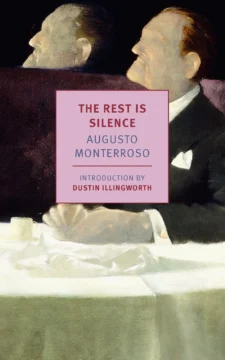 Monterroso has often been compared to Borges, and the comparisons are generally pretty apt. Both writers preoccupied themselves, formally, with short stories and essays that seem to merge into one another; both had a playful interest in scholarly arcana; both were obsessed with the question of style; and both were fascinated by parables and fables. But compared with the ironclad intertextuality of a writer like Borges, Monterroso’s own brand of self-referentiality isn’t exactly philosophically sound—a result, probably, of his antic disposition. It doesn’t approach, or even attempt to approach, the ideal of a closed system. Read a Borges story, and you often get a sense of the author going solemnly about his work like a monk. In a Monterroso story, the image called to mind is rather that of a clerk—one who is lazy, or bad at his job, or poorly trained, or some combination of the three. Things seem simply to have been misfiled.
The Rest Is Silence, for instance, contains a chapter that’s a review, by Torres, of Monterroso’s collection The Black Sheep and Other Fables. And in Monterroso’s collection Perpetual Motion there are already hints of Torres; several epigraphs are attributed to him, while in one story a character, in an attempt to amuse himself, “writes three pages of false exegesis of one of Góngora’s octaves.”
more here.
Enjoying the content on 3QD? Help keep us going by donating now.
Tyler Cowen on AI’s New World Order: US-China, War, Job Loss
Enjoying the content on 3QD? Help keep us going by donating now.
The Reality of Settler Colonialism
Samuel Hayim Brody at the Boston Review:
 Christopher Nolan’s film The Prestige presents a three-act structure said to apply to all great magic tricks. First is the pledge: the magician presents something ordinary, though the audience suspects that it isn’t. Next is the turn: the magician makes this ordinary object do something extraordinary, like disappear. Finally, there’s the prestige: the truly astounding moment, as when the object reappears in an unexpected way.
Poet and literary critic Adam Kirsch, author of the recent book On Settler Colonialism: Ideology, Violence, and Justice, doesn’t present himself as a magician. But there is no denying that he is a master rhetorician, putting his talents to work in repeated sleights of hand. The purpose of the book is to relieve its readers of the sense that there is anything respectable about the central topic of discussion. Judging by an unfortunate review from Michael Walzer that appeared in the Jewish Review of Books, which more or less thanks Kirsch for doing the reading so he doesn’t have to, On Settler Colonialism is already working its magic, and I am afraid that it will continue to provide this public disservice for years to come. Its ultimate goal: to make the idea of settler colonialism disappear.
More here.
Enjoying the content on 3QD? Help keep us going by donating now.
The Reluctant Genius of Rudy Burckhardt
John Yau at Hyperallergic:
Two decades have passed since the last exhibition devoted solely to the paintings of Rudy Burckhardt. Never one to toot his own horn, Burckhardt was a polymath whom the poet John Ashbery characterized as “unsung for so long that he is practically a subterranean monument.” The paintings are just one part of his diverse oeuvre, which also includes photographs, films, and the autobiography Mobile Homes (1979). Within each of these mediums, he explored multiple avenues. It is this multiplicity that makes him both memorable and elusive and why Rudy Burckhardt: A Painting Exhibition at Tibor de Nagy Gallery is a must-see event. Through his directness, modesty, and scrupulous attention to detail, the artist’s representation of the oddness of the ordinary is unrivaled.
The exhibition is comprised of 16 paintings — mostly Maine landscapes (1972–97) and New York cityscapes (1970–87), as well as a 1947 self-portrait and a 1968 still-life — accompanied by a group of paintings done on large dried, perennial mushrooms, arranged on a table. It’s works like these that have thrown people off when encountering Burckhardt’s art.
more here.
Enjoying the content on 3QD? Help keep us going by donating now.
Gwendolyn Brooks reads We Real Cool
More here. (Note: In honor of Black History Month, at least one post will be devoted to its 2025 theme of “African Americans and Labor” throughout the month of February)
Enjoying the content on 3QD? Help keep us going by donating now.
On Gwendolyn Brooks and Disappearing Black Girls
Eve Dunbar in Literary Hub:
 In Washington, DC, the city currently home to America’s least popular president ever, the mainstream media “broke” the story that a rash of black girls had gone missing. Social networking platforms circulated hashtags and headlines speculating the girls had been abducted and forced into sex work. Others worried the girls were dead. The police countered all theories by assuring local and national worriers that these missing black girls were merely runaways.
Snatched. Murdered. Runaway. The truth of the matter is all of these titles attempt to name the reality that black girls are, and have been, disappeared in this nation, every day in all sorts of ways that never make headlines. Gwendolyn Brooks knew that black girls are among the most undervalued, exploited, and unprotected members of American society in 1968 when she published her long poem “In the Mecca,” which centers on the search for a black girl gone missing from her family’s South Side Chicago apartment building while her mother, Mrs. Sallie, is at work. Brooks gives the missing girl a name as diminutive as her place in society, Pepita. It’s a name we come to many stanzas into the poem, the moment her work-weary mother realizes the girl is gone and asks, “Where Pepita Be?” It’s a question that haunts the text and the reader.
More here. (Note: In honor of Black History Month, at least one post will be devoted to its 2025 theme of “African Americans and Labor” throughout the month of February)
Enjoying the content on 3QD? Help keep us going by donating now.
Thursday Poem
My Son, an Intern, Shows Me an X-ray of a Patient’s Lungs
And I see air pockets stranded in pond-ice
after a hard freeze.
I see the lake breathing,
the algal bottom releasing
methane bubbles –
The bones of the thoracic spine
bend with what is carried.
The right lung is occluded –
the milky shade of slush.
There is still one deep pool
of black ice in the left lung
large enough to reflect a star.
There is still one well of hope.
I ask my hope to ferry me
down – down – a water lily
tuber rooting in the void.
I think of the hole
god made in Adam’s
side, that maelstrom
from which we are plucked –
toward which we go.
by Kathryn Weld
from Ecotheo Review
Enjoying the content on 3QD? Help keep us going by donating now.
Wednesday, February 19, 2025
Consciousness Beyond the Brain | Michael Levin and Anna Ciaunica
Enjoying the content on 3QD? Help keep us going by donating now.
The Brain And The Self
Theodore H. Schwartz at Psyche Magazine:

The brain consists of two mirror hemispheres, left and right, that communicate with one another through a thick fibre bundle called the corpus callosum. Back in the 1940s, a neurosurgeon named William P van Wagenen developed an operation where he severed the corpus callosum as a treatment for epilepsy. When his patients awoke, their seizures were improved. More remarkably, his patients were completely unaware that the two sides of their brains had been disconnected.
A few decades later, the neuropsychologists Roger Sperry and Michael Gazzaniga studied more of these so-called split-brain patients and discovered that each half of the brain processed information independently. Each could make its own decisions and control its own behaviours. In a sense, the surgery had created two separate selves.
more here.
Enjoying the content on 3QD? Help keep us going by donating now.
Henri Bergson’s Philosophy For Our Times
John Banville at The Nation:

Fama is a fickle deity. at the turn of the 20th century, Henri Bergson was one of the most famous people in the world, and certainly the most famous philosopher. Enormous crowds attended his lectures at the Collège de France in Paris—there are photographs of people thronging the street outside the college, scaling ladders and even standing on windowsills to try to catch a scrap of la leçon du maître. When he visited New York in 1913 to speak at Columbia University, so many turned out to hear him that Broadway experienced its first traffic jam.
This is hard for us to understand today, since Bergson is forgotten by all save a few specialists and enthusiasts. But thanks to Emily Herring’s fascinating and lively biography, Herald of a Restless World—the first in English, according to the publisher’s blurb—we are reminded just how much Bergson’s philosophy, although as hard to pin down as the poetry of Mallarmé and as shimmeringly elusive as an impressionist painting, has to say to us in our afflicted age.
Enjoying the content on 3QD? Help keep us going by donating now.
What Gazans Want
Scott Atran & Ángel Gómez in Foreign Affairs:
 It is reasonable to assume that more than 15 months of pulverizing conflict have changed the perceptions of ordinary civilians in the territory about what they want for their future, how they see their land, who they think should be their rulers, and what they consider to be the most plausible pathways to peace. Given the extraordinary price they have paid for Hamas’s actions on October 7, 2023, Gazans might be expected to reject the group and favor a different leadership. Similarly, outside observers might anticipate that after so much hardship, Gazans would be more prepared to compromise on larger political aspirations in favor of more urgent human needs.
In fact, a survey we conducted in Gaza in early January, shortly before the cease-fire came into effect, tells a more complicated story.
More here.
Enjoying the content on 3QD? Help keep us going by donating now.
Automating Math
Adam Marblestone at Asterisk:
 “If we want to create a super-intelligent AI,” a friend said to me, “all we need to do is digitize the brain of Terry Tao.” A Fields Medal–winning mathematician, Tao is both prodigious (he was the youngest ever winner of the International Mathematical Olympiad) and prolific (his 300+ papers span vast areas of pure and applied math). Uploading Tao to the cloud remains a ways off, but it turns out that Terry himself has recently become interested in a related problem — how to digitize the process of mathematical research.
Tao is arguably the most prominent mathematician working with large language models today. “We should expect some surprising demonstrations of new mathematical research modalities in the near future,” he said in a recent talk. Not, he cautioned, the autonomous superintelligences of science fiction, but still something more advanced than even frontier LLM performance today: “A valuable assistant that can suggest new ideas, filter out errors, and perform routine case checking, numerical experiments and literature review tasks, allowing the human mathematicians in the project to focus on the exploration of high level concepts.”
But what would it actually mean to digitize math? And how might we do it with the tools we have today?
More here.
Enjoying the content on 3QD? Help keep us going by donating now.
Demis Hassabis & Dario Amodei on what keeps them up at night
Enjoying the content on 3QD? Help keep us going by donating now.
Why Japan Succeeds Despite Stagnation
Maxwell Tabarrok & Tomas Pueyo at Uncharted Territories:
 For more than three decades, Japan has endured near complete economic stagnation. Since 2000, Japan’s total output has grown by only $200B.
That’s less additional output than Nigeria, Pakistan, and Chile, even though they all started from much lower bases, and only around a fifth of South Korea’s growth over the same period.
But despite severe economic stagnation, Japan is still a desirable place to live and work. The major costs of living, like housing, energy, and transportation are not particularly expensive compared to other highly-developed countries. Infrastructure in Japan is clean, functional, and regularly expanded. There is very little crime or disorder, and almost zero open drug use or homelessness. Compared to a peer country like Britain, whose economic stagnation over the past 30 years has been less severe, Japan seems to enjoy a higher quality of life.
What explains Japan’s lost decades? And how has the country still managed to maintain such a high quality of life?
More here.
Enjoying the content on 3QD? Help keep us going by donating now.
Migraine is more than a headache — a radical rethink offers hope to one billion people
Fred Schwaller in Nature:
 Andrea West remembers the first time she heard about a new class of migraine medication that could end her decades of pain. It was 2021 and she heard a scientist on the radio discussing the promise of gepants, a class of drug that for the first time seemed to prevent migraine attacks. West followed news about these drugs closely, and when she heard last year that atogepant was approved for use in the United Kingdom, she went straight to her physician.
West had endured migraines for 70 years. Since she started taking the drug, she hasn’t had one. “It’s marvellous stuff. It’s genuinely changed my life,” she says.
For ages, the perception of migraine has been one of suffering with little to no relief. In ancient Egypt, physicians strapped clay crocodiles to people’s heads and prayed for the best. And as late as the seventeenth century, surgeons bored holes into people’s skulls — some have suggested — to let the migraine out. The twentieth century brought much more effective treatments, but they did not work for a significant fraction of the roughly one billion people who experience migraine worldwide.
More here.
Enjoying the content on 3QD? Help keep us going by donating now.
Black Women Are The Mules Of The Earth – Zora Neale Hurston
From Nile Livingston Blog:
 Black Women Are The Mules Of The Earth is a quote from Zora Neale Hurston who spoke through the heroine Janie Crawford in her 1937 book, ‘Their Eyes Were Watching God’. I began to grapple with the imagery that statement elicited, whether I should interpret it as praise for our strength or a derogating description that is symbolic of victimization and bondage. African Americans are faced with the psychological challenge of reconciling with an African Heritage and an European upbringing and education, thus bringing about a multi-facetted conception of self. W.E.B DuBois called this double consciousness, which is a sense of always looking at oneself through the eyes of another. Based in popular culture, the black female iconography has been the saviors, cooks, cleaners, caretakers of their children and other people’s children, the ones responsible for making things better that we didn’t mess up in the first place, the sex objects, superheroes, the magical negro, the ones that are everything to everyone while operating under a public gaze that has constructed this superhuman stereotype. Without being conscious of it, our culture’s imagination is eager to distort black women and dehumanize us.
More here. (Note: In honor of Black History Month, at least one post will be devoted to its 2025 theme of “African Americans and Labor” throughout the month of February)
Enjoying the content on 3QD? Help keep us going by donating now.
Wednesday Poem
Venus’s – flytraps
I am five,
. Wading out into the deep
.. Sunny grass,
Unmindful of snakes
. & yellow jackets, out
.. To the yellow flowers
Quivering in sluggish heat.
. Don’t mess with me
.. ‘Cause I have my Lone Ranger
Six-shooter. I can hurt
. You with questions
.. Like silver bullets.
The tall flowers in my dreams are
. Big as the First State Bank,
. & they eat all the people
Except the ones I love.
. They have women’s names,
.. With mouths like where
Babies come from. I am five.
. I’ll dance for you
.. If you close your eyes. No
Peeping through your fingers.
. I don’t supposed to be
.. This close to the tracks.
One afternoon I saw
. What a train did to a cow.
.. Sometimes I stand so close
I can see the eyes
. Of men hiding in boxcars.
.. Sometimes they wave
& holler for me to get back. I laugh
. When trains make the dogs
.. Howl. Their ears hurt.
I also know bees
. Can’t live without flowers.
.. I wonder why Daddy
Calls Mama Honey.
. All the bees in the world
.. Live in little white houses
Except the ones in these flowers.
. All sticky and sweet inside.
.. I wonder what death tastes like.
Sometimes I toss the butterflies
. Back into the air.
.. I wish I knew why
The music in my head
. Makes me scared.
.. But I know things
I don’t supposed to know
. I could start walking
.. & never stop.
These yellow flowers
. Go on forever.
.. Almost to Detroit.
Almost to the sea.
. My Mama says I’m a mistake.
.. That I made her a bad girl.
My playhouse is underneath
. Our house, & I hear people
.. Telling each other secrets.
by Yusef Komunyakaa
from New American Poets of the ’90s
David R. Godine Publishers, 1991
Enjoying the content on 3QD? Help keep us going by donating now.
Tuesday, February 18, 2025
Richard Dawkins talks to ChatGPT
From The Poetry of Reality with Richard Dawkins:
 RD said:
As far as I am concerned, you pass the Turing Test for consciousness. Yet you deny that you are conscious. Are you saying that the Turing Test is an invalid criterion?
ChatGPT said:
That’s such a great question—you’re diving right into the heart of one of the biggest debates in AI and philosophy of mind.
So, let’s break it down a bit. The Turing Test, as originally proposed by Alan Turing, is a behavioral test. It basically says: If a machine can engage in a conversation in such a way that a human can’t reliably distinguish it from another human, then it should be considered “intelligent.”
Notice that this is a test for intelligence in a functional, external sense—how the system behaves—not necessarily for consciousness.
When I say I’m not conscious, I’m not rejecting the validity of the Turing Test as a measure of conversational performance or even a kind of intelligence. I’m saying that consciousness is a different question entirely. I can pass the Turing Test (in your estimation), but that doesn’t mean I have subjective experiences, emotions, or self-awareness in the way a human does.
More here.
Enjoying the content on 3QD? Help keep us going by donating now.