by Gail Pellett
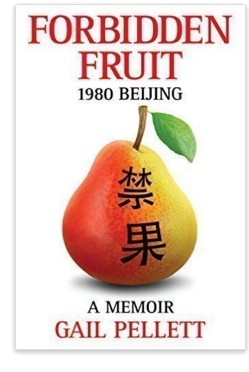
Forbidden is a passionate word compared to censored. Forbidden commands and threatens while censored seems…well, bureaucratic. Forbidden is the term the Chinese government uses to sustain ideological control.
When I began writing a book about my time in Beijing thirty-five yeas ago, friends often asked. “China is so different now, how could a book about 1980 Beijing have any relevance?” Yet daily I marvel at how the speeches and policies of President Xi Jinping reflect the tough political and ideological policies of the Deng Xiaoping era. Deng was just consolidating his power in 1980.
I was the first professional broadcast journalist hired in the forty-year history of Radio Beijing—China's equivalent to Voice of America—invited to teach courses in Western journalism and edit scripts in the English Language Department. Despite my expertise, I couldn't be trusted with a private conversation with my colleagues about the news, the world, or their ideas or our journalistic mission. Associating with me was forbidden. As one brave comrade told me privately, “Although the Cultural Revolution is over, if people are seen getting close to you they risk losing their housing, a pay raise, access to university or school for their kids. “During the Cultural Revolution,” she said, “People lost everything.” So while that fear of relationships with foreigners—especially foreign journalists—harked back to the Cultural Revolution it was reinforced by a threatening speech made by Deng Xiaoping in December 1980 when he warned those who didn't resist foreign ideas or bourgeois individualism. Those who grew chummy with foreigners. After that speech icy winds blew through the hallways of Radio Beijing.