On the dark erotics of Jean Genet’s Our Lady of the Flowers

JeangenetMax Nelson at The Paris Review:

It’s a seductively ironic notion that the freedom Genet gave his narrator consisted precisely in letting him abuse and enslave the rest of the book’s characters. But rarely do the figures who move through Our Lady of the Flowers—Divine/Culafroy, but also Darling, her primary male love interest; Our Lady, the young murderer for whose charms Divine falls; and Gorgui, “the big sunny Negro” she treats with a mixture of tenderness and exotic fascination—seem shackled to their fates to the extent Sartre suggests. What gives the book much of its depth is the intensity with which its narrator identifies with these men. “Their density” as characters, in Sartre’s words, might be “measured by the effect they produce in him” (i.e., their ability to arouse him), but they arouse him precisely by giving him bodies to occupy, spaces to inhabit, memories to relive, and frissons to experience outside his prison’s walls.

In some cases, they enjoy all the freedoms of movement he himself lacks. Late in the book, the narrator skims over a period during which Divine “pursued the complicated, sinuous, looped existence of a kept woman.” Each sentence carries her across another ocean, first to the Sundra Isles and Venice:

Then it was Vienna, in a gilded hotel, nestling between the wings of a black eagle. Sleeping in the arms of an English lord, deep in a canopied and curtained bed. Then there were rides in a heavy black limousine … She thought of her mother and of Darling. Darling received money orders from her, sometimes jewels, which he would wear for one evening and quickly resell so that he could treat his pals to dinner. Then back to Paris, and off again, and all in a warm, gilded luxury, all in such comfort that I need merely evoke it from time to time in its smug details for the vexations of my poor life as a prisoner to disappear.

more here.
Memory capacity of brain is 10 times more than previously thought

From KurzweilAI:

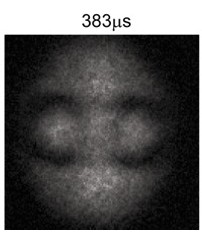
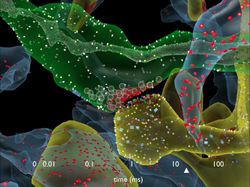
Data-from-the-Salk-Institute-Shows-Brains-Memory-Capacity-Is-in-the-Petabyte-Range-as-Much-as-EntiSalk researchers and collaborators have achieved critical insight into the size of neural connections, putting the memory capacity of the brain far higher than common estimates. The new work also answers a longstanding question as to how the brain is so energy efficient, and could help engineers build computers that are incredibly powerful but also conserve energy. “This is a real bombshell in the field of neuroscience,” says Terry Sejnowski, Salk professor and co-senior author of the paper, which was published in eLife. “We discovered the key to unlocking the design principle for how hippocampal neurons function with low energy but high computation power. Our new measurements of the brain’s memory capacity increase conservative estimates by a factor of 10 to at least a petabyte (1 quadrillion or 1015 bytes), in the same ballpark as the World Wide Web.” “When we first reconstructed every dendrite, axon, glial process, and synapse* from a volume of hippocampus the size of a single red blood cell, we were somewhat bewildered by the complexity and diversity amongst the synapses,” says Kristen Harris, co-senior author of the work and professor of neuroscience at the University of Texas, Austin. “While I had hoped to learn fundamental principles about how the brain is organized from these detailed reconstructions, I have been truly amazed at the precision obtained in the analyses of this report.”

10 times more discrete sizes of synapses discovered

The Salk team, while building a 3D reconstruction of rat hippocampus tissue (the memory center of the brain), noticed something unusual. In some cases, a single axon from one neuron formed two synapses reaching out to a single dendrite of a second neuron, signifying that the first neuron seemed to be sending a duplicate message to the receiving neuron. At first, the researchers didn’t think much of this duplicity, which occurs about 10 percent of the time in the hippocampus. But Tom Bartol, a Salk staff scientist, had an idea: if they could measure the difference between two very similar synapses such as these, they might glean insight into synaptic sizes, which so far had only been classified in the field as small, medium and large.

More here.

Thursday, January 21, 2016

The Fairy Tales That Predate Christianity

Using techniques from evolutionary biology, scientists have traced folk stories back to the Bronze Age.

Ed Yong in The Atlantic:

ScreenHunter_1643 Jan. 21 22.04Stories evolve. As they are told and retold to new audiences, they accumulate changes in plot, characters, and settings. They behave a lot like living organisms, which build up mutations in the genes that they pass to successive generations.

This is more than a metaphor. It means that scientists can reconstruct the relationships between versions of a story using the same tools that evolutionary biologists use to study species. They can compare different versions of the same tale and draw family trees—phylogenies—that unite them. They can even reconstruct the last common ancestor of a group of stories.

In 2013, Jamie Tehrani from Durham University did this for Little Red Riding Hood, charting the relationships between 58 different versions of the tale. In some, a huntsman rescues the girl; in others, she does it herself. But all these iterations could be traced back to a single origin, 2,000 years ago, somewhere between Europe and the Middle East. And East Asian versions (with several girls, and a tiger or leopard in lieu of wolf) probably derived from these European ancestors.

That project stoked Tehrani's interest, and so he teamed up with Sara Graça da Silva, who studies intersections between evolution and literature, to piece together the origins of a wider corpus of folktales.

More here.

Physicists Successfully Tie the Very First Quantum Knots

Jennifer Oullette in Gizmodo:

ScreenHunter_1642 Jan. 21 21.59Theoretical physicists have been predicting that it should be possible for knots to form in quantum fields for decades, but nobody could figure out how to accomplish this feat experimentally. Now an international team has managed to do just that, tying knots in a superfluid for the very first time by manipulating magnetic fields.

Led by David Hall, a physicist at Amherst College, and Mikko Möttönen of Aalto University in Finland, the group describes their groundbreaking achievement in a new paper in Nature Physics. It’s tough to visualize these exotic objects, but they are essentially particle-like rings or loops in a quantum field connected to each other exactly once. A mathematician might not consider these structures to be true knots; typically a knot is defined as a knotted circle, like a pretzel, while a rubber band would be considered an “un-knot.” Hall and Möttönen prefer to think of their structures as knotty solitons.

And what’s a soliton, you may ask? There is a certain type of traveling wave that keeps rolling forward at a constant speed without losing its shape. That is a soliton, and such objects also show up in quantum field theory. As I wrote in a 2014 article for Quanta, “Poke a quantum field and you will create an oscillation [wave] that usually dissipates outward, but configure things in just the right way and that oscillation will maintain its shape” — just like a traveling wave.

More here.

Updating Paul Krugman, “Evolution Groupie”

David Sloan Wilson in Evonomics:

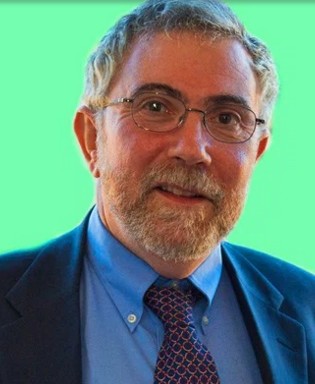
ScreenHunter_1641 Jan. 21 21.54After complaining that economic soul searching taking place since 2008 ignores evolutionary theory, I was made aware of Paul Krugman’s 1996 address to the European Association for Evolutionary Political Economy. I had read it before but upon refreshing my memory I see that it provides an excellent opportunity to reflect upon changes that have taken place in my own field of evolutionary science during the last two decades.

Krugman’s address, which is reprinted here with his permission, was titled “What Economists Can Learn from Evolutionary Theorists”. He begins by acknowledging that his audience might know more than he does about evolution in relation to economics, but then demonstrates an impressive command of the evolutionary literature, including major figures such as George C. Williams, William D. Hamilton, John Maynard Smith, Richard Dawkins, and Stephen Jay Gould. He confesses to being an “evolution groupie”, even to the point of reading the primary literature and not just popular accounts.

What is the take-away message of evolutionary theory for Krugman? Mostly, that it affirms “standard economics”, at least in the form that he practices. In his own mind, he is “a maximization-and-equilibrium kind of guy” who has “pushed the envelope, but not broken it”.

More here.

2015 declared the hottest year on record

Jeff Tollefson in Nature:

IndiaIt’s official: 2015 was the hottest year on record. Global data show that a powerful El Niño, marked by warmer waters in the tropical Pacific Ocean, helped to drive atmospheric temperatures well past 2014's record highs. Some researchers suggest that broader Pacific trends could spell even more dramatic temperature increases in years to come. Released on 20 January, the global temperature data come from three independent records maintained by NASA, the US National Oceanic and Atmospheric Administration (NOAA) and the UK Met Office. All three data sets document unprecedented high temperatures in 2015, pushing the global average to more than 1 ºC above pre-industrial levels. Although El Niño boosted temperatures late in the year, US government scientists say that the steady increase in atmospheric greenhouse gases continues to drive the longer-term trend. “The reason why this is such a warm record year is because of the long-term trend,” says Gavin Schmidt, director of NASA’s Goddard Institute for Space Studies in New York. “And there is no evidence that this long-term trend has slowed.”

Average global surface temperatures in 2015 were 0.16 °C warmer than in 2014, which was previously the warmest year on record, according to NOAA. Virtually all areas of the globe, including land and oceans, experienced above-normal temperatures. Satellite and balloon records of temperatures in the upper atmosphere showed less warming due to a delayed response to El Niño, but are expected to rise faster in 2016. Overall, global temperatures have increased by 0.1 to 0.2 ºC per decade since the 1970s, says Thomas Karl, director of NOAA’s National Centers for Environmental Information in Ashville, North Carolina. “Clearly the 2015 data continues the pattern,” Karl said. “This trend will continue.”

More here.

An attempt to talk to the Brontë sisters through their possessions

63c389c4-bf6b-11e5_1205990hSamantha Ellis at the Times Literary Supplement:

For the most part, we don’t keep relics the way the Victorians did. It would be hard, now, to find a story about a widow squabbling with her husband’s best friend over who could keep the heart another friend had snatched from the fire where his body was being cremated. But for Mary Shelley this was not a peculiar thing to do, particularly as other friends were also cherishing Percy’s ashes, and even giving them away as presents. As Deborah Lutz writes, death doesn’t just bring about the tragedy of turning people into things; “it might also start inanimate objects to life, cause them to travel, move about, generate meaning”.

Lutz, a professor at the University of Louisville, set out her stall in her first book, The Dangerous Lover: Gothic villains, Byronism, and the nineteenth-century seduction narrative (2006); she is both fabulously erudite and refreshingly willing to tackle the trashier end of the literary spectrum. Her two latest books are just as rigorous and, even better, impassioned. Relics of Death in Victorian Literature and Culture is more scholarly in tone. Lutz looks at the Victorian cult of death, analysing the intense and sensual way Victorians mourned. She works chronologically from Romantic remains (Shelley’s jaw, Keats’s hair, a square of the bed curtains that surrounded Byron’s miserable honeymoon bed) to the start of the twentieth century, when the rise of secularism and the advance of medicine came together to produce what Diana Fuss has called the death of death.

more here.

Love and Work: Anthony Powell’s ‘O, How the Wheel Becomes It!’ and ‘Venusberg’

Screen-Shot-2016-01-12-at-3.11.14-PMGerald J. Russello at The Millions:

Love and work are the subjects the British novelist Anthony Powell covers in O, How the Wheel Becomes It! and Venusberg two slim novels, recently reissued by University of Chicago Press, which bracket his monumental 12-volume Dance to the Music of Time, written over the course of almost 15 years, from 1957 to 1971. Still relatively lesser known in the United States, the Dance series is one of the great achievements of 20th-century literature, and perhaps the greatest portrayal of (mostly upper-class) British life from approximately the 1920s through the 1960s.

In his introduction to Venusberg, which Powell published in 1932 when he was only 27, Levi Stahlastutely notes the differences between Powell and the author whom he is often thought to resemble,Evelyn Waugh. Both wrote about the educated upper classes and had enormous skill at skewering their pretensions and obsessions. But where Waugh was highly self-conscious of his status as an outsider and desperately wanted to be included among his subjects even as he savaged them, Powell developed a different style. He writes more as an insider but one removed from the social whirl by almost incomprehensibly sensitive social antennae. “Waugh’s books are arguably funnier (though some sections of Dance hold their own), but they also have an angry, cruel, even nihilistic strain. Waugh’s satire is scorching, leaving little behind but blasted ground. Powell, on the other hand, while refusing novelistic happy endings, presents a more hopeful outlook: his early novels tend to include at least one character who yearns, if fitfully, to live a life with meaning.”

more here.

was ted hughes ‘A Very Sadistic Man’?

Malcolm_1-021116Janet Malcolm at The New York Review of Books:

In a letter of 1989 to his friend Lucas Myers, published in Letters of Ted Hughes,2Hughes writes about how “pitifully little” he is producing and goes on to

wonder sometimes if things might have gone differently without the events of 63 & 69 [the years of Plath’s and Wevill’s suicides]. I have an idea of those two episodes as giant steel doors shutting down over great parts of myself, leaving me that much less, just what was left, to live on. No doubt a more resolute artist would have penetrated the steel doors—but I believe big physical changes happen at those times, big self-anaesthesias. Maybe life isn’t long enough to wake up from them.

Hughes’s feeling of not writing enough is common among writers, sometimes even among the most prolific. In Hughes’s case it was certainly delusory. The posthumous volume of Hughes’s collected poems is over a thousand pages long and there are five volumes of prose and seven volumes of translations. But without question Hughes suffered blows greater than those it is given to most writers to suffer. His life had been ruined not just once, but twice. It has the character not of actual human existence but of a dark fable about a hero born under a malign star.

That it was Bate of all people who was chosen to write Hughes’s biography only heightens our sense of Hughes’s preternatural unluckiness; though the choice might not have surprised him. Ancient stories about innocents delivered into the hands of enemies disguised as friends were well known to him, as was The Aspern Papers. He emerges from his letters as a man blessed with a brilliant mind and a warm and open nature, who seemed to take a deeper interest in other people’s feelings and wishes than the rest of us are able to do and who never said anything trite or obvious or pious or self-serving.

more here.

Wednesday, January 20, 2016

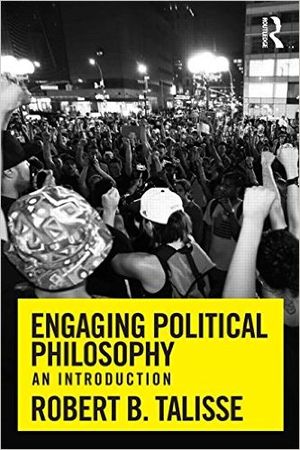
Interview with Robert B. Talisse, author of Engaging Political Philosophy

From the Routledge website:

51eSICcQhFL._SX331_BO1,204,203,200_What sparked your own interest in this area of philosophy?

My earliest philosophical interests – interests that developed even before I was aware of philosophy as an academic field – had to do with politics.Perhaps this is due to the fact that I entered teenage during the Reagan era in the US, and at that time it was difficult to escape philosophical questions about the political world. The television, movies, and especially the music I was encountering all were driven by political concerns.By the time I was 16, I was convinced that the world was soon to be destroyed by madmen with inordinate political power.The question was whether anything at all could be done, and if so, what.This introduced me to the idea of political critique, which naturally raised philosophical issues about what proper criticism is.In a way, then, my political concerns as a teenager brought me not only to political philosophy, but to broader philosophical questions about reasoning, argument, disagreement, and knowledge.When I began studying philosophy as an undergraduate, I was fascinated by two quite different books, Mill’s On Liberty and Robert Paul Wolff’s In Defense of Anarchism. In college, I began thinking, with Wolff, that some form of democracy was the only fitting response to the anarchist’s challenge to political authority.But whereas Wolff famously concludes that no proper version of democracy is practically feasible, I started thinking, with Mill, that individual liberty and autonomy requires there to be a social environment that enables and encourages free thinking and the open expression of heresies; and I also began to think that this kind of social environment can persist only under conditions of democratic governance.As a professional philosopher, my central research is focused on the relations of democracy to epistemology – the ways in which the project of collective self-government is related to the projects of forming, sustaining, and exchanging warranted beliefs.It seems strange to think that a few overly-anxious teenage years could be so formative.

More here.

Making a Memory of Murder: Why it’s not so hard to make an innocent person confess

Julia Shaw in Scientific American:

ScreenHunter_1640 Jan. 20 20.27There are three main reasons why people confess to crimes they did not commit.

The first is that they are voluntarily giving a false confession. Sometimes people confess to crimes because they want notoriety or they want to cover for someone else. For example, a gang member may confess to a crime committed by a higher-ranking gangster. They may also lie by admitting to a lesser crime than the one they are being charged with. Confess to a robbery and avoid a murder charge, for example. It’s a sneaky but effective way of creating an alibi.

The second is that they are being compliant. They are going along with the situation and are giving the interrogator what they think he or she wants to hear. They are guessing, like Brendan claims he did. Since police are keen on closing cases, they generally want to hear a confession. The thing with compliant confessions is that the person might say they committed a crime but might not actually believe it. Why might someone be compliant? They might be overwhelmed by the situation and want to escape it as soon as possible. One easy way to escape a hard line of questioning is to confess.

Third, they may have difficulty separating fact from fiction. This means that people can come to actually believe they committed a crime they did not commit, and they might even say they remember it happening.

More here.

The Political Scientist Who Debunked Mainstream Economics

David Bollier in Evonomics:

ScreenHunter_1639 Jan. 20 20.13“Picture a pasture open to all.”

For at least a generation, the very idea of the commons has been marginalized and dismissed as a misguided way to manage resources: the so-called tragedy of the commons. In a short but influential essay published in Science in 1968, ecologist Garrett Hardin gave the story a fresh formulation and a memorable tagline.

“The tragedy of the commons develops in this way,” wrote Hardin, proposing to his readers that they envision an open pasture:

It is to be expected that each herdsman will try to keep as many cattle as possible in the commons. Such an arrangement may work reasonably satisfactorily for centuries because tribal wars, poaching and disease keep the numbers of both man and beast well below the carrying capacity of the land. Finally, however, comes the day of reckoning, that is, the day when the long-desired goal of social stability becomes a reality. At this point, the inherent logic of the commons remorselessly generates tragedy. As a rational being, each herdsman seeks to maximize his gain. Explicitly or implicitly, more or less consciously, he asks, “What is the utility to me of adding one more animal to my herd?”

The rational herdsman concludes that the only sensible course for him to pursue is to add another animal to his herd. And another…. But this is the conclusion reached by each and every rational herdsman sharing a commons. Therein is the tragedy. Each man is locked into a system that compels him to increase his herd with- out limit—in a world that is limited. Ruin is the destination toward which all men rush, each pursuing his own best interest in a society that believes in the freedom of the commons. Freedom in a commons brings ruin to all.

More here.

Wednesday Poem

Postscript

And some time make the time to drive out west
Into County Clare, along the Flaggy Shore,
In September or October, when the wind
And the light are working off each other
So that the ocean on one side is wild
With foam and glitter, and inland among stones
The surface of a slate-grey lake is lit
By the earthed lightning of a flock of swans,
Their feathers roughed and ruffling, white on white,
Their fully grown headstrong-looking heads
Tucked or cresting or busy underwater.
Useless to think you’ll park and capture it
More thoroughly. You are neither here nor there,
A hurry through which known and strange things pass
As big soft buffetings come at the car sideways
And catch the heart off guard and blow it open.
.

by Seamus Heany
from The Spirit Level
Farrar, Straus and Giroux, 1996.
.
.

Why boredom is anything but boring

Maggie Koerth-Baker in Nature:

Boredom-feature-illustration-14_01_16In 1990, when James Danckert was 18, his older brother Paul crashed his car into a tree. He was pulled from the wreckage with multiple injuries, including head trauma. The recovery proved difficult. Paul had been a drummer, but even after a broken wrist had healed, drumming no longer made him happy. Over and over, Danckert remembers, Paul complained bitterly that he was just — bored. “There was no hint of apathy about it at all,” says Danckert. “It was deeply frustrating and unsatisfying for him to be deeply bored by things he used to love.” A few years later, when Danckert was training to become a clinical neuropsychologist, he found himself working with about 20 young men who had also suffered traumatic brain injury. Thinking of his brother, he asked them whether they, too, got bored more easily than they had before. “And every single one of them,” he says, “said yes.” Those experiences helped to launch Danckert on his current research path. Now a cognitive neuroscientist at the University of Waterloo in Canada, he is one of a small but growing number of investigators engaged in a serious scientific study of boredom.

There is no universally accepted definition of boredom. But whatever it is, researchers argue, it is not simply another name for depression or apathy. It seems to be a specific mental state that people find unpleasant — a lack of stimulation that leaves them craving relief, with a host of behavioural, medical and social consequences. In studies of binge-eating, for example, boredom is one of the most frequent triggers, along with feelings of depression and anxiety1, 2. In a study of distractibility using a driving simulator, people prone to boredom typically drove at higher speeds than other participants, took longer to respond to unexpected hazards and drifted more frequently over the centre line3. And in a 2003 survey, US teenagers who said that they were often bored were 50% more likely than their less-frequently bored peers to later take up smoking, drinking and illegal drugs4.

More here.

Tuesday, January 19, 2016

Martin Luther King Jr. Celebrations Overlook His Critiques of Capitalism and Militarism

Zaid Jilani in The Intercept:

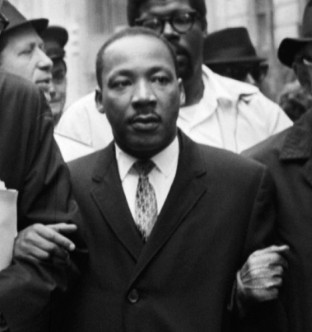
ScreenHunter_1638 Jan. 19 19.09America’s celebrations of Martin Luther King Jr. typically focus on his civil rights activism: the nonviolent actions that led to the Civil Rights Act of 1964 and the Voting Rights Act of 1965.

The last few years of King’s life, by contrast, are generally overlooked. When he was assassinated in 1968, King was in the midst of waging a radical campaign against economic inequality and poverty, while protesting vigorously against the Vietnam War.

This was a campaign whose intellectual roots were found in a younger King, who grew uneasy with the excesses of capitalism around him even as he focused on civil rights issues. In the summer of 1952, he wrote a letter detailing these concerns to Coretta Scott, whom he began dating earlier in the spring. In that letter, he concluded that “capitalism has outlived its usefulness”:

I imagine you already know that I am much more socialistic in my economic theory than capitalistic. And yet I am not so opposed to capitalism that I have failed to see its relative merits. It started out with a noble and high motive, viz, to block the trade monopolies of nobles, but like most human systems, it falls victim to the very thing it was revolting against. So today capitalism has outlived its usefulness. It has brought about a system that takes necessities from the masses to give luxuries to the classes.

Government officials tracked his growing radicalism, and feared it.

More here. Also see this shameful and shocking letter the FBI sent to MLK, Jr.

In Defense of Accommodationism: On the Proper Relationship Between Science and Religion

Massimo Pigliucci in The Philosopher's Magazine:

Pigliucci-webMy biology colleague Jerry Coyne has recently published his new book: Faith vs Fact — Why Science and Religion are Incompatible, and my philosophy colleague Russell Blackford has just penned a glowing review of it, entitled “Against accommodationism: How science undermines religion.” I have known Jerry for a long time, and I’m familiar with his writings on the matter, but I have not read the book, so this essay is intended as a response to Blackford and to the general issue of “accommodationism.” Should I have time and stamina I will eventually go back to Faith vs Fact and comment on it directly on a separate occasion.

First: what is accommodationism? Having being accused a number of times of being an accommodationist (a word ominously reminiscent of “collaborationist,” but maybe I’m just paranoid), I think I have a sense of what Blackford, Coyne, and others are reacting to. These authors think that science undermines religion, and that if someone (like me) claims that that is actually not the case (with a huge caveat to come in a minute), then that someone is an accommodationist. And very likely he is also intellectually dishonest, unnecessarily deferential to religion, politically expedient, or all of the above.

Second, notice that accommodationists usually are atheists, because a religious person who accepts scientific findings (as opposed to, say, a fundamentalist creationist) is just that, a religious person who accepts science — like the majority of people on the planet.

Third, it is good to bear in mind that accommodationists readily agree that science directly contradicts (i.e., it is logicallyincompatible with) a number of claims made by a number of religious people (this is the above mentioned huge caveat). If someone believes that the earth is a few thousand years old, say, or that the Grand Canyon was formed during a single flood, they are flatly wrong. You can either be a young earth creationist or someone who accepts the findings of modern science, but not both. The two are utterly, irreducibly incompatible with each other.

Well, then, so what’s left to say on the issue? A lot, as it turns out.

More here.

Bernie Sanders: The Quiet Revolt

Simon Head in the New York Review of Books:

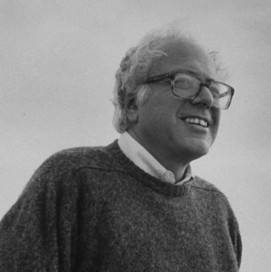
ScreenHunter_1636 Jan. 19 18.51In 2003 I wrote in my The New Ruthless Economy that one of the great imponderables of the twenty-first century was how long it would take for the deteriorating economic circumstances of most Americans to become a dominant political issue. It has taken over ten years but it is now happening, and its most dramatic manifestation to date is the rise of Bernie Sanders. While many political commentators seem to have concluded that Hillary Clinton is the presumptive Democratic nominee, polls taken as recently as the third week of December show Sanders to be ahead by more than ten points in New Hampshire and within single-figure striking distance of her in Iowa, the other early primary state.

Though he continues to receive far less attention in the national media than Hillary Clinton or Donald Trump, Sanders is posing a powerful challenge not only to the Democratic establishment aligned with Hillary Clinton, but also the school of thought that assumes that the Democrats need an establishment candidate like Clinton to run a viable campaign for president. Why this should be happening right now is a mystery for historians to unravel. It could be the delayed effect of the Great Recession of 2007-2008, or of economists Thomas Piketty and Emmanuel Saez’s unmasking of the vast concentration of wealth among the top 1 percent and the 0.1 percent of Americans, or just the cumulative effect of years of disappointment for many American workers.

Such mass progressive awakenings have happened before. I remember taking part in antiwar demonstrations on the East and West coasts in the Fall and Winter of 1967–1968. I noticed that significant numbers of solid middle-class citizens were joining in, sometimes with strollers, children, and dogs in tow. I felt at the time that this was the writing on the wall for Lyndon Johnson, as indeed it turned out to be.

More here.