Evolution makes scientific sense. So why do many people reject it?

Nathalia Gjersoe in The Guardian:

ScreenHunter_1828 Apr. 01 16.42Evolution is poorly understood by students and, disturbingly, by many of their science teachers. Although it is part of the compulsory science curriculum in most schools in the UK and the USA, more than a third of people in both countriesreject the theory of evolution outright or believe that it is guided by a supreme being.

It is critical that the voting public have a clear understanding of evolution. Adaptation by natural selection, the primary mechanism of evolution, underpins a raft of current social concerns such as antibiotic resistance, the impact of climate change and the relationship between genes and environment. So why, despite formal scientific education, does intelligent design remain so intuitively plausible and evolution so intuitively opaque? And what can we do about it?

Developmental psychologists have identified two cognitive biases in very young children that help to explain the popularity of intelligent design. The first is a belief that species are defined by an internal quality that cannot be changed (psychological essentialism). The second is that all things are designed for a purpose (promiscuous teleology). These biases interact with cultural beliefs such as religion but are just as prevalent in children raised in secular societies. Importantly, these beliefs become increasingly entrenched, making formal scientific instruction more and more difficult as children get older.

More here.

Can Pakistan win its war against the Taliban?

Mohammed Hanif in The Guardian:

ScreenHunter_1827 Apr. 01 16.39Paranoid parents have always known that children’s parks are potentially dangerous places. That rickety seesaw might fling your child skywards. That slide is always too steep. That swing will snap one day. That toy plane that vibrates after you insert a metal token and sings Twinkle, Twinkle, Little Star is wrongly wired and will turn into a death trap.

We think of all these things, but we never think of a suicide bomber blowing himself up in children’s play area on a Sunday afternoon. Not even on an Easter Sunday afternoon. Not even in Pakistan.

We have seen schoolchildren being massacred before, we have seen churches bombed and Christian localities burnt to ashes. We thought we had seen the worst. We were told that we are winning this war. Nothing could have prepared us for the carnage that took place in Gulshan-e-Iqbal park, Lahore, last Sunday.

More here.

Friday Poem

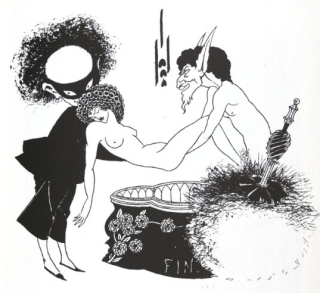
Origin of the World

I hereby close the gates between my legs till further notice
For an unlimited period, due to maintenance.
No bearers of first fruit will come
No pilgrims will make pilgrimage
No prayers made under the empty skies,
Not a single butchered sheep is to be offered as a sacrifice
Upon my tortured holy altar.
The origin of the world was found to be rotten.
All men are corrupt.
All sexual activity – an abomination.
I raise a dam, lay an embargo, impose a curfew, economic ban –
No goods or wares can be transported,
Or imported, or exported,
All vessels are requested to remain in port and blow
Their steam on neutral.
I build a wooden ark to save only myself
And flee this wretched ruin,
Tout seul.
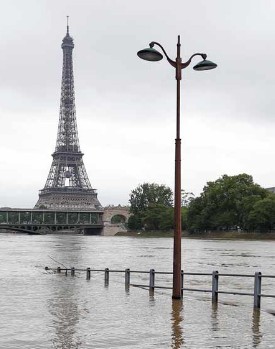
I bring down a heavy rain, a flood, a cloudburst without break,
And may all men flutter, be washed out like seashells in a rake.
All men are similar to starfish, putrid, withered, pale – the works,
All men are green glass bottles sealed with perforated corks
Carrying worn, forlorn and fraudulent love letters, safe and sound.
All men are carried by the waves,
Forever lost and drowned.
And I promise –
That no rebellious raven will flutter within my drunken depths,
Nor be set free prematurely from my abyss
To see if the waters have abated.
As for the dove, you rest assured I keep it close to my heart.
The flood already happened!
Tear all existing things apart!
‘The origin of the world’ will remain frozen and static, a dead metaphor,
Still life under my short mini skirt
Like in the painting by Courbet.
For I, dear sirs, am luckily
A female poet.
And now I will create a whole new world
All different than you know it.


by Naomi Partom
from: Leh-havir et hamayim bah-esh/Setting the Water on Fire
publisher: Xargol/Am Oved, Tel Aviv, 2012,
translation: Yotam Benshalom

“Peter Fischli David Weiss: How to Work Better”

ArticleClaire Bishop at Artforum:

Part of what makes “Suddenly This Overview” so wonderful is the image it conjures of two artists beavering away in the studio, each interpreting a list of topics in a way that would tickle the other’s fancy. The pair’s very first collaboration, “Sausage Series,” 1979, also gives this impression—it is a group of photographs in which various forms of Germanic processed meat, along with other foodstuffs and household objects, are arranged to create ambitious diorama-like landscapes in the confines of an unremarkable apartment. This sense of relentless indoor tinkering is fully fledged in the elaborate garage setup of the artists’ much-loved, much-copied video The Way Things Go, 1987: a mesmeric chain reaction of objects set into motion via spillages and explosions, its cobbled-together devices constantly on the brink of failure. The video took two years to make and is gloriously self-sufficient; it’s also one of the earliest and only works of video art to be commercially accessible to the public (currently $14.99 on iTunes). These works position Fischli and Weiss in a lineage of artists who thrive in the studio, but instead of making work about not knowing what to make, as Bruce Nauman did so poignantly in 1969, the duo seem unburdened by time or the pressure to produce meaning. The Way Things Go is a labor of love whose obsessiveness is immediately recognized by viewers, who are often unable to tear themselves away (hence the unusual decision to install the work twice).

At the end of the exhibition, in the Tower Gallery, is the black-and-white (and possibly too-cute) installationQuestions, 2000–2003, which flashes hundreds of polyglot queries across the wall. I would have rather seen this space used to present Visible World, 1986–2012, in its best-known format of three thousand photographs on a seventy-two-foot-long table, rather than half-buried on three modest plasma screens halfway up the ramp. While the work was first seen as a slide show on late-night television in Germany (during Documenta 10), the present installation is a little too close to a screen saver, losing the sense of information overload that arises from topographic sprawl.

more here.

Zaha Hadid’s unfettered invention

091221_r19146_p646John Seabrook at The New Yorker:

For an architect so celebrated, Hadid has a relatively small output. She has completed thirteen structures: these include the Vitra Fire Station, in Weil am Rhein, Germany (1994); a train station in Strasbourg (2001); a ski jump in Innsbruck, with an attached restaurant (2002); the Lois and Richard Rosenthal Center for Contemporary Art, in Cincinnati (2003); the Phaeno Science Center, in Wolfsburg, Germany (2005); the BMW Plant Central Building, in Leipzig (2005); and MAXXI, in Rome (2009). She shows an unusual degree of comfort with changes of scale; she enjoys working on small projects, like furniture and shoes, at the same time that she is designing large structures, like museums and railway stations. Her Aqua Table, a resin-and-silicone dining table she designed in 2005 for Established & Sons, which has sold for as much as two hundred thousand dollars, looks like the roof of her Aquatics Center, in East London, currently under construction, which will be the architectural showpiece of the 2012 Summer Olympics.

There is no single Hadid style, although one can detect a watermark in her buildings’ futuristic smoothness. Certain themes carry through her use of materials (glass, steel, concrete), her lines (corridors often trace flowing arabesque shapes, while roof struts make sharp Z-shaped angles), her structures (she favors column-free spaces), and her sculptural interiors and asymmetric façades. In all her work, Hadid is concerned with movement and speed—both the way people will move through the buildings and the way a sight line travels through light and shadow.

more here.

James Tate’s Last Poem

TatetypewriterDan Piepenbring at The Paris Review:

Late last year, I saw John Ashbery give a reading at Pioneer House, in Brooklyn. At one point, he read a prose poem by James Tate, who died last summer. It was, Ashbery said, Tate’s final poem—so incontrovertibly final, in fact, that it had been discovered in the poet’s typewriter soon after his death. What Ashbery went on to read was terrific: as I recalled, it opened in a comic mode, riffing on all these bogus feats Tate claimed to have accomplished that year (hot-dog-eating contest winner, arm-wrestling contest winner, et cetera) and building to a quiet, rueful meditation on aging.

It seemed almost too perfect to have been plucked unedited from a typewriter, so much so that I wondered, in passing, if maybe it were a sly, prankish tribute. I knew, or I thought I remembered, that Ashbery and Tate had been close. “He has developed a homegrown variety of surrealism almost in his own backyard,” Ashbery had written of his friend in 1995—a variety in which we find “something very like the air we breathe, the unconscious mind erupting in one-on-one engagements with the life we all live, every day.” The poem Ashbery had read was so rich with those “eruptions” that I knew it had to be Tate’s.

more here.

When it’s good to be bad: taking the long way around

Cody Delistraty in Aeon:

Header_ESSAY-NYC132575Epicurus understood that the expectation of future pleasure is a pleasure in itself. Taking up his ideas, the Enlightenment philosopher Jeremy Bentham noted: ‘Nature has placed mankind under the governance of two sovereign masters, pain and pleasure.’ Yet pleasure, for Epicurus and Bentham, was defined not by sensation or excitement but by both the absence of pain and the expectation of its absence. For Freud, the ‘pleasure principle’ described the active pursuit of pleasure; but in both cases, pain and pleasure are binary feelings: while a person might still have to physically endure pain, by looking forward to a lack of pain in the future – that is, pleasure – she can be sufficiently distracted from her current bodily discomfort. The history of exaggerated pleasure is generally a response to a perceived deprivation. That is, pleasure is relative. For the late 19th-century French Decadents, for instance, whose works might seem salacious, pornographic, unnecessary (reminiscent of the Marquis de Sade), their exaggerated pleasure came to embody a bolder meaning when juxtaposed with the bourgeois values that brought levels of financial inequality and deprivation that had been unheard of since the Revolution.

To take a more prosaic example, consuming 2,300 calories might not be pleasurable to someone who consumes that on a daily basis; however it quickly becomes pleasurable when one is accustomed to eating just 1,300 calories per day. A fancy restaurant means very little if every night is spent at august tables, and a good deal more when one has been consuming dinners comprised chiefly of ramen. Therefore to plan hedonistic setbacks on your way to achieving a goal is to convert an otherwise painful process into a more pleasurable one. ‘The simple act of knowing they would have a moment of pleasure in the future made participants more persistent towards their goals’, said do Vale. Pleasure, however, is a particularly slippery concept. Surely the pursuit of pleasure – and avoidance of pain – does not exclusively inform our every move? Is that what all of our goals come down to – maximising pleasure, minimising pain? In De Anima, Aristotle claimed animals desire things and with this desire they are given movement – a lion desires food so he runs for a gazelle. But for human beings, Aristotle says, reason also plays into our pursuit of a goal. Humans use reason to shape how they imagine a useful object of desire. With reason and desire working in tandem we choose and pursue our goals. In Phaedrus, Plato said the soul is guided by a dark horse of passion and a white horse of reason. Socrates agreed, but said the white horse is of greater importance – we must use reason to pursue the right things; to let desire reign over reason is to chase the eventually meaningless and temporal.

More here.

Thursday, March 31, 2016

The Hypnotic Clamor of Morocco

Moroccan-musicians

Adam Shatz at The New York Review of Books' Daily site:

In 1931, a twenty-one-year-old American composer in Paris named Paul Bowles visited Morocco at the suggestion of Gertrude Stein. His travel companion was his composition teacher, Aaron Copland. They rented a home in Tangier, where Bowles, a composer of svelte, jazzy music in the Poulenc mould, wrote one of his first scores, an impressionistic piano piece called “Tamamar,” after a village in the Atlas mountains. Copland was unsettled by the clamor of drums during wedding season, and thought Tangier a “madhouse,” but Bowles was enraptured. He collected 78s of local music, just as he had collected old blues recordings back home, and sent copies to Béla Bartók. “When I first heard Arabic music on records,” he recalled later, “I determined to go and live where I could be surrounded by sounds like those, because there seemed to be very little else one could ask for in life.”

By the time Bowles finally moved to Tangier, with his wife, the writer Jane Bowles, in 1947, he had refashioned himself as a novelist, and was busy writing The Sheltering Sky, the tale of American expatriates in Morocco that remains his best-known work. Yet it was in large part the music of Morocco that led him to make his life there. A decade later, on a grant from the Rockefeller Foundation, Bowles travelled throughout Morocco, recording traditional music of a startling variety—Berber, Arabic, Andalusian, and Jewish—for the Library of Congress. For years known mostly to specialists, the recordings from that remarkable project have now been re-edited and re-released in a meticulously prepared box set by Dust to Digital, Music of Morocco.

Morocco was rich in hypnotic sounds, and in his novels Bowles described them with a composer’s precision. In Let It Come Down (1952), he recreated a scene he had witnessed at a concert in Chefchaouen, where a man went into a trance, slashing his arms with a long knife and covering himself in blood, as he danced in “perfect rhythm with the increasing hysteria of the drums and the low cracked voice of the flute.” John Stenham, the hero of The Spider’s House (1955), imagines that he can find his way blindfolded through the old city of Fez merely by listening to the sounds of footsteps and water:

taut, metallic reverberations…shuddered between the walls like musical pistol shots. There were places where his footfalls were almost silent, places where the sound was strong, single, and compact, died straightaway, or where, as he advanced along the deserted galleries, each succeeding step produced a sound of an imperceptibly higher pitch, so that his passage was like a finely graded ascending scale, until all at once a jutting wall or a sudden tunnel dispersed the pattern and began another section in the long nocturne which in turn would disclose its own design.

As Bowles saw it, Morocco’s sounds were forms of experience that had yet to be contaminated by Western influence.

More here.

‘Minimal’ cell raises stakes in race to harness synthetic life

Craig Venter’s creation comes as CRISPR gene-editing methods provide alternative ways to tinker with life’s building blocks.

Ewen Callaway in Nature:

ScreenHunter_1826 Mar. 31 19.54Genomics entrepreneur Craig Venter has created a synthetic cell that contains the smallest genome of any known, independent organism. Functioning with 473 genes, the cell is a milestone in his team’s 20-year quest to reduce life to its bare essentials and, by extension, to design life from scratch.

Venter, who has co-founded a company that seeks to harness synthetic cells for making industrial products, says that the feat heralds the creation of customized cells to make drugs, fuels and other products. But an explosion in powerful ‘gene-editing’ techniques, which enable relatively easy and selective tinkering with genomes, raises a niggling question: why go to the trouble of making new life forms when you can simply tweak what already exists?

Unlike the first synthetic cells made in 20101, in which Venter’s team at the J. Craig Venter Institute in La Jolla, California, copied an existing bacterial genome and transplanted it into another cell, the genome of the minimal cells is like nothing in nature. Venter says that the cell, which is described in a paper released on 24 March inScience2, constitutes a brand new, artificial species.

“The idea of building whole genomes is one of the dreams and promises of synthetic biology,” says Paul Freemont, a synthetic biologist at Imperial College London, who is not involved in the work.

More here.

‘Queen of the curve’ Zaha Hadid dies aged 65 from heart attack

Caroline Davies, Robert Booth and Mark Brown in The Guardian:

Zaha-Hadid-010Dame Zaha Hadid, the world-renowned architect whose designs include the London Olympic aquatic centre, has died aged 65.

The British designer, who was born in Iraq, had a heart attack on Thursday while in hospital in Miami, where she was being treated for bronchitis.

Hadid’s buildings have been commissioned around the world and she was the first woman to receive the Royal Institute of British Architects gold medal.

A lengthy statement released by her company said: “It is with great sadness that Zaha Hadid Architects have confirmed that Dame Zaha Hadid DBE died suddenly in Miami in the early hours of this morning.

“She had contracted bronchitis earlier this week and suffered a sudden heart attack while being treated in hospital. Zaha Hadid was widely regarded to be the greatest female architect in the world today.”

Speaking from Mexico, Richard Rogers, the architect of the Pompidou Centre and the Millennium Dome, told the Guardian the news of Hadid’s death was “really, really terrible”.

“She was a great architect, a wonderful woman and wonderful person,” Lord Rogers said.

More here.

Jane Austen’s ‘Emma’: a masterpiece

Be174cf0-f67d-11e5_1217995hDevoney Looser at The Times Literary Supplement:

Jane Austen’s Emma, on the other hand, is an interesting novel, full stop – a masterpiece, if not the masterpiece, of the genre. Emma’s opening line is not as famous as Pride and Prejudice’s “It is a truth universally acknowledged”, but provides just as much to mull over. Of Chapter One’s first six words, “Emma Woodhouse, handsome, clever, and rich”, the critics ask why is the heroine handsome not beautiful, clever not intelligent, rich not wealthy? Austen famously quipped that Emma was “a heroine whom no one but myself will much like”. This unusual novel – about a privileged, matchmaking, misreading but redeemable young woman whose story may teach us to be better readers ourselves – is celebrating its bicentenary. The question is: when?

The title page of Emma is dated 1816, but the book first appeared in print on December 23, 1815. Such post-dating is briefly mentioned by Jan Fergus in Peter Sabor’s Cambridge Companion to “Emma”. But it is in the OHNE that one learns of the banality of the practice. As OHNE’s James Raven argues, in a tour-de-force chapter on “Production”, “post-dating was common, designed to extend the currency of the novel . . . . Novels printed and published in August or even as early as April carried the date of the following year”. Bicentenaries of Emma are rightly celebrated in both 2015 and 2016, something likely to remain confusing to all but diehard Janeites.

The OHNE attends to very different bicentenaries. In his “Afterword: The rise of the ‘rise’ of the novel”, Clifford Siskin calls attention to two of them – “the shared anniversaries of the novel and Literature”. He marks the moment of the novel’s securing a place in the canon, alongside the emergence of the first English Department and the establishment of a body of texts that comprised Literature (with a capital L) in Britain. Siskin dates these twin phenomena to the 1810s and 20s.

more here.

nostalgia and authenticity

Forum_Mall_DSWMegha Majumdar at Okey-Panky:

In my childhood, Hollywood films played at three cinema halls in the city of Kolkata. Grand destinations of the British era—marble staircases, red curtains which parted before the screen—these theaters sought contact with a world of which, we already knew as children, we occupied a filthy periphery. We were still a colony, in thrall to the west. Even the names of the cinemas declared it: Lighthouse, New Empire, Globe.

With the obsessions of a colonized people taught that we were unclean, we noticed the cleanliness and comfort of the west. On screen, the streets of America were so pristine that people could come home and jump into bed with shoes on. Americans had silent, efficient machines for everything—curling hair, cleaning carpets, chopping onions, washing clothes. We had nasal-voiced maids who slapped and punched our worn garments on the bathroom floor as if on riverside rock, after which we clipped dripping dresses, in summer, winter, and monsoon, to ropes strung from the verandah.

Our lives were terribly unsophisticated, even coarse. The lanes flooded every July, drowning roaches whose brown shells floated in the water. In all seasons, beggar children touched our elbows and whined with upturned palms until we gave them a rupee, and uncles on the minibus pinched our breasts.

more here.

Ireland: ‘A Terrible Beauty Is Born’

Donoghue_1-040716Denis Donoghue at The New York Review of Books:

R.F. Foster’s Vivid Faces is a study of the “backgrounds and mentalities of those who made the revolution” in Ireland in 1916. On the morning of Easter Monday, April 24, 1916, members of the Irish Volunteers, a nationalist military organization, and the Citizen Army, a group of trade union volunteers, numbering in all about four hundred, marched into Sackville Street—now O’Connell Street—in Dublin and seized the most notable public building, the General Post Office. Uncertain in number, they were certain in aim: to declare a sovereign Irish republic that was independent of Great Britain. In another part of the city, then allies Éamon de Valera, Éamonn Ceannt, the Countess Markievicz, and other nationalist leaders assembled their troops close to various buildings, such as Boland’s Mills, and took possession of them.

Shortly after noon, Patrick Pearse, in effect the leader of the insurgents, came out of the General Post Office and read a one-page statement, headed (in Irish) “Poblacht na hÉireann,” followed by “The Provisional Government of the Irish Republic to the People of Ireland.” The statement, addressed to “Irishmen and Irishwomen,” began:

In the name of God and of the dead generations from which she receives her old tradition of nationhood, Ireland, through us, summons her children to her flag and strikes for her freedom.

Five brief paragraphs followed. The first called upon the support of Ireland’s “exiled children in America” and “gallant allies in Europe,” these last unnamed but evidently referring to the German government, which was expected in feeble theory to invade Ireland with troops, artillery, and ammunition on behalf of the new Irish government.

more here.

Runs in the Family

Siddhartha Mukherjee in The New Yorker:

Sid nyIn the winter of 2012, I travelled from New Delhi, where I grew up, to Calcutta to visit my cousin Moni. My father accompanied me as a guide and companion, but he was a sullen and brooding presence, lost in a private anguish. He is the youngest of five brothers, and Moni is his firstborn nephew—the eldest brother’s son. Since 2004, Moni, now fifty-two, has been confined to an institution for the mentally ill (a “lunatic home,” as my father calls it), with a diagnosis of schizophrenia. He is kept awash in antipsychotics and sedatives, and an attendant watches, bathes, and feeds him through the day. My father has never accepted Moni’s diagnosis. Over the years, he has waged a lonely campaign against the psychiatrists charged with his nephew’s care, hoping to convince them that their diagnosis was a colossal error, or that Moni’s broken psyche would somehow mend itself. He has visited the institution in Calcutta twice—once without warning, hoping to see a transformed Moni, living a secretly normal life behind the barred gates. But there was more than just avuncular love at stake for him in these visits. Moni is not the only member of the family with mental illness. Two of my father’s four brothers suffered from various unravellings of the mind. Madness has been among the Mukherjees for generations, and at least part of my father’s reluctance to accept Moni’s diagnosis lies in a grim suspicion that something of the illness may be buried, like toxic waste, in himself.

Rajesh, my father’s third-born brother, had once been the most promising of the Mukherjee boys—the nimblest, the most charismatic, the most admired. But in the summer of 1946, at the age of twenty-two, he began to behave oddly, as if a wire had been tripped in his brain. The most obvious change in his personality was a volatility: good news triggered uncontained outbursts of joy; bad news plunged him into inconsolable desolation. By that winter, the sine curve of Rajesh’s psyche had tightened in its frequency and gained in its amplitude. My father recalls an altered brother: fearful at times, reckless at others, descending and ascending steep slopes of mood, irritable one morning and overjoyed the next. When Rajesh received news of a successful performance on his college exams, he vanished, elated, on a two-night excursion, supposedly “exercising” at a wrestling camp. He was feverish and hallucinating when he returned, and died of pneumonia soon afterward. Only years later, in medical school, did I realize that Rajesh was likely in the throes of an acute manic phase. His mental breakdown was the result of a near-textbook case of bipolar disorder.

More here.

Nonstop Metropolis: The Remix

The Queens Museum is crowdfunding an art project, Nonstop Metropolis, by Rebecca Solnit & Joshua Jelly-Schapiro. (There's a day remaining, and they are very close to their target.)

Organized on the occasion of the release of Rebecca Solnit and Joshua Jelly-Schapiro’s forthcoming New York City Atlas, Nonstop Metropolis, the Queens Museum’s “Remix” takes inspiration from the book’s maps and essays. The New York City Atlas is the third in Solnit’s series, following Atlases for New Orleans and San Francisco. With our very own, one-of-a-kind, 3-D map here at the Museum—the Panorama of the City of New York—as well as a deep commitment to the many issues Solnit raises in her books, the Queens Museum has commissioned two new projects by New York-based artists Duke Riley and Mariam Ghani in anticipation of the book’s launch at the Museum…

Nonstop Metropolis reinvents the traditional atlas. Solnit and Jelly-Schapiro work with visual artists, cartographers, and writers to combine cartography and storytelling to illuminate how New York City is a place where different forces clash, come together, and cross-pollinate. Drawings, paintings, and photographs adorn twenty-six maps revealing the fascinating histories of the City that never sleeps. The book’s full-color maps will explore the Big Apple through dozens of lenses, ranging from the Wu Tang Clan’s Staten Island, to a re-imagining of the entire NYC Subway system with the stations named for prominent yet often overlooked women. The third in the Infinite trilogy, Nonstop Metropolis will be the most ambitious, expansive, and influential Atlas to date!

If so moved, donate here at Kickstarter.

Our ancestors may have mated more than once with mysterious ancient humans

Lizzie Wade in Science:

DenisovansIt looked like an ordinary finger bone. But when researchers sequenced its DNA in 2010, they uncovered the existence of a group of ancient humans no one had seen before: the Denisovans. Then came an even bigger surprise. Some modern humans also carry Denisovan DNA, meaning that at some point in the ancient past, Denisovans and modern humans mated and had children. Now, a new study concludes that all that free love had some dark consequences, including male offspring that were likely sterile.

In the absence of much fossil evidence, the best way to study Denisovans is through the genes they left behind in modern humans. So population geneticists Sriram Sankararaman at the University of California (UC), Los Angeles, and David Reich at Harvard University sifted through 257 genomes of present-day people from 120 non-African populations around the world. (Africans, whose ancestors didn’t leave Homo sapiens’s original home, do not have any Denisovan heritage.) They confirmed an earlier finding that among humans living today, people from Papua New Guinea, Australia, and other parts of Oceania have the most Denisovan ancestry, between 3% and 6% of their genomes. This compares with about 2% from Neandertals for all non-African genomes. Sankararaman and Reich found another hot spot of Denisovan ancestry in an unexpected place: South Asia. “It’s about 10% of what we see in the Oceanians,” Sankararaman explains. That’s quite a small contribution—which allowed it fly under the radar in previous studies—but it’s more than researchers expected to find based on their best models of population mixing. East Asians, in turn, have more Denisovan ancestry than Europeans but less than South Asians, the team reports today in Current Biology.

More here.

Wednesday, March 30, 2016

 Will This New Book Change the National Debate on Poverty?

Eyal Press in The Nation:

ScreenHunter_1824 Mar. 30 22.42In the spring of 2008, a graduate student named Matthew Desmond began renting out a trailer in a mobile-home park on the south side of Milwaukee. Like much of the south side, the park’s population was predominantly poor and white, with an outsize number of its residents addicted to drugs or working as prostitutes. After four months, Desmond moved to an equally impoverished, predominantly black neighborhood on the north side of Milwaukee, into a duplex bordering an alley covered in gang graffiti. Unlike most of his neighbors, Desmond didn’t live in these places because he had no better options. He was an ethnographer interested in studying the dynamics of eviction, a familiar ritual at his fieldwork sites, where movers arrived seemingly every day to dump the possessions of another evicted tenant on the curb. How often did this actually happen? No one knew. When Desmond searched for data on the eviction rate in Milwaukee, he couldn’t find much.

The dearth of information might have discouraged some researchers. Desmond took it as a sign that he was onto something. Countless studies have traced the way factors like jobs, wages, and mass incarceration fuel urban poverty, but the role of housing had been curiously overlooked. Since no good data existed, he decided to oversee a survey of his own. When Desmond crunched the numbers, the results were astonishing. As it turned out, eviction wasn’t a daily event in Milwaukee; it was more like an hourly one. In a city with less than 105,000 renter households, 16,000 adults and children were being evicted every year, amounting to one in eight renters between 2009 and 2011. The movers were especially ubiquitous in black neighborhoods, where female renters were nine times as likely to be forced out of their homes as women in poor white neighborhoods.

More here.

Physicists at the Gate: Collaboration and Tribalism in Science

Veronique Greenwood in UnDark:

ScreenHunter_1823 Mar. 30 22.34Did you know that most animal species have roughly the same number of heartbeats over the course of their lives? Short-lived creatures’ hearts beat faster, using up their allotment more quickly — mice before humans, humans before elephants — and this universal quality may be the result of the fact that all of our bodies depend on networks of vessels with similar physics. Did you know that as cities grow, the rate of business transactions grows faster than their population, while the number of miles of roads grows slower? Or that building a network of mysterious genes could help reveal the history of malaria?

All of these findings and more have been made in recent years by researchers reaching across the boundaries of their scientific fields. They are the focus of physicists collaborating with biologists, archaeologists, sociologists, and others, forming teams to look for questions to answer and new ways to describe the world. “Physics is not conceptually super-interesting anymore, not as interesting as biology and evolution and all things social — at least for me,” says Luis Bettencourt, a physicist at the Santa Fe Institute who once studied the origins of the universe and now studies the growth of cities.

In many cases, these new collaborations have been fueled by an explosion of data pouring in from DNA sequencing, cellphone records and other sources, filled with latent patterns that could reveal more about the systems that created them. “It’s an opportunity for people that are fluent with dealing with data, and modeling data” — in other words, certain kinds of physicists — “to come in and say something,” Bettencourt says.

But as physicists sink their teeth into the data, many are finding that entering another field is not simple. As Bettencourt puts it: “Physicists come at it and say, ‘What’s wrong with these people, biologists and social scientists? There’s all this data … Why don’t you just look at the data and see what it tells you about these systems?’

More here.