
Why We Need Bodies
A song remains unheard unless it passes
through some body’s throat. This morning
I watched a wren nibble apart a beetle
and digest it into birdsong. Even air needs
loose-leafed trees to express its melancholy.
Everything invisible seeks a shape.
Remember how, in our dizzy younger years,
we tried to pour the abstraction of love
into the pink cup of each other’s mouth?
Now you kneel to tie my shoe (as you’ve done
daily since the stroke) and I telegraph my gratitude
by tapping the nipple mole cuddled in the small
of your back. Nights I slide my fingers
along the lines sloping down your cheek. I flatten
my hand on your chest to check for life
announcing its presence in your heartbeat steady
as a dog tail’s happy thump against the floor.
When I turn over you lightly clasp my left breast
which, for private reasons, you call Freckles.
by Judith Tate O’Brien
from Rattle Magazine #16, Winter 20011
|
—20
Enjoying the content on 3QD? Help keep us going by donating now.
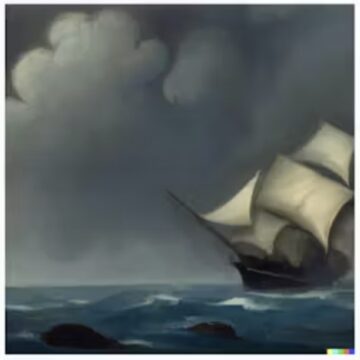 It is among the most memorable moments in American literature. At the start of Chapter Three of his masterwork, Moby-Dick (1851), Herman Melville has his protagonist, the existential castaway Ishmael, newly embarked on his fateful commitment to go a-whaling (is it a kind of suicide? a mere lark? both?), push open the door of a port-side rough-house for boozing mariners: the so-called “Spouter-Inn”. It is dark. It is dank. Savage weaponry from cannibal isles spikes the walls. And those who hunker at the bar are renegades and isolatoes, gruff men of the sea. In the half-light, Ishmael immediately discerns, in the entryway itself, like a warning over the threshold, “a very large oil-painting”.
 Dartmouth researchers conducted the first-ever clinical trial of a generative AI-powered therapy chatbot and found that the software resulted in significant improvements in participants’ symptoms, according to results
  Many people don’t know how seriously to take A.I. It can be hard to know, both because the technology is so new and because hype gets in the way. It’s wise to resist the sales pitch simply because the future is unpredictable. But anti-hype, which emerges as a kind of immune response to boosterism, doesn’t necessarily clarify matters. In 1879, the Times ran a multipart front-page
 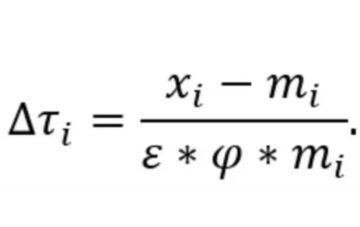 So Trump’s basic starting point is that he thinks trade deficits are bad.
 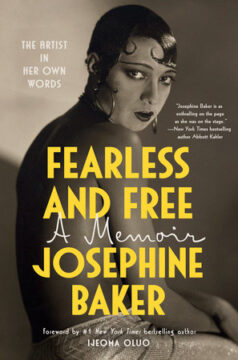 Today we think of Josephine Baker as the personification of the Jazz Age – the skinny black kid from Missouri who took Paris by storm. In retrospect, her show-stopping Revue Nègre act can be read as a subversion of the prejudices of her age. At the time, however, it just looked like a heady cocktail of comedy, exoticism and sex. Scantily garlanded with feathers, dancing to ‘barbaric, syncopated music’, Baker was ‘black poetry’, according to Marcel Sauvage, who acted as her ghostwriter.
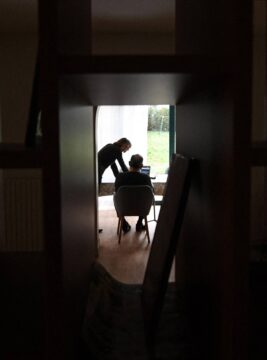 Travelers to Unimaginable Lands is that rarity: true biblio-therapy. Lucid, mature, wise, with hardly a wasted word, it not only deepens our understanding of what transpires as we care for a loved one with Alzheimer’s, it also has the potential to be powerfully therapeutic, offering the kind of support and reorientation so essential to the millions of people struggling with the long, often agonizing leave-taking of loved ones stricken with the dreaded disease. The book is based on a profound insight: the concept of “dementia blindness,” which identifies a singular problem of caring for people with dementia disorders—one that has generally escaped notice but, once understood, may make a significant difference for many caregivers.
 In 2015, scientists made a surprising discovery about physiologically normal human skin: More than
  I
I One doesn’t need a philosophy degree to recognize that the way we think about animals is, at best, deeply inconsistent. Consider the following: many Americans
  B
B While a drop in libido is often associated with aging in women, it’s not just a female issue. Around
 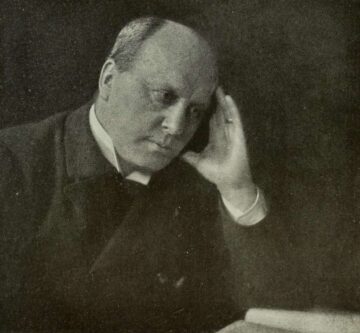 When Henry James decided to come to America in 1904 and 1905, his elder brother, William James, was not immediately pleased. William said that while his wife, Alice, would welcome his visit (she and Henry had a firm bond), he felt “more keenly a good many of the désagréments to which you inevitably will be subjected, and imagine the sort of physical loathing with which many features of our national life will inspire you.” There follows an account of how traveling Americans ate their boiled eggs, presumably in hotels and on trains, “bro’t to them, broken by a negro, two in a cup, and eaten with butter.” As a source of physical loathing, this seems a bit excessive: one might linger over William’s attempts to keep Henry’s visit at bay. William’s letter seems more to the point when he notes: “The vocalization of our countrymen is really, and not conventionally, so ignobly awful … It is simply incredibly loathsome.”